
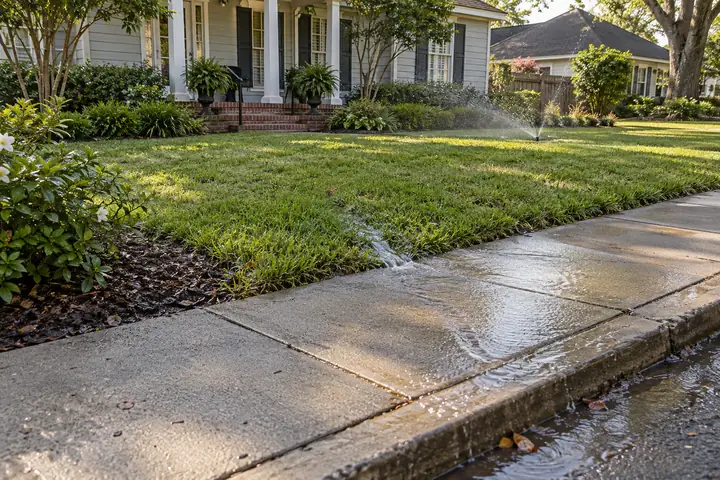
Watch how the water reaches the pavement
A wet sidewalk beside an operating sprinkler can have more than one explanation. Spray may land directly on the concrete, water may flow off the lawn, or an existing puddle may overflow from somewhere else. Those are different problems. Start from a safe dry position and notice the sequence: where the water first appears, which direction it moves and whether it continues after the sprinkler stops. You do not need to stand in the flow to describe it. A short video from a fixed viewpoint can preserve the route better than a close photograph of the final puddle. Avoid changing several controls while watching, because the sequence becomes harder to understand when the setup changes halfway through the observation.
Separate an aiming problem from an absorption problem
Direct overspray can wet pavement before water has touched the grass. Surface runoff begins on the planted area and travels away from it. When both occur together, describe each rather than calling everything poor drainage. A nozzle aimed toward a walk and a lawn that cannot accept the current application rate may need different assessments. Do not redirect a head into an adjacent bed simply to make the sidewalk look dry. That can move the excess water into another planting area without resolving the original question. Record the intended watering boundary and the actual spray boundary. The difference between them is useful information for an irrigation professional, even before any adjustment is considered.
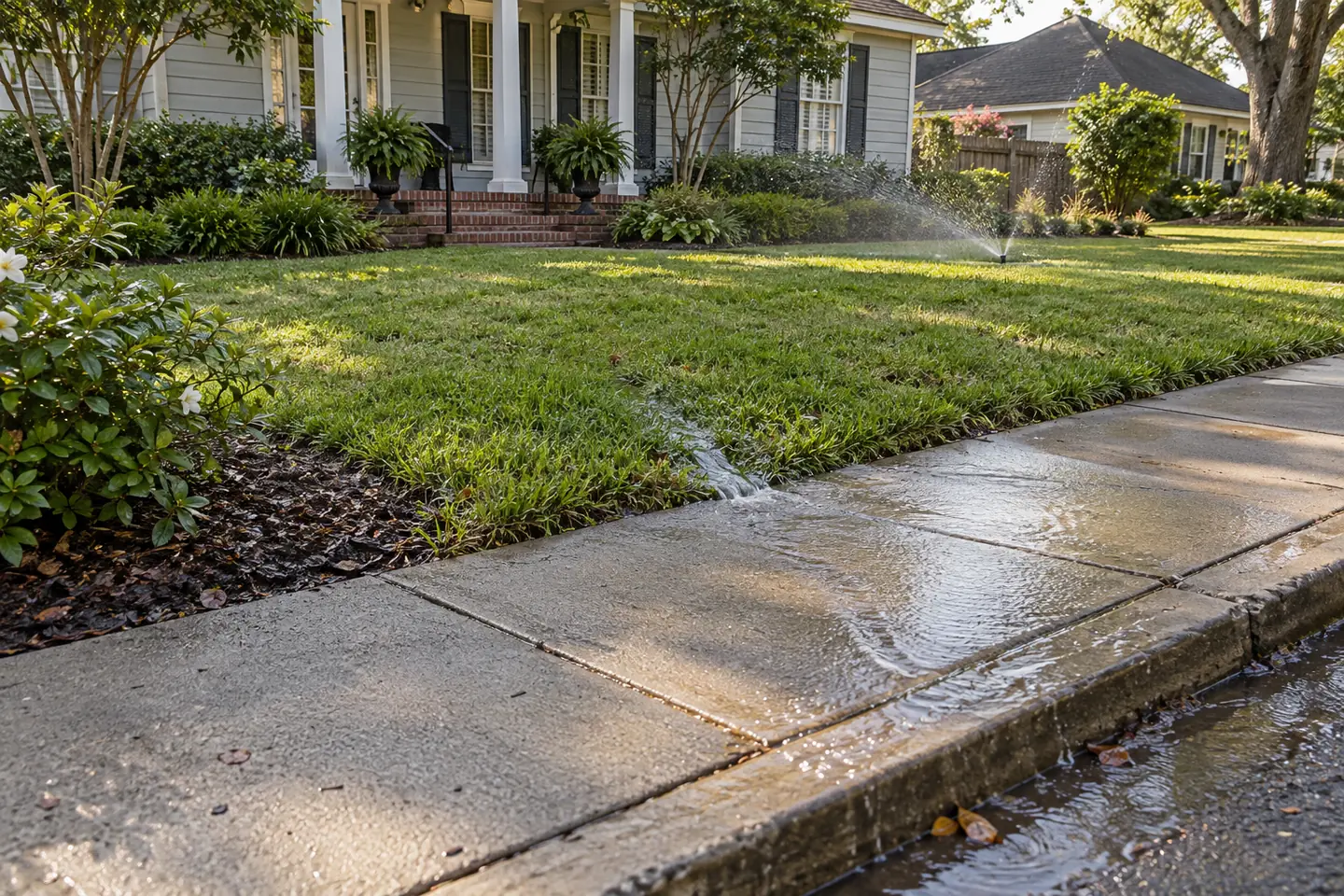
Understand the application-rate question
Texas A&M AgriLife explains that irrigation can apply water faster than a soil surface accepts it, producing runoff. Its cycle-and-soak discussion divides application into shorter periods with pauses where that approach fits the site. The important principle is the relationship between delivery and acceptance, not a universal number of minutes. A setting borrowed from another yard may use a different sprinkler type, soil or slope. If an irrigation professional recommends a revised program, ask how the application rate and the observed runoff informed it. Keep the recommendation with the zone name. Do not turn a general explanation into a new schedule for every part of the property without that site-specific review.
Record when flow begins, not just when it ends
A useful observation distinguishes immediate pavement spray from water that starts leaving the turf later in the event. Note the start of the known zone and the approximate time surface flow becomes visible. Record whether the ground was already wet from earlier rain or watering. Those details describe the conditions that produced the event. A lawn observed after a dry interval cannot be assumed to behave identically after several wet days. If you miss the beginning, say so. An honest note that runoff was already present when you walked outside is better than inventing a starting time. Keep the observation short enough that you can repeat it without turning the yard into a test site you cannot safely supervise.
Trace the destination without entering a hazard
Water leaving the lawn might cross a walking route, reach a driveway, collect beside a foundation or continue toward a street inlet. Describe the destination from a safe location. Do not step into road traffic, open a drain cover or walk through an unknown wet depression to follow it farther. If flow is reaching a neighbor's property, record the visible route without assuming permission to enter. The destination matters because the consequence may be different even when the amount looks small. A narrow wet ribbon across a commonly used walk deserves attention as a walking condition. A recurring flow path across an edge may also explain why the border stays soft when the lawn's center feels firm.
Keep the sprinkler event separate from rainfall runoff
Photographs taken after a storm and photographs taken during irrigation can look remarkably similar. Label them clearly. A downspout may contribute to the same low area that later receives sprinkler water, but a combined puddle does not identify the contribution from each source. If the event included rain, save that limitation instead of presenting it as a clean irrigation-only observation. A simple timeline can help: shower ended, yard remained wet, scheduled sprinkler began, water crossed the walk. This is enough to ask a focused question without claiming you measured every source. Where drainage or grading may be involved, that becomes a separate assessment rather than a nozzle adjustment guessed from a single photograph.
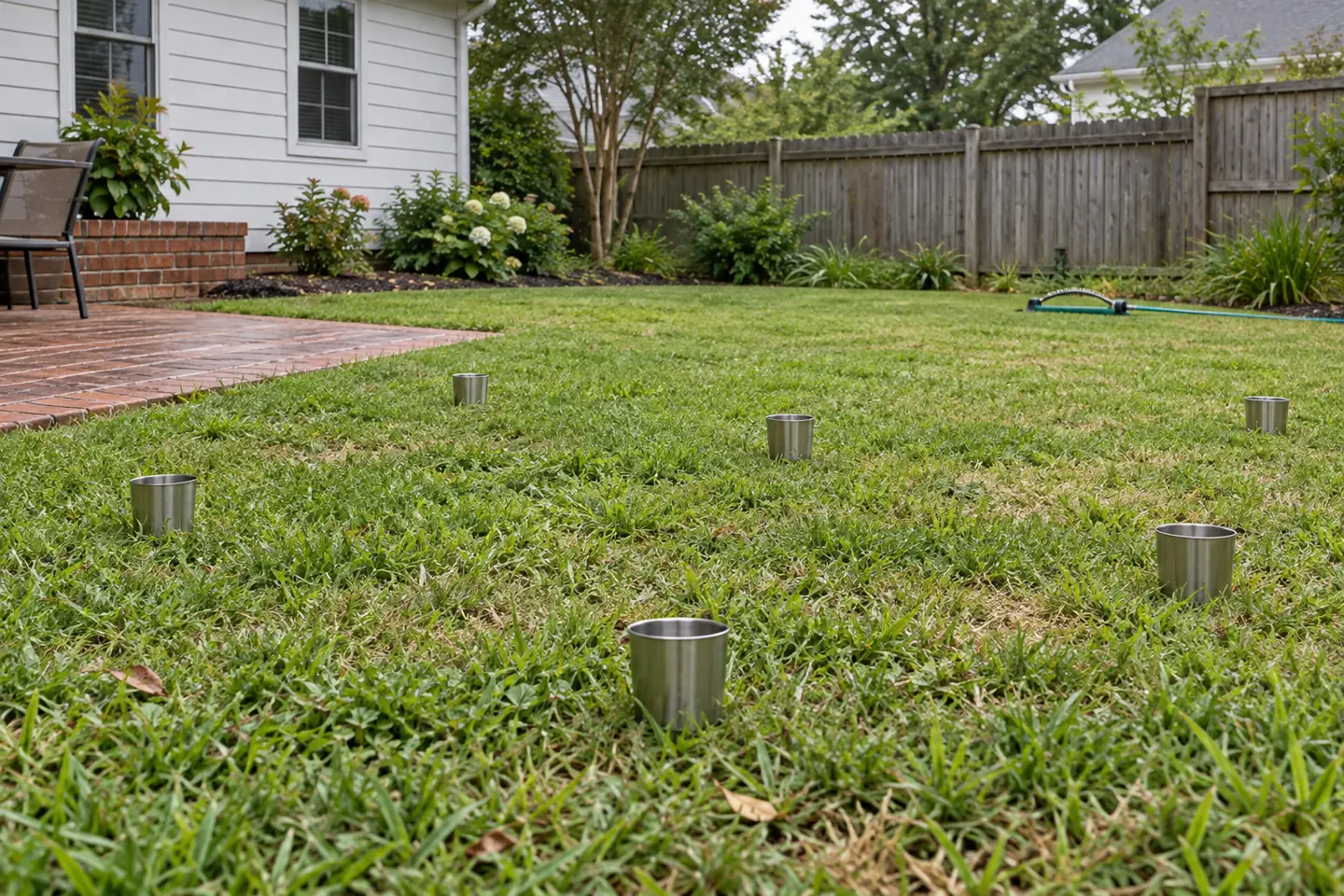
Do not solve visible runoff by starving another area
Shortening an entire system run may reduce water reaching the walk while leaving a different part of the intended coverage area inadequately supplied. Increasing a run can create the opposite problem. That is why distribution and plant need belong beside the runoff observation. Ask whether the relevant zone contains different surfaces, slopes or exposures. Save any existing catch-cup information, but do not infer a full design correction from it alone. An irrigation professional can consider these relationships together. Your role as the owner is to preserve what happened and where, so the review begins with the actual layout instead of a vague instruction to make the system run less everywhere.
Surface fixes need their own justification
A strip of gravel, a shallow trench or a new mound can look like a quick way to redirect water. Each changes the site and can shift flow toward another area. Do not treat one runoff observation as a reason to dig across a lawn, bury an outlet or modify a shared boundary. Keep the ground unchanged while the cause is being assessed, especially where utilities, drainage equipment or property limits are uncertain. If work is later authorized, make sure its intended purpose is described clearly. Correcting sprinkler application, improving a drainage route and repairing a damaged walking surface are separate scopes even when they meet at the same corner of the yard.
Build a compact record for the right person
The most useful request combines a location, a source and a sequence. For example, identify the backyard zone, the brick walk along its lower edge and the point in the run when water begins crossing. Include whether the same strip was wet before irrigation started. Avoid describing a guessed cause as established fact. A phrase such as water first appears at the lawn edge after the sprinkler has been running leaves room for an appropriate assessment. A phrase such as the soil needs a particular repair skips several unanswered questions. Save the original video and the notes with the request, so a later retelling does not lose the part that made the event distinctive.
- Identify the zone or portable sprinkler position.
- Distinguish direct spray from water flowing over soil.
- Note prior rain, earlier irrigation and visible obstructions.
- Describe the first flow point and its destination.
- Keep any proposed equipment or drainage repair separate from the observation.
Compare the same border without assuming the same cause
If water crosses the walk again, use the earlier viewpoint to compare the route. Notice whether it starts at the same location or appears along a different stretch. A repeat at one low point and a new wet strip beside a relocated sprinkler are different observations. Keep the earlier notes even when the latest event seems to confirm your first guess. They may show that the route changed after a delivery, landscape alteration or equipment adjustment. Comparisons are strongest when the source and starting conditions are clear. They are weakest when only the final wet pavement is photographed and every event is described afterward as the same recurring problem.
Explain what the next maintenance visit needs to know
A homeowner in Algiers or Belle Chasse may need an irrigation review and an ordinary lawn visit during the same week. Tell the maintenance provider which border stays soft and whether a walking route becomes wet at the planned arrival time. Do not ask for a lower cut as a way to fix water leaving the property. Cutting height does not describe the sprinkler pattern or establish a drainage correction. If the watering program is being changed by another provider, share the resulting timing information with the person arranging access. The aim is a lawn-maintenance visit that fits current conditions while the water problem receives the separate attention it needs.
Ask Happy about the grass work
For available mowing, edging, trimming and finishing work, contact Happy Grass and explain the affected route before the visit. Ask for Happy at 504-339-3571. Irrigation programming, drainage design and excavation are not promised as part of this guide or an ordinary mowing request.