
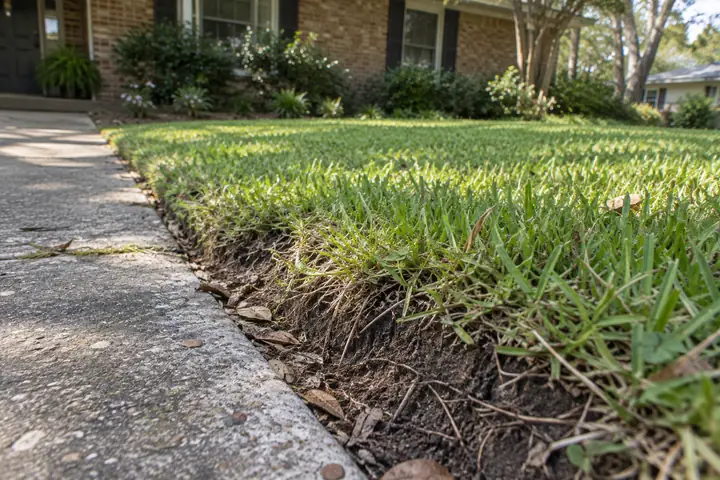
A green surface does not describe the whole growing space
A lawn can look reasonably uniform from the porch while the ground below differs between areas. Roots occupy soil, not the photograph's green surface. When watering or turf decline is being assessed, it can be useful to ask what is happening where the roots grow. That does not mean every homeowner should begin digging inspection holes. Start with the question and the appropriate adviser. A root-zone assessment should have a purpose, a suitable method and a safe location. Without those, a small plug may become a curiosity that is difficult to interpret and a disturbance that still needs repair. The useful goal is information that helps explain a lawn concern, not a collection of holes made because the first one looked interesting.
Define the plant and the part being examined
Grass species, growth stage and recent establishment history matter when interpreting roots. A newly laid sod piece and a long-established lawn do not begin with the same background. Keep the grass identity and known history with any observation. Do not assume that every pale fiber is a healthy grass root or that a root from another nearby plant belongs to the turf. If identification matters, an appropriate plant-health resource can help. Photographs should preserve the connection between the sample and its original location. An isolated handful of material can lose the context needed to distinguish grass structures, soil layers and unrelated debris, especially after it has been washed, shaken or handled extensively.
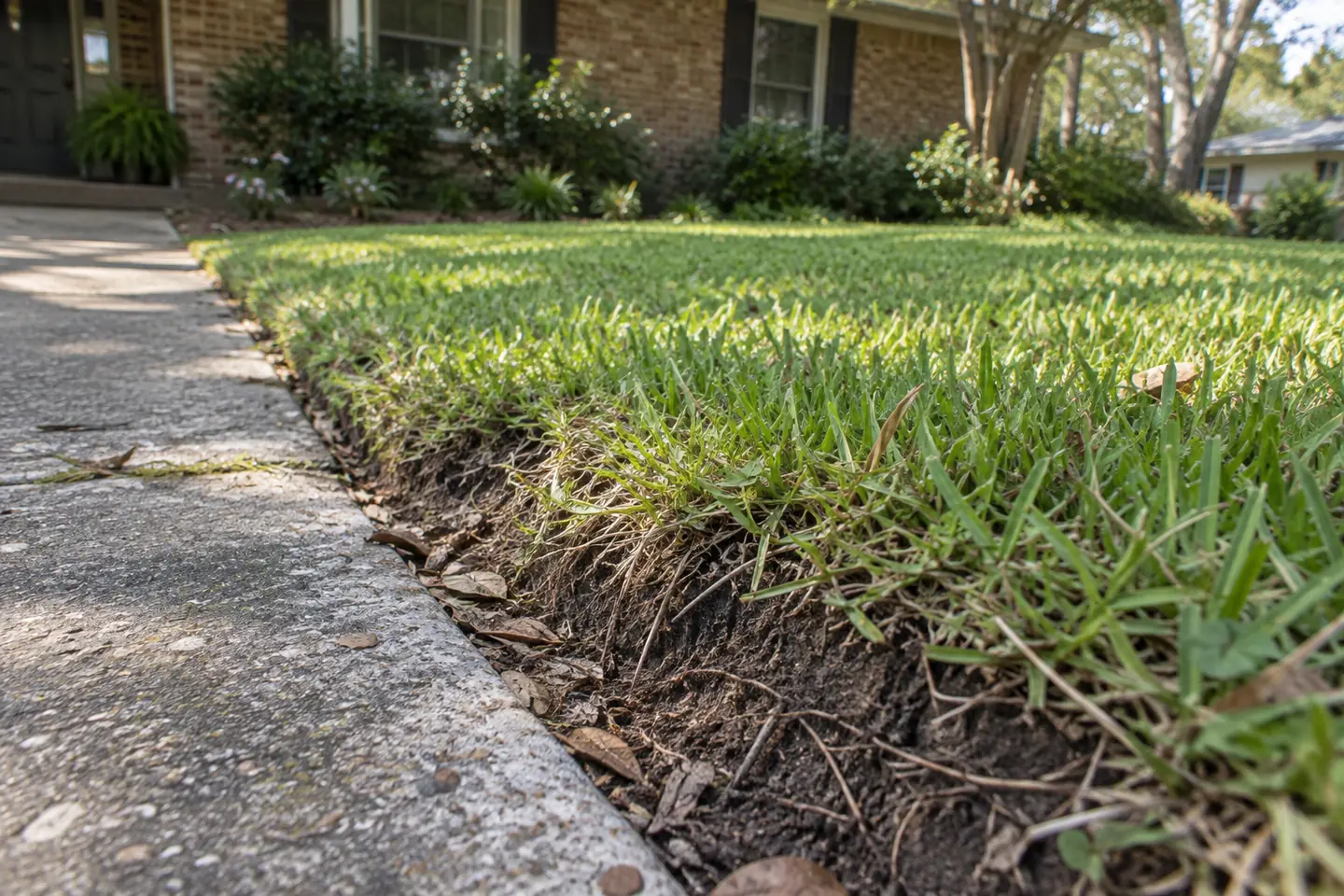
Ask how the sample will answer the concern
If a professional proposes examining a plug or profile, ask which question it is intended to address. The purpose might involve rooting depth, a distinct soil layer, suspected injury or a comparison with a better area. Those questions do not necessarily use the same collection or handling method. A routine fertility sample mixed from several points is different from a plant-diagnostic sample that needs intact structures. Follow the instructions for the selected assessment. Do not wash or discard portions of a sample before asking what the laboratory or adviser needs. Careful collection preserves options. Casual preparation can remove the evidence that would have helped answer the original question.
A visible root depth is not a universal target
Roots can vary with grass, soil and conditions. The University of California explains that established turf rooting and watering depth are connected, and that shallow frequent wetting can favor shallow rooting. That principle does not establish one correct visible root length for every Westbank lawn. Ask how an observation fits the actual grass and site. Avoid declaring a lawn unhealthy solely because one sample differs from an online photograph. Likewise, a few long roots do not prove the whole lawn has unrestricted access to deep moisture. The observation needs a method, a location and an interpretation that recognizes what the sample can and cannot represent.
Notice layers without diagnosing them by appearance alone
A profile may show changes in color, texture or material with depth. Record what is visible before assigning a cause. A light layer is not automatically construction residue, and a dark layer is not automatically an ideal growing zone. Known soil deliveries and building history can help interpret the observation, but guesses should remain labeled as guesses. Ask whether the layer could affect the specific concern being investigated and whether further examination is appropriate. Do not authorize a major soil alteration simply because a contrasting band appears in one small view. The purpose is to understand its relevance, not to assume that every visible boundary below the grass is a defect that needs removal.
Keep moisture and rooting observations distinct
Moist soil at one depth does not prove that the turf has functioning roots there. Visible roots do not measure how much water is available throughout their surroundings. Preserve both types of information when an assessment includes them. An irrigation event may wet a layer while another part of the profile behaves differently. A lawn can also have a plant problem that affects roots even when water is present. These relationships are why a broad instruction to water deeper is not a complete response to every root-zone concern. Ask what the evidence supports and what additional questions remain. A useful assessment connects plant structures and site conditions without treating either as a substitute for the other.
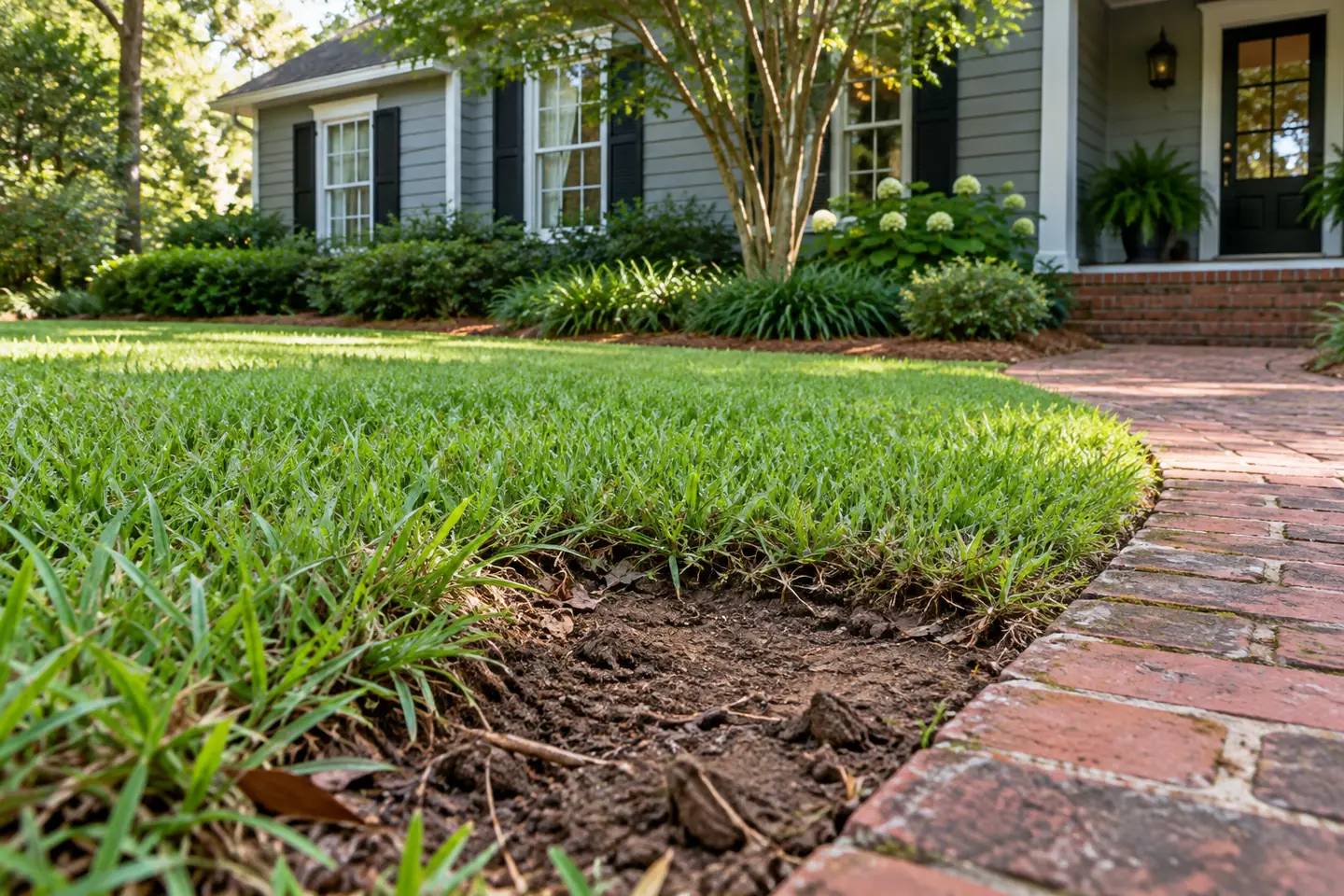
Compare a concern area with an appropriate reference
When the purpose is to understand a struggling patch, an adviser may want a comparison with nearby turf in better condition. Keep the locations and handling consistent under the chosen procedure. Do not select a reference area simply because it looks green if it differs in grass, soil history or watering exposure in ways that matter. Document those differences rather than hiding them. The contrast may still be useful, but its limits should be clear. A comparison gives the professional more information about variation on the property. It does not promise that every difference seen in the samples is the cause of the visible problem.
Do not disturb uncertain buried equipment
Residential lawns can contain irrigation lines, lighting cables, pet-boundary wires, drainage equipment and utilities. A root inspection does not justify probing an uncertain location. Arrange appropriate assessment and locating before work that requires it. Avoid digging near a known feature based on a guessed clearance. If a safe suitable sampling point cannot be identified, explain the limitation and let the responsible professional choose a next step. This is also a reason to keep a property sketch with known equipment locations. The sketch is useful background, while current locating and competent judgment remain separate needs. A household observation should not become an excavation project improvised around unknown underground conditions.
Keep an intact view before separating the material
When an authorized assessment exposes a suitable sample, an initial photograph can preserve the arrangement before handling changes it. Ask the adviser what view is useful and include the original orientation when relevant. A later pile of loose soil and fibers may no longer show which structures occupied which layer. Do not rearrange roots to make them stand out or scrape away material simply for a cleaner photograph if it might be needed for interpretation. Documentation should preserve the sample as found under the selected method. A clearer-looking picture is not necessarily better evidence when producing it removes the relationships the assessment was intended to examine.
Preserve the sample's condition and identity
If material is collected for a laboratory, follow its packaging and handling guidance. Keep the location, date, symptoms and treatment history with the submission. Do not let several unlabeled plugs become mixed on a driveway and then try to reconstruct which one came from the damaged edge. If only photographs are being reviewed initially, show an appropriate scale and a broad location view as well as the close detail requested. Keep the original images. Strong processing or a cropped view can conceal features an adviser might otherwise notice. The aim is to preserve the evidence, not to make the sample resemble a reference illustration more closely.
Record what happened to the ground after inspection
An investigation can alter the small area it examines. Note whether a plug was replaced, loose soil remains or a temporary opening needs attention. Do not assume the inspection spot now behaves exactly like the undisturbed comparison area. If you observe it again, identify that it was previously disturbed and keep the date in the record. This detail matters when a later photograph shows a pale square or a soft spot where the sample was taken. Without the history, an ordinary consequence of inspection can be mistaken for the spread of the original lawn problem. Restore the surface appropriately and arrange any necessary follow-up with the responsible person.
Ask what the finding changes about the care plan
A root-zone observation becomes useful when its interpretation informs a specific next decision. Ask whether the finding supports a watering review, further diagnostics, continued observation or another appropriate action. Keep the explanation and its limits in the file. A photograph alone should not become a promise that the lawn needs a particular product or disruptive procedure. If work is recommended, ask how its purpose relates to the observed condition and how the result will be evaluated. This helps the owner understand the difference between an investigation and a repair proposal. It also keeps later conversations from turning a provisional observation into a diagnosis no one actually made.
- Identify the turf, site history and assessment purpose.
- Follow the collection method appropriate to the question.
- Keep root appearance, depth, soil layers and moisture as distinct observations.
- Avoid uncertain buried equipment and unnecessary disturbance.
- Preserve sample labels, handling instructions and the interpretation received.
Leave a clear surface for the lawn visit
Any inspection opening, removed plug or temporary marker should be addressed appropriately before maintenance. Tell Happy Grass where the ground was disturbed and whether an area remains outside the agreed route. Discuss mowing, edging, trimming and finish with Happy at 504-339-3571. Root diagnostics and soil reconstruction are separate from ordinary lawn-maintenance work.