
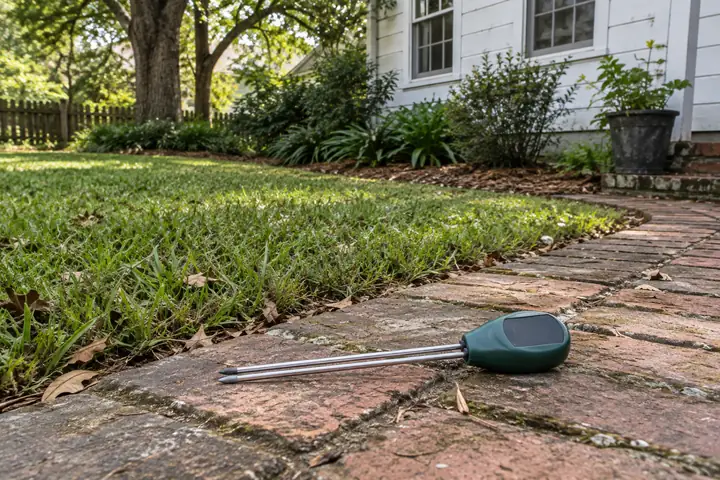
Start by asking what the device actually reports
A display marked wet or dry can look more authoritative than a careful look at the yard. Before using it to change watering, identify the device, its intended use and what its scale means. Some equipment measures or estimates a soil property under specified conditions; a simple household probe may use a broad indicator scale. Do not assume a number from one device is a percentage of water or equivalent to another instrument's result. Read the instructions and keep the model information. The first useful question is what this observation means at the place and depth where it was taken. A clear answer to that question is more valuable than a precise-looking number whose meaning the owner cannot explain.
Depth makes the observation a different observation
A reading close to the surface and one deeper in the soil do not necessarily describe the same conditions. Record the intended measurement depth and follow the device's operating guidance. Do not push a probe deeper by force around unknown buried equipment or roots. A shallow result should not be presented as a complete picture of the root zone merely because it came from a soil tool. If an irrigation professional recommends monitoring at a particular depth, ask how that depth relates to the grass and site. Save the explanation with the record. This prevents later measurements taken differently from being compared as though only the lawn's moisture changed between observations.
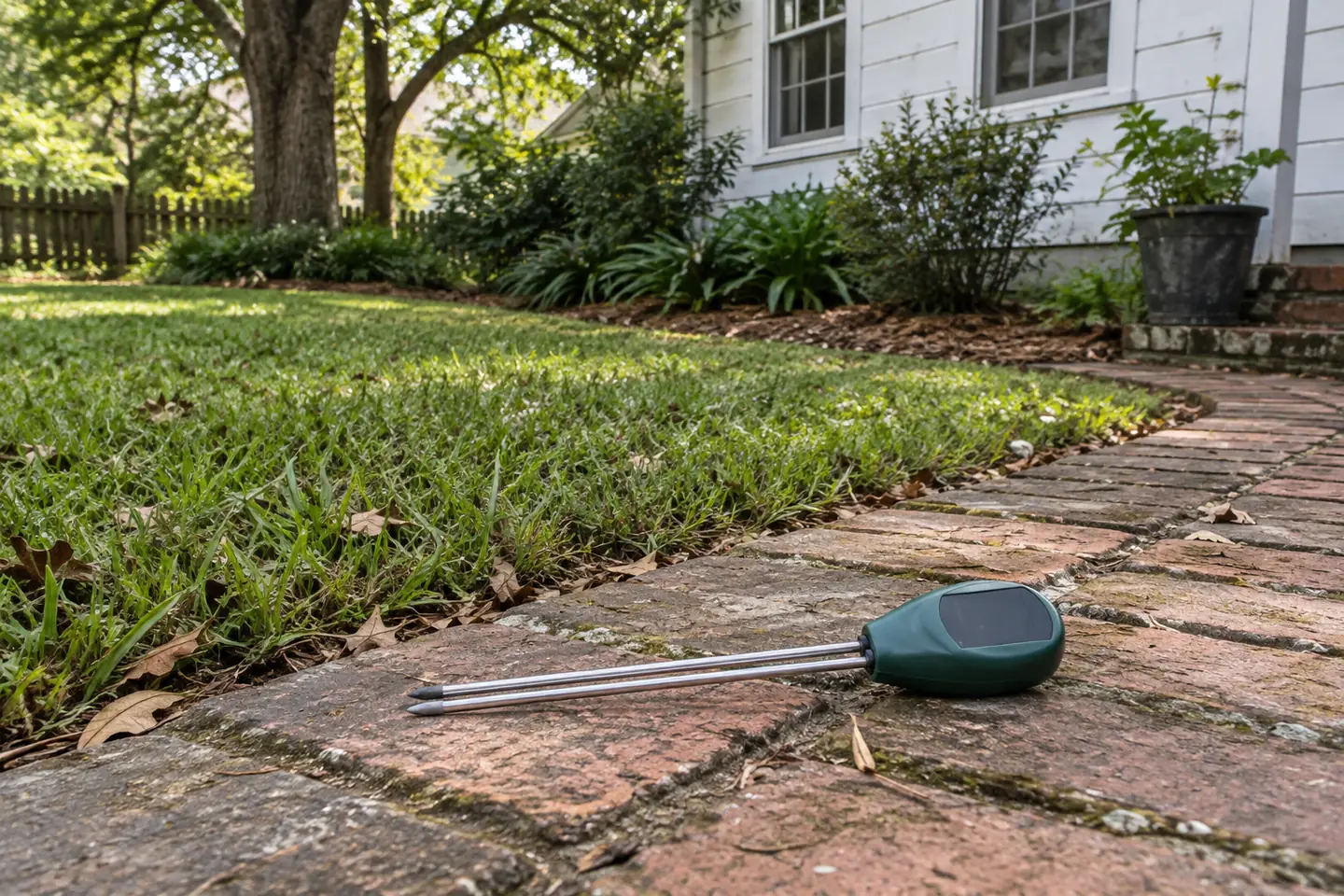
One point cannot stand for every lawn area
A location beside a downspout may differ from an open center lawn. A sheltered side strip may differ from the area inside a sprinkler's strongest coverage. Select observation points for a reason and identify them on a sketch. Do not choose only the easiest patch to reach and then label the reading whole yard. If the purpose is to compare two areas, preserve the identity of each and use a compatible method. A few well-defined observations can support a useful discussion without pretending to be a complete moisture map. The limitation is manageable when it is stated. It becomes a problem when a local reading quietly turns into an instruction for all of the property's irrigation zones.
Record the water history that produced the reading
Note whether the observation followed rain, irrigation, a long dry interval or water arriving from another source. A reading taken immediately after a sprinkler event answers a different question from one taken just before the next event. Keep the collection time with the result. If the controller ran unexpectedly or the amount of rain is unknown, save that uncertainty. A timeline can show change without requiring a household to measure every water input. For example, label the first observation after the morning zone and the second before the following planned event. The value is in knowing the sequence, not in collecting many numbers that cannot be connected to what happened in the yard.
Device placement matters in an automatic system too
EPA WaterSense describes soil-moisture-based irrigation controls as equipment that uses ground moisture information to affect scheduled irrigation. That does not mean every corner of the lawn is independently measured. Ask the responsible provider which location the sensor represents, how the system uses it and what should prompt a review. Do not move an installed sensor to make its reading resemble another part of the yard. Its placement is part of the control system's design and setup. If the landscape changed around it, report the change. A sensor near a new planting bed, disturbed soil or altered water route may need professional review even though the equipment still communicates normally with its controller.
Treat contact and preparation as part of the method
Follow the instructions for making an appropriate reading, including any requirements for soil contact, insertion, cleaning or calibration. A probe held loosely in an existing opening may not be used the same way as one placed under the specified procedure. Do not add water around it simply to make insertion easier and then describe the result as the lawn's original condition. If the ground cannot be assessed appropriately with the tool at hand, stop and ask for a suitable method. A missing result is more honest than one obtained by changing the condition being investigated. Keep any deviation in the notes so a later adviser understands how the observation was made.
Use repeat readings to answer a defined question
Repeated observations can be useful when the place, method and purpose remain clear. You might ask whether a selected patch changes between an irrigation event and the next planned watering. That is different from repeatedly moving the tool until it shows a preferred result. Save the sequence, including unexpected readings, and avoid treating small changes as meaningful without understanding the device's limits. If several people collect observations, give them the same location names and procedure. Consistency improves the record without turning a household instrument into laboratory equipment. Ask the relevant professional which pattern would actually affect a watering recommendation before committing time to an elaborate series of measurements.
Keep plant symptoms beside the measurements
A grass blade that folds, a patch that yellows and a moisture reading are different observations. None should be erased because another seems more convincing. If the lawn appears stressed while a selected location reads moist, report both. The problem may involve a different area, root conditions, equipment limits or a plant-health issue requiring assessment. Do not resolve the apparent disagreement by assuming the grass is wrong or the instrument is broken. A useful record can preserve conflicting evidence. That gives an Extension or irrigation resource a better starting point than a summary that omits everything that did not fit the first explanation.
Avoid converting a display into an unreviewed threshold
A number becomes an operating threshold only within an appropriate method and system. A household probe result should not be copied into an automatic controller simply because both screens contain a moisture scale. Ask what the installed equipment expects and who is qualified to set it. Keep the manufacturer's instructions and any provider recommendation together. This guide does not prescribe thresholds, wiring changes or sensor installation. Its purpose is to help the owner understand the difference between observing the ground and authorizing a control decision. That distinction protects the usefulness of the data by keeping it connected to the equipment and conditions that produced it.
Separate a local wet point from the surrounding strip
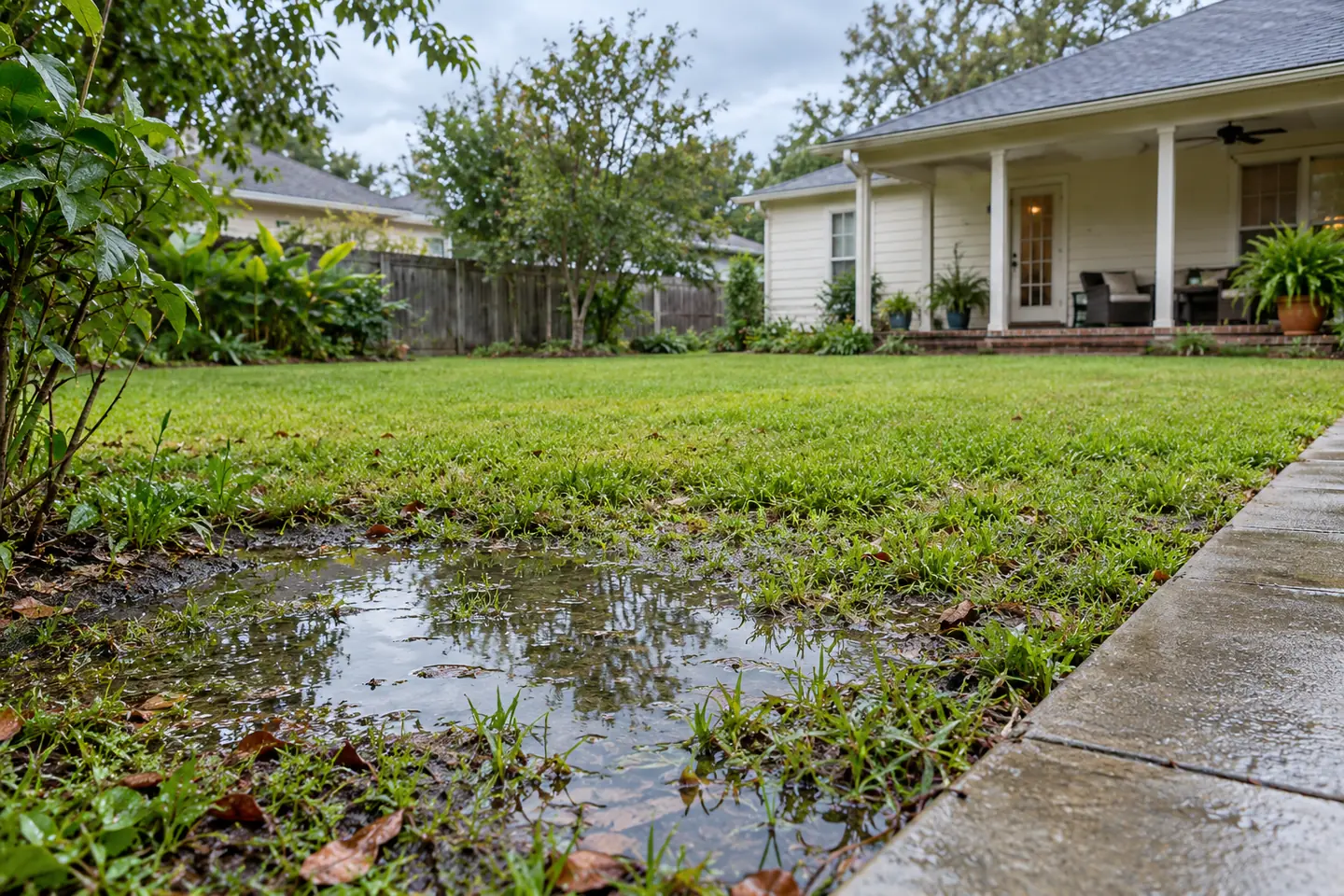
Suppose a defined observation point beside a roof outlet stays moist while the rest of the side lawn looks different. Preserve the outlet's location instead of moving the probe a little farther away and describing the replacement reading as a correction. The first point may accurately reflect a small area receiving extra water. The next question is how large that affected area is and whether the observation is relevant to the intended irrigation zone. A local result can be real and still be unsuitable as the sole basis for controlling a much broader patch. Keeping its position explicit helps an adviser make that distinction.
Give a surprising result one careful verification
If a reading seems inconsistent with the location's known history, check the instructions, device condition and observation record before acting. Do not immediately repeat the measurement in several easier spots and select the result you prefer. Ask whether the original method was suitable and whether a repeat at the same defined point would answer the question. Record a failed or unreliable reading as such. A verification is useful when it tests an identifiable concern about the observation. Repetition without a reason can create a long list of numbers while leaving the same uncertainty untouched, especially when each attempt changes the depth, position or soil contact.
Make a report that another person can interpret
Identify the device, location, depth, time and recent water history, then state the observation without adding an unconfirmed cause. A homeowner in Westwego can describe a consistently damp side strip more clearly by naming the same observation point on each date. Include the grass symptom and any nearby water source separately. A professional may decide additional checks are needed; the household record still saves time by preserving the starting conditions. Keep device details and photographs in the property file, while sharing only the relevant access or ground-condition information with the person arranging a lawn visit. Different roles need different parts of the same story.
- Save the device model and meaning of its scale.
- Identify location and intended depth for each observation.
- Record rain, irrigation and timing alongside the reading.
- Preserve inconsistent results rather than replacing them with guesses.
- Ask how the observation supports a particular decision before changing controls.
Tell Happy about the actual route
For a Happy Grass maintenance request, explain which area remains wet or soft and how it affects access. Ask about the available mowing, edging, trimming and finish at 504-339-3571. Soil-moisture equipment, thresholds and irrigation control work are separate responsibilities, not services promised by this page.