
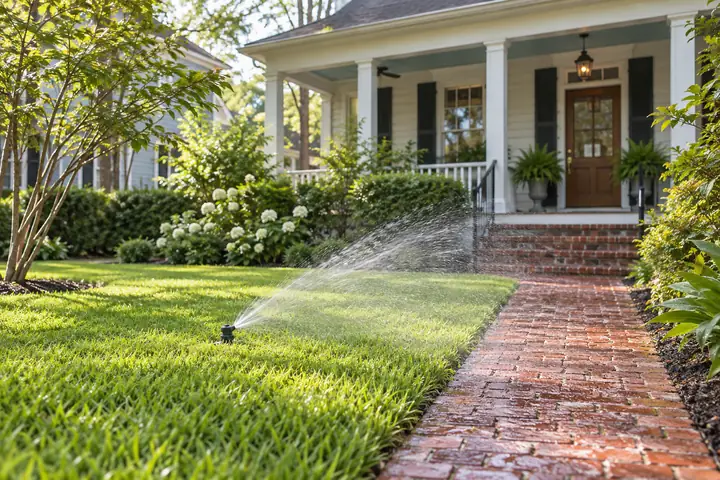
Watch the water rather than only the sprinkler head
A sprinkler can appear to operate normally while some of its spray drifts away from the intended lawn. The head may move, water may be visible and the timer may finish, yet the same edge receives less than expected. Observe the actual spray boundary from a safe dry position. Notice whether water reaches the turf, nearby paving or plants outside the intended area. A broad view is often more useful than a close photograph of a working head because it preserves the relationship between the equipment and the lawn. Do not conclude that the edge needs a longer run until that relationship has been examined. More operating time can mean more water landing in the wrong place.
Wind is a condition, not an equipment diagnosis
Record obvious wind direction and whether it changes during the event. A gust moving water toward the driveway is a useful observation, but it does not establish the condition of every component. Nor does a calm event prove the system will distribute water evenly under all weather conditions. Keep the event's context with any video or catch-cup comparison. An irrigation professional can use that information alongside the layout and equipment assessment. Avoid naming a failed part simply because the spray looked uneven on one windy afternoon. The observation tells you what happened. Determining why it happened, and what response is appropriate, may require checks that cannot be made from a distant view of moving droplets.
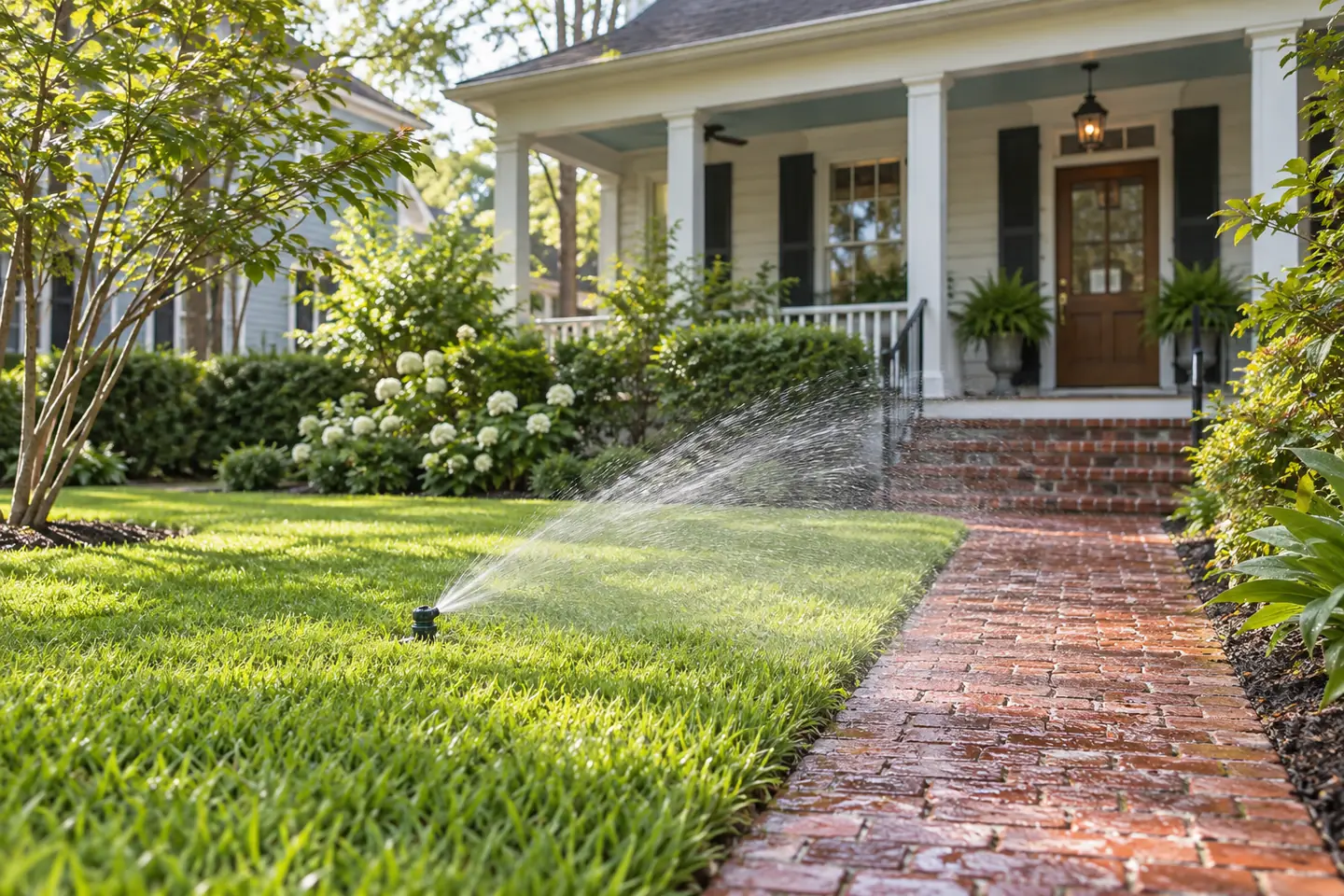
Mist can raise a pressure question without answering it
EPA WaterSense discusses pressure-regulated spray sprinkler bodies as a way to address excess operating pressure and its effects on spray performance. Fine mist can be relevant to that equipment question, but a photograph alone does not measure pressure. Do not adjust a home's water supply or substitute a nozzle based only on how the spray looks in sunlight. Describe the mist, the affected zone and the conditions under which it appears. Ask the responsible irrigation professional whether pressure or another equipment factor should be assessed. The distinction is practical: identifying a reason for a measurement is different from claiming the measurement has already been made and a repair has already been proven necessary.
Separate a drifting boundary from an obstructed boundary
A shrub, fence panel or temporary object can block spray even when the air is still. Look for an obstacle between the source and the missed area, and record whether it was present during the event. Do not prune a plant, move a permanent structure or redirect a head without the appropriate authority and assessment. A low catch-cup reading behind a newly placed chair and a low reading on an exposed windy edge may call for different investigations. Keep those possibilities distinct rather than treating every uneven patch as wind damage. The property layout and the weather can interact, but neither should disappear from the record because the other offers a convenient explanation.
Use a stable viewpoint for a short useful video
Choose a position that shows the sprinkler, the intended edge and where the drifting water goes. Stay clear of moving equipment, slippery paving and traffic. A short recording can capture a gust or a shifting spray boundary more effectively than several isolated photographs. Save the time, zone and general weather conditions in a note. Do not add arrows or labels that imply an unconfirmed cause to the only copy of the recording. Keep the original available for review. The goal is to make the event understandable to someone who was not standing beside you, not to create a dramatic clip that proves a theory before the system has been examined.
A coverage comparison needs its weather history
If cups or gauges are used under an appropriate procedure, record whether wind changed their collection pattern. Preserve individual positions and readings rather than only an average. A later comparison under different conditions may be informative, but it should not silently replace the earlier event. Keep both with their context. Do not borrow a rate measured in calm conditions and assume every windy run applies that depth evenly across the lawn. The amount discharged, the amount collected at a location and the amount used by the plant are related but different questions. A useful irrigation review can consider them together without treating one number as a complete description of the whole watering event.
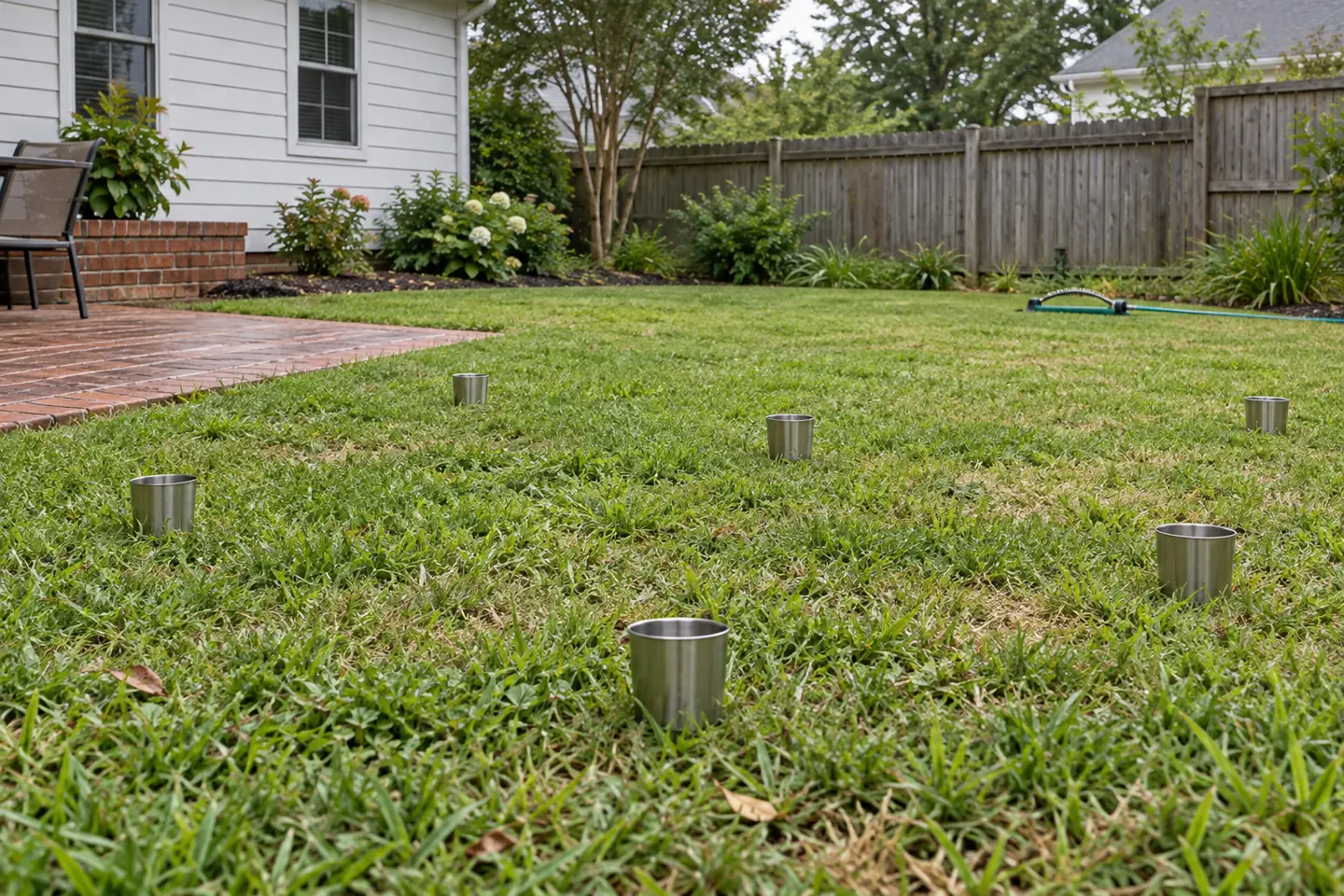
Longer runtime can conceal a distribution problem
When the center stays green and an exposed edge looks dry, adding minutes to the whole zone may make the visible contrast less obvious while over-supplying another area. That is not a reason to withhold water indiscriminately either. Ask for the distribution and the lawn's needs to be reviewed together. Keep any plant-health concern separate from the spray observation. A pale strip could involve more than inadequate irrigation, especially where soil, traffic or grass identity differs. The owner's record should show the missed spray footprint and the turf condition independently. That gives the adviser a chance to assess both rather than being asked to confirm a timer change already chosen as the answer.
Timing can help, but it is not a repair certificate
General watering guidance often favors calmer periods because wind can move spray away from its intended target. The actual conditions still matter on the day in question. Moving a schedule does not establish that nozzle selection, pressure, spacing or coverage is suitable. If a provider changes timing, save the reason and ask what observation should prompt a further review. Do not claim the system is repaired merely because the next event occurred without a visible gust. A successful adjustment has a defined purpose. It should be understood in relation to that purpose, while any unresolved equipment or layout question remains clearly identified.
Protect neighboring areas from an improvised response
Redirecting a portable sprinkler away from wind can send water onto a shared walk, a neighbor's planting or an area with different needs. Review the intended boundary before moving it. Keep hoses and equipment from blocking access, and follow the device's operating instructions. If a safe suitable arrangement is not available, ask for an appropriate watering plan rather than improvising an unattended setup in a new location. The point is to keep water serving the intended lawn without creating another access or overspray problem. A change that makes one edge look better can still be unsuitable if it simply transfers the unwanted water somewhere else.
Compare changes without losing the original layout
If an authorized adjustment is made, save the earlier sprinkler position, equipment description and observed conditions alongside the new event. A different spray footprint may reflect the adjustment, a calmer day or both. Identify what changed instead of attributing the whole difference to the last action. A portable sprinkler moved several feet and observed under different wind is not a controlled comparison of one factor. It can still provide useful household information when the limitations are stated. This habit makes follow-up conversations more accurate: the adviser can see the sequence of layouts and events rather than receiving only the latest clip with a statement that everything is now fixed or still wrong.
Explain the finding in a focused assessment request
Name the zone or portable sprinkler position, the edge that is missed and the observed destination of the drifting spray. Add whether mist appeared consistently or only during a particular event, and whether obstacles were present. A homeowner in Algiers can provide that description without promising a pressure reading or diagnosing a defective head. An irrigation professional can decide which measurements and checks fit the concern. Keep the final recommendation with the original observations so the household understands how the response was selected. That makes it easier to revisit the issue later if conditions change, rather than starting again with a vague message that the lawn still needs more water.
- Show the intended lawn boundary and actual spray footprint.
- Note wind, mist and obstructions as separate observations.
- Preserve collection locations and weather during coverage checks.
- Avoid adjusting supply pressure or permanent equipment from a photograph.
- Keep any timing change connected with its stated purpose and limits.
Coordinate the lawn visit without taking over the system
Tell Happy Grass about active spray, wet walking routes and equipment left in the mowing area. Discuss the agreed mowing, edging, trimming and finish with Happy at 504-339-3571. Pressure testing, sprinkler design and irrigation repairs are separate equipment work, not part of this educational guide.