
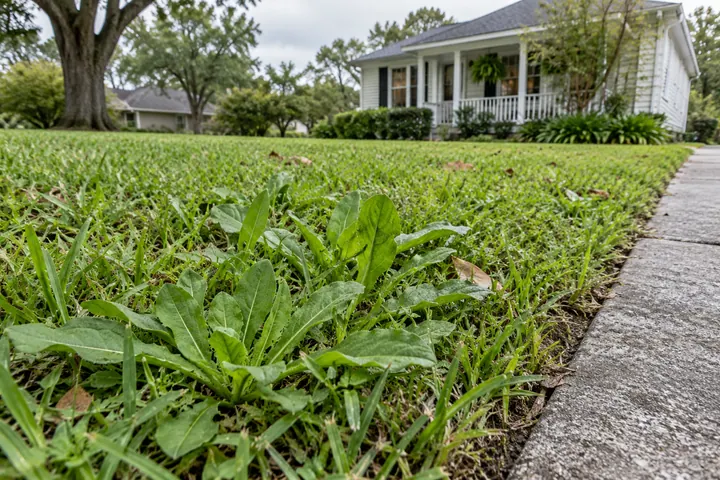
A flat patch can be easy to miss from the porch
From across the yard, you may see an ordinary green lawn. Beside the walk, a group of broad leaves suddenly looks different from the narrow grass around it. The leaves may seem pressed close to the ground while slender stalks rise above them. Before describing the whole yard as overgrown, look at those two layers separately. The height of a stalk and the position of the low leaves are different features. Each can affect what you expect to see after a maintenance visit.
This distinction matters when your request is to make the yard look even. Cutting visible height does not necessarily remove a low-growing plant. A useful conversation begins with what is present and what result you want, rather than asking for a lower cut without explaining why. Happy Grass can review the surrounding mowing, edging, weed-eating and blowing scope. Identification of an unfamiliar plant may need an appropriate Extension adviser, especially when the photograph does not show the features clearly.
What the plantain background contributes
UC IPM describes broadleaf plantain as a perennial with oval leaves arranged in a basal rosette, noticeable lengthwise veins and upright flowering stalks. It explains that plantains grow from a crown close to the soil surface, which helps them persist after mowing. Those features explain why a plantain question is more specific than a general complaint about tall weeds. They do not confirm the identity of every broad leaf beside a sidewalk. Other plants can resemble part of that description.
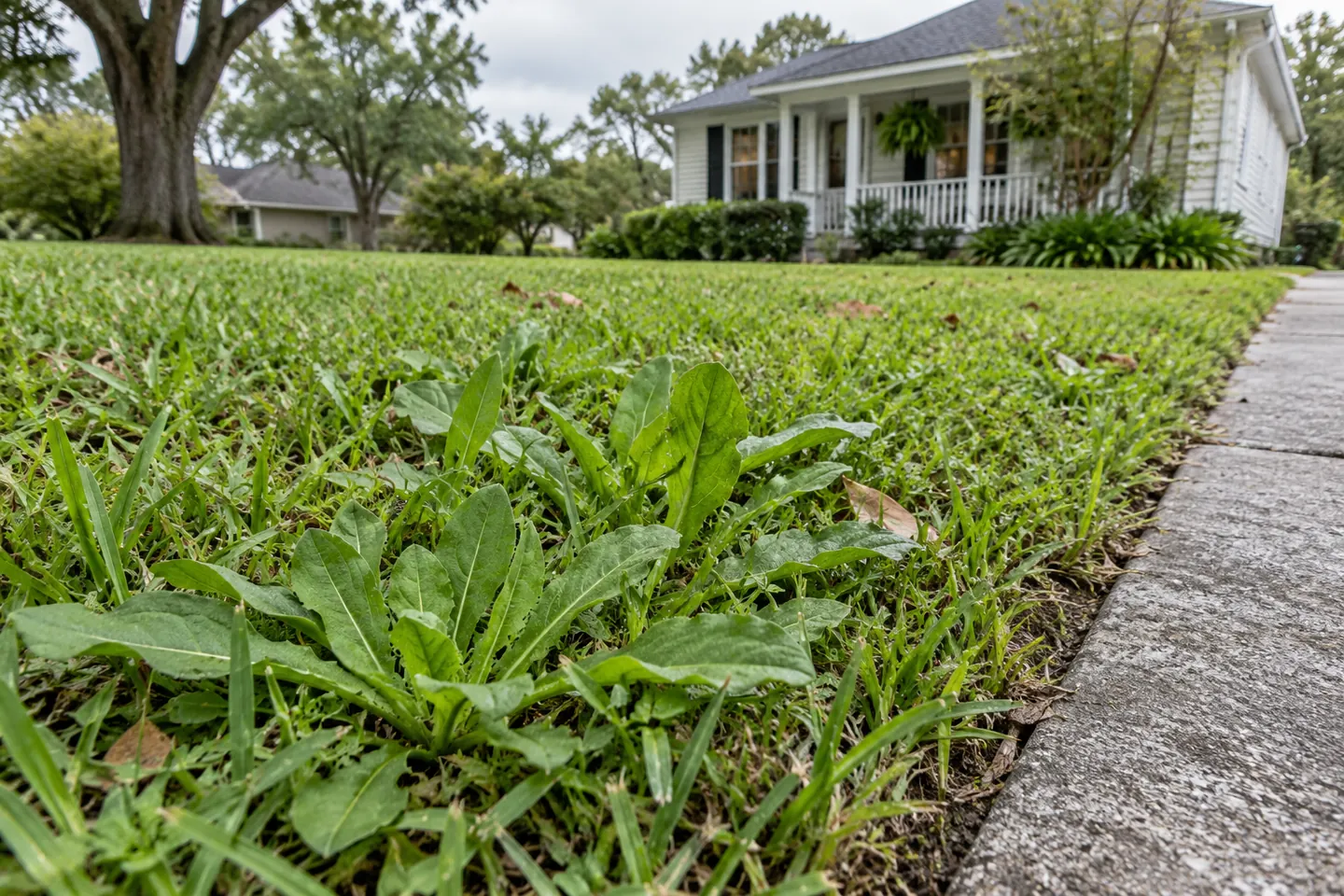
Use the whole plant structure as a question for identification rather than relying on one detached leaf. A clear leaf image, a view of the base and a wider location photograph can help explain what you mean. Keep any uncertain name qualified until someone with suitable evidence confirms it. The yard image accompanying this guide provides a general rosette-and-grass setting. It is an original editorial illustration, not a scientific identification plate, a verified specimen or a photograph of a customer job.
Compare leaf shape with the way the plant is arranged
Begin with a view of the plant as it stands. Are several leaves clustered around one low center, or are leaves attached along a spreading stem? If the base is hidden, say that you cannot see it. There is no need to tear apart the lawn to produce a more convincing answer. A photograph that honestly shows an obscured base can still help an adviser decide what additional view is needed. An incorrect description of the growth pattern can send the conversation in the wrong direction.
For the leaf detail, try to show the outline and visible veins in the same image. Avoid folding the leaf or placing it over another plant just to improve the background. If it has already detached, explain that it is detached and retain the original location image. A leaf found loose on paving should not be presented as though you watched it grow from the rosette you photographed. Keep those small distinctions intact so the evidence remains useful when shared.
Describe the stalk without making it the entire problem
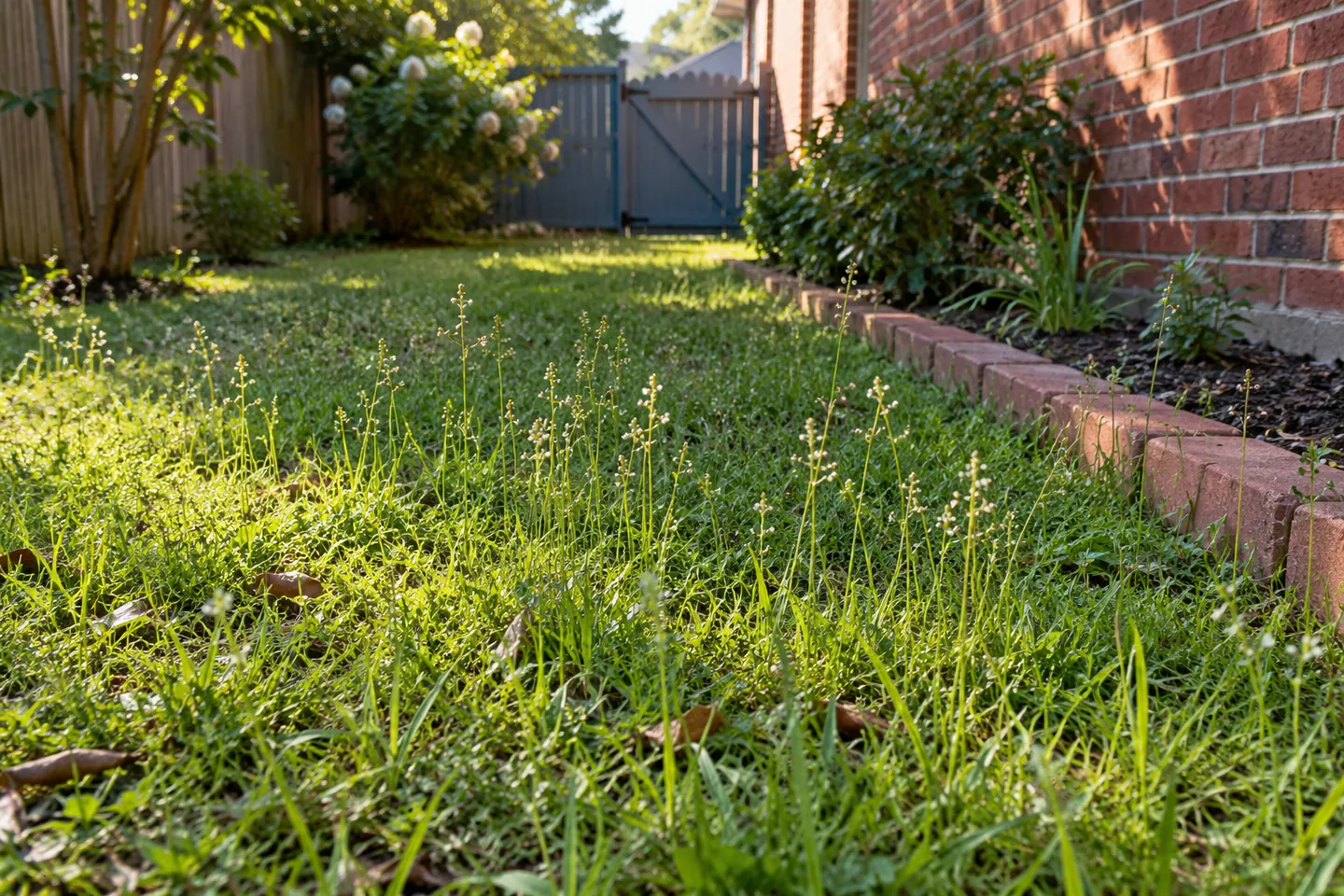
A stalk can attract attention because it rises above an otherwise tidy lawn. Record whether you can trace it to the same low plant or whether that connection is unclear. The presence of several tall stems does not automatically describe the condition of all the grass beneath them. Give the surrounding grass its own description. This lets Happy discuss the actual maintenance request instead of guessing whether you want a general cut, a border review or help clarifying a plant concern.
If the stalk was removed before you asked for identification, do not recreate its appearance from memory as though it were a current photograph. State what you remember, label it as a recollection and provide what remains visible now. A specialist may be able to work with that information or may ask for a later observation. Either way, the record should distinguish a feature that was photographed from one that was only noticed briefly before the visit.
Map separate rosettes rather than calling everything one mat
A cluster of low plants can look like a continuous patch when viewed from above. Use a wider photograph to show whether it is a few distinct centers or a broad area whose structure is difficult to separate. Name the location with a stable landmark, such as the first straight section of walk beside the gate. That is usually more useful than an unsupported estimate of how many plants cover the entire property. You can improve the location record without conducting a detailed plant survey.
If a similar-looking plant appears elsewhere, give it a separate note. The shady side path and the open front lawn may deserve different observations even if both contain broad leaves. Do not assume they share an identity or cause simply because the plants look green and low. Keeping locations distinct also helps when a professional requests a sample or when you want a specific area discussed for the next maintenance visit. One clearly labeled patch should not silently become the whole yard.
Keep soil explanations separate from plant identification
It is tempting to treat an identified weed as a complete soil test. A plant may be associated with certain conditions in reference material, but its presence does not provide a measured result for your property. If you are concerned about the soil, decide which question needs testing and speak with the appropriate service. Do not report a pH value, a nutrient deficiency or a compaction diagnosis solely because a rosette appeared beside the walk. Those are separate findings that require suitable evidence.
Your practical notes can still describe observable context. Record whether the plant sits in a frequently used route, near a downspout or at a thin lawn edge. These details help someone understand the setting without establishing why the plant grew there. If another person suggests a soil explanation, retain it as a suggestion and ask how it could be checked. A careful distinction between observation and measurement makes later decisions easier to defend and easier to revise when better information arrives.
Explain the result you want from mowing
For a maintenance request, describe whether the concern is the tall stalks, the low leaves or the overall appearance of the surrounding grass. These are different goals. A shorter-looking lawn after cutting should not be described as eradication of an established plant. Likewise, low leaves remaining visible do not automatically mean the agreed mowing task was missed. Ask Happy to review the site and clarify what the proposed work can actually address before accepting a scope built around an ambiguous instruction.
Avoid turning an ordinary cut into a request to scalp the lawn in pursuit of the rosette. Discuss the grass species and current condition to the extent they are known, and keep plant-control questions separate from height alone. This guide does not choose a herbicide, prescribe a removal method or offer a treatment schedule. If a different service is proposed, confirm who provides it and what is included. A familiar service name is not enough to establish an unspoken promise about the plant's long-term presence.
Compare the same place after the visit
Return to the original location view when you assess the finish. Record what changed in the grass height, the stalks and the low foliage using separate sentences. This helps you compare the actual work with the agreed request. Do not use a new close-up from a different corner as proof that the original area was unaffected. If the comparison is difficult because the light or angle changed, acknowledge that limitation instead of making a precise claim about the number or size of plants remaining.
If you have an identification reply, save it with the original photograph set and its date. A later maintenance discussion can then use the confirmed name without rewriting the earlier uncertain record. Should a different-looking rosette appear, give it a new entry. This approach keeps a useful history while avoiding the assumption that every low broadleaf plant has the same identity. A tidy yard and a reliable plant record can develop together without either one pretending to be a complete diagnosis.
Bring a small, clear record
- Keep the low center, a leaf detail and any attached stalk identifiable in the photo set.
- Describe the surrounding grass separately from the broadleaf plant.
- State the visible maintenance result you want discussed before assuming complete plant removal.
You do not need a botanical vocabulary to ask a useful question. Plain descriptions such as oval leaf, low center and tall stalk are enough when accompanied by honest photographs. Let the identification professional supply the confirmed name, and let the maintenance agreement define the work. That division gives each conversation a practical purpose and reduces the chance that an ordinary lawn visit is judged against an outcome nobody actually promised.
Ask Happy about the surrounding lawn work
Call 504-339-3571 and ask for Happy to discuss the lawn area and requested maintenance. Happy Grass serves Harvey, Marrero, Gretna, Algiers, Belle Chasse and Westwego. Fertilization, aeration, overseeding and pest-control services are not offered. Any additional weed-control question requires a clear discussion of the actual available scope; do not assume a treatment is included in mowing.