
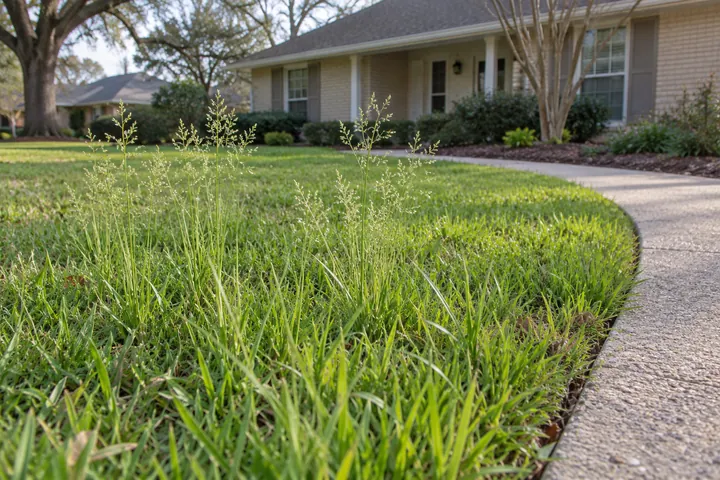
The lawn can be short while a different grass draws the eye
You look over a recently maintained yard and notice pale tufts that seem to interrupt the finish. Some carry little branching heads above the leaves. That can feel like uneven mowing, but it is useful to describe the leaves, seed heads and surrounding lawn separately before deciding why the area looks different. A visible stalk does not automatically tell you the height of the lawn beneath it. The first useful question may concern which grass is growing there.
Annual bluegrass is one possible subject when a cool-season clump contrasts with a warm-season lawn. It should not be assigned to every light-green patch. A maintenance review needs the current site condition and the outcome you want discussed, while identification needs suitable plant evidence. Keeping those requests distinct lets you ask about the visible finish without assuming that a different cut will identify or eliminate the contrasting grass. Happy Grass can help clarify the actual maintenance scope.
What the Louisiana description contributes
LSU AgCenter describes annual bluegrass as a cool-season annual that forms clumps. Its leaves can look yellow-green, with folded blades and boat-like tips. The branching flowering structures carry small pale spikelets. LSU also notes tolerance of very low mowing, which helps explain why simply cutting shorter is not a reliable answer to its presence. These are useful identification clues, but they should be evaluated together on the actual plant rather than inferred from a pale color alone.
If the details are difficult to see, use a neutral description such as pale clump beside the curved walk until an adviser can assess it. The yard illustration here shows mixed grass heights and small heads in a general residential setting. It is not a verified annual bluegrass specimen, a demonstration of species-specific behavior or a photograph of a customer lawn. An identification request should use the evidence from the plant you actually observed.
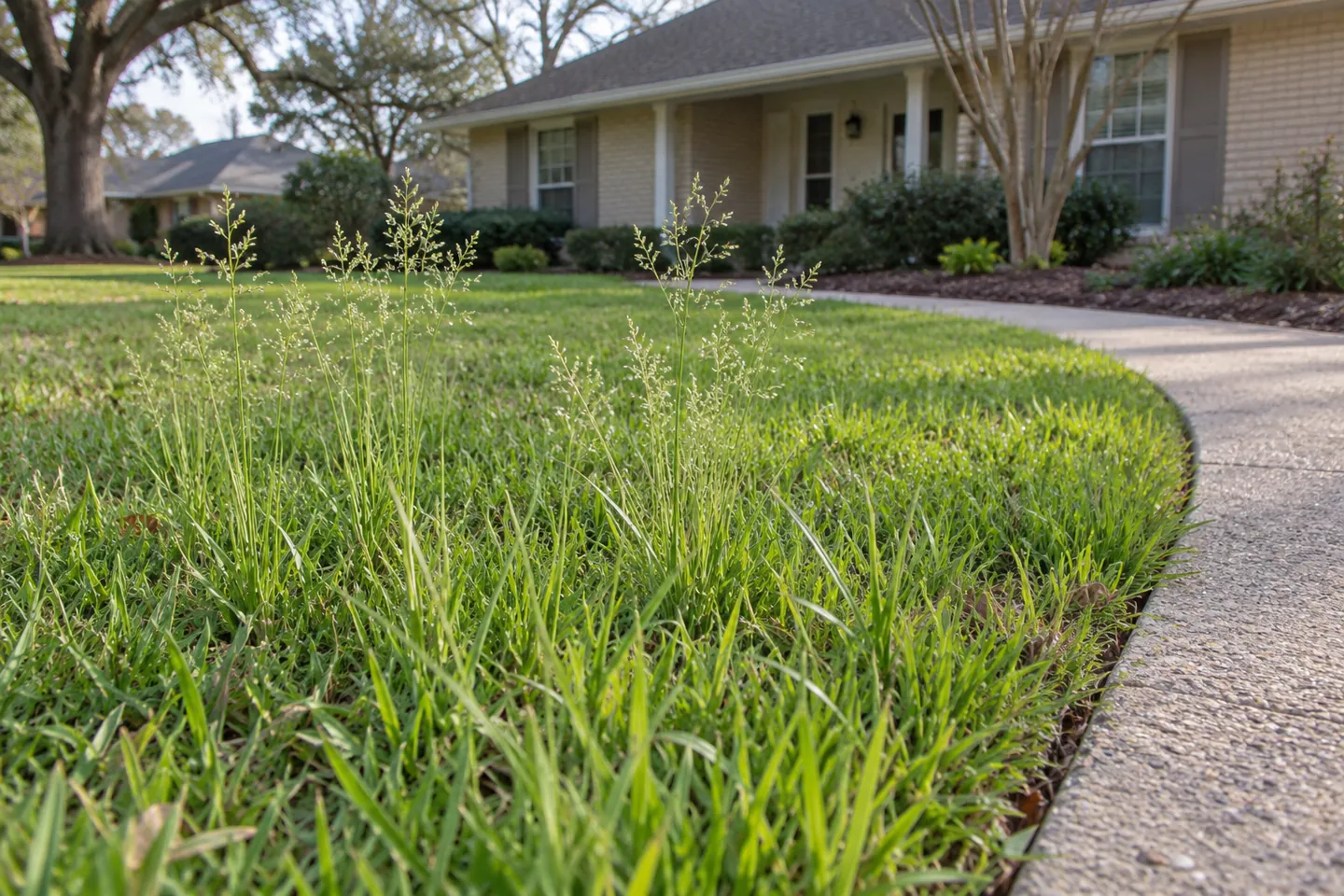
Photograph the clump from its base to its head
Begin with a wider view that shows the clump in relation to the surrounding lawn. Then try to obtain an attached leaf and an intact head in separate close views. The connection between the base, leaves and stalk matters. A head found loose after mowing should be labeled as loose material, not silently presented as a feature still attached to the photographed clump. If several grass types are interwoven, explain that the connection is uncertain rather than selecting whichever parts look most convincing.
For the leaf tip, keep as much of the blade in the frame as you can clearly resolve. A tiny enlarged crop may look sharp without showing enough structure to help identification. Retain the original file and ask whether the reviewer needs a different angle or specimen. You do not need to dig out a patch or dismantle the lawn just to begin the question. A careful initial set can establish what remains to be seen before any collection is considered.
Describe the contrast within the same photograph
Photograph the pale area and nearby grass under the same light when practical. Two photographs from different times of day can make ordinary color differences appear much greater or smaller. Note whether the contrast is obvious to the eye or primarily visible in the image. Avoid using a color filter to make the pale patch stand out. The adviser needs an accurate record, not a more dramatic version of the difference that first caught your attention.
Keep texture and color in different sentences. A fine upright tuft can be structurally different from surrounding broad blades even when both look green. A color difference can also be noticeable without an obvious texture change. Describing those observations separately makes the question more useful. It prevents the word patch from becoming shorthand for several features that may not all share the same explanation. If the lawn contains known mixed species, include only the identifications you can support.
Keep seed-head height out of a blade-height argument
When discussing the finish, say whether the concern is the flowering heads or the leaves below them. A photograph taken at a low angle can emphasize stalks that are less prominent from the usual standing view. Include both perspectives if they explain your concern. Do not use the tallest isolated structure as the height of the entire lawn. An appropriate mowing discussion needs to account for the grass that is actually being maintained, rather than a single conspicuous stem.
If you recorded a height, state which plant part was measured and where. A number without that context can lead to an argument in which two people are describing different things accurately. Happy may be discussing the surrounding grass while the homeowner is pointing to a flowering head. A clear description of the measurement resolves that confusion more effectively than demanding an arbitrary lower setting. Identification and maintenance expectations can then be addressed on their own terms.
Record the cool-season timeline honestly
Write down the first supported observation of the contrasting clump, whether heads were present and whether the surrounding lawn was actively growing in your view. Do not turn a reference's general seasonal description into a claim that the plant appeared on a particular date at your address. If an older photograph shows the same location but lacks enough detail for identification, retain it as a location record and explain its limits. It may still help establish when the contrast became noticeable.
Note actual cuts and other documented yard work between views. If the clump looks different after a visit, describe the change without immediately assigning a cause. A sequence can show shortened leaves, fewer visible heads or a different contrast with surrounding grass. Those are observations. Whether the plant has been controlled, whether its identity is correct and why its appearance changed are additional questions for suitable evaluation. Keep the record useful by preserving that distinction.
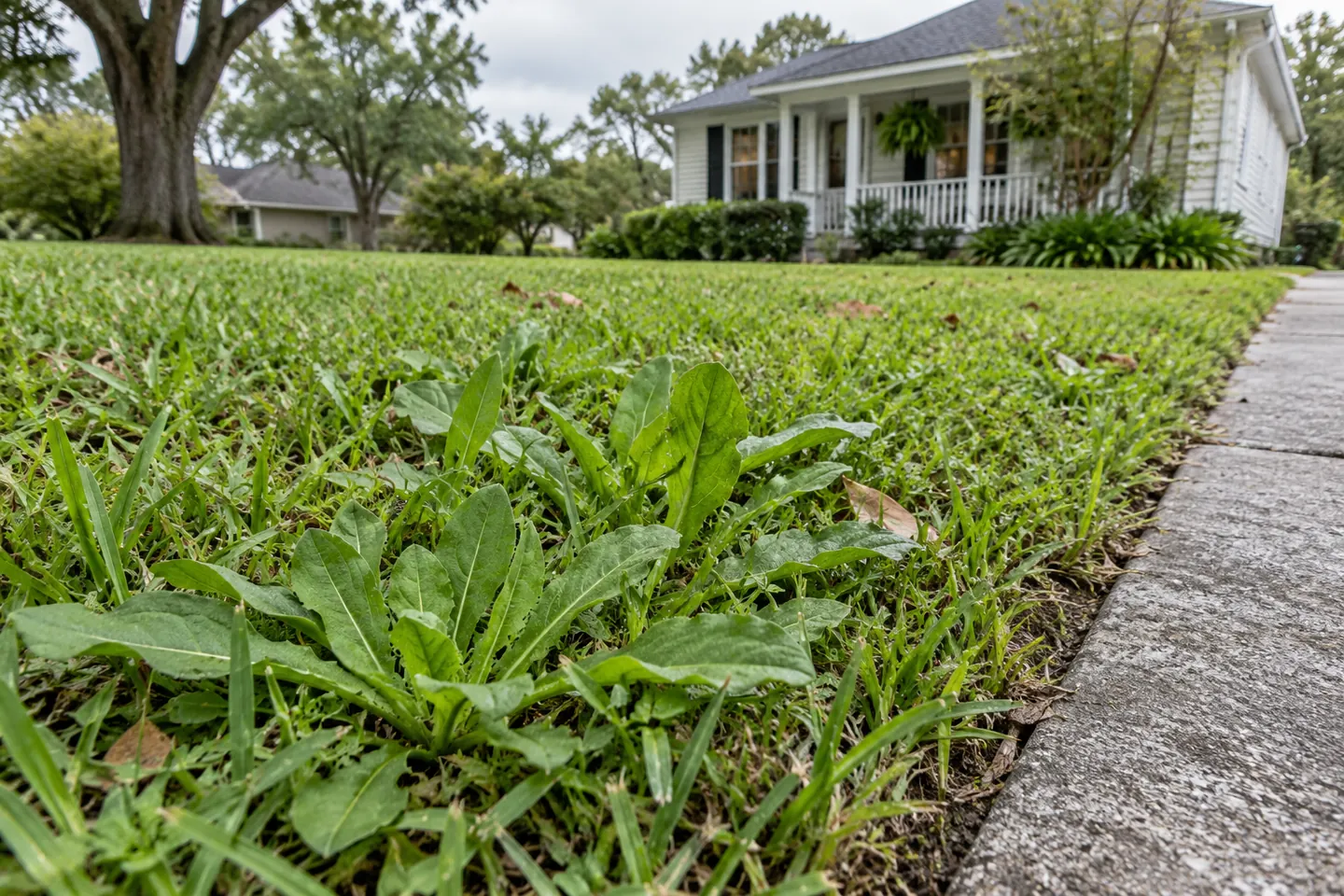
Do not treat one clump as the whole lawn
If pale tufts occur in several places, give each location a simple identifier and note which was photographed closely. The one beside the front walk may not represent the plant at the rear fence. An adviser can decide whether the evidence supports connecting them. Until then, avoid filing every grassy difference under one confirmed name. This is especially helpful when a yard contains multiple textures or when a narrow curbside strip has a different maintenance history from the main lawn.
For the work request, explain which areas remain in scope even while identification is pending. A concern in the front strip does not tell Happy what you intend for the backyard or side passage. A simple map or labeled wider photograph can keep those decisions clear. If a small section is to remain undisturbed for an adviser, agree on the boundary rather than placing an unexplained object in the grass and assuming its purpose will be obvious.
Ask the right question before changing the routine
If you want to know what the pale clump is, ask for identification with the connected plant evidence. If you want the lawn finish reviewed, describe the visible difference and the actual maintenance agreement. If you want advice about managing a confirmed species, speak with an appropriate adviser and confirm any service arrangement separately. These questions can be related without being interchangeable. A successful identification does not automatically authorize every treatment mentioned in a reference article.
This guide does not supply herbicide names, rates or application timing. Do not copy a seasonal treatment date from another location into a maintenance request and assume the provider has agreed to perform it. Happy Grass does not offer fertilization, aeration, overseeding or pest-control services. Any additional weed-control discussion must clarify what is actually available and included. The ordinary mowing conversation should remain grounded in the lawn's present condition and a confirmed work scope.
Evaluate a maintained appearance without declaring a cure
After a visit, compare the same clump and surrounding grass from the original reference position. Record whether leaves, heads or both look different. Keep an identification reply with the matching image set so the confirmed name is not applied to a different tuft by accident. If the evidence was inconclusive, preserve that wording. A lawn can receive appropriate maintenance while a plant question remains unresolved; neither outcome needs to be overstated to make the work useful.
If a later observation raises a new concern, state what changed and what decision you now need help making. It may be another identification view, clarification of the mowing expectation or review of a separate area. Repeating the phrase uneven cut without the new detail can obscure progress already made. A specific follow-up keeps the discussion focused on a visible remaining issue rather than requiring everyone to defend a conclusion that the evidence never established.
A clearer seed-head record
- Identify which photographed structures are heads and which are leaf blades.
- Keep a same-light comparison with the surrounding grass.
- State the location and plant part behind any height measurement.
- Distinguish a maintenance finish from a claim about long-term plant control.
These details can turn an initially frustrating contrast into a practical discussion. You do not need to identify the grass yourself before asking for help, but an accurate description makes the next answer more useful. Keep the plant evidence and the requested lawn outcome connected without expecting either one to stand in for the other.
Discuss your lawn with Happy
Call 504-339-3571 and ask for Happy about mowing, edging, weed-eating and blowing. Explain the clump's location and the visible finish you want reviewed. Confirm the actual service and availability before arranging a visit; a species name or seed-head photograph is not itself an agreement for treatment or removal.