
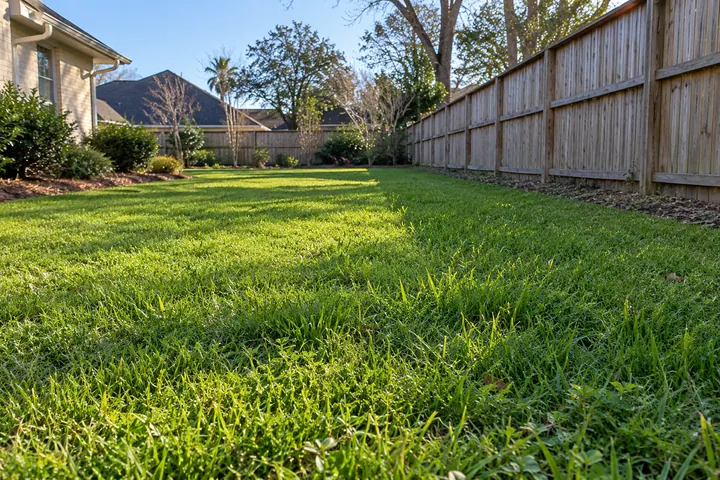
Start with the question of intent
A bright green area in a cooler-season lawn can prompt two very different requests. One homeowner wants the temporary green cover maintained. Another wants to understand an unfamiliar grass that has appeared among the existing turf. Before anyone discusses a cut, work out which question applies. The appearance alone does not reveal the property owner's plan, and a remembered seed purchase does not prove which plants are present today.
LSU AgCenter describes annual ryegrass as a cool-season grass used in Louisiana for temporary cover. Its identification profile includes glossy, pointed leaves, a single flower stalk with alternating flower groups and growth from basal tillers rather than spreading aboveground or underground stems. That limited background helps explain what evidence an identification review might need. It does not establish that the grass in your photograph was planted intentionally, or authorize any new lawn service.
Separate the current lawn from the remembered project
Start with records rather than a confident family recollection. If someone arranged a landscape project or purchased seed, look for the date, the product identity and the area covered. A label or receipt can describe what was bought; it cannot certify every plant now growing across the property. Keep those two forms of evidence separate. That makes a later conversation about unexpected grass much easier to follow.
If the history is unavailable, write that down plainly. A new resident may know only that the front yard was green at move-in. A renter may have no permission to change the lawn. A relative may remember a winter project without knowing who performed it. These are normal information gaps, not reasons to invent a planting story. Happy Grass can discuss a maintenance request more clearly when the uncertainty is visible from the start.
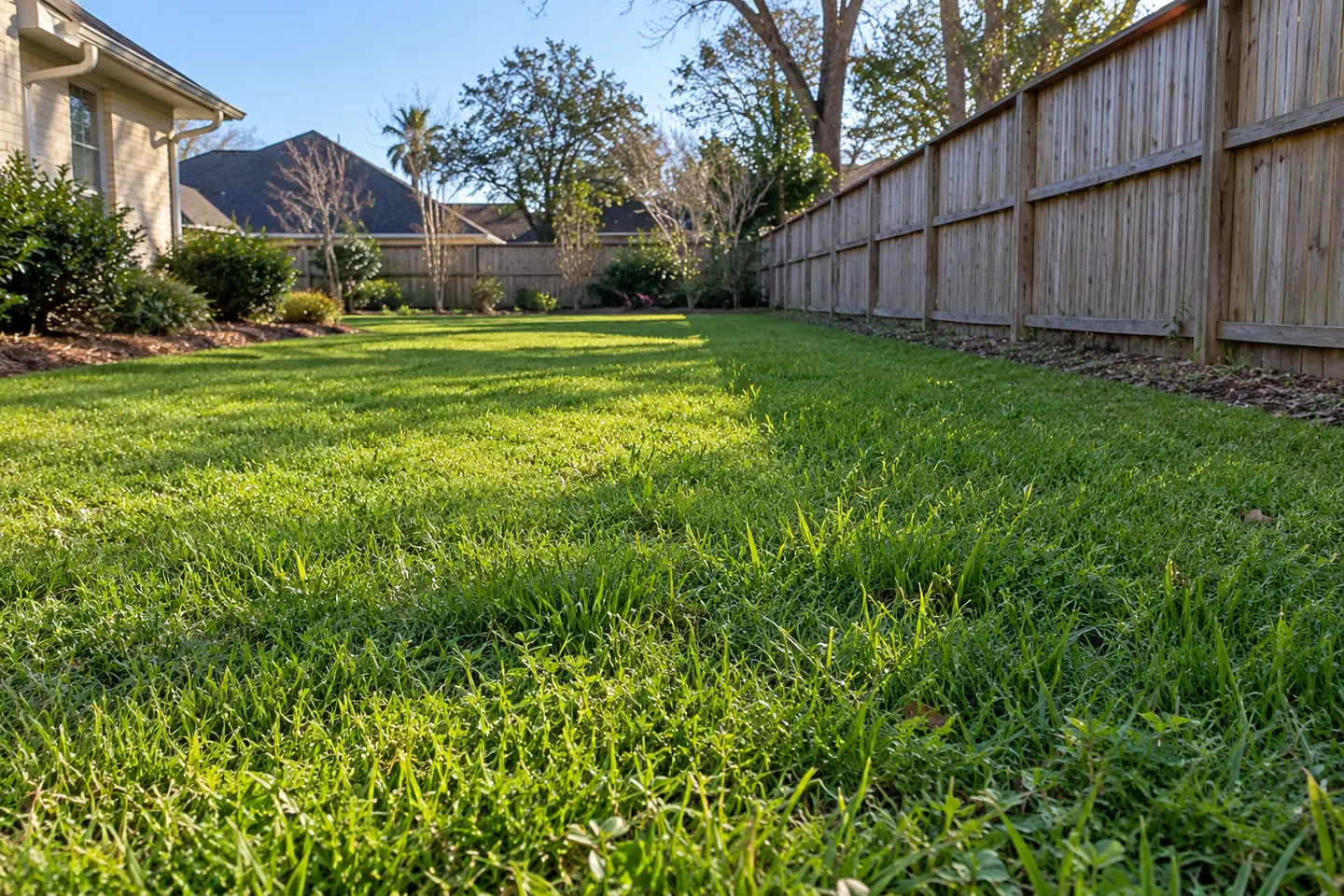
Map the areas that have different expectations
Draw a simple boundary around the area under review using property features you can identify. The front lawn between the driveway and entry walk may have a different history from the strip behind a side gate. Do not join them into one task merely because the grass looks similar in a distant photograph. Different areas can have different permissions, access conditions or expectations even before species identification enters the discussion.
For each area, state whether you want its present appearance maintained, its contrasting texture reviewed or its identity clarified. Those are distinct goals. If different household members have different preferences, resolve that before a visit becomes an attempt to satisfy incompatible instructions. A clearly approved maintenance boundary is more useful than a general request to make everything match a photograph of a different lawn.
Photograph glossy leaves without letting glare become the evidence
A reflective leaf surface can look very different as the phone angle changes. Take a view that shows the leaf itself, including its outline and attachment, rather than only a bright stripe of reflected sky. Compare nearby grass in the same lighting. A dark picture from the rear lawn and a sunlit picture from the front do not create a fair color comparison, even if they were taken only minutes apart.
Keep any head connected to its supporting stem in the frame when it is available. If no useful head is present, do not substitute one found in a pile of cuttings without explaining that it was loose. The reviewer needs to know which parts belong together and which connections remain unobserved. A practical photo set can be short as long as the missing information is named honestly.
A planting label is evidence of a purchase, not a lawn-wide diagnosis
Save the label if one exists, but resist reading it as a complete current plant inventory. A packet can contain useful names and dates while leaving many questions unanswered: which area received it, whether another product was also used and whether unrelated plants occupy the same space. A photograph of the label should accompany a location description, not replace a clear view of the living grass.
If you are gathering information for a family member, ask permission to share the relevant lawn record and omit unrelated account or payment details. The helpful part is the plant information and the project boundary. A full invoice with private financial material is unnecessary for an ordinary finish discussion. Keep the evidence focused on what a person needs to answer the lawn question.
Describe the contrast you want managed
The concern may be a faster-looking section, a brighter color, a taller flowering structure or a texture that differs from the rest of the yard. Name the contrast without assuming its cause. For example, say that the front-left section looks taller from the entry walk on a particular date. Avoid saying that every tall blade proves one species has taken over unless an appropriate review actually supports that conclusion.
An overall height difference and an isolated flower stalk are also different observations. Photograph the feature that determines your impression of the lawn. If the concern is the view from the street, include that view. If it is an uneven transition beside a path, give the transition its own frame. This helps a maintenance conversation stay connected to the visible result you care about.
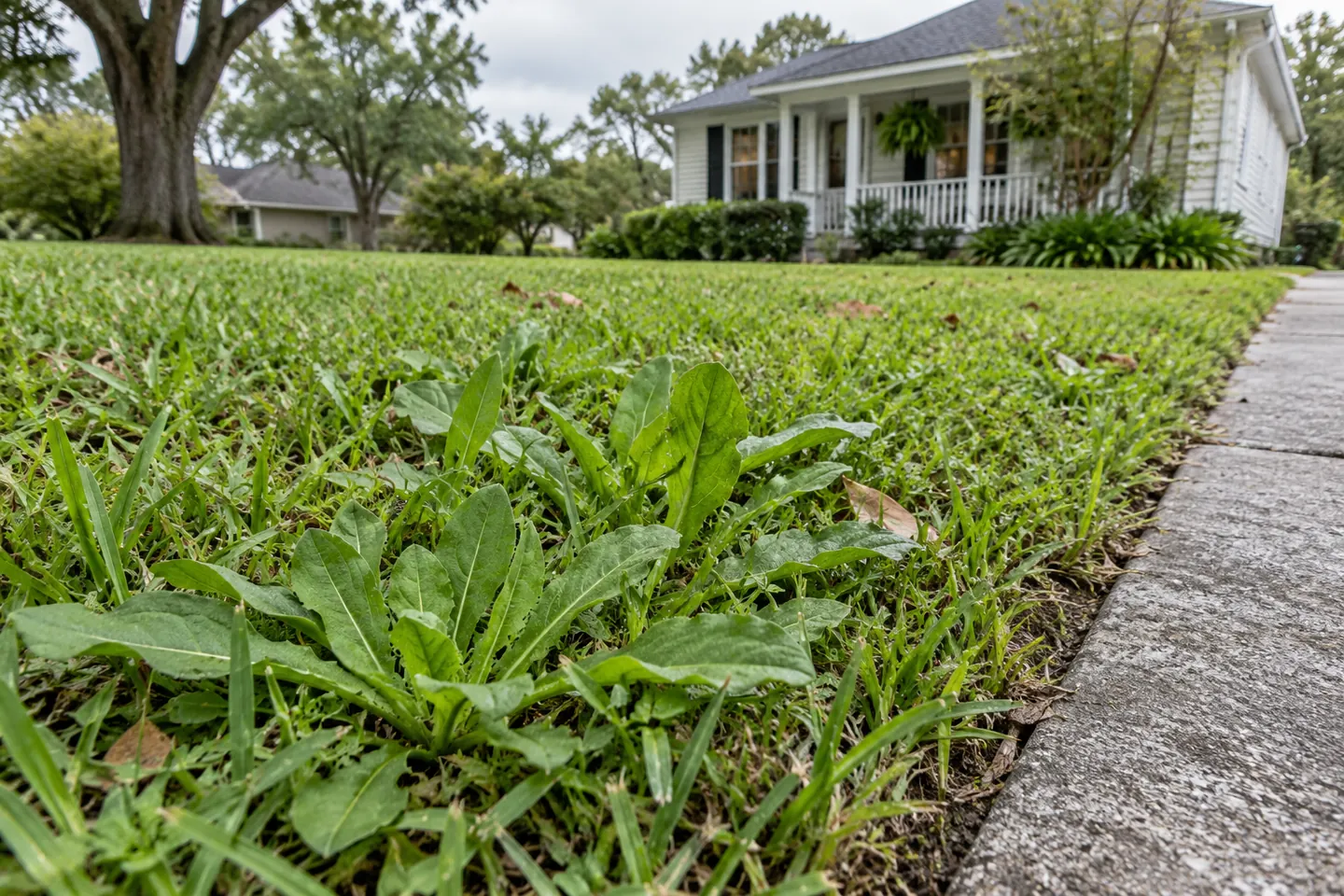
Agree on a finish for the grass that is actually there
A request for one uniform number can sound simple while hiding a mixed lawn. Ask for the grass composition and the proposed finish to be considered together. The suitable approach should not be inferred from a generic calendar or from the fact that a lawn was cut a certain way at a previous address. Your evidence should explain the present surface, not force it into a remembered routine.
Do not translate a species article into an instruction for Happy Grass to plant, feed or treat the lawn. Those activities are outside the routine maintenance discussion here. A source can help explain plant characteristics without expanding the service scope. Confirm which of mowing, edging, weed-eating and blowing is being proposed, where it applies and what visible result will be reviewed after the work.
Plan the next observation before the appearance changes
If the lawn has a documented temporary-cover history, keep that history with the current photographs. Choose a repeat viewing position at the boundary between contrasting sections. Record the dates of observation and the dates of any known maintenance separately. This does not predict what the grass will do next; it gives you a way to discuss changes without relying on a vague memory of the whole yard.
When a difference becomes noticeable later, identify what actually changed in the record. Perhaps a section is less green, the head is now visible or the contrast from the walkway has become less obvious. Avoid calling every change an improvement or failure before comparing it with the agreed goal. A temporary planting history can matter, but it should not become a blanket explanation for every new lawn concern.
Use a handover note when responsibility changes
Tenants, relatives and property caretakers often inherit a lawn routine without its original reasoning. A short handover note can state the known grass history, the areas covered, the authorized decision-maker and the maintenance boundary. Label uncertain details as uncertain. The next person should be able to distinguish a confirmed instruction from something a neighbor once suggested during a driveway conversation.
- Name the person authorized to approve changes to the lawn request.
- Keep the known planting date and the date of the latest observation separate.
- Identify any front and rear areas with different instructions.
- Record the current finish request in ordinary language.
This is especially helpful when arranging care from another location. Clear instructions reduce the temptation to make a new decision from an isolated picture. They also make it easier to ask Happy a focused question about the next visit without rewriting the property's history.
Bring the unanswered question to the conversation
You may finish your review knowing the task boundary but still not knowing the grass name. That is a useful place to be. Explain whether identification, routine appearance or permission is the unresolved issue. Ask what information would make the next answer more reliable. A candid question about one uncertain section is easier to address than a confident instruction built around an unverified species label.
For a Westwego, Gretna or Algiers lawn, the practical goal is a maintenance arrangement that reflects the present yard and the owner's intentions. Keep the planting record, the visible contrast and the agreed work connected. None of those requires pretending that a photograph can establish everything about a mixed lawn in one glance.
Ask Happy about the next routine visit
Call 504-339-3571 and ask for Happy. Describe the mixed lawn, the known temporary-cover history and the area authorized for mowing, edging, weed-eating or blowing. Confirm availability and the specific work before arranging service.