
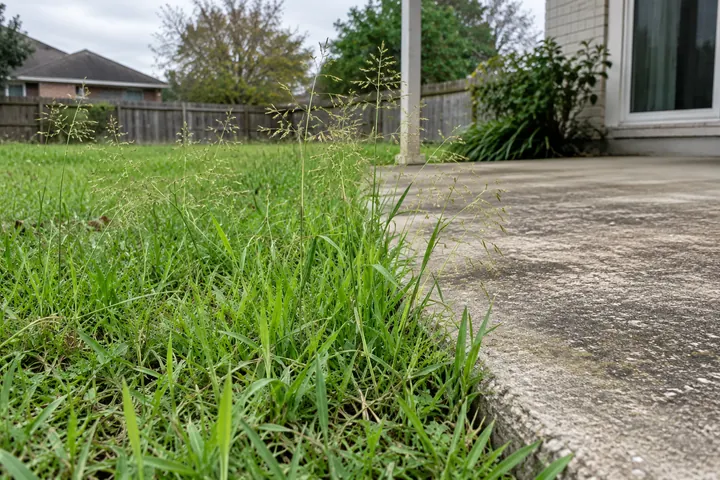
The head on the walkway is only the beginning
A branching grass head found on a walkway may be the first thing that catches your eye. Perhaps it was noticed after the lawn was cut, or came in with a shoe. Rescuegrass is one possibility a person may encounter while searching for a name. The useful next step is to find out what the loose item can actually establish. Its presence on the path does not prove that the nearest green tuft produced it.
University of California identification material describes rescuegrass as a tufted annual or short-lived perennial with an open, branching flowering structure and strongly flattened spikelets. The USGS Plants of Louisiana account places it among cool-season grasses. Those characteristics provide limited reference points for an identification inquiry. They do not turn a detached head into proof of a lawn-wide problem, and they do not establish the origin of a particular plant at your property.
Trace a known connection before making a larger claim
If an intact plant is available, photograph a head that is still attached to its stem and show the stem leading toward the base. Keep the full branching outline visible in one frame. Follow with a closer view of a branch rather than cropping so tightly that the structure loses its context. A reviewer needs both the overall arrangement and the detail, not a sequence of isolated shapes with no clear relationship.
If there is no intact example, keep the inquiry provisional. You can still discuss the loose item, its location and when it was found. Avoid searching the lawn until you find something green that can be made to match the picture. A similar-looking plant is a candidate for review, not a confirmed source. That distinction prevents a small identification question from becoming an unsupported instruction to alter every tuft in sight.
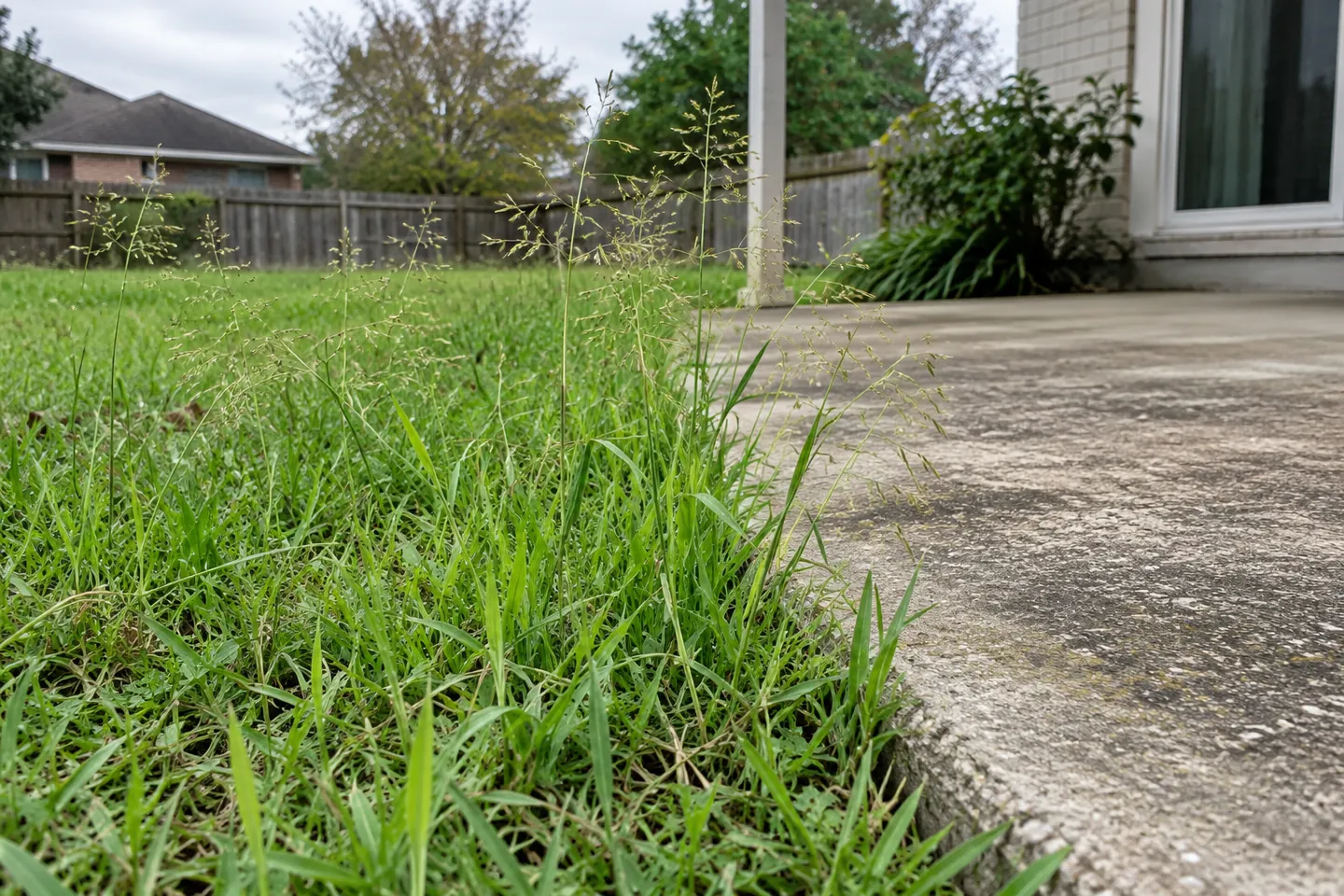
Understand what a branching outline contributes
A branching head contains more spatial information than a close-up of one small piece. The angles of the branches and the way the smaller structures sit on them may matter to a person reviewing the grass. Lay out the question so those features are visible. Do not straighten, trim or rebuild a specimen simply to make it resemble an illustration. If it arrived broken, show the break and label the condition.
The word seed is often used for the whole head in ordinary conversation. That is fine as a starting description, but clarify whether you mean the complete branching structure, one spikelet or a loose particle. A message can be perfectly readable without specialist vocabulary: the entire branching head, still attached to this stem, is the feature I want checked. Clear relationships matter more than guessing the technical term.
Keep flattened spikelets in focus
The rescuegrass reference highlights strongly flattened spikelets. If that is the feature being compared, photograph a readable side view and a second angle of the same connected portion. Do not treat a compressed screenshot as a reliable measure of thickness. An image may show the broad face clearly while hiding the edge that helps explain its shape. Record what the photograph demonstrates and what still needs closer examination.
Avoid using a ruler as the only reason a specimen should receive a name. Dimensions can be useful, but a single length without the plant's structure is incomplete evidence. If you include scale, name the part being measured and keep it in the same plane as the scale. A perspective-distorted picture can make an ordinary comparison look much more exact than it actually is.
Give each lawn tuft its own place in the record
When several upright tufts are visible, label the locations separately. The one near the back step and the one beside the fence may look similar from across the yard while belonging to different plants. Ask whether the available evidence supports treating them together. Until then, describe a pattern of contrasting tufts rather than declaring that one identified species fills the entire lawn.
This is also useful for a service request. A task can be bounded by the rear step, the path and the inside fence line even while identification remains incomplete. Do not include a neighboring strip or an inaccessible corner merely because the same color appears there. Keep your observations within the property area you can authorize and the part of the lawn you actually want reviewed.
Distinguish the flowering structure from the maintenance concern
The branching head may interest you because it helps name the grass. The visible lawn concern may instead be the tuft's shape, its position beside a path or the contrast it creates after a routine cut. Write those as separate sentences. One asks what the plant is. The other asks what lawn finish is practical. They may inform each other, but answering one does not automatically settle the other.
For example, a homeowner can ask for the walkway edge to look tidy without requesting plant elimination throughout the rear lawn. Another may need identification before deciding what to request at all. Explain which stage you are at. Happy Grass does not need a confident species name from you in order to discuss mowing, edging, weed-eating or blowing within an agreed boundary.
Do not build a spread story from a loose head
Finding a similar item in a second location does not prove how it arrived there. A photograph normally cannot establish which shoe, tool, animal or maintenance event moved a particular piece of plant material. Keep the record factual: where it was found, whether it was attached and when you first noticed it. Leave a proposed explanation labeled as a question unless there is evidence to support it.
That restraint makes a complaint or follow-up more useful. A person can review a repeat appearance beside the path and compare the agreed work. It is much harder to resolve an accusation based on a movement history nobody observed. Focus on the present condition you want assessed and the evidence that connects it to a known location. You can ask a direct question without assigning an unsupported cause.
Use a brief sequence rather than an album without labels
Arrange a small photo set in the order a reviewer would need it. Begin with the tuft's place in the yard, move to the whole connected plant and finish with the flowering detail. If a loose specimen is included, place it last and say that it was found separately. This order prevents a striking close-up from being mistaken for a complete property record.
- Identify the fixed feature beside the tuft.
- State whether the head remained attached during photography.
- Keep the same example identifiable between wide and close views.
- Name any photograph that shows a different location or a loose item.
A good set can still contain unanswered questions. The purpose is to help someone see where the uncertainty lies, not to create the appearance of a scientific conclusion. If a local extension review is needed, the same organized evidence can help you ask what additional plant features should be supplied.
Judge the next visit against the task you agreed
After maintenance, review the specified area from the intended viewing position. Describe whether the path-side outline, surface contrast or visible upright growth now matches the agreed finish. Do not infer that a remaining plant base means a separate eradication task was promised. Likewise, do not treat a smoother view as proof that the identified plant is absent from the property.
Keep the follow-up tied to something another person can check. The rear path still has an uneven-looking tuft at this marked point is a useful observation. Rescuegrass is everywhere again is much broader and may go beyond the evidence. A focused description gives Happy a fair opportunity to explain the result, clarify scope and discuss any remaining routine lawn work.
Keep the submitted sample version clear
If an identification request contains several rounds of photographs, number the rounds and say which one replaced an unclear earlier view. Keep the original loose-head photograph rather than deleting it after a connected example is found. The later evidence may answer a question that the first photograph could not, and preserving that sequence explains why the conclusion became stronger. A folder of unlabeled replacements can make a tentative early answer look as if it reviewed information that arrived only afterward. State which response belongs to which evidence set so the review remains traceable.
Discuss the tufted area with Happy
Call 504-339-3571 and ask for Happy. Describe the path or fence boundary, the connected plant evidence and the maintenance result you want reviewed. Confirm the proposed mowing, edging, weed-eating or blowing and its availability before arranging a visit.