
Begin with the route people actually use
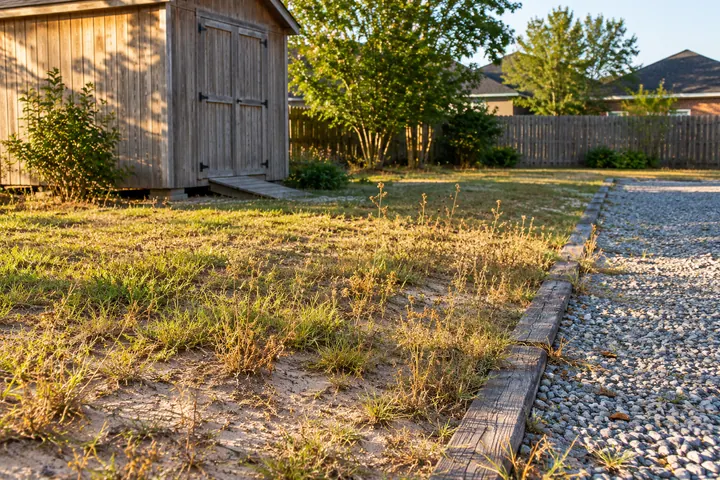
A sandbur inquiry often begins with something found along a walking route rather than with a complete plant. The useful first record is the place where it was noticed: the grass beside the side gate, the edge near the driveway or a particular point on the rear path. Do not turn that finding immediately into a claim about the entire lawn. A clear route description gives a later inspection somewhere definite to begin.
UC IPM describes sandbur species as grasses whose mature fruiting structures have stiff spines, and notes that similar sandbur species can be difficult to distinguish. Its longspine sandbur account describes burs along a terminal stalk and movement by attachment to clothing or equipment, among other routes. This is background for a careful identification question. It does not establish which species or movement route applies to your property, nor show that an ordinary lawn visit includes complete bur removal.
A loose bur and an attached head answer different questions
A loose finding can establish that the object was present where it was observed. An attached head can help connect that object to a living plant. Label the two forms of evidence separately. If a bur was noticed on footwear after walking through several areas, give that sequence without claiming a precise source. The nearest lawn patch may be relevant, but proximity alone is not a demonstrated connection.
When an attached example is visible, photograph it without disturbing the structure or handling the spines for the sake of a picture. Show the plant's position and the complete head in separate readable frames. Do not ask someone to press a bare hand against a bur to provide scale. A clear photograph with a fixed nearby reference can explain the concern without staging direct contact.
Keep the evidence useful without creating an exposure demonstration
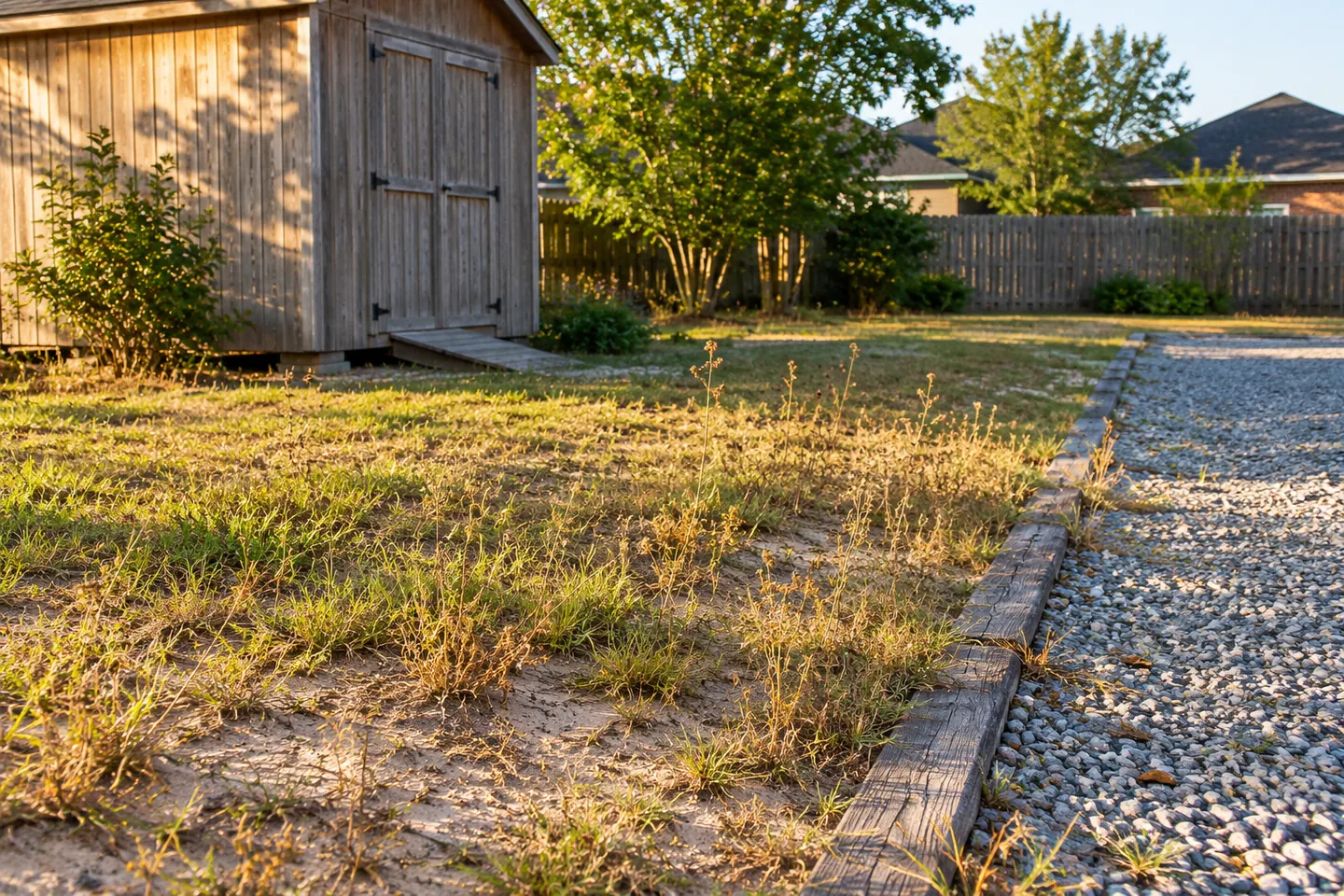
There is no need to walk barefoot through a suspect strip or send a pet through it to prove the issue. Describe the observed finding and mark the area for discussion. If you have already restricted use of a route, explain that access arrangement to anyone reviewing the lawn. The practical point is to communicate where attention is needed, not to recreate the event that first brought it to your attention.
This guide concerns site observations and a maintenance conversation, not treatment of an injury or a claim that a route is safe. Do not read a tidy-looking surface as proof that no loose sharp material remains. The absence of an obvious head in a wide photograph tells you only what that photograph shows. Keep any question about using the route distinct from the visual finish expected from ordinary lawn work.
Mark the strip with stable property references
Describe the suspect area using landmarks that will remain after mowing. Between the gate opening and the first path bend is more useful than around the tall clump, because the clump's outline may change. Include which side of the path is involved and whether the area extends under a fence or into a neighboring strip. Confirm the boundary you can authorize before asking for work beyond it.
If multiple findings occurred, give each a location and date. They may indicate several areas worth review, but do not join them into one confirmed infestation without supporting plant evidence. A short written map can distinguish a finding on the paved path from a visible attached head in the grass. The difference matters when discussing what should be inspected and what routine maintenance is actually being proposed.
Avoid blaming an unobserved movement route
Because burs can be moved in several ways, a finding after a visit does not by itself prove that a particular person or machine introduced them. State the timing honestly, including what was checked before the work and what was first noticed afterward. A sequence of dates can raise a useful question without becoming proof of a cause that nobody observed.
For example, a message can say that a loose spiny object was found at the side gate on Tuesday and that the attached plant source has not yet been located. That is actionable evidence for a discussion. Saying that the mower brought sandbur into every part of the yard adds both a source claim and an extent claim that the finding may not support. Keep the next step focused on the actual area of concern.
Ask what the proposed maintenance can address
Tell Happy Grass about the suspected burs before discussing the work. Do not assume a routine mowing request communicates the presence of spiny material or a special collection expectation. Ask which parts of the proposed visit are appropriate to the visible site conditions and what remains outside the agreement. The answer should refer to the actual lawn and boundary rather than a generic promise about all sticker plants.
Mowing, edging, weed-eating and blowing should be named individually when relevant. A request for a neat edge does not automatically include a detailed search for every loose bur. A request to move ordinary lawn debris does not establish a verified bur-free surface afterward. If a different type of review is needed, identify that question before treating a routine service arrangement as a complete solution.
Do not use the word sticker as a final identification
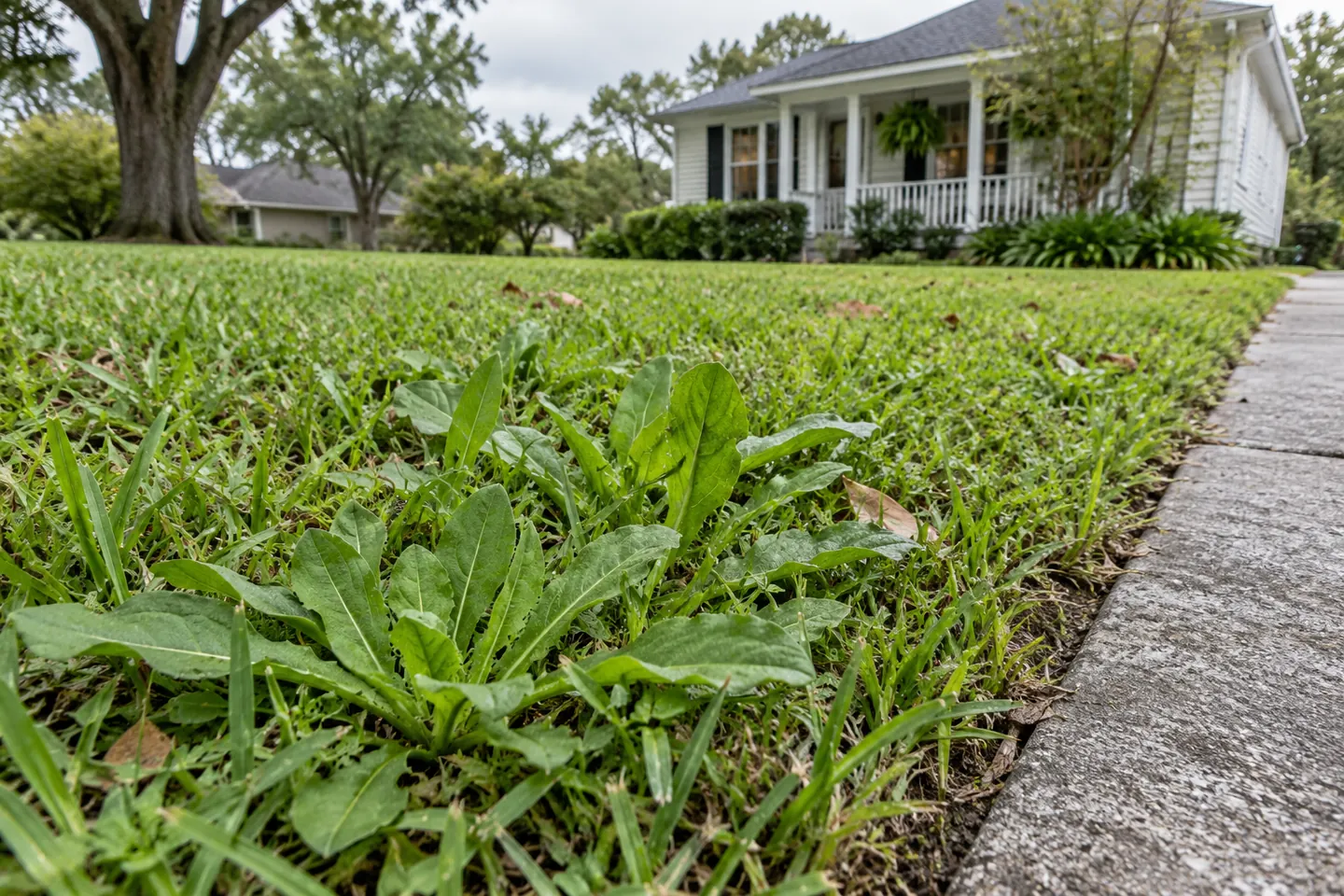
People use sticker for several kinds of sharp plant material. Preserve that everyday description if it is all you know, then seek appropriate identification from the actual specimen or photographs. The word alone cannot distinguish a grass bur from a different plant structure. A clear image of the living plant, where available, is more useful than a confident name selected from an internet picture.
If the identification remains uncertain, ask the local extension office what additional evidence would help. Do not collect unrelated plant parts into one packet and imply they grew together. Keep the finding location and the attached-plant location separate on any note. The goal is to make the evidence traceable, particularly if the ground contains more than one kind of unfamiliar plant.
Review the surface without overpromising the result
After agreed maintenance, describe the visible changes in the marked area. Perhaps the upright growth is shorter, the path edge is clearer or the access strip looks more even. Those observations can be meaningful without claiming that every sharp object has been removed. A finished appearance and a verified absence of burs are different outcomes and require different evidence.
Use a repeat photograph from the same path reference. If another loose object is found later, record its exact finding area and whether an attached source was visible. Avoid treating a new finding as automatic proof that the agreed visual task was skipped. Compare the work with its actual scope, then ask the next focused question about what remains. This keeps the follow-up fair and useful.
Prepare a concise inquiry before the visit
A good inquiry can be short while still carrying the important distinctions. Identify the walking route, explain whether the evidence is a loose finding or a connected plant and state the task you want discussed. Add any access limitation already in place. Do not include a household member's private medical details when a location and a site description are enough to explain the maintenance concern.
- Name the route and its fixed beginning and end.
- Separate the loose-object finding from any confirmed plant source.
- State what was observed before and after previous work, if known.
- Ask what the proposed visit includes and what it cannot verify.
For a Westwego or Belle Chasse yard, that record is more useful than a dramatic lawn-wide label. It lets Happy review a real task and lets an identification specialist see what evidence is missing. Be direct about the concern while keeping the claims within what you actually observed. Clear information is the first useful improvement you can make before any work is arranged.
Separate evidence storage from the finding route
If you keep a photograph or an already collected item for identification, label its finding location immediately. Do not rely on remembering whether it came from the gate strip or the rear path several days later. Keep separate findings separately identified and avoid combining them into one apparent sample. A clear label lets the reviewer discuss the actual evidence without assuming that every photographed object came from the same plant or surface.
Discuss the marked route with Happy
Call 504-339-3571 and ask for Happy. Mention the suspected spiny material and the exact lawn boundary before arranging mowing, edging, weed-eating or blowing. Confirm the proposed work and availability; an ordinary visit is not a guarantee of a bur-free route.