
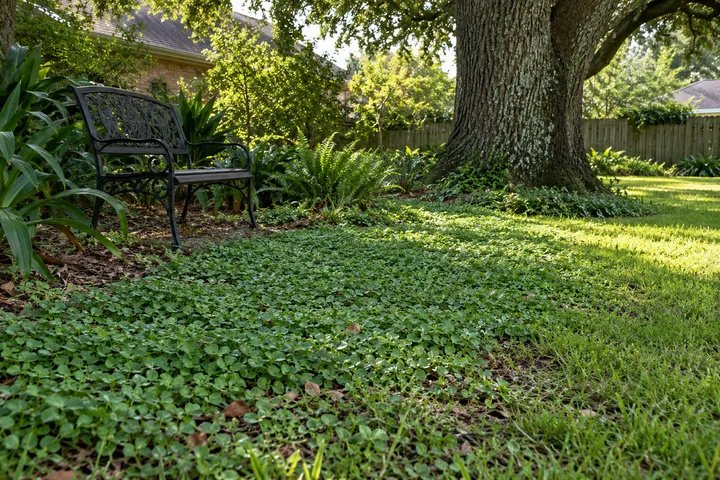
The first decision belongs to the property owner
A low patch with tiny yellow flowers can produce opposite reactions in the same household. One person sees welcome greenery; another sees an untidy interruption in the lawn. Horseherb is one possible plant behind that discussion, but naming it will not resolve the preference. Before arranging work, establish whether the patch is meant to remain, be reviewed or be included in an ordinary surface-maintenance request. Those are decisions about the property, not conclusions hidden inside a plant name.
The USGS Plants of Louisiana account describes horseherb, Calyptocarpus vialis, with opposite simple leaves, toothed margins, yellow flowers and a low, prostrate form. NC State Extension also describes it as a ground cover that some people value and others consider weedy. These limited characteristics can help organize identification evidence. They do not prove that an unfamiliar yellow-flowered patch is horseherb or establish what any particular homeowner should choose to keep.
Write the preference before drawing the edge
If you want the patch retained, say that plainly before describing a tidy lawn. A general request to clean up everything can conflict with a wish to preserve a small ground-cover area. If you are undecided, record the area as awaiting review rather than expecting the provider to choose for you. The instruction should distinguish a preference already settled from a question still open.
For shared homes or rental properties, identify who may approve the decision. Someone arranging a routine visit may not have permission to alter a planting or remove a favored patch. Do not let an informal conversation with one household member silently override the owner's instructions. You can agree on ordinary lawn care around a hold area while the larger decision remains unresolved, as long as the boundary is clear and practical.
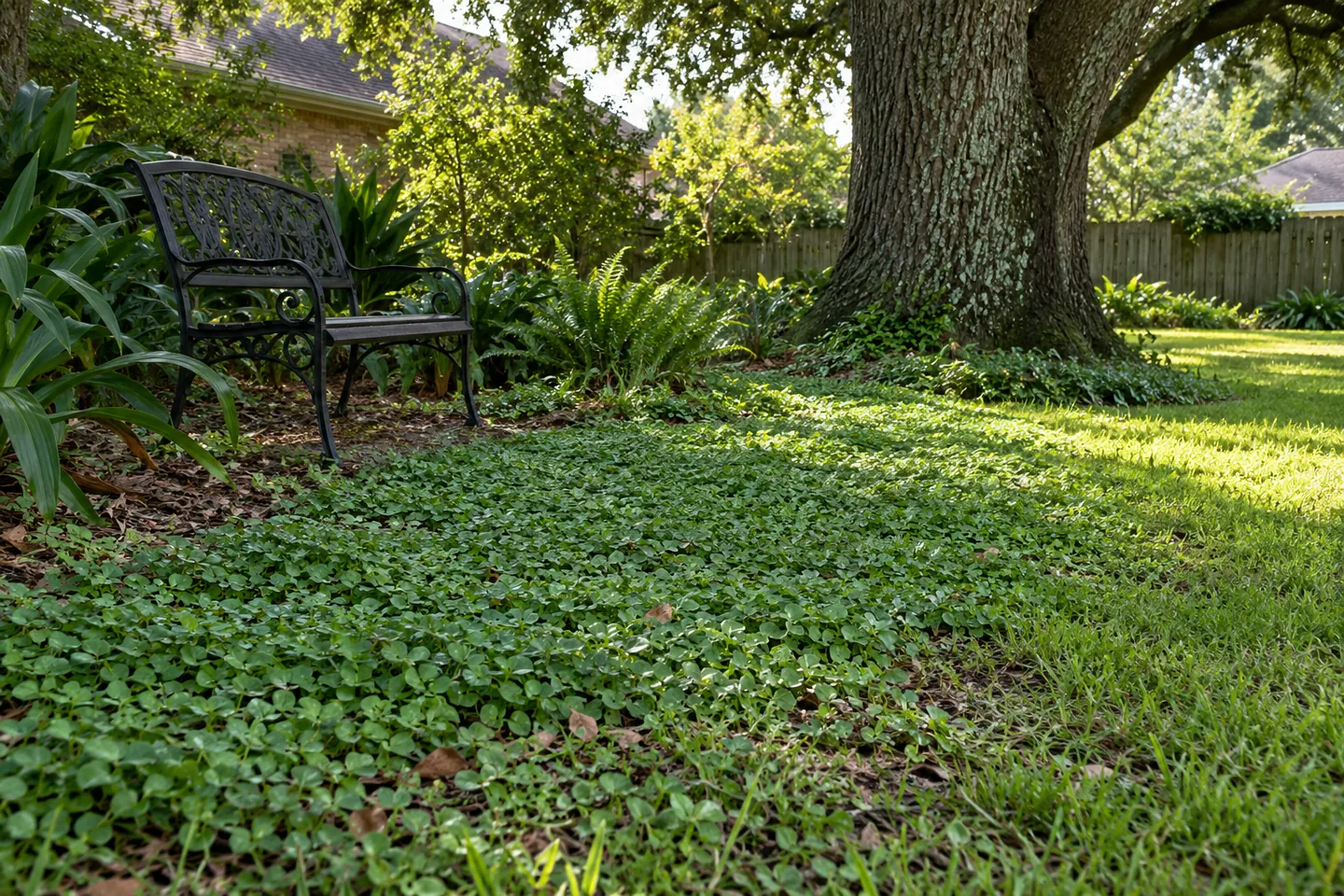
Tiny flowers need more than a distant yellow dot
If identification matters, photograph the flowers clearly enough to show them as structures rather than colored pixels. Pair that view with attached leaves and the low plant's overall habit. A patch can contain more than one flowering species, so do not assume every yellow point belongs to the same plant. Trace the flower and leaves to the same connected example when that relationship can be seen.
If the flowers are absent at the time of photography, state that instead of borrowing a picture from another plant. A reference image can explain the question, but it should remain labeled as a reference. Your property's evidence should stay identifiable as your own observation. That distinction is particularly important when several people are coordinating the inquiry and images may be forwarded without their original captions.
Show opposite leaves without confusing overlapping stems
Opposite leaf arrangement means the attachment relationship on a stem matters. A photograph of a dense mat may create apparent pairs where two separate stems cross. Choose a readable connected stem section and keep the point of attachment visible. Do not interpret a neat-looking pair of loose leaves as proof of a natural arrangement. The reviewer needs the actual relationship, not a visual approximation assembled after cutting.
Include the leaf margins in focus if they are part of the comparison. Avoid describing fine teeth that the image does not resolve simply because a reference lists them. It is acceptable to write that the margin could not be seen clearly. That limitation tells a qualified reviewer what to ask for next and prevents the written description from sounding more certain than the photographs support.
A valued patch needs a stable keep boundary
Draw the proposed keep area using fixed property features rather than the current outermost leaf. The growth outline may be irregular or may change before the visit. A small marked overview can show the relationship to a path, tree surround or bed edge. Pair it with text that names the same boundary so the instruction remains understandable without relying on a color highlight alone.
Do not mark a keep area so broadly that it accidentally includes a different plant or a neighboring property. Walk through the proposed boundary with the person authorized to decide, or use photographs that make the limits unambiguous. If the patch blends into the lawn without a clear stop line, say that the boundary needs discussion before work. A provider should not have to guess where your preference changes.
Do not use shade as a complete explanation
A low plant may be most noticeable near a shaded part of the yard, but the location alone does not establish its identity or diagnose the lawn around it. Record the actual light conditions you observed and the time of the photograph if relevant. Avoid turning one shaded picture into a claim about how much light reaches the area all day or why the surrounding grass looks different.
The maintenance request can stay practical without a complete site diagnosis. Explain whether you want the adjacent lawn surface maintained, the path margin clarified or the plant identified before deciding on a change. Do not assume a routine lawn visit includes tree work, a shade correction plan or a new ground-cover installation. Keep those separate questions visible rather than embedding them in a request for a cleaner edge.
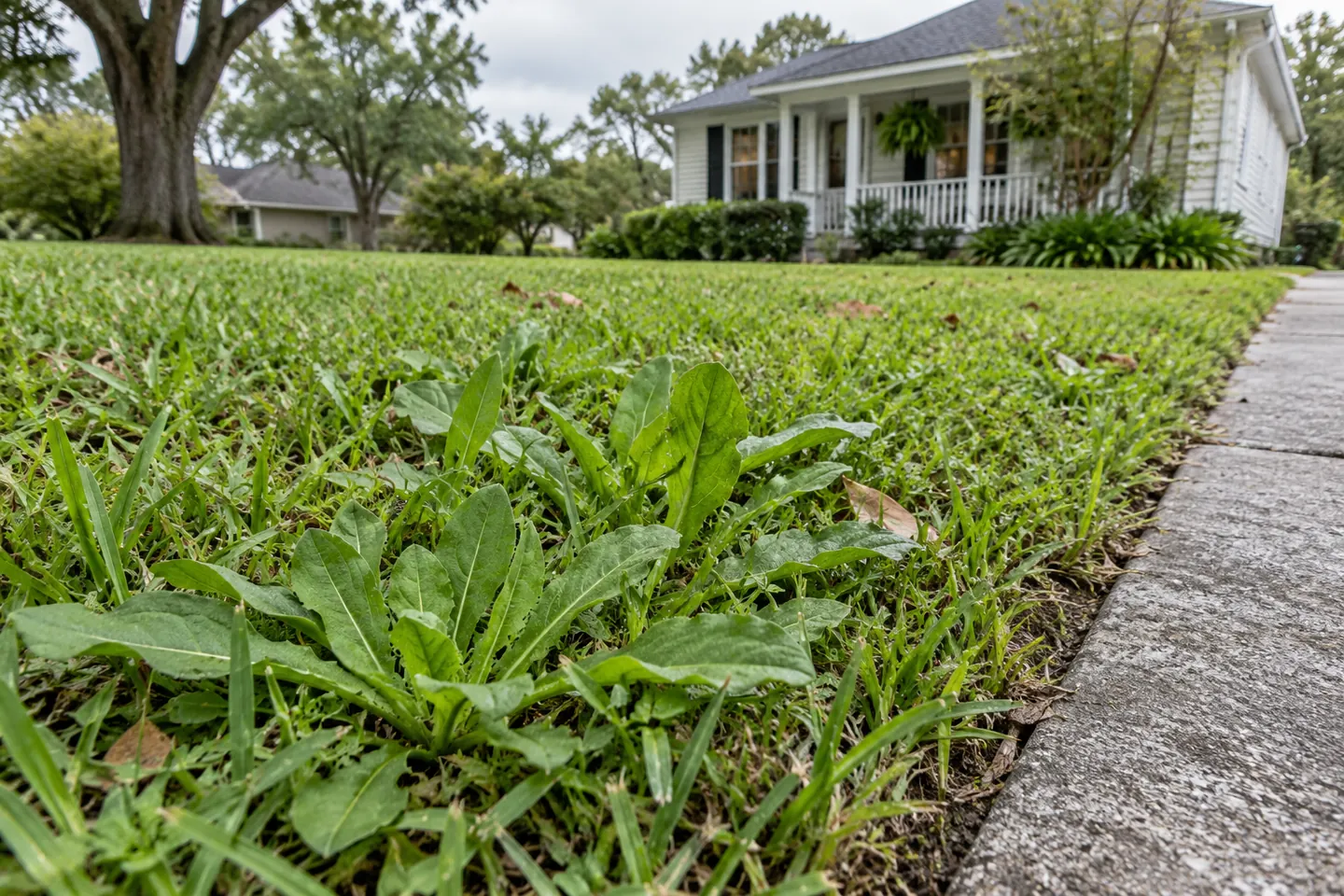
Define what neat means beside the retained patch
If the patch is to stay, the surrounding finish needs a positive description. Perhaps the walkway should remain visibly defined while the low greenery inside the marked area is preserved. Perhaps the lawn edge needs review without touching the uncertain section. State the desired relationship between surfaces. A request simply to avoid the plant can leave the rest of the task too vague to assess.
Discuss what can be accomplished with the routine work actually proposed. Mowing, edging, weed-eating and blowing are not interchangeable operations, and none should be assumed to include a landscape redesign. A clear agreement can acknowledge that one transition remains informal while another is meant to look defined. That is more useful than expecting every part of a mixed yard to have the same visual treatment.
Keep the identification response attached to its sample
If an extension office or another qualified reviewer identifies the plant, save the response with the exact photographs and location it addressed. Do not copy the name onto every yellow-flowered patch in the yard. A second area may need its own evidence, especially if the leaves or growth pattern differ. The property preference can be similar across areas without the species identity being the same.
When the review remains tentative, preserve that wording. A possible horseherb identification is still useful information, but it should not become confirmed horseherb in the next forwarded message. Clear uncertainty protects the quality of the later maintenance conversation. It also gives you a way to ask for a specific missing feature rather than starting another general search through unrelated plant pictures.
Review the edge and the keep area separately
After agreed work, assess whether the specified surrounding finish was completed and whether the keep boundary was respected. These are two distinct parts of the result. A retained patch should not be described as missed weeds if retaining it was the instruction. Likewise, a neat path does not answer whether the protected area was handled as agreed. Compare each part with its actual task description.
- Keep the approved boundary image with the work request.
- Note any area explicitly held for identification or owner review.
- Use the same fixed path or bed references in follow-up photographs.
- Describe a boundary concern without expanding it to an unrelated yard area.
For an Algiers or Marrero homeowner, the useful outcome is a lawn routine that reflects the household's settled choices. You can enjoy a small flowering patch, decide against it later or leave the question open while gathering evidence. What matters for the present visit is a clear authorized instruction and a visible finish that everyone understands in the same way.
Preserve a decision that is deliberately temporary
A keep instruction can be provisional without being unclear. State that the patch is to remain for the current visit while the owner reviews identification or appearance, and record when that instruction was given. Avoid describing a temporary hold as a permanent landscape plan. If the preference changes later, issue a new explicit instruction rather than assuming the provider will infer the change from a different photograph caption or a household conversation they did not hear.
Explain the keep area to Happy
Call 504-339-3571 and ask for Happy. Identify the low flowering patch, the approved keep or review boundary and the surrounding mowing, edging, weed-eating or blowing you want discussed. Confirm the work and availability before scheduling.