
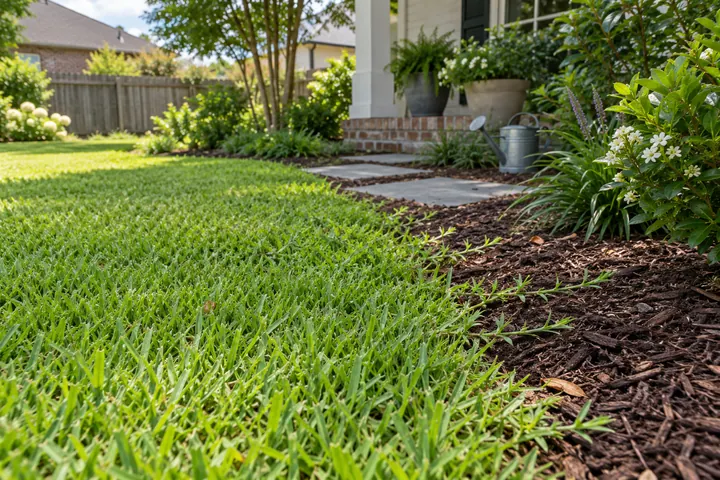
A line can look finished while the plant question remains
The border beside a bed or driveway may look clear after a visit, then draw attention again when fine grass extends across it. Common bermudagrass is one possible part of that discussion. Before treating the recurrence as an unfinished edge, ask what was actually agreed: a visible line for routine presentation, removal of specific surface growth or a lasting change in the plant boundary. These expectations require different evidence and should not be blended into one vague request.
LSU AgCenter describes common bermudagrass as a warm-season perennial that can be desired turf or an unwanted grass among other lawn species. Its profile notes fine, pointed leaves and both aboveground and underground spreading stems. It also describes fingered flowering heads. That background explains why an edge's appearance should be kept separate from a claim of complete plant exclusion. It does not identify every fine runner at your property or prove where a particular stem originated.
Decide which side is meant to contain the grass
Start with the intended layout. Is the fine grass accepted as part of the lawn on one side of the border, or is it an unwanted contrast within a different lawn? Those are different situations. A request to keep an existing bermudagrass lawn tidy is not the same as a request to change the composition of a mixed lawn. Clarify the intended surface before focusing on a particular runner.
If the border meets a planted bed, identify the plants or area meant to remain untouched. Do not assume that everything beyond the current lawn outline is disposable. A path edge, a bed edge and a property line may sit close together while representing different limits. Use a marked overview that makes the intended lawn side and the protected side distinguishable without requiring someone to infer them from color alone.
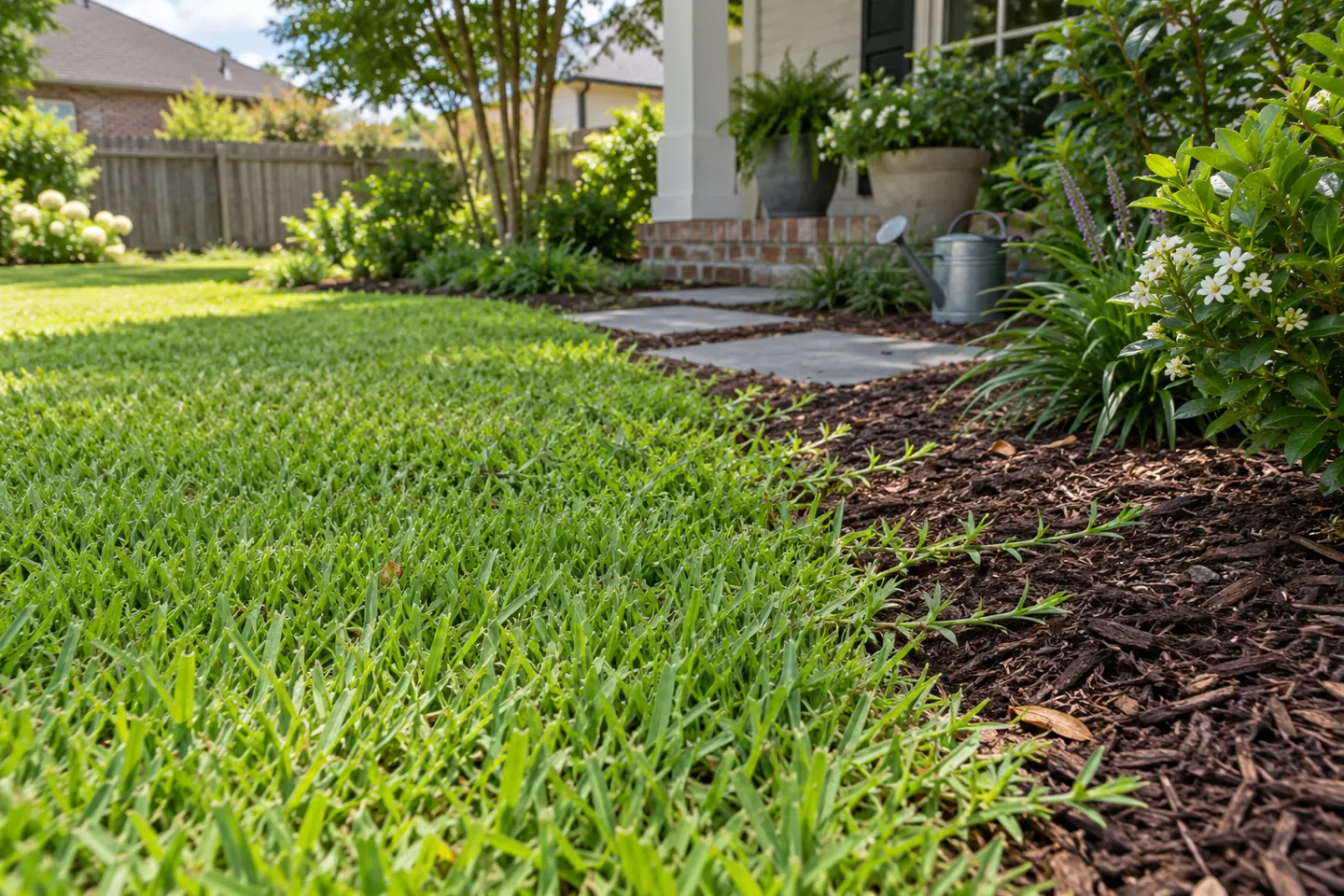
Photograph a runner as a connection, not a loose strand
A fine green stem lying across mulch can be difficult to interpret in isolation. If it is still attached, show the visible route back toward the lawn and the points where leaves meet the stem. Keep a wider image of the border for orientation. Do not pull a strand across another surface to make its length easier to display and then present that arrangement as its original position.
If a piece is already detached, label it as a cutting or loose material. A loose strand may be useful for a plant inquiry, but it does not by itself show a rooted connection on either side of the border. Do not claim that a photograph proves an underground route it cannot show. Keep visible surface connections and suspected below-ground connections in different parts of the record.
Separate crossing, resting and rooted growth
Three descriptions can look similar in a distant image: a stem crossing a line while attached to the lawn, a detached cutting resting across it and a plant established on the far side. State which condition you actually observed. If the connection is unclear, say that it needs review. A confident word such as invading can hide an uncertainty that matters to the proposed task.
The distinction also improves a follow-up. A few loose cuttings after work raise a different question from a visible connected runner extending into a bed. Describe the actual material and location before judging the result. An accurate account lets Happy discuss the agreed routine finish without being asked to answer a plant-history claim that the available photographs do not establish.
Choose a repeatable line rather than chasing the newest tip
An instruction to stop at the outermost grass tip can move as the surface changes. A fixed hardscape edge is easier to understand where one exists. For an informal bed border, agree on a visible reference that the owner and provider can both identify. If the line itself needs a design decision, resolve that before asking routine maintenance to create a permanent layout by assumption.
Avoid placing a temporary marker where it could be mistaken for an instruction to cross a property boundary or disturb a retained planting. A marked photograph is often enough for the initial discussion. The written request should match it: lawn side here, retained area there, and this is the stretch under review. Clear instructions remain useful even if the particular runner in the photograph is no longer visible at the visit.
A tidy edge is a maintenance result worth defining
Ask what the proposed edging or weed-eating is intended to accomplish at that border. The answer may concern the visible line and the material immediately beside it. Do not silently enlarge that into a guarantee that the grass will never cross again or that all plant structures beyond the line have been removed. A routine finish can be valuable without making an unsupported permanent-exclusion promise.
This is also where mowing and border work should be distinguished. A neat lawn surface does not automatically mean every bed transition was included. Conversely, an agreed edge task does not establish a whole-lawn species-control program. Name the operations and boundary you want discussed rather than relying on a broad request to handle the Bermuda. Confirm the proposed work for the actual property.
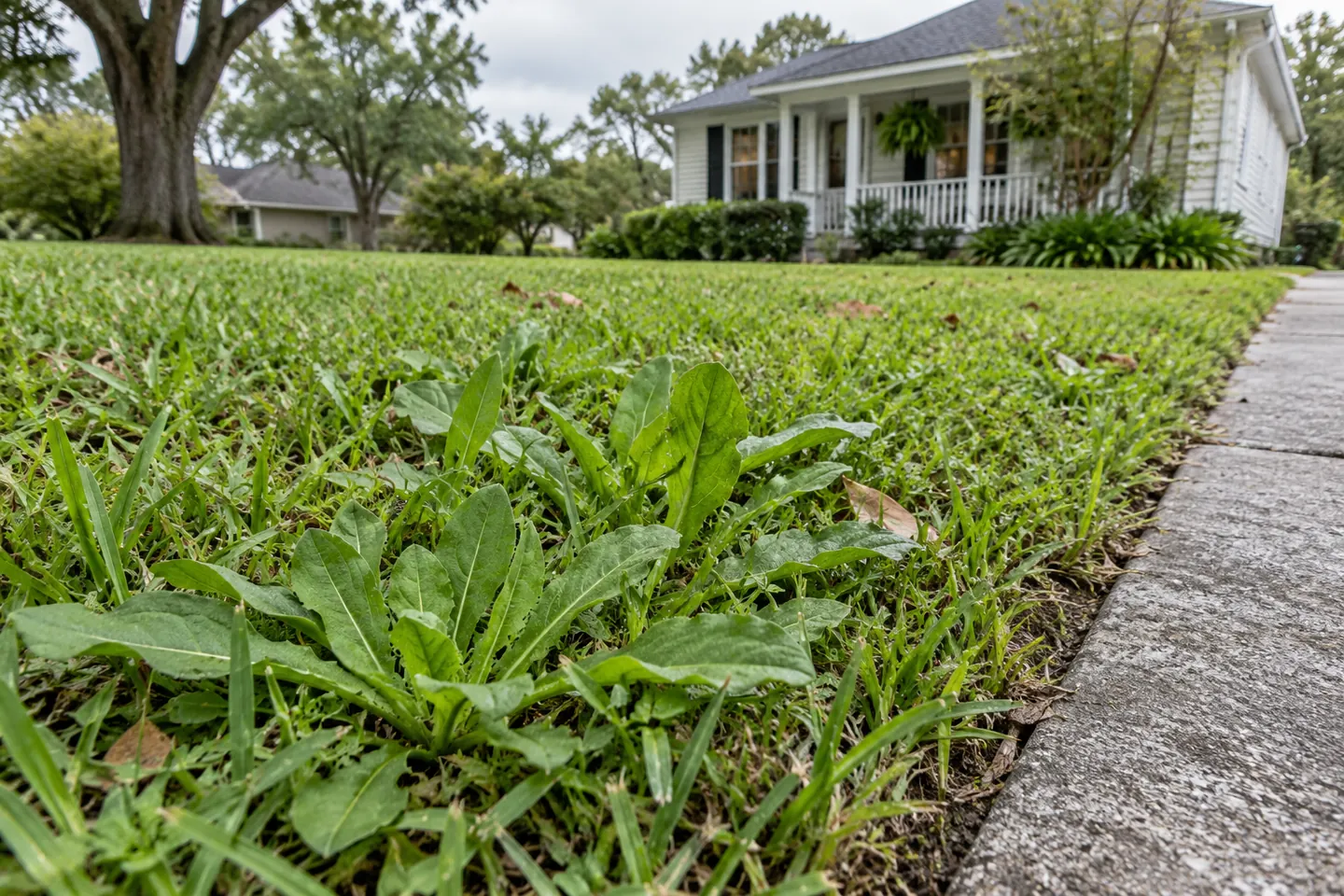
Do not copy another grass's cutting routine across the transition
If the fine grass meets a broader-bladed lawn section, provide a view of both sides and ask how the proposed finish accounts for the mixed surface. One grass name does not settle the needs of its neighbor. A request to lower the entire lawn until the textures look similar can overlook that difference. The maintenance discussion should consider the lawn that is actually there, not a single patch in isolation.
Keep reference information in its proper role. The LSU article can support a plant-characteristics discussion, but it does not authorize Happy Grass to offer treatments or landscape conversion. This guide supplies no chemical prescription or establishment plan. If your aim is a permanent change in the grass composition, identify that as a separate question requiring appropriate assessment rather than an implied addition to a routine visit.
Track the border without inventing a growth rate
For later photographs, use the same fixed line and the same viewing direction. Note when the line was maintained and when the new observation was made, if those dates are known. Do not estimate a growth rate from two images with different framing or from a strand whose original attachment was never established. You can document a recurring appearance without assigning a precise speed or cause.
If the visible crossing returns, describe the exact stretch and whether the material is connected, loose or unresolved. Compare it with the agreement before deciding whether the issue is a missed area, a scope misunderstanding or a separate plant-boundary question. A useful record can support that discussion without pretending to answer it in advance. Keep the claim as specific as the evidence allows.
Use a border handover note for recurring care
For a caretaker or a family member arranging visits, save the approved boundary image with a brief note about the intended surfaces. Include any retained area and the currently agreed routine task. If identification is tentative, preserve that wording rather than converting it into a confirmed species label. The next person should inherit a usable instruction, not just a photograph of a runner that has since disappeared.
- Identify the accepted lawn side and any protected planting side.
- Distinguish connected runners from detached cuttings.
- Define the visible finish separately from long-term plant exclusion.
- Keep the same fixed reference for later observations.
For a Harvey or Belle Chasse lawn, this keeps border care practical. You can ask for a crisp, readable transition while remaining honest about what the visit includes. A plant boundary can need further review even after the visible line looks good. Recognizing both results makes the next decision clearer and prevents a routine maintenance agreement from carrying promises nobody actually made.
Keep the end points of the border task visible
A long bed margin may contain several different transitions. Mark the start and finish of the specific stretch under review, including corners where the instruction changes. An image of one runner does not define how far along the bed the work is intended to continue. If an older agreement covers only the driveway side, do not assume the rear section was included. Explicit end points make both the proposal and the follow-up easier to evaluate without broadening the task after the fact.
Review the border task with Happy
Call 504-339-3571 and ask for Happy. Describe the intended lawn, retained area and fixed border stretch. Confirm the proposed mowing, edging, weed-eating or blowing, its availability and the visible result to be reviewed after the visit.