
One strong resemblance can hide several differences
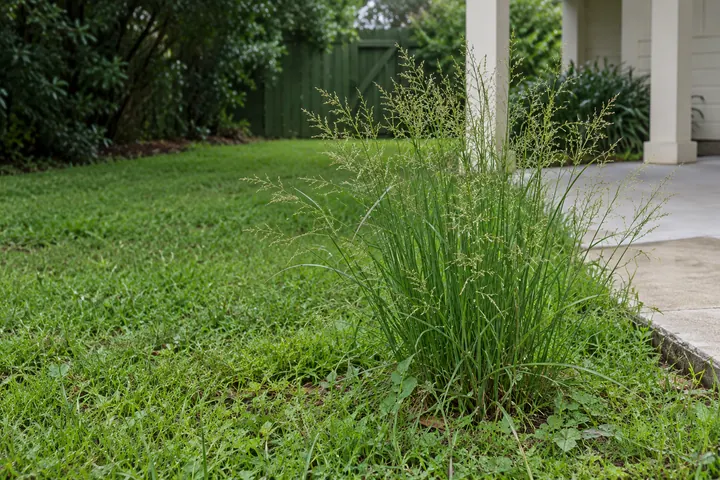
A large grassy clump with a pale stripe down its leaves may quickly be called johnsongrass. Vaseygrass is one reason to keep that first label provisional. The useful question is not which familiar name fits the distant outline best. It is which connected features distinguish the candidate plants and whether your photographs actually show those features. A description can be clear without claiming the comparison is finished.
UF/IFAS compares vaseygrass, johnsongrass and guinea grass and notes that all three can have a noticeable pale leaf midrib. It distinguishes vaseygrass's bunch-type habit and seed-head arrangement, including hairs associated with the seeds, from the more open angular heads of the other grasses. It also discusses hairs near leaf attachments and the lower stem. Those details give the inquiry direction; a white line alone does not settle the name.
Give the clump a record before assigning a species
Choose a simple label based on location, such as patio-corner clump. Keep that label on every photograph and note about the example. If you later receive a tentative identification, add it beside the location rather than replacing the label. That preserves the sample's identity if another review changes the botanical conclusion. It also prevents photographs of different clumps from being silently combined under one convenient name.
If several examples need review, use a separate set for each. A head from the driveway edge and a stem from the back lawn should not become a single apparently complete specimen because their leaves look alike. This matters most when a reviewer is trying to distinguish closely similar grasses. Each feature needs to remain associated with the plant that actually supplied it.
The whole head and one branch have different jobs
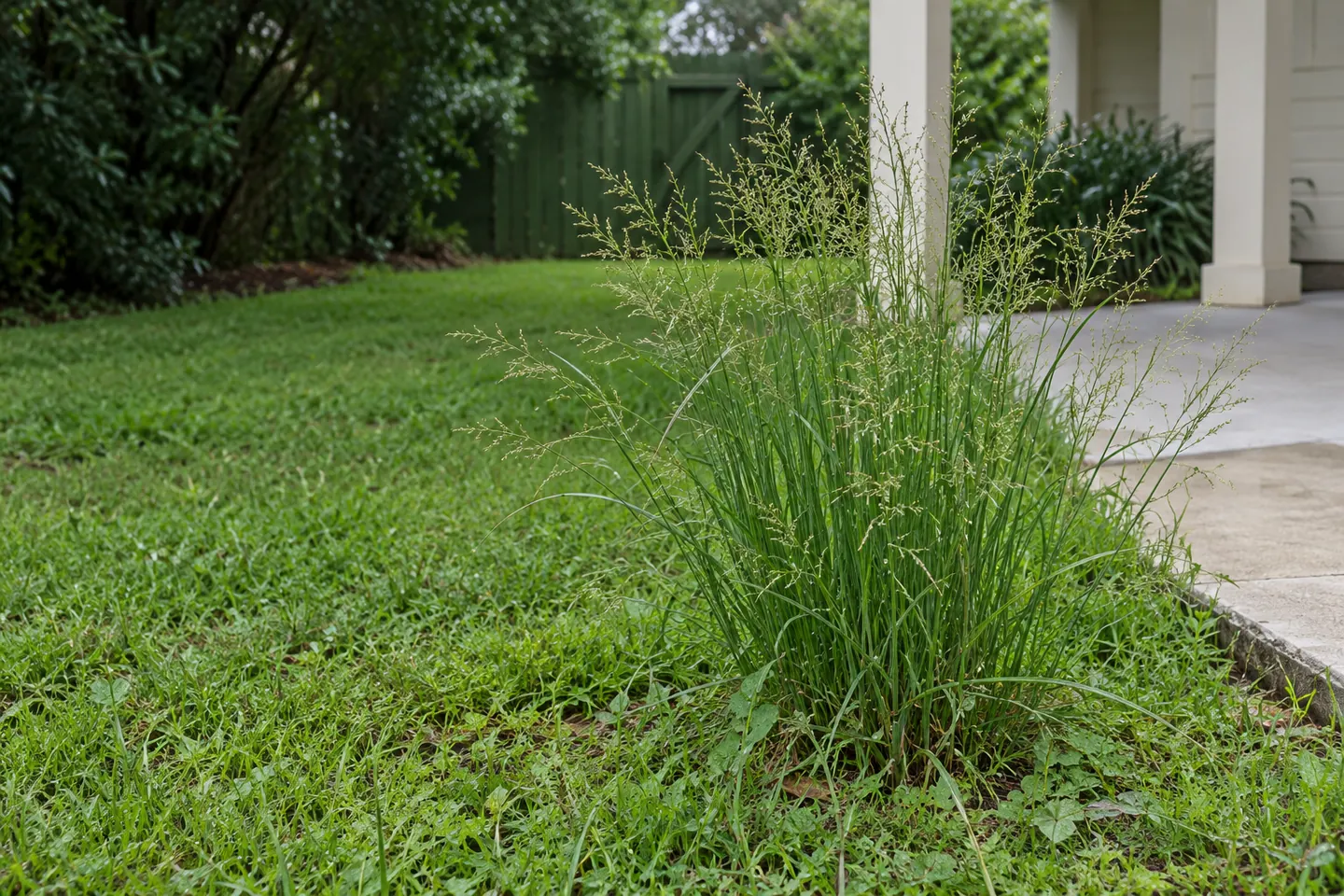
Begin with a complete attached head in a readable frame. That shows the overall arrangement and how branches relate to the supporting stalk. Follow with a closer view of one branch from the same example. The larger picture preserves the structure that a tight crop removes, while the closer picture may show details that disappear in the overview. Neither should be expected to answer both questions on its own.
Do not separate or straighten branches to make the specimen look more like a reference. If the head is damaged or has been partly cut, show that condition. A qualified reviewer can explain whether the remaining features are sufficient. An incomplete but honest example is more useful than a reconstruction whose apparent connections were created for the photograph rather than observed on the plant.
Fine hairs need a clear image, not a confident caption
The UF comparison includes hair details that may be difficult to resolve in an ordinary phone picture. Keep the difference between a visible hair and a bright edge caused by backlighting. If the image cannot distinguish them, leave the feature unresolved. Do not report a hair pattern simply because it is listed in the description of the plant you currently suspect.
Ask which part would be most useful to photograph more clearly. A reviewer may want the lower stem, a leaf attachment or a particular head branch. Responding to that specific request is better than sending another distant clump image. It keeps the evidence focused on the actual difference being considered instead of adding volume without adding the missing information.
A bunch outline is useful without proving every connection
Photograph the base as far as it can be seen from an ordinary accessible position. Show whether you are looking at one apparent bunch or several shoots separated by other lawn growth. Do not infer a continuous underground system from a surface view. The reference comparison can explain why growth habit matters, but the property photograph should state only the connections it actually shows.
If the base is hidden, preserve that limitation. A head-and-leaf record can still support an initial inquiry while leaving the growth-habit question open. Do not dig into an uncertain area merely to make the record appear complete. If an appropriate specimen examination is needed, ask the reviewer what is required and keep that identification process distinct from a routine lawn-maintenance request.
Keep the location description factual
UF's discussion associates vaseygrass with wetter locations, but a possible identification is not a drainage assessment. A clump near a low-looking area does not prove that the ground is waterlogged, and a dry day does not prove that the site never holds water. Record what you actually observed and when. Keep the candidate plant's general background separate from the property's current condition.
This distinction helps when arranging a visit. If the ground is currently soft or the route cannot be used as expected, say that directly. Do not ask Happy Grass to infer the access condition from the word vaseygrass. The provider needs the real boundary and present route information, even if the plant identification later changes. A practical service discussion should survive a revised botanical name.
Treat a reference comparison as a question set
An extension article can help you ask whether the head arrangement, hairs and growth habit fit a candidate. It does not make you responsible for producing a definitive answer from every feature yourself. Write down which observations support the possibility and which remain missing. That creates a useful handoff to a qualified identification reviewer without overstating the evidence.
For example, a note can say that the pale midrib is clear, the head is attached and the stem hairs are not resolved. That is a focused inquiry. A note saying confirmed vaseygrass based only on the leaf stripe discards the very uncertainty the comparison article is meant to address. Keep the wording as careful as the actual evidence requires.
Do not move pasture recommendations into a home-lawn request
The UF publication is a comparison written for pasture situations. Its identification background can help explain similar grasses, but a home lawn is a different service setting. Do not copy a pasture treatment recommendation into a request for Happy Grass to maintain a residential surface. This guide provides no application rate, product recommendation or species-control service commitment.
The proposed routine work should name the actual mowing, edging, weed-eating or blowing under discussion and the area it covers. A clump may require site review before that work can be confirmed. If your goal is a longer-term change in the grass composition, identify it as a separate question. A plant name in the message does not silently enlarge an ordinary maintenance agreement.
Review the clump's appearance at the agreed scale
After a routine visit, compare the specified surface or edge with the expected finish. If the head is less visible, record that visible result. If the coarse base remains noticeable, state where and how it affects the view. Neither observation alone proves that the plant is present everywhere, absent entirely or permanently controlled. Keep the follow-up tied to the actual task rather than an unstated species-management goal.
Use the same fixed patio or path reference in later photographs. That makes the area easier to compare without relying on a stalk that may no longer be standing. If another clump appears similar, label it as another example instead of immediately adding it to the original identification. A consistent record makes the next question more useful and reduces confusion about what was actually reviewed.
Carry forward the reviewer's actual conclusion
An identification response may be definite, tentative or limited to a broader group. Preserve that level of confidence when summarizing it for someone else. Keep the reviewed sample label and the requested next feature with the response. Do not upgrade a possible identification into a confirmed species because a more certain message seems easier to send.
- Retain the full head and close branch view together.
- Associate every leaf or stem detail with its own clump.
- Separate general habitat notes from current site observations.
- Keep the proposed lawn finish independent of an unresolved species name.
For a Gretna or Marrero property, this turns a confusing large-grass comparison into a manageable conversation. You can gather the relevant evidence, ask a focused identification question and discuss routine care within a clear boundary. A pale stripe can begin that process without being expected to finish it.
Discuss the patio-side clump with Happy
Call 504-339-3571 and ask for Happy. Give the clump's fixed location, current route conditions and the mowing, edging, weed-eating or blowing you want reviewed. Confirm the proposed work and availability before scheduling.