
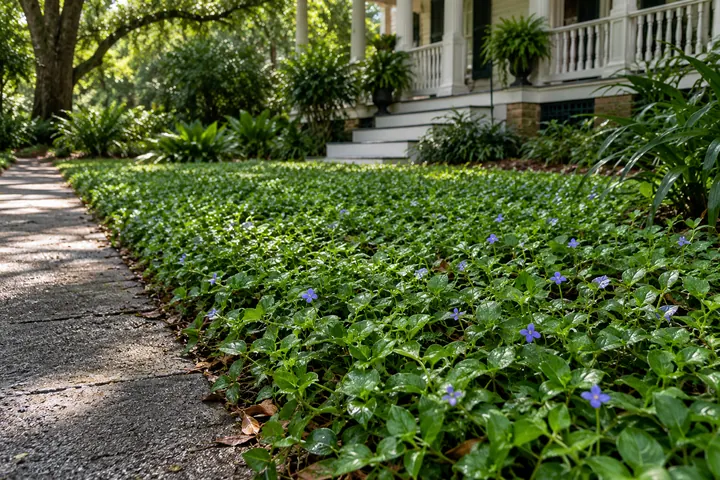
A smooth green surface can contain different plants
From the porch, a low mat may look like part of the lawn. Up close, its leaves, stems or small flowers may suggest something else. Doveweed is one candidate worth checking when that happens. Begin by separating the apparent lawn surface from the particular creeping layer under review. A uniform green color from a distance does not establish that the whole area is one turfgrass or that a single mowing instruction addresses every part of it.
LSU AgCenter describes doveweed as a warm-season annual with thick grass-like leaves, horizontal stems and small blue-to-purple flowers near leaf nodes. Its leaves and stems can form a dense low mat. The account notes that cut stem pieces can contribute to further establishment. These characteristics explain why the surface layer deserves its own review; they do not identify your patch from color alone or prove how it arrived at the property.
Follow the low layer to its visible boundary
Start with the area where the suspected mat meets the surrounding grass. Photograph both sides in one frame under the same light. That shows the texture transition and its relationship to a path, bed or other fixed feature. A close-up of glossy foliage may help with identification while leaving the extent and location of the concern completely unclear.
Use the visible boundary as an observation, not automatically as the work limit. The owner may want the surrounding lawn maintained while the uncertain layer is reviewed. Or the request may concern the path margin rather than the entire green patch. Agree on a fixed authorized area that remains understandable if the creeping outline changes before the visit. Do not ask a provider to infer the intended landscape from a leaf edge.
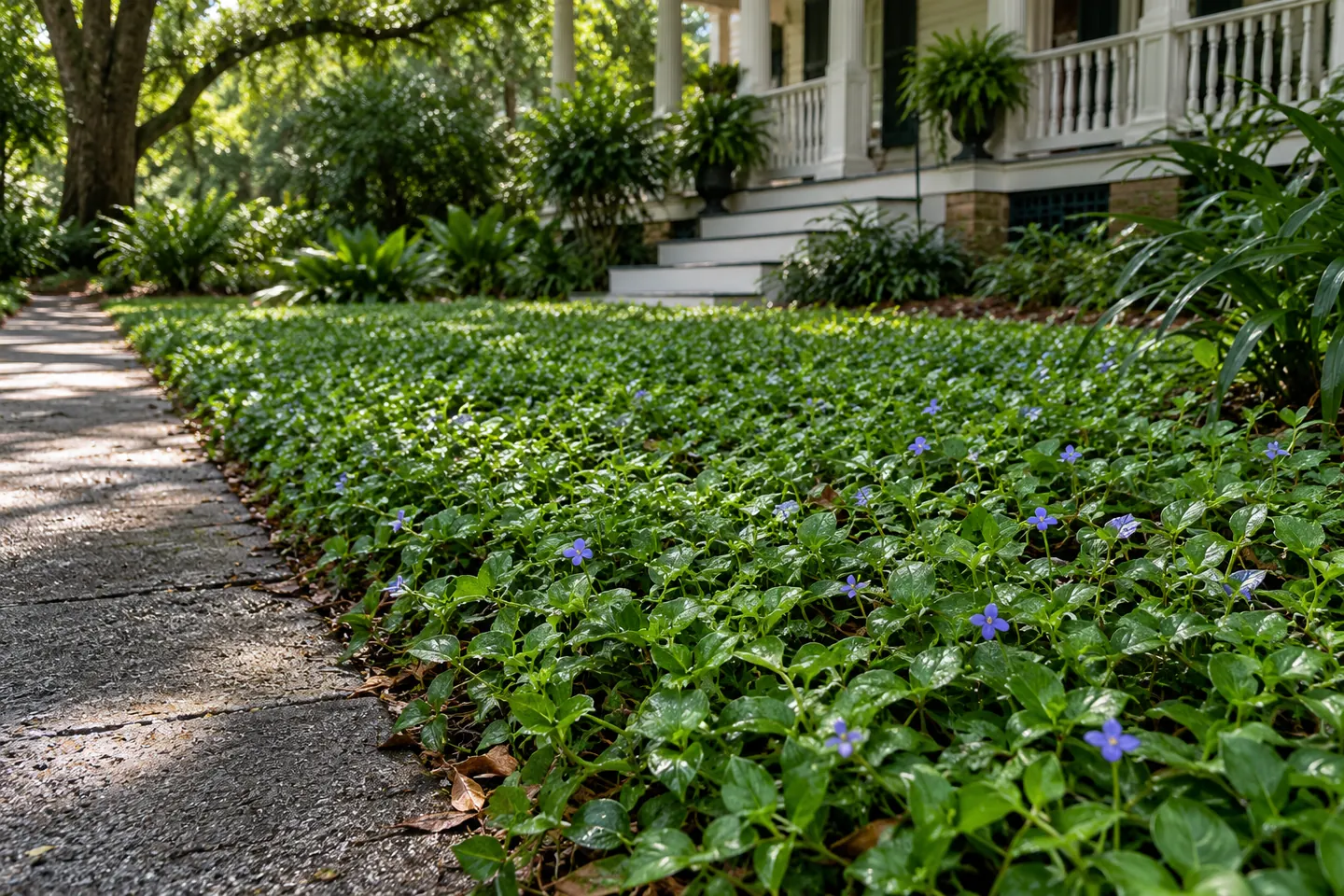
Grass-like leaves do not settle whether it is turfgrass
Describe what looks different without forcing an early category. The leaves may appear thicker, glossier or arranged along a stem that lies across the surface. Show those relationships rather than simply writing different grass. A person reviewing the inquiry can then ask for the next useful feature without treating the initial everyday description as an established botanical classification.
Avoid using a single leaf photograph to label every broad-bladed area nearby. A mixed lawn can contain several plants with superficially similar foliage. Keep each photographed example associated with its location and connected stems. If a blade was found loose after work, label it as detached instead of implying that its attachment to the pictured mat was observed.
The flower needs a stem connection
Small blue or purple flowers can make the low layer easier to notice, but a colored dot is not enough to establish identity. If flowers are present, show where they arise on the same example as the leaves. A flower from a neighboring plant can appear to sit within the mat in a crowded photograph. Keep that association uncertain unless it can actually be followed.
The original imagery in this guide supplies a yard setting for the discussion. It should not be used as a botanical key, including for exact petal arrangement or other small identification details. Compare your evidence with the linked primary account and ask a qualified reviewer about unresolved features. A generated scene cannot authenticate the species in a real lawn.
A creeping stem is more informative than a pile of cuttings
Where a horizontal stem is visible, photograph its route and attached leaves without rearranging them. Keep a wider frame so the close-up has a place in the patch. If the stem disappears under other foliage, label the missing connection. You do not need to claim that every nearby shoot belongs to one continuous system just because the surface looks dense.
A pile of cut pieces answers a different question. It may show material present after maintenance, but it does not by itself establish where each piece grew or whether it has become established elsewhere. Record the finding location and condition. Do not turn a loose fragment on the walk into proof that the entire neighboring strip now contains the same plant.
Discuss cut material without inventing a movement history
The LSU account's discussion of stem pieces is a reason to raise a clear handling question before work is agreed. It is not proof that a particular visit spread the plant across your yard. If you have a concern about material left along a path or edge, document what was actually seen and when. Keep the observation separate from a proposed explanation for how it got there.
Ask what the proposed routine finish includes in the marked area. Do not assume that mowing, weed-eating or blowing means a complete species-specific collection or eradication process. The service agreement should state the actual work rather than inherit a larger promise from a reference article. This guide supplies no treatment prescription or guarantee about preventing every future plant fragment from establishing.
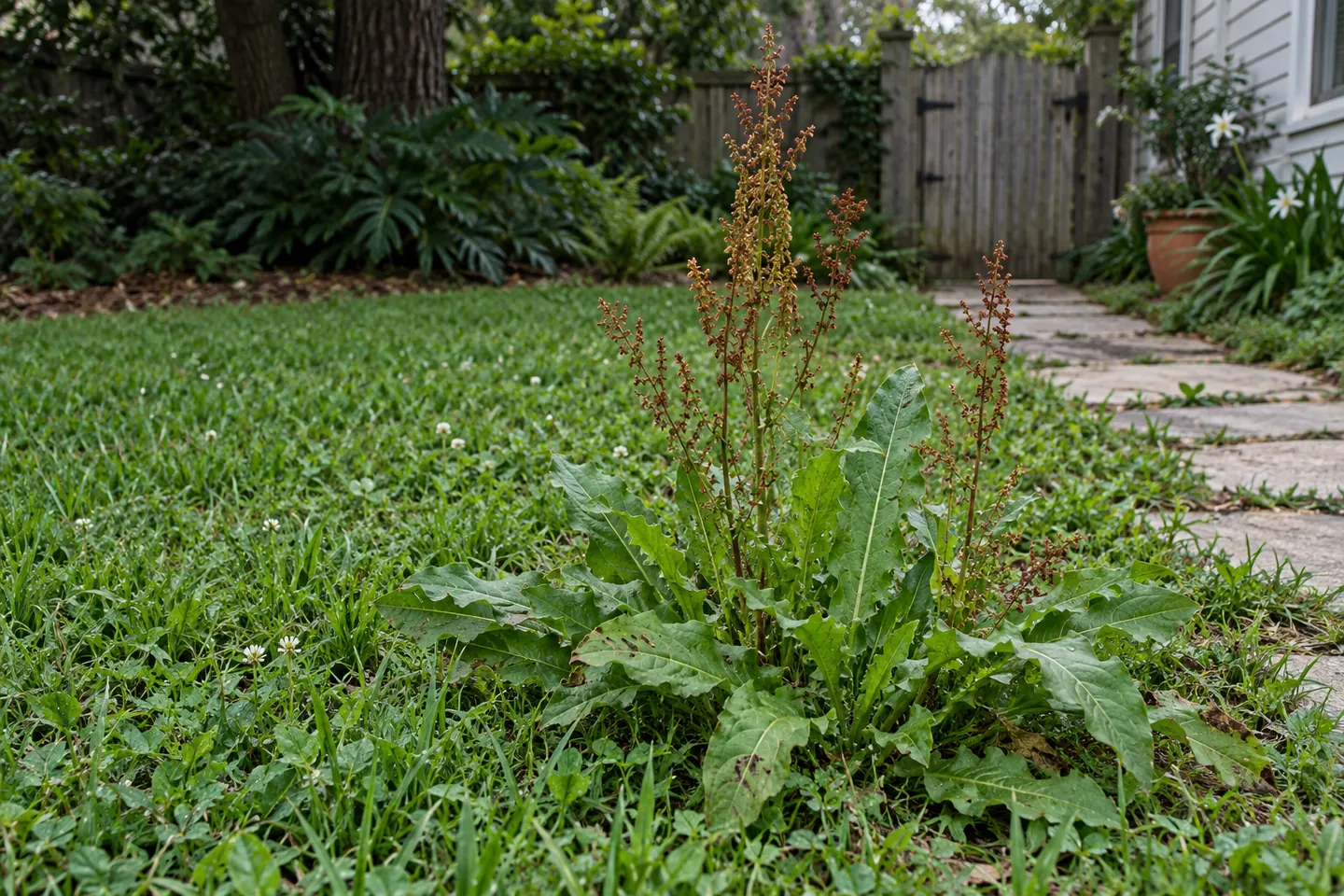
Keep moisture observations separate from the plant name
Doveweed background discusses wet conditions, but a possible identification is not a full drainage diagnosis. State whether the area was visibly wet at the time, whether standing water was observed on a known date or whether the surface is presently dry. Those are useful facts even while the plant name is uncertain. Avoid substituting a general species association for a property-specific assessment.
If current conditions affect access, explain that directly to Happy Grass before arranging a visit. A glossy leaf photograph does not tell the provider whether the ground can be used as expected. Likewise, a low mat beside a drain does not turn a routine lawn inquiry into a drainage-repair request. The site condition and the proposed operation both need their own plain descriptions.
Do not make the lowest layer a mowing-height target
A homeowner may be tempted to lower the whole lawn until the unfamiliar mat is reached. That request needs the surrounding turf and the actual lawn condition to be considered. The height of one low-growing layer is not enough information to specify the entire yard's cut. A suitable overall finish should not be inferred from a close-up of the most persistent-looking foliage.
Bring a view showing the accepted lawn and the contrasting mat together. Explain whether the concern is uneven appearance, a path boundary or plant identification before deciding what work to request. Those questions can be discussed without pretending that the same operation answers all of them. A routine surface result and a longer-term change in what grows there are separate goals.
Record the patch after work at the same scale
Use the same fixed path or bed reference for follow-up photographs. Describe whether the agreed edge or lawn finish changed and where the low layer remains visible. Do not claim complete removal from a smoother-looking overview, and do not call every remaining leaf evidence that an unstated treatment task was missed. Compare the result with the work that was actually proposed.
If another area becomes noticeable later, label it separately and give the first supported observation date. Avoid calling it new growth caused by the visit unless evidence establishes that sequence and cause. A traceable record can show a change in the visible pattern while leaving its explanation unresolved. That is enough to support a useful next question without overstating what the photographs prove.
Keep the owner's intended surface clear
A low green layer can make an open patch look more continuous than it really is. Confirm what the owner expects the area to be before discussing a change. The current request may be routine maintenance around it, an identification review or a later decision about the lawn itself. Those are different stages and should not be compressed into a general instruction to fix the doveweed.
- Show the mat-to-lawn transition and its fixed location.
- Keep flowers, leaves and visible horizontal stems connected to one example.
- Distinguish loose cut material from established growth.
- State the proposed routine finish separately from long-term plant management.
For a Gretna or Algiers property, this gives the conversation a practical shape. You can explain the low layer without relying on its green appearance, ask for the evidence needed to identify it and discuss a clear visit boundary. The useful result begins with understanding what is present and what work is actually being requested.
Review the low mat with Happy
Call 504-339-3571 and ask for Happy. Identify the mat boundary, current ground conditions and the mowing, edging, weed-eating or blowing you want discussed. Confirm the actual scope and availability before arranging a visit.