
Start with the leaf arrangement at ground level
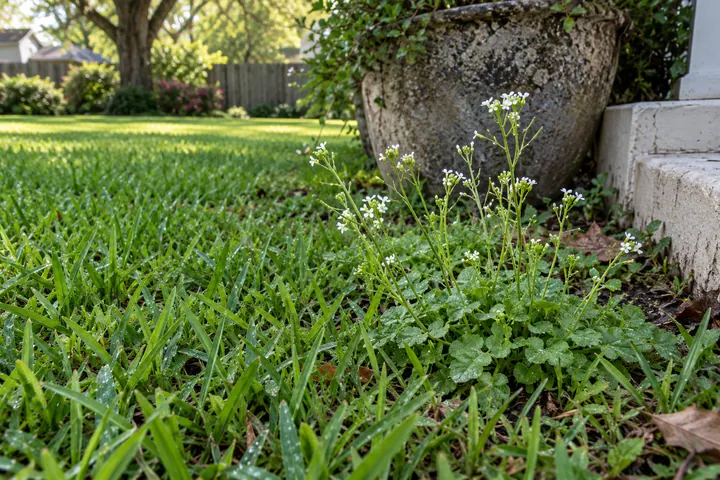
The common name hairy bittercress can send a homeowner searching for conspicuous fuzz. A better opening record shows the whole lower plant. University of Maryland Extension describes a winter annual with a basal rosette and divided leaves, typically with a larger terminal leaflet and smaller paired leaflets. Its small white flowers have four petals. Later, slender upright seed capsules become a particularly noticeable feature.
Those traits support a comparison; they do not mean that every small white-flowered plant beside a container has been identified. Photograph the leaf arrangement and the flowering or fruiting stem on the same marked example. Keep the leaflets readable enough that a reviewer can distinguish an entire leaf from one of its divisions. A close crop without the attachment can make that simple question surprisingly difficult to answer.
A leaflet is not always the whole leaf
When a rounded green part fills a phone photograph, the viewer may not know whether it is one leaf or the terminal leaflet of a divided leaf. Back out enough to show its connection to the smaller parts and then to the plant. Keep one wider image in the set even if a closer view looks prettier. The relationship among the parts is the important information here.
Use ordinary labels such as larger end leaflet and smaller side parts if you are not sure of the terminology. You do not need to copy a complete botanical description into the message. Explain which relationship is visible and which remains covered. If two leaves cross, choose another attached example rather than drawing an imagined connection through the overlap. A readable arrangement is worth more than a technically impressive caption attached to an ambiguous picture.
Do not use the common name as a hair checklist
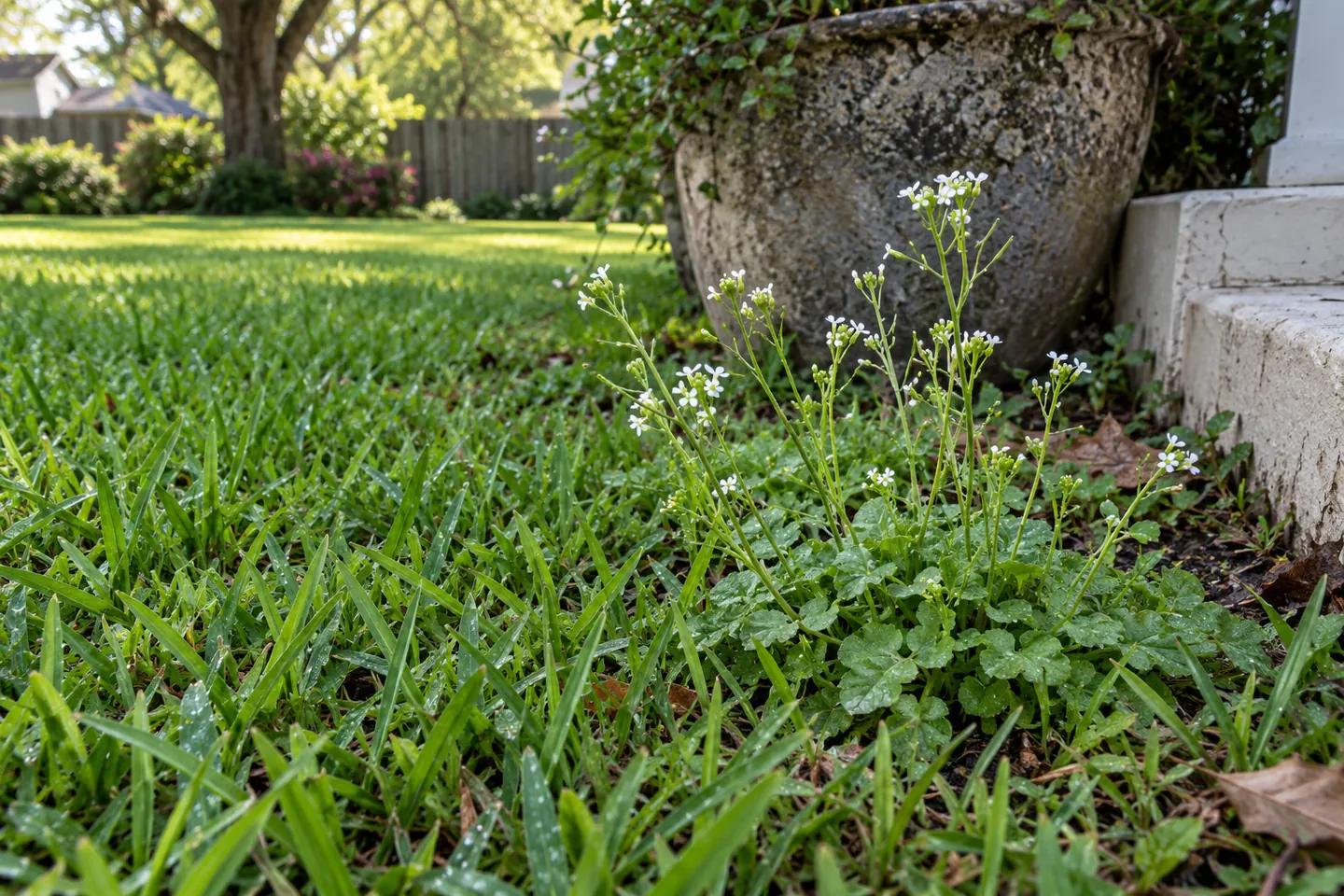
Names are useful for finding references, but they are not substitutes for the reference's full description. The absence of obvious hair in a distant photograph does not settle a hairy bittercress inquiry. Equally, a few visible hairs on an unrelated small plant do not confirm it. Keep any hair observation attached to the particular surface that was actually photographed.
If a reviewer asks about the stem or leaf base, show that area rather than answering from the appearance of another leaf. Avoid rubbing the plant or taking it apart just to create a feature you expect to find. An intact, limited observation can be reviewed honestly. A manipulated example without an explanation may make the evidence harder to interpret, especially when the original lower leaves have already been lost.
Distinguish white flowers from pale capsule edges
The slender pods can catch the light and look like pale lines beside the small white flowers. Include a frame that shows both structures in their attached positions. Describe flowers as flowers only when their parts are visible. Record the narrow upright structures separately so the reviewer can assess whether they are the capsules described in the reference.
The University of Maryland account explains that mature capsules can release seed explosively. There is no need to stage a demonstration for a lawn inquiry. A still photograph of intact structures is useful evidence. If a capsule opened while you were observing it, say what happened without inventing a distance or a direction for every seed. A brief observation does not establish the origin of all the little rosettes around a pot.
Keep container observations separate from lawn observations
A plant in a pot, one at the pot's base and one in the turf are three locations. They may look alike, but that alone does not demonstrate where they came from or how they arrived. Label each location before combining the photographs. This is especially helpful when the practical request concerns only the surrounding lawn, while the most readable example happens to be in a container.
For an Algiers yard, a useful message might identify the patio pot as comparison evidence and the adjoining turf strip as the area needing attention. That keeps a reviewer from assuming that container work is included. It also protects the identification record if the pot plant and lawn plant turn out to differ. Location labels preserve the observation even when the first candidate name needs revision.
A regional seasonal label is not a local delivery date
Maryland's winter-annual description provides biological background. It is not a promise about the exact week a plant will appear in a West Bank yard. Record when you first noticed the marked example, whether it was already flowering and whether earlier photographs exist. A date of first notice is different from a date of emergence, and the difference matters when somebody tries to reconstruct the patch's history.
Keep the local observations modest and specific. Seen beside the concrete pot on this date is stronger than always arrives in this month if that annual pattern has never been documented. Seasonal notes can help organize future comparisons, but they should not be used to blame a lawn visit or watering decision that the record does not actually connect to the plant's appearance.
Clarify the low layer before discussing the finish
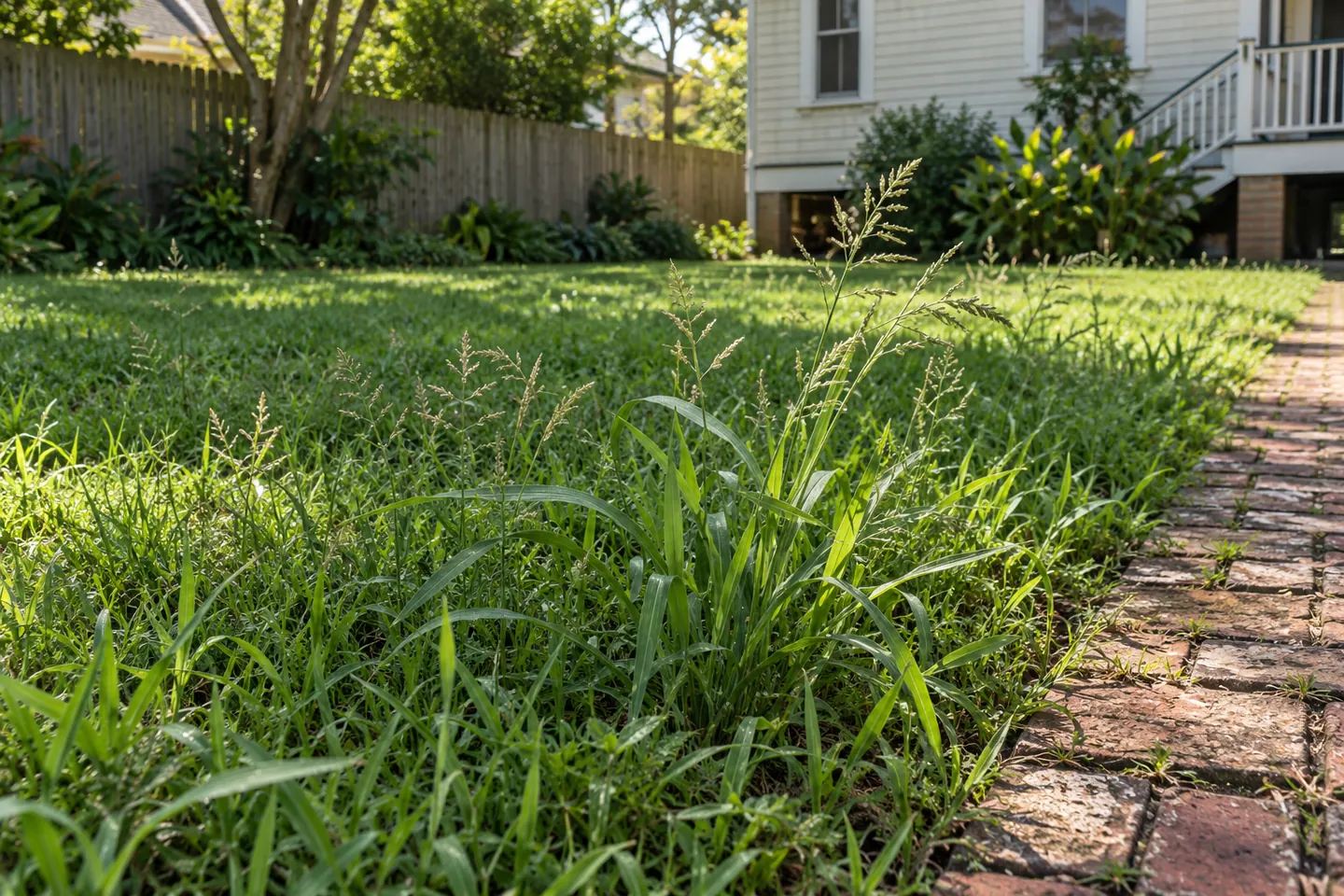
A lawn can look taller because fine flower stems project above a small rosette. Another lawn can look uneven because many rosettes interrupt the surface even when the stems are inconspicuous. Show the ordinary viewing position and say which effect concerns you. An extreme close-up cannot tell Happy how the patch reads from the patio or front walk.
Ask about the specific routine operation proposed for the location. Mowing, edging, weed-eating and blowing have different roles in a lawn visit, and a plant name does not select among them. Confirm what visible finish is being discussed and whether the area is accessible. A conversation about tidying an edge should not quietly become a promise to eliminate every lower plant, its roots or future seedlings.
Preserve evidence before it changes
If identification is important, collect the useful photographs before routine work changes the flowering stems. Do not postpone an already necessary safety or access decision merely to keep a tiny flower for a photograph. Instead, tell the reviewer which structures were present and which are no longer available. An earlier clear image may remain useful if its location and date were preserved.
Save an original image and a matching crop under the same example label. Mark a later comparison as another plant when it is not the original individual. This prevents a collection of convenient images from becoming a fictional single plant with every possible feature. The record should help someone understand the evidence you have, not create the appearance that every detail was observed together.
Keep a leaflet map separate from a plant map
For a difficult divided leaf, make a small sketch showing only the connections you can trace. Give the complete leaf one label, then use simple letters for the visible end and side parts. Put a question mark at an overlap instead of completing a guessed line. Keep the sketch beside its source photograph so a reviewer can tell that it is a navigation aid, not an independent botanical drawing. This can make a conversation about the larger end leaflet much clearer than repeatedly pointing to the round green part in an unlabeled crop.
Use a different record for the plant's position beside the pot. A diagram of leaf divisions and a map of several rosettes answer different questions, and combining them can create confusing labels. On the location map, a single dot can stand for the whole marked example. On the leaf sketch, the label should refer to the specific attached leaf being discussed. If a later image shows another leaf from the same plant, give it a new leaf label rather than overwriting the first. The reviewer can then explain whether the second view resolves the original overlap or simply supplies a better comparison. These modest records preserve useful relationships without pretending that every small part was visible at once.
Ask one question that the evidence can answer
A focused identification question can ask whether the divided lower leaves, small white flowers and narrow upright capsules belong to the hairy bittercress comparison. Add a note about anything the images cannot show clearly. Keep maintenance questions in a separate sentence so the reviewer does not mistake a request for routine lawn help for a request to certify a species.
- Show the complete divided leaf before enlarging a leaflet.
- Label pot, paving edge and turf examples individually.
- Keep intact capsules as observation evidence without staging seed release.
- Record first notice honestly when the emergence date is unknown.
Talk about the pot-side strip with Happy
Call 504-339-3571 and ask for Happy. Identify the lawn area, current access and the mowing, edging, weed-eating or blowing you want discussed. Confirm the actual scope and availability before a visit is arranged.