
Read the frame before enlarging a flower
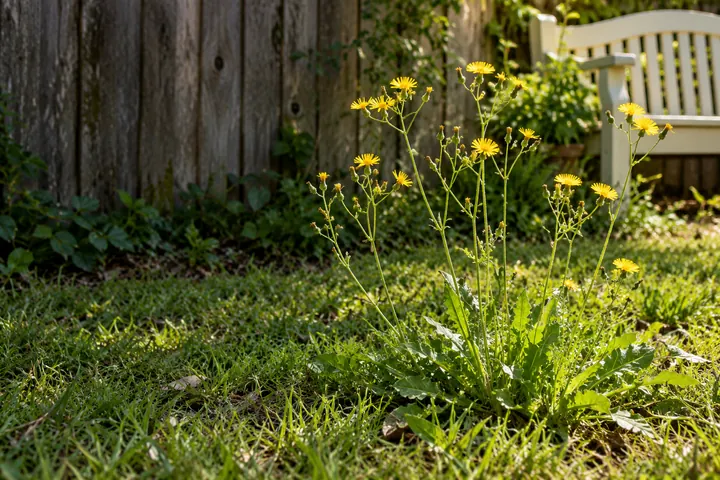
A close yellow flower can look familiar while concealing the most useful distinction. LSU AgCenter's Greater New Orleans gardening account describes Asiatic hawksbeard, Youngia japonica, as an annual with a lower rosette, lobed leaves and slender branching stems carrying small yellow flower heads. Its account also describes milky sap and later fruit with a tuft of dispersal hairs. Those details belong within a connected plant record, not a collection of interchangeable yellow-flower images.
Begin far enough back to show the route from the lower plant to the branching top. Then add a close view of a head that is visibly attached to that frame. This order gives a reviewer a structural question to answer before the details are enlarged. A crop that removes every branch may be less informative than a plain overview with one clearly marked example.
A branching stem needs visible junctions
Two slender stems can cross without forming a branch. Look for a readable junction before describing a fork as part of one plant. A second angle may separate a crossing stem from an attached side branch. Keep the original wide image so another person can understand which junction the close view represents. Do not draw a confident branch diagram over a connection hidden by lawn blades.
If a plant leans against a neighboring stem, label the uncertainty. The record can still show the general form while explaining that one connection is unresolved. A reviewer may ask for a clearer example. That is a useful next step, not a reason to invent the missing junction. Following the actual frame helps distinguish a branching plant from several simple stalks that merely occupy the same patch.
Small heads can be numerous without being one cluster
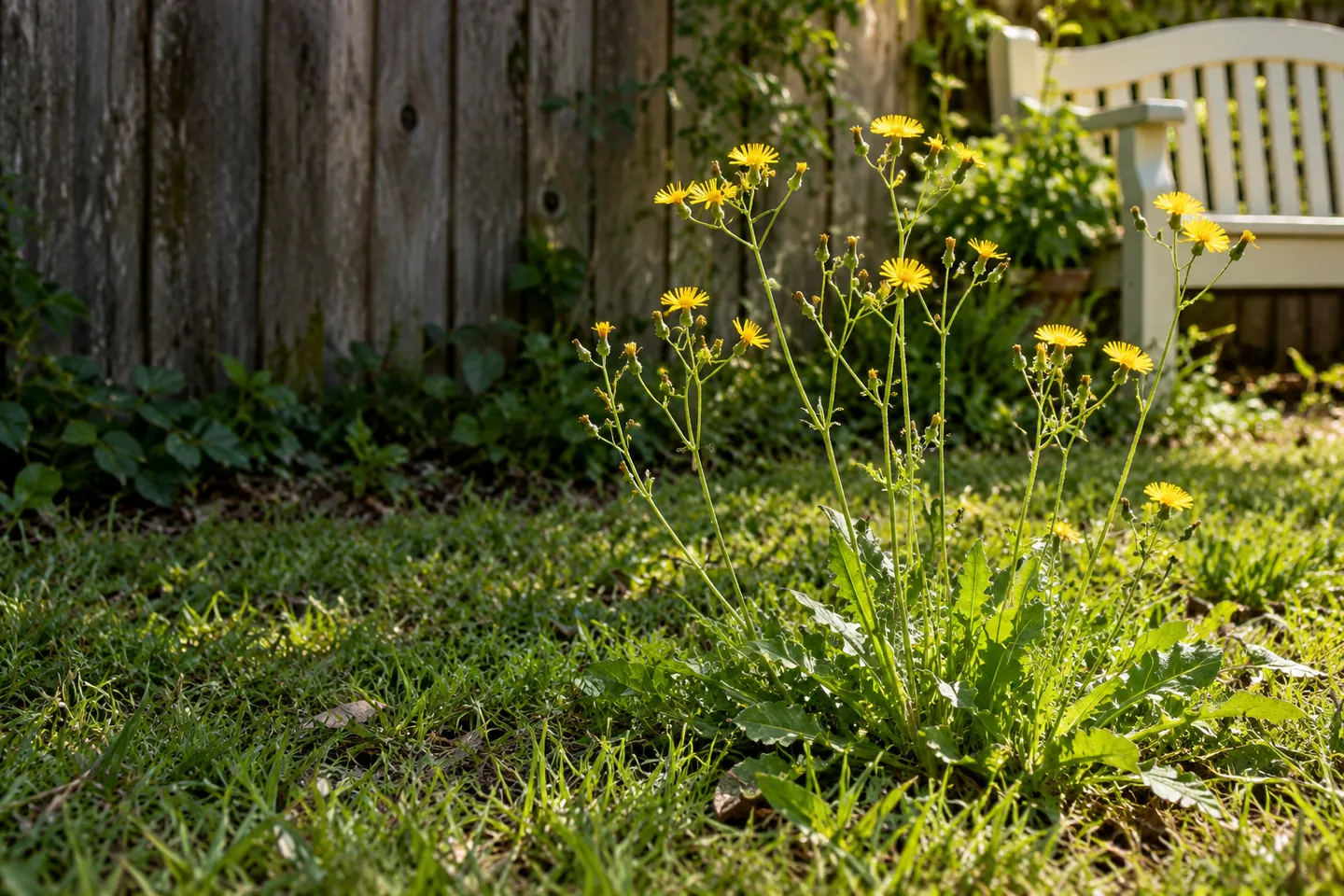
In a photograph, heads at different depths may appear tightly grouped. Show the spacing along the attached branches as well as the nearest flower. Describe the number and positions you can resolve without trying to count every blurred yellow mark in the background. A comparison image should make the arrangement easier to understand, not turn an uncertain background into a precise census.
For the lawn conversation, you may only need to explain that the fine branching top is visible from the patio. Say that directly. The plant's identification and its effect on the yard's appearance are related but separate questions. A flower close-up can support the first; an ordinary viewing-distance image supports the second. Keeping both roles clear prevents one attractive detail from standing in for the whole maintenance concern.
Connect the lower rosette without borrowing a neighbor
The lower leaves can become hard to distinguish in a mixed patch. Look for an example whose base is readable and show the stem emerging from it. Do not assume that the largest lobed leaves in the frame supplied the nearest yellow flowers. If the relationship cannot be traced, keep the lower-leaf photograph as an unconfirmed nearby example rather than silently combining the two.
A stable label such as cream-seat example is useful before the name is settled. Keep a second rosette under a separate label even when it looks similar. A later review can then explain which record fits the candidate and which needs more evidence. The location labels keep the homeowner's practical notes useful through that correction, so changing a plant name does not erase the work of mapping the lawn concern.
Milky sap is reference information, not a home test request
The LSU description includes sap among the plant's characteristics. That does not mean you should break an unidentified plant, handle its liquid or stage a test to finish a routine lawn inquiry. Document an already observed condition if it matters and ask a qualified reviewer what further evidence is appropriate. Many identification questions can be organized before anyone needs to discuss a specimen.
Avoid treating a single fluid observation as a complete identification. The branching form, flower heads and lower leaves still need to be considered together. Keep the caption factual about where and how an observation occurred. A description copied from the candidate profile should never be substituted for something actually seen on your example, even if every other visible feature seems to fit the first guess.
A fine pale tuft is not a complete seed history
The later fruiting structures may become noticeable after the yellow heads change. Keep dated photographs if the same marked example is being followed. An older image of a yellow head and a newer image of a pale tuft can be useful when their relationship is clear. If the later image came from another plant, identify it as a comparison rather than a continuous record.
Do not infer a route across the property from the direction a tuft appears to point in one frame. Nor can a photograph establish when all the surrounding rosettes began. Map where examples are visible and preserve any known maintenance dates separately. This gives a reviewer a usable observation history without a speculative story about exactly which plant supplied every new-looking patch.
Keep the annual label separate from a local calendar promise
An annual life-cycle description provides background about the plant. It does not establish a guaranteed appearance or disappearance date for a particular Harvey lawn. Record first notice, visible flowering and any later observations as separate dated facts. If earlier checks were not made, leave the beginning of the timeline unknown rather than assigning it to the last routine lawn visit.
This matters when a fine-stemmed plant suddenly becomes obvious above the turf. Becoming visible from the porch is not necessarily the same event as first emerging at ground level. Explain the change you actually observed. A useful message may say that branching yellow heads are now noticeable from the seat, while the age of the lower rosette is unknown. That is enough to start a focused conversation without inventing a growth rate.
Agree on a visible finish in a marked area
Show the boundary of the area you want discussed. A narrow strip beside a seat, a bed margin and an open turf area can require different routine operations even when similar plants appear in all three. State whether the concern is raised stems, coarse lower texture or uncertainty about the plant. Happy should not have to infer a complete task from a candidate species name.
Confirm which mowing, edging, weed-eating or blowing is proposed and what result belongs to that work. A shorter visible top is not a promise about permanent absence of the plant or its future seedlings. A clear scope also prevents an identification conversation from expanding into an unstated request for treatment, soil correction or bed work. Discuss those boundaries before judging a later photograph as a success or failure.
Use branch labels to keep a follow-up understandable
A fine branching top can be difficult to discuss by telephone because several junctions look alike. In an annotated copy, label the lowest readable fork and one upper side branch. Keep the labels outside the plant outline and retain the original photograph. A caption can then explain which fork is clearly attached and which apparent crossing still needs another angle. This gives both people stable reference points without tracing an idealized frame over parts that the camera did not resolve.
When the follow-up image is taken, identify the same fork if it is still available. If the top has changed or been cut, say that the earlier reference point is no longer present. Do not rename a convenient new branch as though it were the original one. The comparison may still show the current form, but it answers a different question from tracking a particular junction over time. A short note about that change can prevent a long exchange in which each person is discussing a different part of the plant. It is also useful when the reviewer suggests another candidate: the branch labels remain tied to observed structures, so the discussion can improve without discarding the evidence or pretending that the first name had already been established.
Send a frame, a base and a readable head
Choose images that preserve the structural story: one overall plant, one lower connection, one branch junction and one attached flower detail. More pictures are useful only when their examples and roles are clear. Tell the reviewer which connection remains uncertain and ask whether the visible arrangement supports the Asiatic hawksbeard comparison. Keep a revised conclusion with the same location label.
- Distinguish crossing stems from attached branches.
- Keep the lower rosette tied to the marked flowering frame.
- Record existing observations without staging sap or seed tests.
- Describe the ordinary lawn view separately from the close identification detail.
Bring the branching-flower question to Happy
Call 504-339-3571 and ask for Happy. Describe the marked area, current access and the mowing, edging, weed-eating or blowing you want discussed. Confirm scope and availability before arranging your visit.