
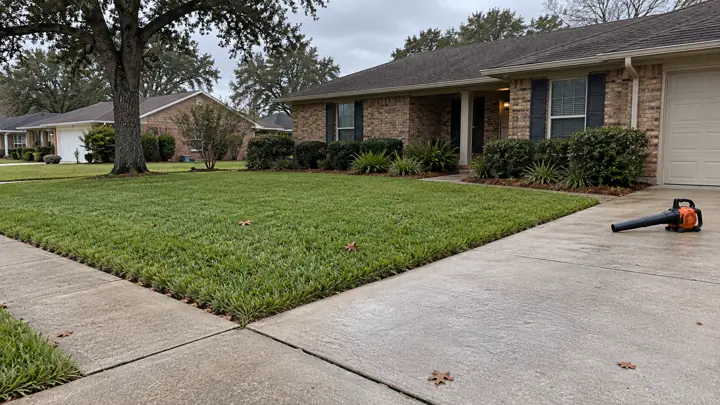
Finish the cut.
Leave the path clear.
Freshly cut grass belongs in the lawn plan, not as a surprise across the driveway. Blowing is the finishing step that addresses immediate clippings and loose mowing debris on the paved areas included in your service.
It’s the last little detail in a lawn-care plan that includes mowing, edging and weed-eating.
The important word is agreed. A routine finish after mowing is different from clearing months of leaves, moving a pile of soil or cleaning construction waste. Show Happy the actual surfaces and material so the quote reflects the work you want done.
What a clean finish means for your property
Most people notice the entrance, the driveway and the walkway to the door. Those are often the surfaces where clippings make a newly cut lawn feel unfinished.
A useful quote identifies which paved areas will be addressed and what should happen to the loose material.
Do not assume that every hard surface is included simply because it is somewhere on the lot. A back patio, pool surround or detached parking area may require separate access or a different approach.
Describe these areas up front, particularly if the initial request only shows the front yard.
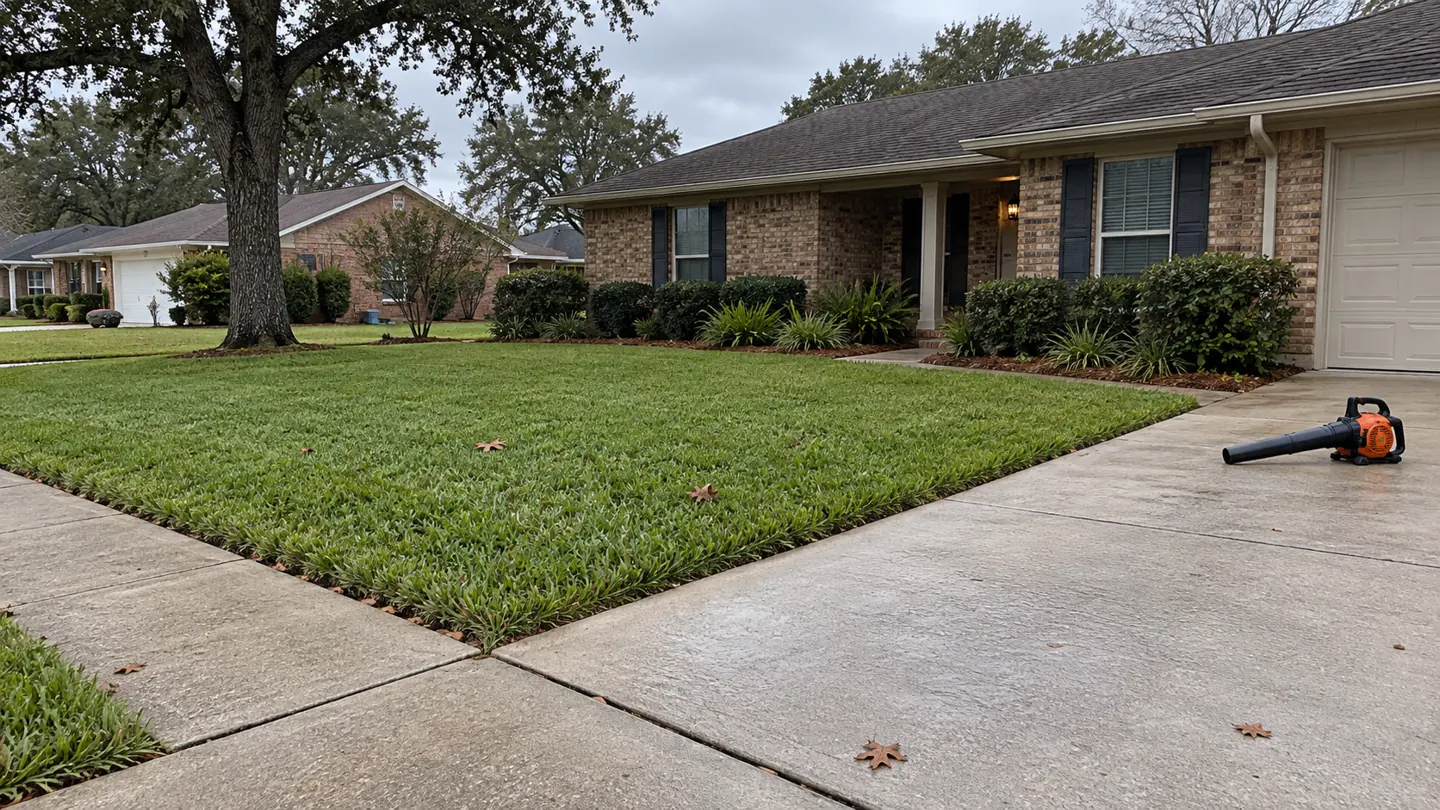
A blower moves material; it does not wash the surface
There is a clear difference between removing loose grass and cleaning the concrete itself. Stains, algae, embedded dirt and discoloration do not become a lawn maintenance task because a blower passes nearby.
If your main concern is a dirty surface rather than loose debris, explain that before requesting the work.
The same distinction applies to wet mud. Material adhered to the concrete may not move like dry clippings. A lawn visit also does not correct the drainage or soil movement that put it there.
We keep those boundaries clear so the finished result is judged against a realistic scope.
Keep clippings out of drains and water
The destination of the debris matters. Loose material should not be deliberately directed into a storm drain, a water feature or an adjoining property.
Point out nearby drains and sensitive areas when describing the lawn. That information helps the finishing approach fit the layout.
Fine clippings from appropriate routine mowing may be returned within the lawn, while heavier accumulations may need another handling method. If you prefer bagging or collection, discuss it before the visit.
A large load of material is not made to disappear simply by moving it somewhere less visible.
Different lawn conditions produce different cleanup needs
A regularly maintained lawn can produce a manageable amount of fine material. A delayed cut may leave longer clippings, and wet conditions can cause clumps that do not spread or move the same way.
Those differences are part of deciding when and how to mow, not just how long to run a blower afterward.
If the yard is tall, soaked or covered with old debris, include current photos in the quote request.
Happy can review the first-visit condition and distinguish it from the maintenance visits that might follow. A realistic starting scope makes the ongoing arrangement easier to understand.
Access and clearance are part of the finish
- Identify cars, trailers and other parked items near the work area.
- Keep garage doors and sensitive openings closed where appropriate.
- Point out pools, ponds, drains and delicate planting areas.
- Move loose personal items from the surfaces you want cleared.
- Explain which side paths or back patios belong in the request.
- Tell Happy about broken surfaces or objects hidden in the debris.
These are practical preparation details, not a request to deep-clean the property before a lawn visit. The aim is to avoid having the finishing work depend on assumptions about a vehicle, an open door or a surface that cannot be reached.
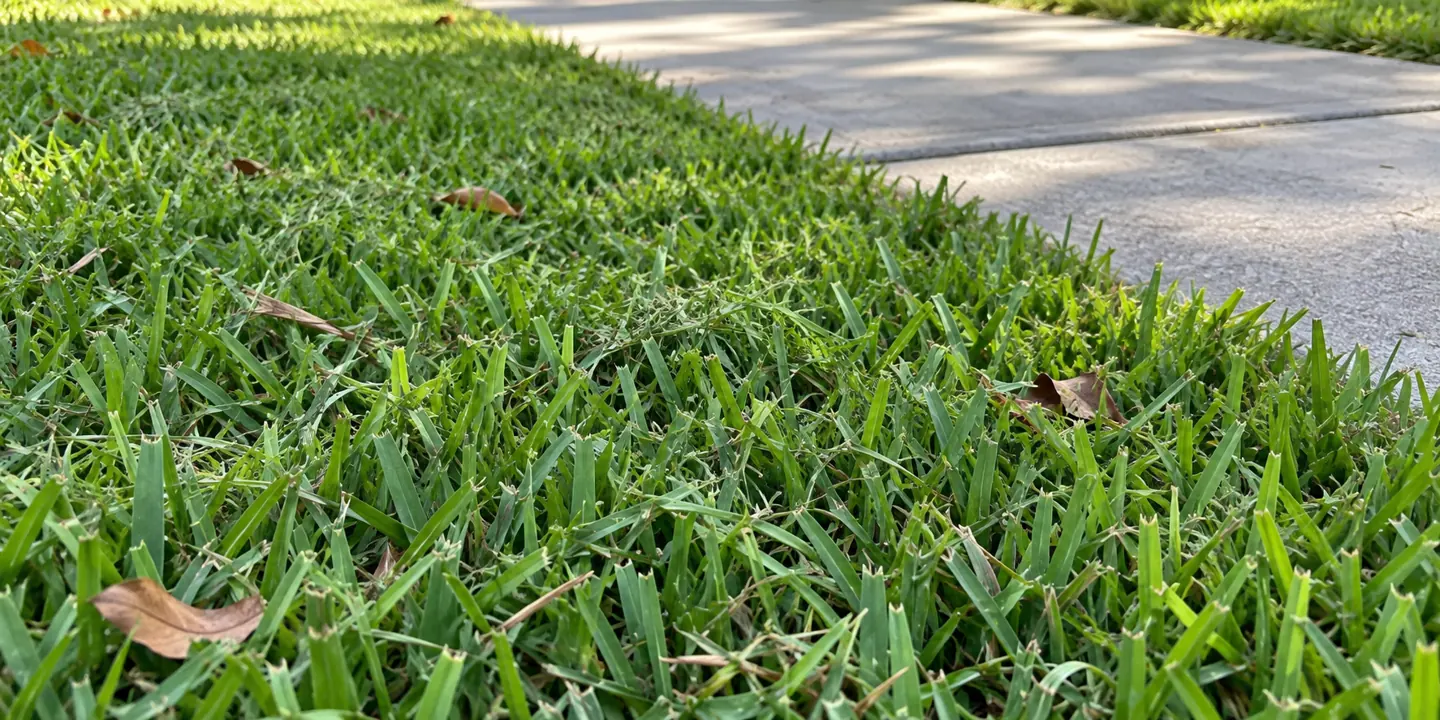
Distinguish mowing debris from a larger cleanup
Grass clippings, fallen leaves, household trash, soil and construction material are different kinds of material. Their handling and disposal needs are not interchangeable.
If you are looking for a heavier cleanup, send pictures and name what is actually there instead of describing everything as yard debris.
Happy can then explain whether the request fits the available work. The services listed on this website should not be expanded into hauling, pressure washing or general property clearance without a separate agreement.
Clear limits make it easier to receive a useful answer and compare quotes fairly.
Connect the finish to the full maintenance visit
Mowing brings the turf to an agreed height, edging defines appropriate hard-surface borders and weed-eating handles suitable growth around obstacles. Blowing addresses the immediate paved-area finish after that work. Ask for the combined option if that is the result you want.
Happy Grass lists Harvey, Marrero, Gretna, Algiers, Belle Chasse and Westwego as service areas. Request a lawn maintenance quote with your property address, current photos and clipping preferences, or call (504) 339-3571. Ask for Happy and explain what a finished yard looks like to you.
Follow the path you use every day
When you picture a tidy finish, think about where you actually walk. The front approach, the path to the side gate and the paved area beside the patio may each matter for a different reason.
Tell Happy which of those surfaces belong in the work so the cleanup is tied to your property and the visit you’re requesting.
Name the surfaces and the material separately
A useful request might say, “Please include the front walk and driveway after mowing; there is also an older leaf pile beside the fence that I’d like to discuss separately.” That gives Happy two clear questions to answer.
Asking for the entire property to be cleaned can blur the difference between the routine finish and a larger cleanup job.
If you don’t know what the material is, avoid guessing. Show it and explain what you know about where it came from. Soil from a project, packaging from a delivery and lawn clippings are different kinds of concerns.
A lawn-service conversation should identify the actual work rather than treat every loose item as something a blower will handle.
Make room for the finishing work
Before the confirmed visit, think about movable items along the agreed surfaces. A parked vehicle, loose outdoor belongings or a delivery can change which areas are accessible.
Tell Happy if the arrangement is different from the photos used for the quote. Put away small household items yourself rather than leaving them mixed into the mowing debris.
Mention nearby open doors, a garage, planting beds or other places where you want particular care. Agreeing where material should be handled is part of the conversation.
A clean finish should be understood in relation to the work area, rather than simply moving the visible mess somewhere you didn’t want it.
Judge the visit against the finish you agreed on
After the lawn work, look at the named surfaces and the immediate mowing debris that was part of the service. If you have a question, describe the specific area and ask Happy about it.
That is easier to resolve than a broad statement that the yard doesn’t look finished, especially if the question involves material outside the agreed scope.
Ready for the last little lawn detail to get some attention? Tell Happy which paths and paved areas matter to you. We can discuss the full mowing, edging, trimming and blowing combination, then keep the plan as clear as the walkway you want to enjoy.
Keep a clear surface reference for follow-up
If a particular walkway regularly raises questions, keep a dated wide view that shows its relationship to the lawn and a close view only when a specific material needs explanation. Say whether the picture is from before or after the agreed work. This separates an existing pile beside the path from a question about the immediate mowing finish. Use the same location name in any follow-up message and describe what you want reviewed there. A consistent photo reference helps the conversation stay attached to one surface and the actual accepted scope.
Follow a piece of material through the request
When you ask about blowing, identify the starting surface and the intended finish. For example, distinguish loose mowing pieces on the front walk from a pile of older leaves beside the garage. Both may appear in one photograph, but clearing the walk and handling the pile are different questions. Keep the destination discussion attached to the material you mean.
If the work area changes before the visit, update that distinction. A new pile should not silently become part of the previously discussed finish. Afterward, review the named surfaces from a normal viewpoint and describe any remaining concern by location. This is more useful than saying the yard still needs blowing when the unresolved issue may actually be collection, old debris or material outside the agreed area.