
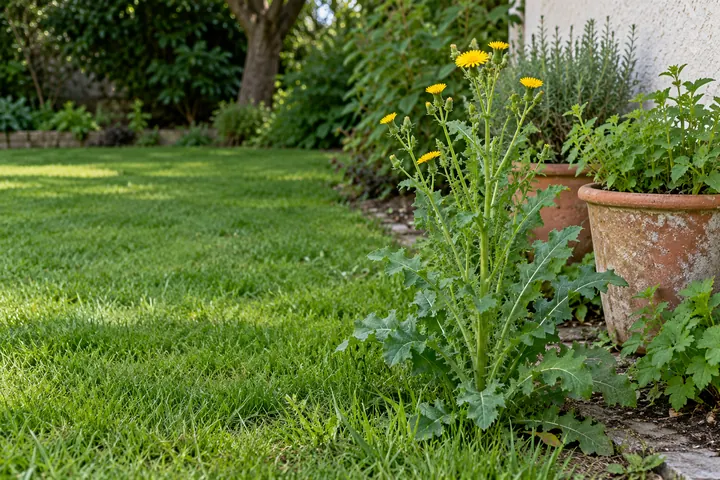
Begin with the upper leaf attachment
The University of California gallery describes annual sowthistle, Sonchus oleraceus, as an erect annual with a smooth stem, hollow internodes and milky sap. Its upper leaves clasp the stem, and its yellow heads occur in groups. Lower leaves can have a prominent terminal lobe. These features provide a useful comparison when the photographed plant's parts can be followed together.
Start with one attached upper leaf and the stem around its base. A broad leaf behind a stem can look as though it wraps around it when the attachment is actually hidden. Use a second angle if needed, and keep a full-plant view to show where the detail belongs. A confident common name should follow the evidence rather than supplying the missing connections in the photograph.
Clasping is an attachment question
When asking whether a leaf clasps the stem, the relevant area is the leaf's base. An image of the blade tip cannot answer that question even if its outline is very sharp. Include enough of the stem above and below the attachment that a reviewer can orient the view. State whether both sides of the leaf base are visible or whether one remains covered.
You do not need to bend a brittle stem or strip the neighboring leaves to make a perfect textbook view. Choose a more readable intact example when one is available. If the only example is obscured, describe it honestly and ask what further evidence would help. A limited photograph can still locate the plant and explain the lawn concern while the identification detail remains unresolved.
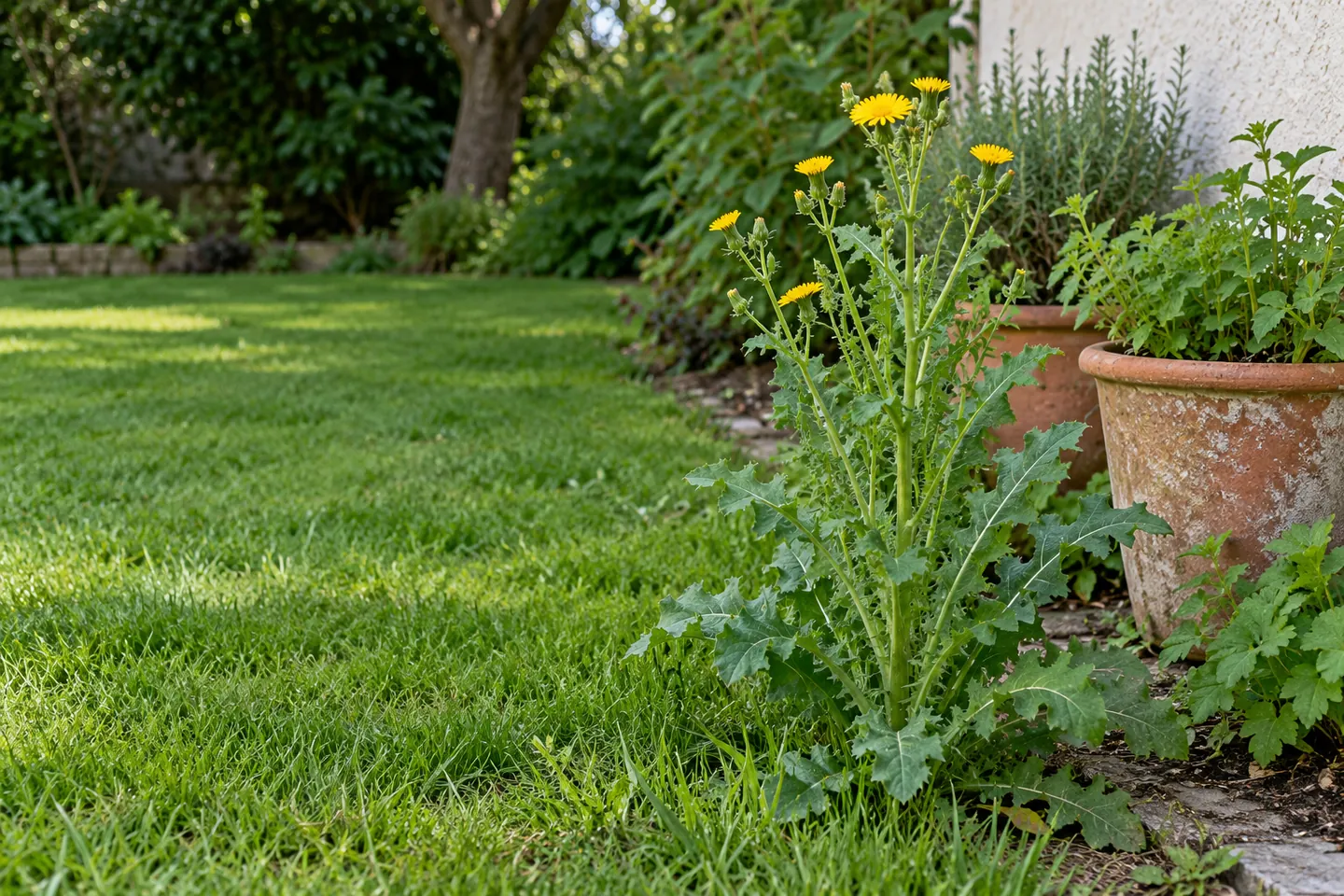
Separate the terminal lobe from an entire leaf
A large end portion of a lobed leaf can look like a separate leaf when the narrower lower portion is hidden. Back out enough to show the full blade outline and its connection to the stem. Keep that image alongside a closer crop if the leaf margin is part of the review. Neither image should be expected to answer every structural question on its own.
In a mixed patch, do not borrow a convenient lower leaf from another plant. Give each example a stable location label and preserve the relationship between its lower and upper photographs. If you cannot trace that relationship, say that the lower leaf is from a nearby unconfirmed example. The distinction protects the record from becoming an imaginary plant assembled from several attractive details.
Grouped heads are different from one crowded camera angle
Several yellow heads may be attached to the same branching top, or they may belong to neighboring plants. Show the supporting branches where they are visible. An overhead image of yellow circles alone cannot establish their connections. Count only the structures whose positions can be understood, and describe the remainder as background rather than treating a blurred patch as a precise number.
UC also distinguishes the loose, fluffy later seed head from a dandelion's more spherical appearance. A comparison photograph should preserve that actual structure instead of relying on the general presence of white fluff. Keep the date and label with each image. If a yellow head and a fluffy head came from different plants, present them as separate examples rather than a timeline of one individual.
Do not stage a sap or hollow-stem demonstration
The gallery's stem and sap descriptions are identification background. They do not require a homeowner to cut an unidentified plant, handle its liquid or produce a broken-stem photograph for a routine lawn discussion. If a stem was already damaged, explain that condition and preserve any intact view. Ask a qualified reviewer what specimen information is appropriate if the existing images are insufficient.
One fluid observation would not replace the rest of the comparison anyway. Keep leaves, attachment and flowering arrangement in the evidence set. A description copied from the reference is not an observation of your plant. When a feature has not been checked, mark it unknown. That simple discipline makes it easier for a reviewer to distinguish a plausible candidate from a conclusion that still lacks important evidence.
A leafy wall-side stand is an access description too
The practical question may concern a narrow strip between a wall and the maintained lawn. Show the whole space from an accessible viewpoint, including any fixed obstacle that affects the proposed work. Do not let a close plant image conceal a tight corner, loose material or an unclear boundary. These conditions can matter before anyone settles the species name.
For a Gretna yard, a useful message can identify the garden-wall strip, the number of separately marked examples and the result you want discussed. Keep the access note separate from a claim that the plant is hazardous or that special removal has already been agreed. A tall plant photograph does not by itself define a service, and an identification article does not expand Happy Grass's routine lawn-care scope.
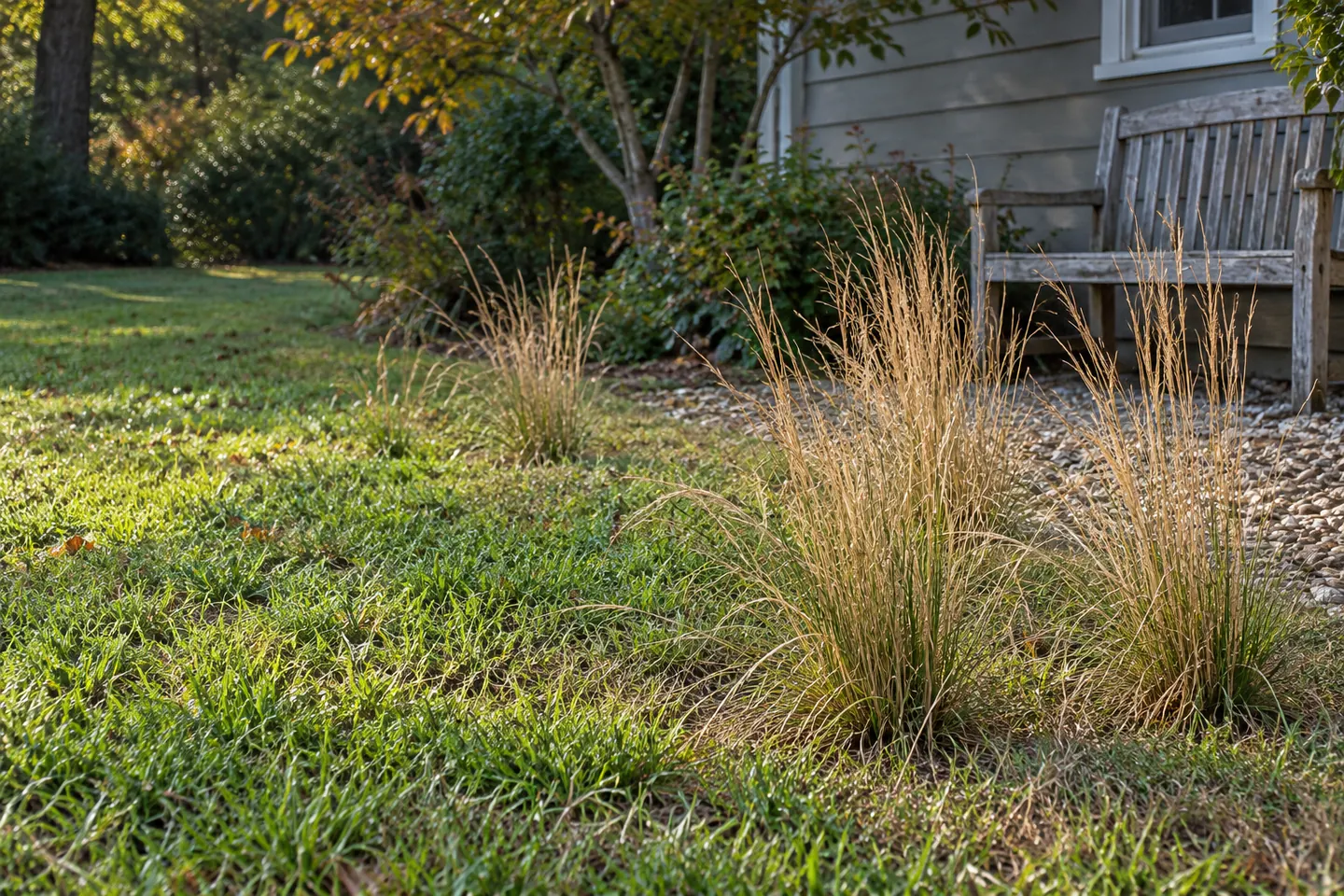
Define the visible result before judging a return visit
One request may be to tidy the tall flowering top. Another may concern the lower leafy texture along the wall. A third may be a question about whether routine work can be arranged in the narrow space. Name the actual concern. A lawn visit can only be evaluated fairly against the operations and visible finish that were discussed for the marked area.
If a later image shows lower leaves after taller growth was cut, describe that result directly. Do not use the remaining leaves as proof that every possible task failed. Equally, do not describe a shorter surface as proof that the whole plant and its future appearance have been eliminated. Routine mowing, edging, weed-eating and blowing should be explained in terms of the specific work proposed, with any separate question left explicit.
Preserve uncertain names through maintenance changes
A plant can lose the structures that made it recognizable after cutting or natural change. Save the earlier labeled images instead of replacing them with a new close-up of a different shoot. Record the maintenance date if known and the date of each observation separately. A later short example in the same strip is not automatically the same individual as the earlier tall plant.
If the candidate name changes after review, update the identification note while keeping the location label. The homeowner's practical map remains useful even when the botanical conclusion improves. This is one reason to call a record wall-strip example two rather than naming every file confirmed sowthistle. A location can remain certain while a species is still being examined.
Distinguish the leaf base from a cut point
A damaged or previously shortened stem can complicate a photograph of an upper leaf attachment. Keep the cut or broken area in a separate labeled view. Do not use an irregular edge at the stem tip to stand in for the leaf base being discussed. A reviewer needs to know which feature is the attachment and which reflects the present condition of the stem. If the event that damaged it was not observed, describe the appearance without assigning a tool, date or person to it.
A useful caption can identify the leaf-base photograph as an intact side attachment and the second photograph as the current top of the same marked stem. If that continuity cannot be traced, label the images as separate examples. This lets the reviewer assess the attachment without importing assumptions from the damaged top. It also makes a maintenance follow-up clearer: the photographed cut point, remaining lower foliage and grouped heads elsewhere in the strip may each answer a different question. Keep those questions distinct before concluding that the whole stand has one history. A wall-side patch often contains enough overlap that precise labels save more time than a large album of vaguely similar leaves, especially when the current shape differs from the earlier intact view.
Ask about a connected set of features
The strongest first question asks whether the readable upper attachment, lower leaf outline and grouped heads support annual sowthistle. Explain which stem details are unknown rather than filling them in from the gallery. Include an ordinary yard overview so the lawn discussion has the same clear location as the identification discussion.
- Photograph the leaf base when the question is clasping.
- Keep the full lower blade with its terminal lobe visible.
- Show supporting branches beneath grouped heads.
- Separate damaged-stem observations from unperformed tests.
- Keep a dated result tied to the work actually agreed.
Discuss the wall strip with Happy
Call 504-339-3571 and ask for Happy. Describe the space, access and the mowing, edging, weed-eating or blowing you want considered. Confirm the actual work and availability before arranging a visit.