
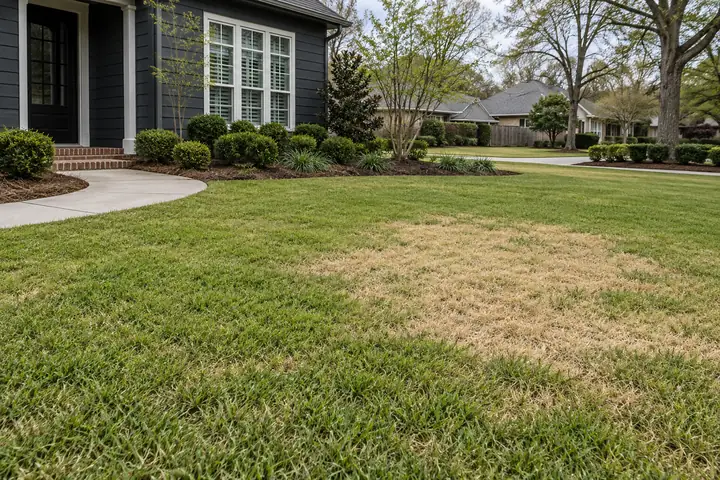
Spring reveals a contrast that winter can hide
When an entire bermudagrass lawn is dormant, a pale section may not stand out. Once surrounding grass resumes growth, an area that stays straw-colored becomes easier to notice. Spring dead spot is one possible explanation for that contrast. Extension references describe a disease involving below-ground and spreading plant parts, with damage becoming apparent as the turf comes out of dormancy. The name refers to when the loss is seen, not necessarily when the problem began.
This guide concerns that specific bermudagrass pattern. It is not a reason to name every brown spring lawn patch spring dead spot. Begin by checking whether the grass around the area really is resuming growth, whether the pale area remains different and whether the turf identity is known. A warm afternoon, green weeds or one sunny strip beside pavement do not establish the condition of the whole stand. Keep the comparison tied to the intended grass.
Confirm bermudagrass before borrowing a disease name
Spring dead spot is strongly associated with bermudagrass. Some regional references discuss less frequent occurrences on other turf, but that does not make the name a general diagnosis for all warm-season lawns. A West Bank yard containing St. Augustinegrass, centipedegrass or a mixture deserves an assessment of the plants actually present. Do not choose the grass identity from the disease photograph that looks closest to the patch.
If the lawn is mixed, ask which grass occupies the pale area and which is greening beside it. You may be seeing two species respond differently rather than one species showing a disease boundary. Useful identification material retains the connection between leaves and spreading shoots. A mower bag full of fragments removes much of that context. Resolve the host question before treating a spring color contrast as evidence for a particular disease cycle or importing a management calendar from another region.
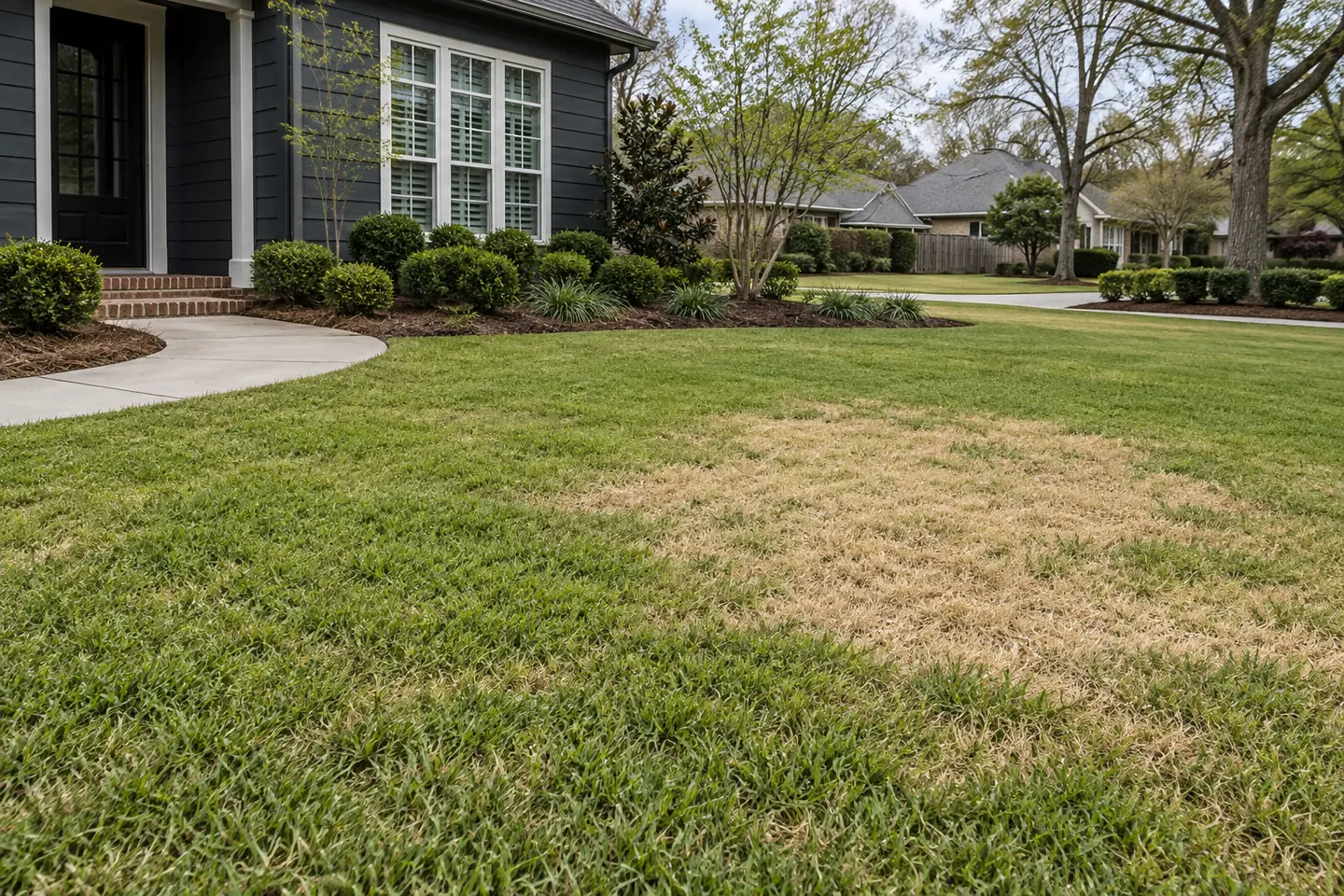
Look at the failed green-up pattern
Oklahoma State describes pale dead areas that can be circular, semicircular or arc-shaped, with size and appearance changing over time. UC IPM notes that separate spots can merge. These descriptions give the assessor several possible patterns to consider; they do not make a round outline a confirmation test. An irregular boundary may need the same careful review as a conspicuous circle. Report what is visible instead of completing an imagined shape.
For a useful first comparison, distinguish the pale center, the boundary and the surrounding bermudagrass. Note where new grass is actually growing. If only the edge has living shoots, keep that separate from the condition of the center. If plants inside are growing but remain shorter, describe that instead of calling the whole area dead. These distinctions help frame the question of survival and recovery without pretending that a homeowner's color map can identify the organism responsible.
The plant parts below the leaves matter
Extension descriptions of spring dead spot include dark, deteriorated roots and spreading structures such as stolons and rhizomes. The visible leaves are therefore only part of the evidence. A pale canopy may show where to investigate, but detached leaves cannot reveal the complete condition below. If diagnosis is needed, ask the receiving resource which connected turf, roots and soil it wants before removing material.
Avoid repeatedly pulling apart the center to see whether it is loose. That can turn a small assessment area into a disturbed patch while providing little additional information. If a specimen has already been taken, record its location and what parts remained attached. Also keep a view of the surrounding transition. The purpose of sampling is to answer a plant-health question, not to demonstrate that brown leaves are brown. An appropriate sample plan preserves the parts needed for that answer.
Separate the spring observation from the infection period
UGA explains that spring dead spot fungi can be active under cool, moist conditions and make bermudagrass more vulnerable to cold injury. This is why a problem noticed during green-up may have a history extending into an earlier season. It also explains why a response aimed only at making the spring leaves look greener may fail to address the assessment question. Timing needs to be considered as part of the disease process.
For the homeowner, record the visible pattern in spring while it is easy to locate. Do not turn a treatment date from Georgia, Oklahoma or California into an automatic Louisiana appointment. Regional publications differ in climate, grass and management setting. Ask a locally appropriate adviser what timing applies to this identified condition. The spring record can support that later decision without requiring you to decide, on your own, when an unseen infection began or which product should be used.
Map the affected area while the contrast exists
A simple sketch can mark the patch relative to a porch corner, fence or walkway. Add a photograph showing those fixed features and a closer view of the boundary. There is no need for a precise GPS location or a claim about a particular day's fungal activity. What matters is being able to find the same area after surrounding growth changes the appearance or partly covers it.
Keep this season's map separate from a remembered patch in a different location. If an older image exists, compare actual boundaries rather than saying “it is always the same.” An area may recur, expand, shrink or be replaced by a different problem. The map should preserve those possibilities. It is especially useful when a new provider begins maintaining the lawn after the spring contrast has become less obvious. The next person can then understand why a particular section remains under review.
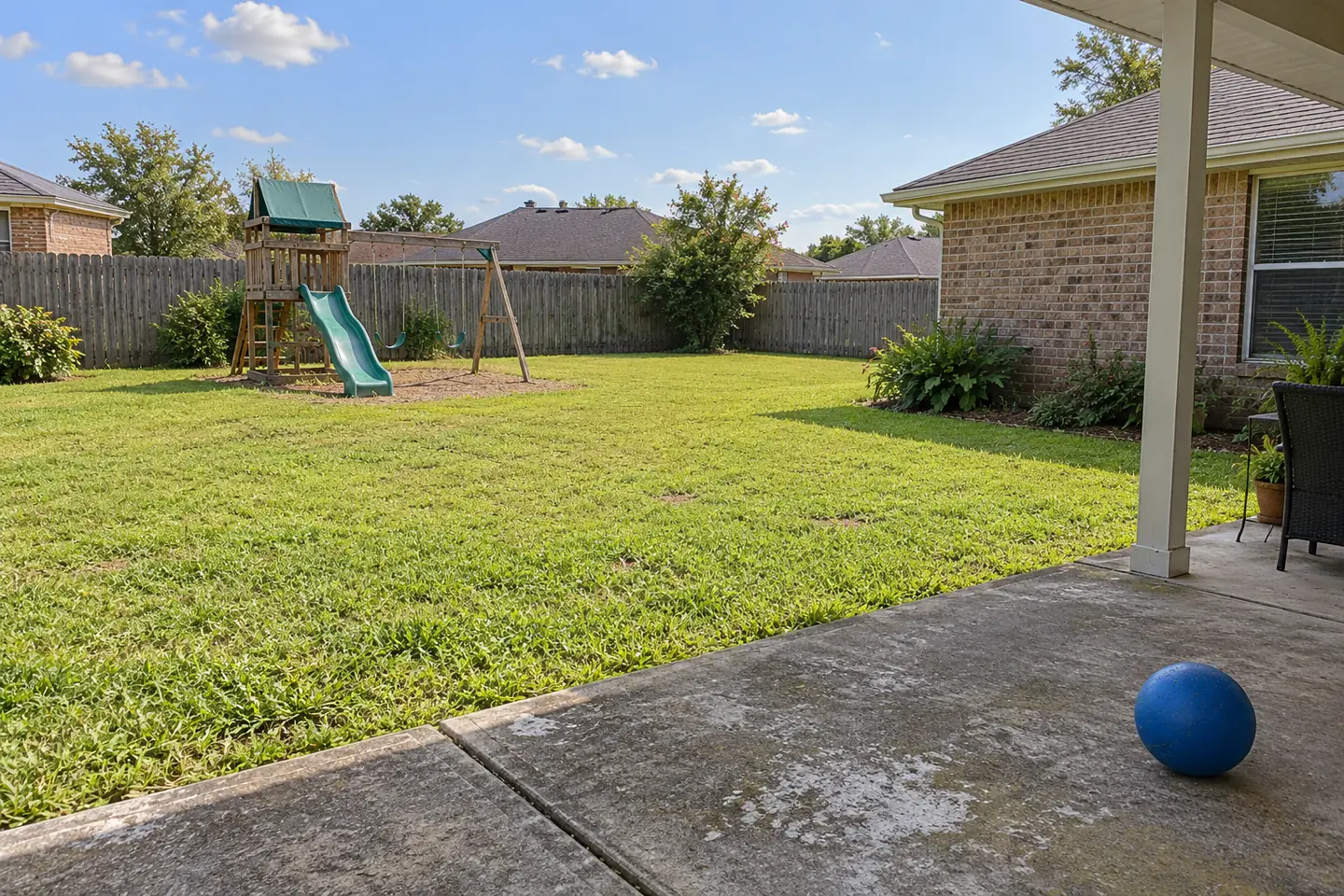
Greening from the edges is different from survival in the center
Oklahoma State explains that surviving plants around or within damaged areas are responsible for much of the regrowth. A patch can therefore become greener as shoots extend into it even when the original plants did not survive. That distinction affects how recovery is described. New coverage is encouraging, but it should not be rewritten as proof that every old plant recovered or that the assessed problem cannot return.
Look for where the growth originates and how much open space remains. Keep weeds separate from bermudagrass in the comparison. A patch filled with green weeds is not the same outcome as a restored turf stand. If separate repair work is being considered, ask what living growth is already present and what the assessment suggests about its prospects. Avoid promising that a particular patch will fill completely by a calendar date solely because bermudagrass spreads.
Plan maintenance around the living grass and exposed area
The next mowing request should identify the pale section and any diagnostic or repair instructions. If material needs to remain intact for an assessment, arrange that before cutting or cleanup. If mowing can proceed, discuss a height and route appropriate to the actual turf and surface. Lowering the entire yard to make the contrast less visible does not answer whether the affected plant parts are alive.
Also distinguish routine cutting from removal of damaged turf, soil movement or renovation. These are separate operations with different consequences for the area under review. Some disease guidance discusses spread through infected material and soil, so a proposed movement of those materials deserves a specific conversation with the assessor. A homeowner should not assume that every operation mentioned in a turf reference is included in a lawn-maintenance visit or suitable while an assessment is pending.
Ask what the longer plan is trying to accomplish
A useful plan separates confirming the cause, supporting surviving grass, reviewing coverage and considering any later preventive or corrective work. These goals may have different timing. A freshly cut lawn can satisfy the maintenance goal while leaving a legitimate plant-health question open. Conversely, an assessed disease-management step may not immediately replace the turf already lost. Ask which outcome will be checked at the next review.
For Harvey, Marrero, Gretna, Algiers, Belle Chasse and Westwego homeowners, the sensible starting point is a clear seasonal comparison of the actual bermudagrass. Keep the location, plant observations and supplied instructions together. The lawn should not need a new explanation every time its color changes. A spring record and a specific handoff help the next visit follow what is known while leaving room for the assessment to resolve what is not.
Confirm the work with Happy
Call 504-339-3571 and ask for Happy to discuss available lawn maintenance. This educational guide does not add disease diagnosis, fungicide application, fertilization, aeration, overseeding or pest control to your agreement. Separate specialist assessment or repair work needs its own provider and confirmed scope.