
Start by clearing up the name
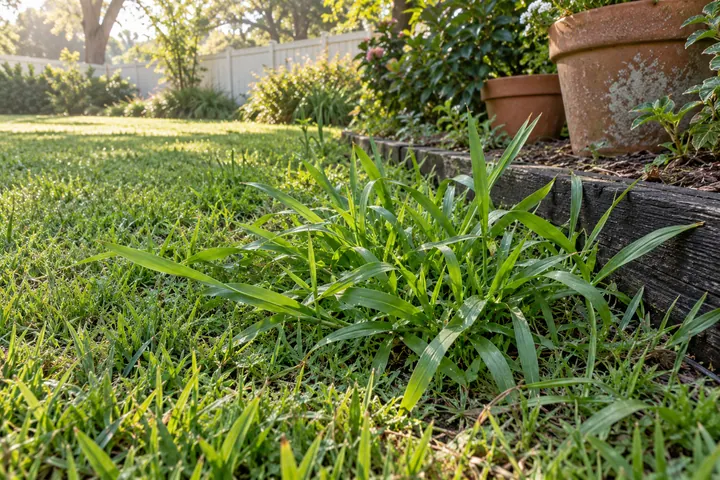
Broadleaf signalgrass is a grass. The word broadleaf in its common name describes the relatively broad blades, not a conclusion that it belongs with every broadleaf lawn weed. That small distinction matters when searching for a reference or asking for identification help. Begin with the actual plant's structure rather than choosing a category from one word in its name. A clear description can keep the inquiry on the right track.
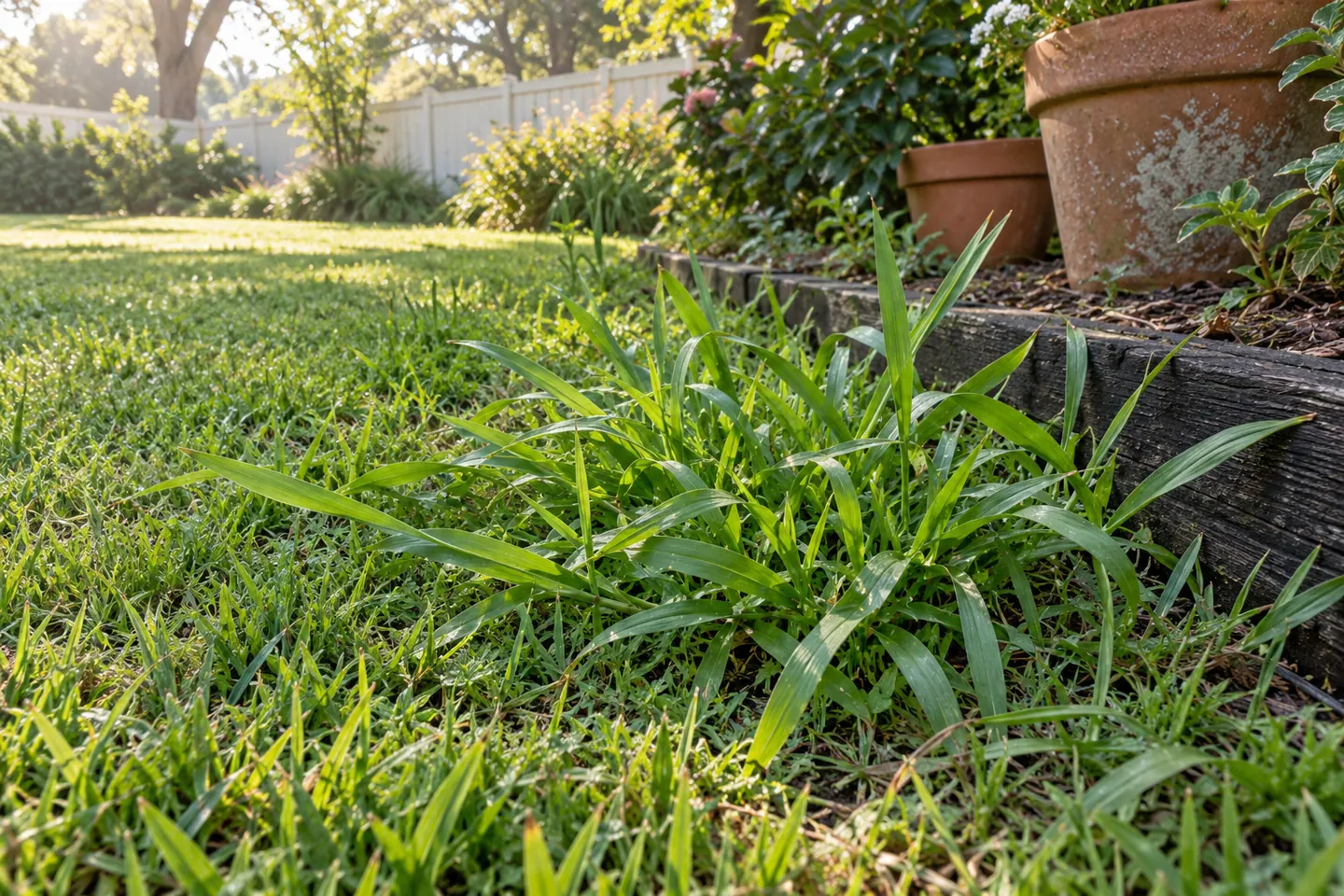
Missouri State's identification account describes broadleaf signalgrass as a spreading summer annual with horizontal stem bases and upward-turning flowering branches. Its stems can root at nodes. The account highlights relatively broad, short blades, hairy sheaths, a short fringed ligule and a head with several stiff branches. It also notes that one side of a blade can look crinkled while the other is smoother. These connected traits support a comparison, not a diagnosis from blade width alone.
Show a blade's proportion rather than calling it large
A leaf can look broad in one close-up and narrow in another because the camera is at a different angle. Include the blade's visible length as well as its width and keep the attached base in another frame. You do not need a precise measurement to explain that the blade looks relatively short and broad. The important point is to show the proportion rather than asking the word large to do all the descriptive work.
If scale is included, identify the plant part being compared and keep the scale in a useful plane. Do not compare an enlarged leaf photograph with an unscaled reference image as if they establish matching dimensions. A reviewer may still need the stem and head even when the blade's proportions are clear. Size is supporting evidence, not a shortcut around the plant's relationships.
Keep the asymmetric crinkle visible if it is present
The reference's note about one-sided blade crinkling gives a useful feature to examine. Photograph the whole attached blade so the difference between its sides can be understood. A tight crop of one crease may hide whether the effect runs along the blade or comes from a recent fold. State whether the leaf was intact when observed rather than treating every wrinkle as the expected reference trait.
Do not convert that appearance into an automatic claim about lawn stress, disease or watering. A wrinkled-looking leaf can prompt a question without answering its cause. The source describes a possible identification feature; your property record should say what the actual blade shows. If the image does not resolve the two sides clearly, leave the comparison incomplete and ask which view would help.
The bent stem needs a visible connection
A low stem that turns upward can be hard to trace through mixed grass. Include enough of the surface route to show which leaf and flowering branch belong to that example. Do not assume a nearby broad blade connects to a head that merely crosses behind it. An apparent association in a dense lawn can disappear when the view changes, so keep the connections you can actually observe distinct from those you suspect.
If the lower stem is hidden, label that limitation. You can still explain the visible patch and ask about the missing feature. Do not pull apart an uncertain area merely to create a complete-looking photograph. A qualified identification reviewer can advise whether a clearer connected view or an appropriate specimen is needed. The inquiry should preserve evidence rather than reshape it to match a picture.
Rooting at a node is different from lying on the ground
The reference says that stems can root at nodes. A surface photograph of a stem resting against soil does not automatically demonstrate that connection. State whether rooting was actually visible or whether the lower stem simply appeared to touch the ground. Keep an unobserved root association out of a confident written identification, even if the source says that the candidate is capable of it.
This distinction also helps when a loose piece is found after maintenance. A cutting on the path is not proof of an established plant at that point. Label its finding location and whether it was detached. The material may be useful for identification while leaving its exact source unresolved. Do not turn the location of a loose piece into a map of rooted growth across the yard.
Preserve the flowering branches as one structure
If a head is available, show its full arrangement and the point where the branches relate to the supporting stalk. Follow with a closer view from the same example if requested. A photograph of isolated tips can hide the shape the reviewer needs to compare. A count of visible branches should stay attached to that particular head and should acknowledge damage or overlap when present.
Do not select different heads around the lawn to assemble an ideal reference pattern. A comparison is useful only when the parts belong to a traceable example. If the plant was recently cut and the head is missing, say so. A provisional name can remain useful while a distinguishing feature is unavailable. There is no need to pretend that every stage is visible at the same time.
Keep surface spread separate from the patch's whole history
A low spreading appearance can be documented without proving when the plant arrived or what moved it. Mark the visible area using fixed edging, a path joint or another stable reference. If older photographs show the same boundary, keep their dates and limitations clear. A later view may demonstrate a change in appearance while still leaving the mechanism and original source unanswered.
Avoid assigning responsibility for the patch from an isolated after-visit photograph. State what was checked before the work and what was first noticed afterward. A factual sequence supports a focused discussion. An unsupported claim that a particular machine distributed the plant adds a movement history that the images may not establish. Keep the next question about the actual present condition and the agreed task.
Do not choose a lawn routine from an agricultural setting
Some signalgrass references discuss crop situations. Their identification descriptions can help explain a candidate plant, but crop-management recommendations should not be copied into a residential maintenance request. This guide provides no product, rate or treatment schedule. The presence of a source link does not make those practices part of Happy Grass's services or establish that they suit the lawn in front of you.
For routine care, identify whether the current concern is the surface texture, an irregular edge or the visibility of flowering branches. Confirm which mowing, edging, weed-eating or blowing is proposed and the fixed area it covers. A longer-term change in grass composition is a separate question. Keep that distinction explicit rather than expecting a species name to carry an unstated management agreement.
Define the border even if the plant crosses it visually
A spreading patch may overlap the apparent boundary between lawn and bed. State which side is included in the present request and which planting or surface is intended to remain. The newest leaf tip is not a stable work limit. A fixed boundary gives the provider an instruction that stays understandable even if the low growth changes shape before the visit.
If the desired line itself is undecided, resolve that with the authorized owner or mark the area for review. Do not rely on a provider to choose the landscape layout during a routine cut. A clearly defined hold area can allow the surrounding lawn work to be discussed while the border question remains open. The task should reflect an actual decision rather than an assumption drawn from a green mat.
Review the result without claiming a different lawn
After agreed maintenance, compare the specified edge or surface with the expected finish. A neater line can be a valid result while broad blades remain present. A shorter flowering structure does not prove that the plant has been removed from the site. Keep the follow-up in the same terms used to arrange the visit, then identify any separate unresolved identification or longer-term lawn question.
- Show leaf proportion and any one-sided crinkle honestly.
- Keep blades, lower stems and heads associated with one example.
- Distinguish visible rooting from a stem merely touching the surface.
- Define the routine border or finish separately from species control.
For a Marrero or Westwego property, this makes the broad-bladed patch easier to discuss without overcomplicating ordinary lawn care. The common name no longer has to act as a category, a diagnosis and a service instruction all at once. Clear connected evidence and a fixed task boundary give the next conversation a more useful starting point.
Describe the broad-bladed patch to Happy
Call 504-339-3571 and ask for Happy. Identify the marked patch, retained border areas and the mowing, edging, weed-eating or blowing you want reviewed. Confirm the actual scope and availability before arranging a visit.