
Start with the tuft, not a diagnosis
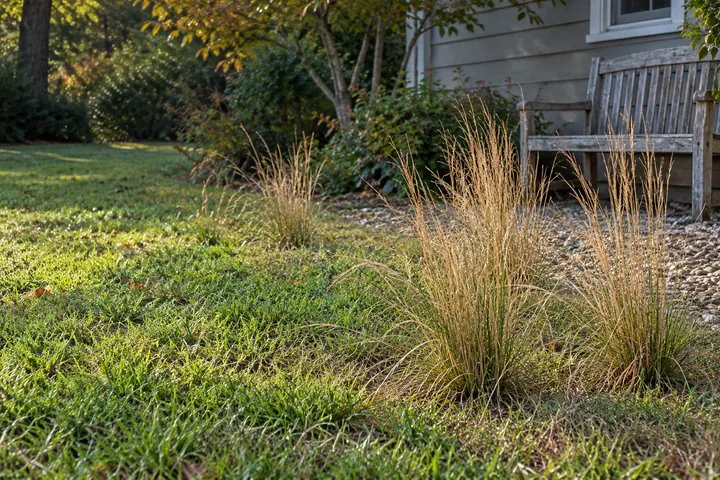
A few tawny upright tufts can stand out sharply against a greener lawn. A homeowner may call them dead grass, sedge or a sign that the soil needs something. Those are different claims. Begin with the visible description: standing straw-colored growth in a particular marked area. That gives the plant inquiry a reliable starting point without assuming that its color explains the lawn's condition or specifies the next maintenance task.
NC State's TurfFiles account describes broomsedge as a perennial grass with leaves arising from a basal crown. It notes flattened sheaths with hairs, younger bluish-green foliage and mature leaves that become light brown while remaining upright. Despite the common name, broomsedge belongs to the grass family rather than the sedges. These points help frame the question; a brown tuft alone does not confirm the plant's identity or establish a soil deficiency.
The common name should not choose the reference category
If you search only for sedges because the name contains sedge, you may end up comparing the wrong group of plants. Keep the common name as a candidate while checking the reference's actual description. The wording people use in a driveway conversation is not always a botanical classification, and a familiar-sounding category can send an identification inquiry in an unhelpful direction.
You do not need specialist vocabulary to correct that course. Say that the candidate called broomsedge is described as a grass, and show the actual tuft under review. If someone has already labeled the corner as nutsedge or another sedge, preserve that as an earlier suggestion rather than a confirmed fact. The next reviewer should be able to understand how the question developed without inheriting an unsupported conclusion.
Brown can describe an appearance without proving death
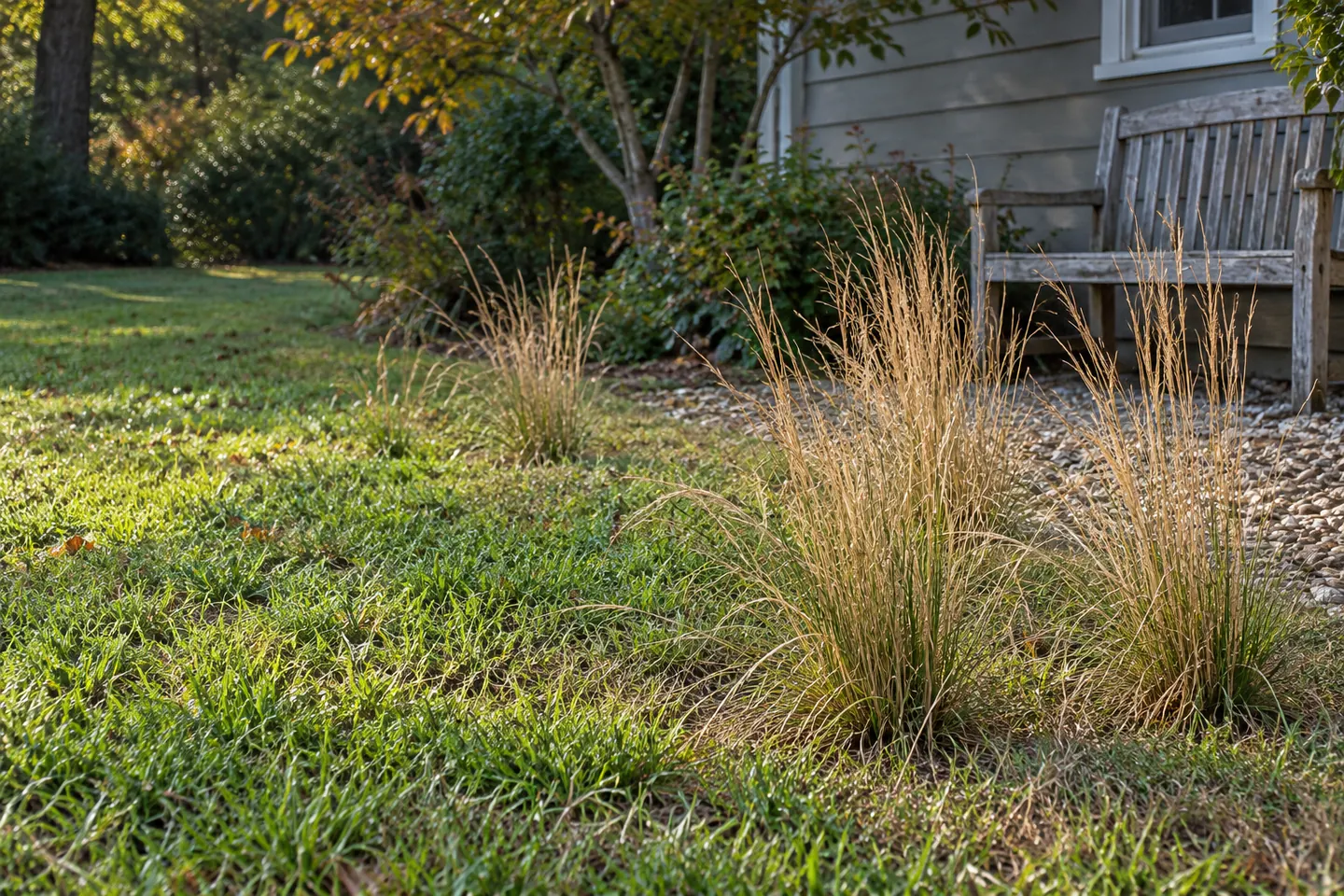
The reference's description of mature light-brown standing leaves is a reason to avoid using color as the entire conclusion. Record which parts of the tuft look tawny and whether other parts look green. Do not assume a brown top means that every part of the plant is dead, or that a greener base establishes its identity. Keep those as observations about the example rather than a complete biological assessment.
A photograph can show the contrast clearly when it includes the surrounding lawn under the same light. A heavily shaded corner and a sunlit center lawn may look more different on screen than they do in person. Use one frame that crosses the transition, then add a closer view of the tuft. That helps another person distinguish the actual color pattern from differences introduced by the photographs.
Keep a retained planting out of an automatic cleanup instruction
Before asking for every straw-colored tuft to be cut, confirm whether the area contains any intentionally retained grass or planting. A lawn corner can meet an informal bed without an obvious hard edge. The owner may want a particular clump left alone while still wanting the surrounding lawn maintained. A general request to clean up the brown grass can obscure that preference.
If the intention is uncertain, mark the area for review rather than expecting the provider to decide what belongs in the landscape. Identify the authorized decision-maker and the practical hold boundary. You can arrange routine care around a clearly defined retained area while the plant question remains open. The important point is to give a usable instruction instead of relying on the color of the foliage as permission to alter it.
A candidate plant does not replace soil information
People sometimes connect broomsedge with poor soil and jump straight to an amendment. A possible plant identity is not a substitute for representative soil testing or interpretation of a current report. This guide does not diagnose nutrient status from a photograph. If soil condition is the real question, say that it needs its own evidence rather than presenting the tuft as a complete test result.
Keep the practical lawn task separate as well. Happy Grass can discuss mowing, edging, weed-eating and blowing within an agreed boundary; the presence of a candidate plant does not create a soil-amendment service. A reference article may mention other management practices without making them part of the proposed visit. Ask the right question of the appropriate reviewer instead of turning a plant label into a treatment instruction.
Show the crown area without inventing a hidden connection
An overview can locate the tuft while a closer accessible view may show where the upright leaves emerge. Keep that relationship visible if possible. Do not combine loose straw from one place with green leaves from another and imply that they belong to one plant. Mixed lawn corners can contain several overlapping forms, and a convenient arrangement can make the evidence look more complete than it is.
If the base is hidden by surrounding foliage, state that limitation. A qualified identification reviewer may request a clearer feature or an appropriate specimen. You do not need to disturb an uncertain area just to produce a photograph that seems to match every reference trait. An honest description of what cannot yet be seen gives the next person a more useful decision point.
Distinguish the standing outline from the lawn surface
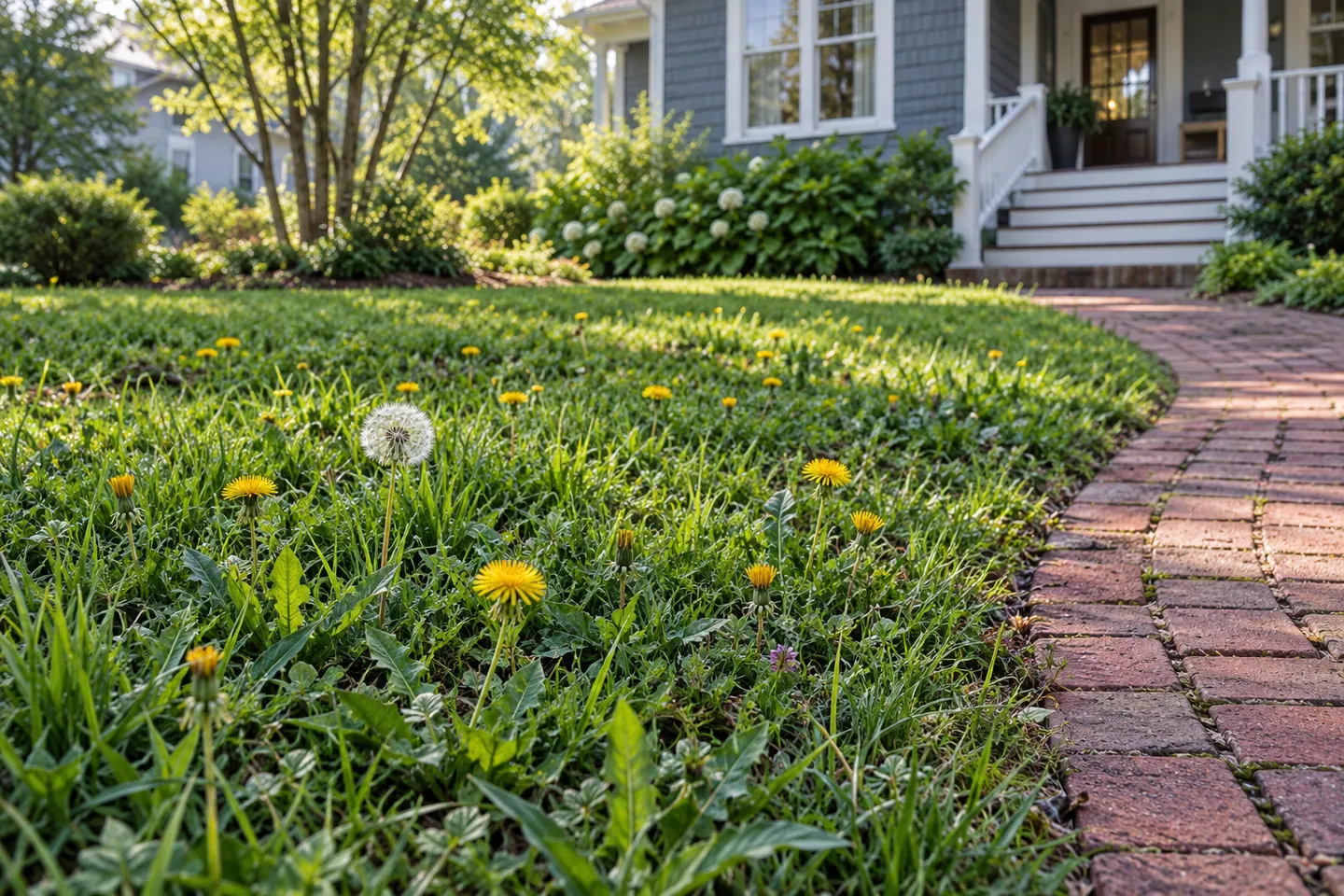
The upright tawny leaves may be what makes the corner look unfinished. The underlying surface may raise a separate concern about texture, access or the line beside a path. Explain which appearance matters to you. A task focused on the standing outline should not be expected to resolve every difference between that corner and the rest of the lawn.
Choose a viewing position that reflects the desired result. If the concern is the view from the back door, include that perspective. If it is a path margin, show the margin itself. A dramatic low-angle close-up can help identify the plant but may not represent the everyday view you want maintained. Keep those image roles separate so the maintenance discussion stays connected to the actual outcome.
Confirm the operation before treating the corner as routine lawn
A distinct tufted area can need a site review before an ordinary lawn visit is confirmed. Describe its extent, the fixed boundary and the route around it. Do not assume that calling it grass automatically includes every upright stem in a standard mowing request. The provider should know the real condition before the work is agreed, especially if the corner has been outside the normal routine.
Confirm which operation is proposed and where it should stop. A neater edge, a maintained surrounding surface and a change in the plant composition are different goals. This guide does not offer brush clearing, excavation or a species-specific treatment program. A clear routine agreement is useful precisely because it does not have to carry an unstated promise about every future appearance of the plant.
Make later comparisons about the same tuft
If you take another photograph later, use the fixed location label and the same general viewing direction. Record the date and any known maintenance between views. Avoid comparing two different clumps as if they show one plant changing. A useful sequence can document an appearance change without establishing the cause or predicting what every similar tuft elsewhere will do.
If the name remains provisional, keep it provisional in the follow-up. Tawny upright tuft beside the rear path is still a usable description. A confident species name is not required to ask whether the agreed visible finish was achieved. It is more helpful to preserve a traceable example than to replace uncertainty with a label that the evidence has not earned.
A practical corner review can stay straightforward
Bring the color-transition view, the tuft location and the instruction about what should remain. Identify whether plant identity, soil condition or the visible lawn finish is the unanswered question. Those questions can be discussed together without being treated as interchangeable. A clear next step might be routine maintenance around the area while a separate identification or soil inquiry continues.
- Use broomsedge as a candidate name, not a soil diagnosis.
- Record brown and green parts without declaring the whole plant dead.
- Confirm any retained planting before issuing cleanup instructions.
- Compare the result with the actual operation and boundary agreed.
For a Westwego or Belle Chasse yard, that keeps the conversation focused on the corner you use and see. A straw-colored tuft can prompt a useful review without becoming a claim about the entire lawn. Clear observations make it easier to choose the next appropriate question and assess what a routine visit accomplished.
Explain the tawny corner to Happy
Call 504-339-3571 and ask for Happy. Identify the tufted area, anything intended to remain and the surrounding mowing, edging, weed-eating or blowing you want discussed. Confirm the suitable task, boundary and availability before arranging service.