
The plant you notice in spring may have been there lower down
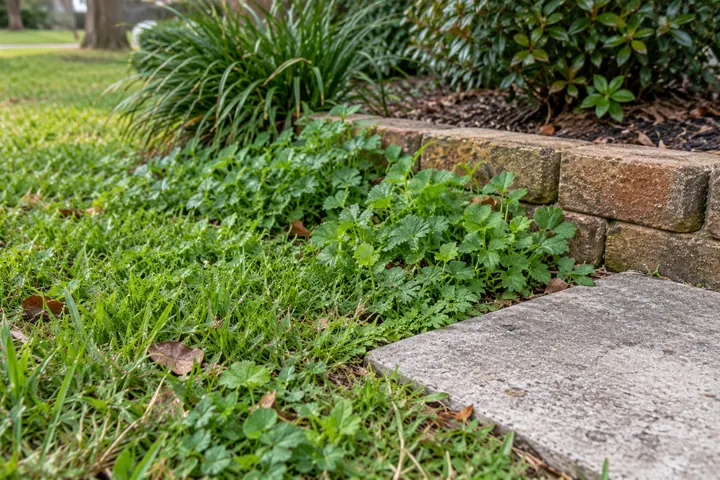
A broad green leaf catches your attention beside a stepping stone. Later, a branching plant seems to occupy the same place and looks much taller than the surrounding grass. Before describing this as an entirely new invasion, compare the location with any earlier photographs. You may have a record of the lower plant without having recognized it at the time. If no earlier evidence exists, say when the plant was first noticed rather than inventing a history of how quickly it arrived.
Carolina geranium is one possible identification when lobed foliage and a changing plant outline raise that question. The name does not apply to every rounded leaf or pinkish stem beside the lawn. A useful record shows how the features connect and how the plant sits within the area you want maintained. Happy Grass can discuss the lawn request while an appropriate adviser addresses identification. Keeping those purposes clear helps avoid judging ordinary mowing against a plant-control outcome that was never established.
Use the Louisiana description as a guide to observation
LSU AgCenter describes Carolina geranium as a cool-season or biennial weed with deeply divided leaves, hairy plant parts and stems that may show pink or red color. Pale flowers have five petals, and the narrow fruit has a beak-like appearance. LSU notes that a low plant can branch more upright as flowering begins. These features explain why the plant's outline may change. They should be evaluated together; a stem's color alone is not a sufficient identification.
Keep the proposed name qualified when the relevant details are missing. If the flower or fruit is absent, show the leaves and branching that are available rather than borrowing a reference image to complete your own observation. The mixed-foliage scene on this page is an original editorial yard setting. It does not identify Carolina geranium, demonstrate a seasonal sequence or document a customer property. Use real photographs of your own observed plant for an identification request.
Describe the cuts in the leaf without cutting the leaf
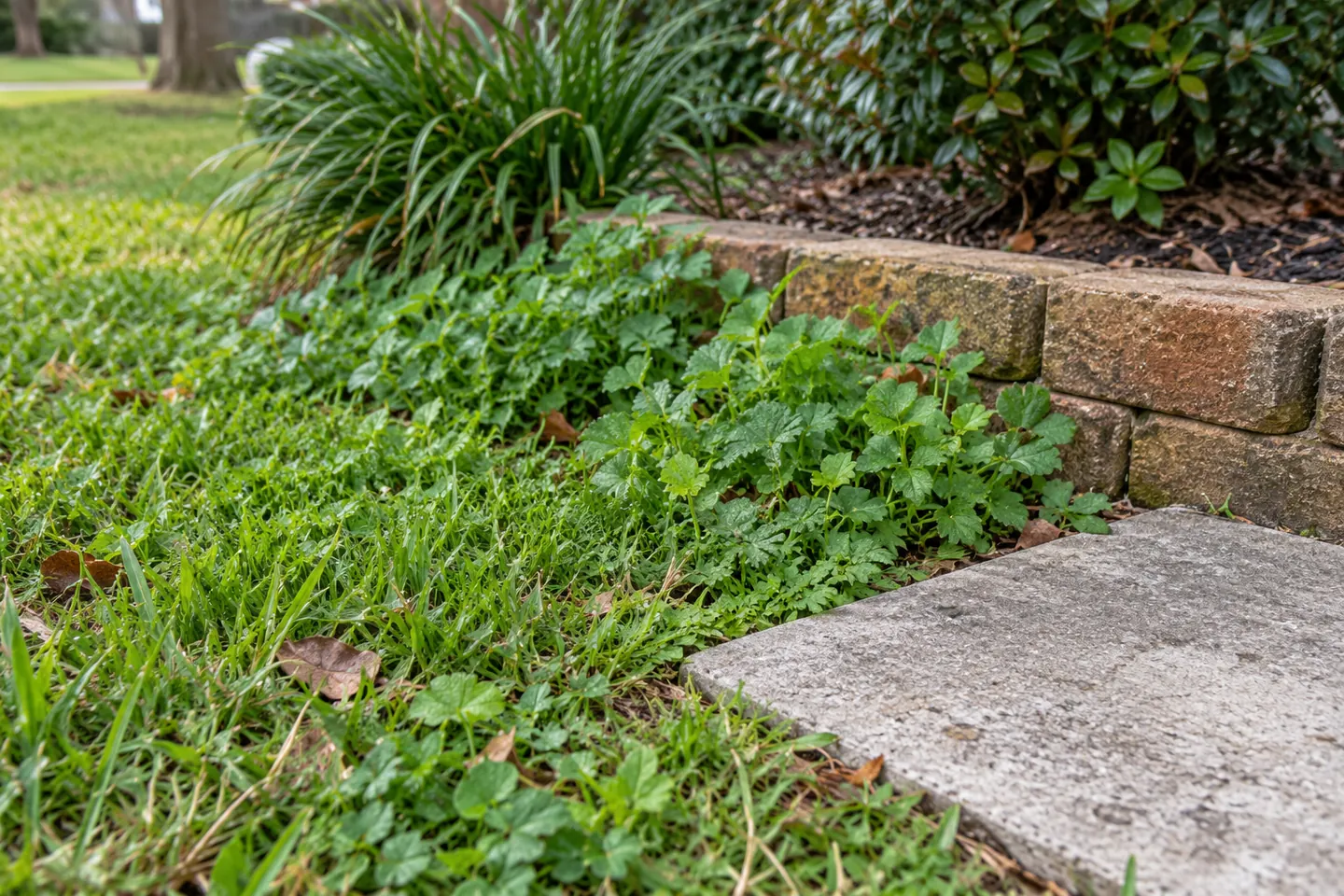
A deeply divided leaf can be difficult to explain in a short message. Instead of choosing a technical term you are unsure about, describe whether the leaf edge has large indentations and whether the blade remains connected around its center. Photograph a whole attached leaf so the reviewer can see its outline. A tight crop of one lobe may hide the overall form. Avoid trimming damaged edges to make the specimen look closer to the illustration you found online.
If leaves overlap, try another angle from an accessible position. There is no need to tear away neighboring plants just to isolate one outline. Explain what is obscured and ask whether another view would help. Keep a wider image that connects the leaf to the branching plant. This preserves the distinction between seeing a lobed leaf somewhere in the patch and documenting that it belongs to the taller stems you are asking about.
Keep stem color in context
Pink or reddish color can be easy to exaggerate in a phone photograph, especially under warm evening light. Note the viewing conditions and retain an unfiltered original. If the color was obvious in person but weak in the picture, state that difference rather than adjusting the photograph until it looks more convincing. The aim is to communicate the observation, including its limits. A vivid image that changes the actual colors is a poor substitute for a clear description.
Also distinguish the surface where the plant emerges from the direction its branches extend. A stem leaning over the lawn might originate beside a bed border or within the grass itself. Show the base if it is visible without disturbance. That location matters to the maintenance scope even when the identification remains open. A request about a plant overhanging the grass is not automatically a request to remove material from the adjacent planted bed.
Record changes in shape with a repeatable view
Choose a viewpoint that includes the stepping stone, border end or another fixed feature. Keep the camera at a comparable height when you return. A close low-angle view can make a branching plant look much larger than it appears in a standing photograph. Explain that difference before describing a precise increase in size. If you want to record dimensions, use an appropriate reference only where it can be included without disturbing the plant or creating an obstacle in the work area.
Write down the actual sequence: low leaves photographed, upright branches noticed, flowers observed. Keep these as dated observations instead of an assumed growth calendar. A reference may describe a seasonal habit, but your private record should say what happened at the property. That separation helps an adviser assess whether the available evidence fits the proposed name. It also gives Happy a current picture of the area rather than an older photograph that no longer represents the visible height.
Separate flowers from nearby ornamental plants
A pale flower can be difficult to connect with the right stem in a busy border. Try to show its attachment and the neighboring leaves in one view. If the flower was found detached or fell from a nearby ornamental, do not present it as an attached feature of the lawn plant. Mark uncertainty explicitly. A missing connection can be resolved by a better observation; it cannot be fixed by choosing the flower that most closely matches an identification page.
If a narrow fruit-like structure appears later, keep its image with the actual date and location. Do not wait for it to make a maintenance request if the current height or access already needs discussion. Identification can proceed with the evidence available and a request for further details if necessary. The household does not need to collect every feature or keep an entire lawn unmaintained while waiting to assemble a perfect botanical display.
Describe the lawn around the plant
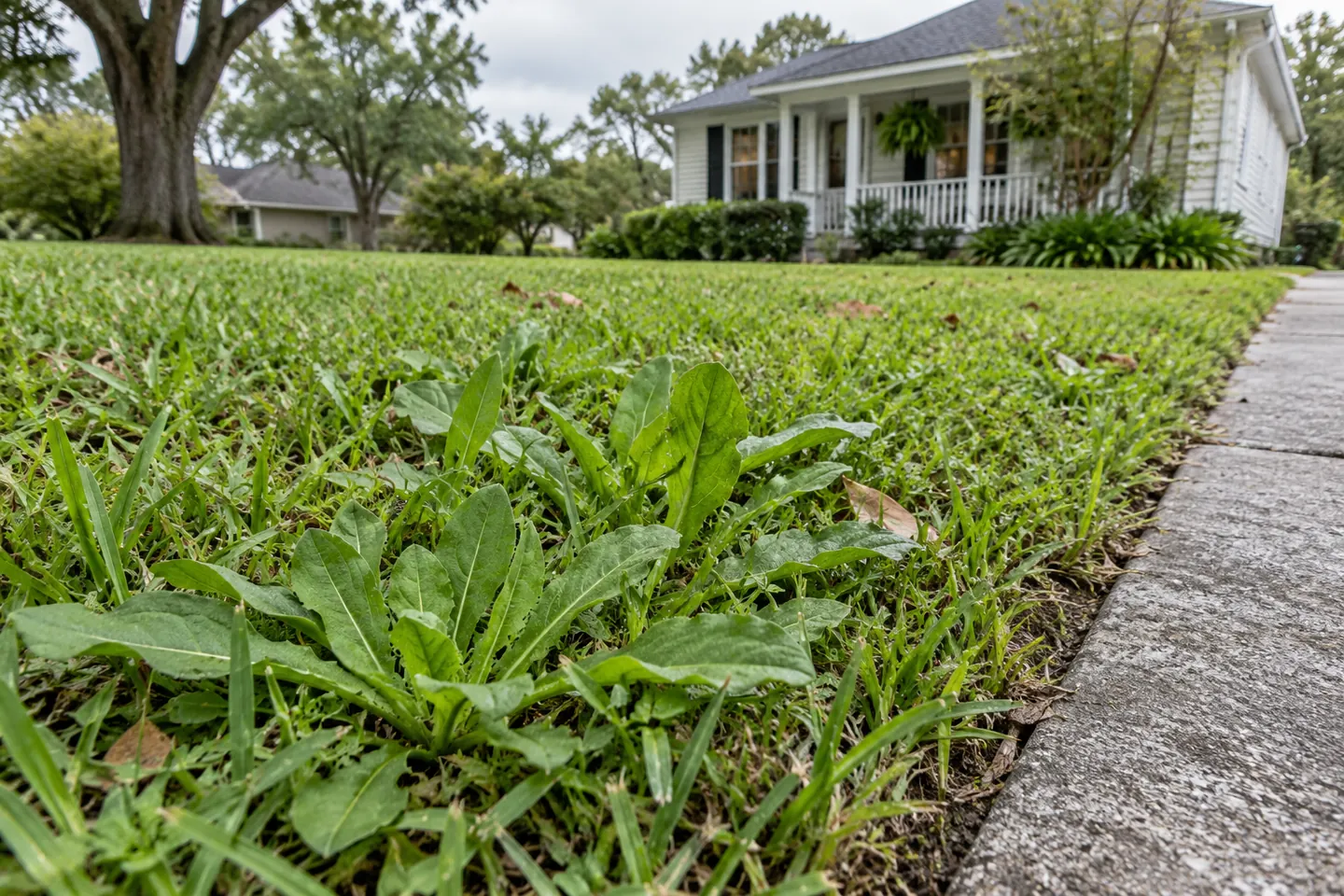
Show whether the plant occupies a thin opening, stands among fairly continuous grass or emerges along a hard edge. These are observable settings, not diagnoses. Do not assume that sparse grass was caused by this plant or that its presence proves a specific soil problem. If the surrounding lawn condition is a separate concern, give it its own description and history. A wider photograph can keep both questions visible without forcing them into one explanation.
For a patch near stepping stones, explain whether people normally use that route and whether the plant currently crosses it. State which part you want Happy to review for maintenance. A vague request to tidy the weeds can conceal different expectations about the grass, path and adjacent bed. Use ordinary location names and confirm the work boundary. That helps the visit focus on the area actually included, even if the plant identification is still being evaluated elsewhere.
Agree on height and finish without promising elimination
Discuss what you want to look different after the next visit. You may be concerned about the upright branches, the uneven appearance within the grass or the edge beside a path. Ask what the proposed mowing or trimming can address in the current condition. Do not substitute a plant name for the work description. Calling something Carolina geranium does not by itself establish a treatment method, a removal agreement or a guarantee that no new plants will appear later.
Keep product and application questions with an appropriate adviser and any provider actually offering that work. This guide supplies no chemical choice, rate or seasonal application date. Happy Grass does not offer fertilization, aeration, overseeding or pest-control services. If you want to discuss an additional weed-control service, confirm its actual availability and exact scope before assuming that it is included with ordinary lawn maintenance. Clear expectations are more useful than an unsupported all-purpose promise.
Review the result using the same three layers
After the agreed work, compare the lawn height, the remaining low foliage and any upright stems separately. A reduction in visible height does not by itself establish that a plant population has been resolved. Likewise, low leaves remaining visible do not automatically show that an agreed cut was missed. Use the confirmed scope to evaluate the maintenance result, and keep unresolved identification or control questions attached to the professional equipped to answer them.
If the plant looks different again later, create a new dated entry rather than replacing the earlier images. An accurate sequence can explain why the concern changed from a low leaf pattern to a branching plant. If a professional revises the proposed identification, preserve the revision without rewriting your original observations. The record is valuable because it shows what was known at each stage, not because it makes the first guess appear certain in retrospect.
A compact seasonal record
- Photograph a complete attached leaf and the connected branching structure.
- Keep stem-color impressions separate from edited image color.
- Label flower and fruit images by their actual dates.
- Define the path, lawn and bed portions of the maintenance request.
One well-organized record can serve several conversations without making them identical. The identification adviser can assess plant details; Happy can review current lawn work; the household can compare the result with the agreement. That arrangement leaves room for uncertainty while still allowing practical decisions about a yard that changes with the season.
Get the maintenance conversation started
Call 504-339-3571 and ask for Happy. Explain the current location, height and boundary you want reviewed for mowing, edging, weed-eating or blowing. Happy Grass serves the Westbank areas of Harvey, Marrero, Gretna, Algiers, Belle Chasse and Westwego. Confirm the actual work and availability before treating an uncertain plant name as a complete service request.