
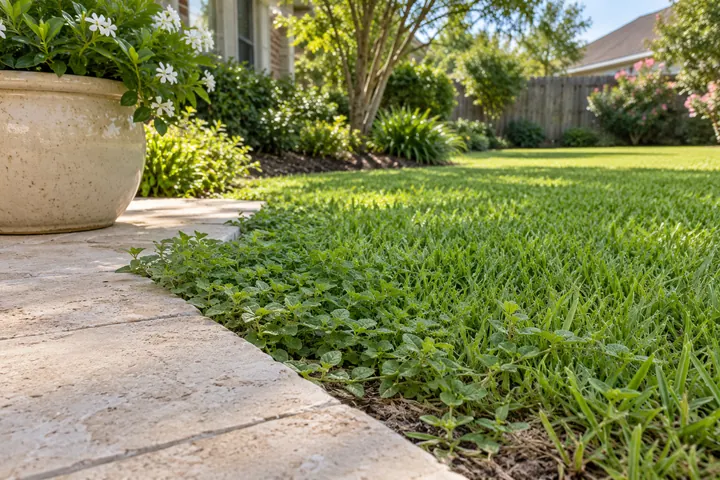
A green cover does not necessarily mean a continuous lawn
An open patch can look greener once low plants occupy it, yet still differ from the lawn around it. Carpetweed is one name a homeowner may encounter while trying to understand that appearance. The practical question is twofold: what plant is present, and what surface is actually meant to occupy the space? Cutting a low plant and establishing a different lawn are not the same task. Begin by keeping those decisions separate.
LSU AgCenter describes carpetweed as a summer annual broadleaf that forms low mats, often on bare soil. Its profile includes smooth stems, spoon-shaped leaves arranged in groups around nodes, and small white flowers in leaf axils. Those traits give an identification review something specific to examine. They do not establish how the open patch developed or prove that the plant caused the missing lawn. A current photograph may show coexistence without showing the site's earlier history.
Make the soil surface part of the record
Take one view that includes the low mat, the exposed ground if visible and the surrounding lawn. Do not crop away all the gaps simply because the greenery is easier to photograph. Those gaps may be central to the question you want answered. The person reviewing the request needs to understand whether you are describing an ordinary turf surface with a few unfamiliar plants or a separate open area with a different intended use.
Name the surface you actually observe: soil, gravel, pavement joints or something not yet clear under the foliage. Avoid calling every non-lawn space a bare patch. The maintenance boundary may be different for a walkway joint than for a lawn opening beside it. If the ground cannot be seen, say so. A low green covering is not enough evidence to describe what lies beneath it with confidence.
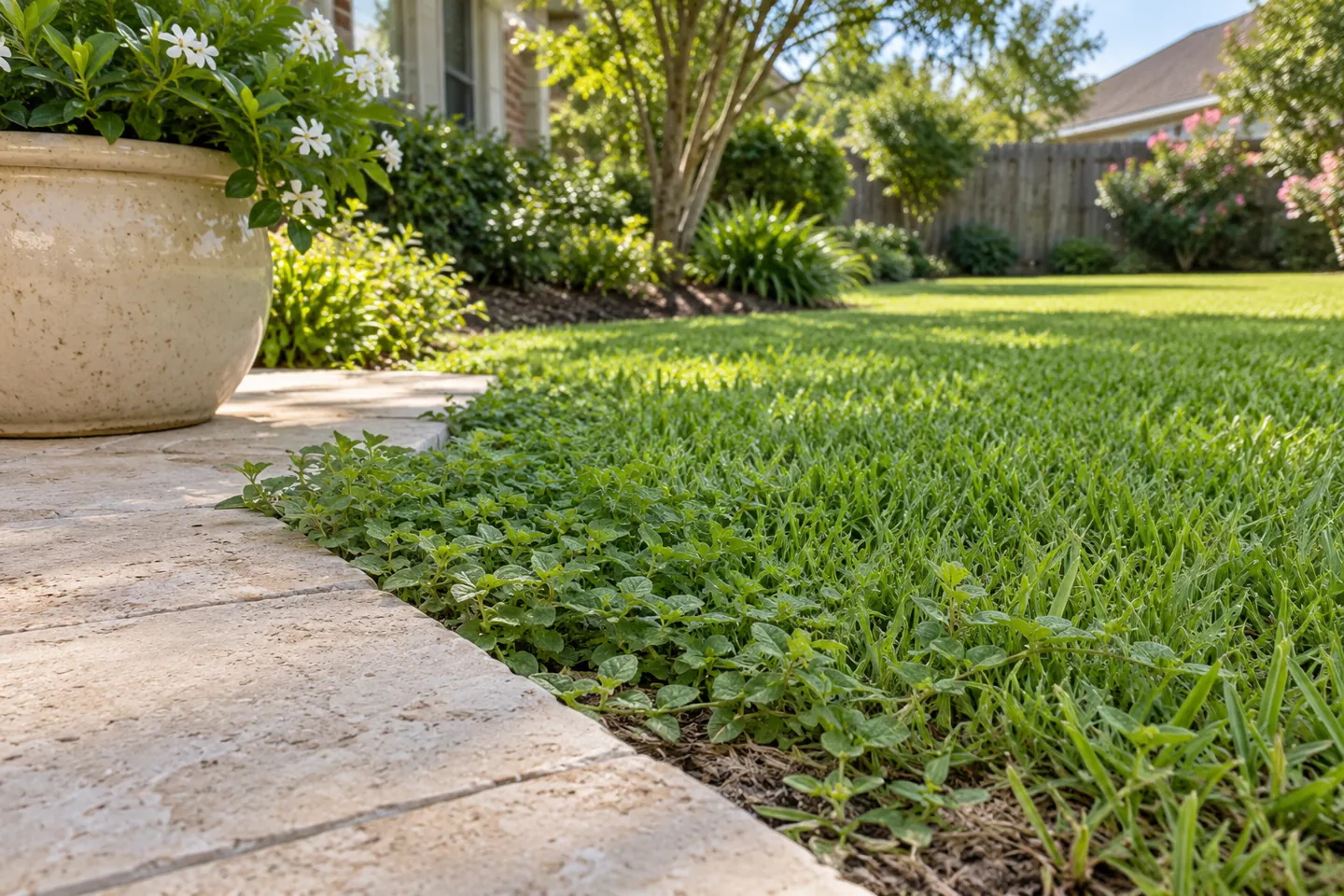
Follow a leaf group to one node
A carpetweed comparison benefits from seeing how the leaves attach around a stem point. A photograph filled with small green leaves may hide that arrangement completely. Choose one visible stem section and show the attachment clearly. Keep another image connecting it to the larger mat. That gives the close-up a place in the scene rather than leaving it as an isolated cluster with an assumed identity.
Do not assemble several loose leaves into a group to demonstrate the reference. The attachment is the information being checked. If a stem has been cut and the relationship is no longer visible, label the material as detached. A reviewer can explain what additional evidence is needed. A reconstructed arrangement may look helpful while removing the very uncertainty that should guide the next question.
Use flowers as connected evidence when available
The LSU description includes small white flowers. If flowers are visible, show where they sit on the same connected example as the leaves. A white dot elsewhere in the mat is not automatically part of that plant. Small structures can be difficult to photograph clearly, so inspect the image before assuming it shows petal detail or attachment. It is acceptable to say that a flower was noticed but the photograph did not resolve it.
Avoid delaying an ordinary maintenance inquiry until every identification feature is available. You can describe the low mat and open-ground boundary while the name remains uncertain. The important distinction is not whether you can use the correct botanical term. It is whether the evidence and requested outcome are clear enough for someone to understand what work is being discussed.
Do not reverse the timeline from one current view
Seeing a mat where the lawn is thin does not show which came first. Unless dated records establish the sequence, avoid saying that carpetweed killed the grass or that a specific visit created the opening. Describe the present condition, then list the history you actually know. A planting project, a period of obstruction or an unknown interval can be recorded without being promoted to a confirmed cause.
If older photographs exist, compare the same boundary rather than unrelated corners of the yard. A useful timeline might show an open patch in one month and a low green mat there later. That supports a change in surface appearance; it may still leave the cause of the original opening unanswered. Keep the conclusion proportional to the evidence so the next conversation starts with a reliable description.
Decide what a successful visit would look like
Ask whether the current goal is a neater surrounding lawn, a clearer path edge or advice about the open patch before another decision is made. A request to make the area look like lawn can imply much more than routine maintenance. Explain the desired appearance in plain terms and ask what the proposed visit can actually include. Do not assume the green mat will become a different surface because the surrounding grass was cut.
Happy Grass's routine discussion here covers mowing, edging, weed-eating and blowing. It does not offer a lawn-establishment plan or a chemical treatment program. A reference article may discuss plant management beyond those services, but linking it does not expand the business's scope. If your real goal is a change in what grows in the opening, identify that as a separate question needing appropriate review.
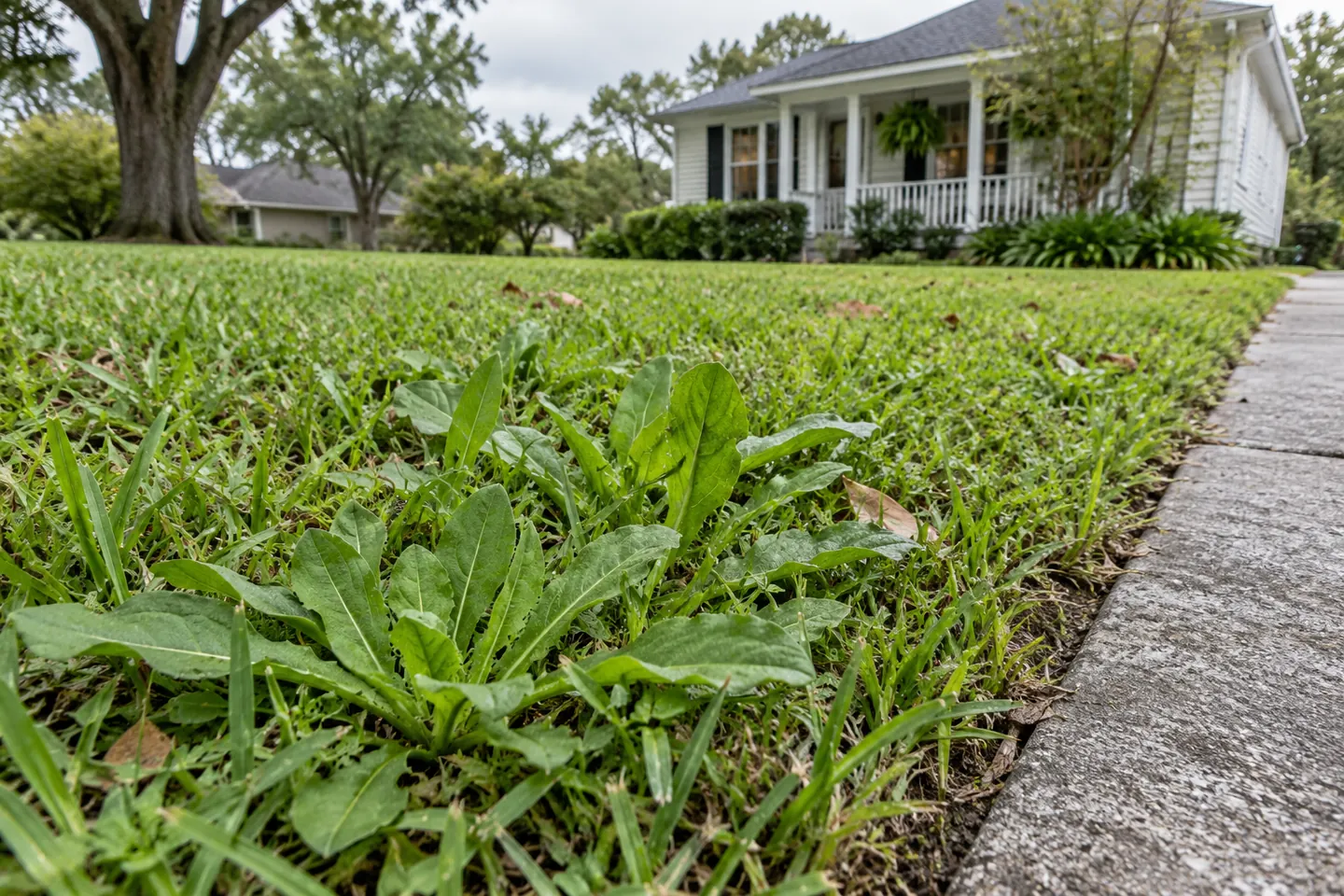
Mark where the ordinary lawn ends
For a patch near a bed, driveway or drainage feature, define which surfaces are within the request. A mat can visually connect areas that should not receive the same instructions. Use the fixed hardscape edge or another stable boundary where possible. If a planted area is intended to remain, make that explicit before someone interprets the entire low green layer as unwanted growth.
This is particularly useful when arranging work through a caretaker. Send a small marked overview and a written boundary that agrees with it. Avoid arrows that point to a general region while the text names a different strip. Clear instructions should remain understandable if the mat changes shape before the visit. The provider should not have to guess which green leaves represented your intended stop line.
Record appearance without promising ground-cover conversion
After routine work, compare the surrounding lawn and the specified edge with the agreed task. If the open patch is still open, that may reflect the original scope rather than an incomplete maintenance visit. If the low mat remains, describe where and how it affects the agreed finish. Do not interpret every unchanged surface as a missed task when its conversion was never proposed.
For a useful follow-up, separate the two statements: the walkway edge now looks clear, and the open patch still needs a decision about its future surface. That makes progress and remaining uncertainty visible at the same time. A single claim that nothing improved can hide the part that was completed and make the next request harder to define.
Keep the next decision grounded in the patch itself
Bring the overview, the connected leaf-group image and any reliable dated history to an identification or site discussion. Ask what the evidence can establish and what additional review is needed. A homeowner does not need to choose a product or a replacement plan before asking that question. The next useful step may simply be a better understanding of the plant and the boundary.
- Show the actual ground surface when it is visible.
- Keep the leaf attachment and the mat location connected.
- Distinguish a documented sequence from a suspected cause.
- Name the routine finish and the separate future-surface decision.
For a Gretna or Westwego property, this approach keeps a small open patch from turning into an unclear whole-yard project. You can ask for tidy routine care while leaving a larger landscape decision honest and unresolved. A low mat is worth understanding on its own terms, with the surface beneath it kept firmly in the conversation.
Record any intended non-lawn use of the opening
An open area may have been left for access, a future planting or another purpose that is not obvious from the current greenery. Ask the authorized owner before describing it as damaged lawn that should be restored. Record a known intended use separately from the plant identification. That small step can change the maintenance request substantially: keeping access legible is a different goal from expecting the entire space to become turf. Do not ask the routine provider to choose between those goals implicitly.
Discuss the mat boundary with Happy
Call 504-339-3571 and ask for Happy. Identify the open-ground patch, the surrounding lawn and any path edge you want reviewed for mowing, edging, weed-eating or blowing. Confirm the proposed scope and availability before arranging a visit.