
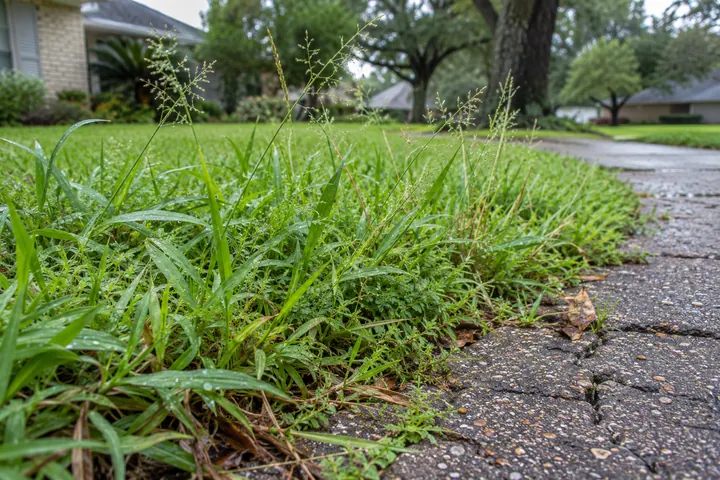
A memorable shape can make the name feel too certain
Crowfootgrass is an easy name to remember when a head looks like a bird's foot. That resemblance can also make a first guess feel more certain than the evidence allows. A phone image may show only three visible branches because another is hidden, or it may combine two overlapping heads into one apparent structure. Slow the comparison down enough to establish what actually belongs to the example in front of you.
LSU AgCenter describes crowfootgrass as a yellow-green summer annual with radiating head branches, pointed leaves with hairs along the margins and lower stems that can bend and root at nodes. Its article notes that the heads may be confused with goosegrass. This is a reason to compare connected features rather than naming a plant from a silhouette. The source does not make every star-shaped lawn head crowfootgrass, or establish why a particular patch appeared at your property.
Isolate one head visually, without rebuilding it
Choose one attached example that can be seen clearly against the background. Take a frame showing its full outline and a second frame from a different direction. Check that both pictures follow the same stalk. If another head crosses behind it, say so or choose a clearer example. A busy photograph can create a branch pattern that no individual plant actually has.
Avoid separating branches and arranging them into a more recognizable shape. That changes the evidence you are asking someone to review. If an example is bent, partly clipped or broken, document that condition. An incomplete structure may still be useful when its limitations are clear. The goal is a truthful comparison with the reference, not a picture that wins a visual matching exercise.
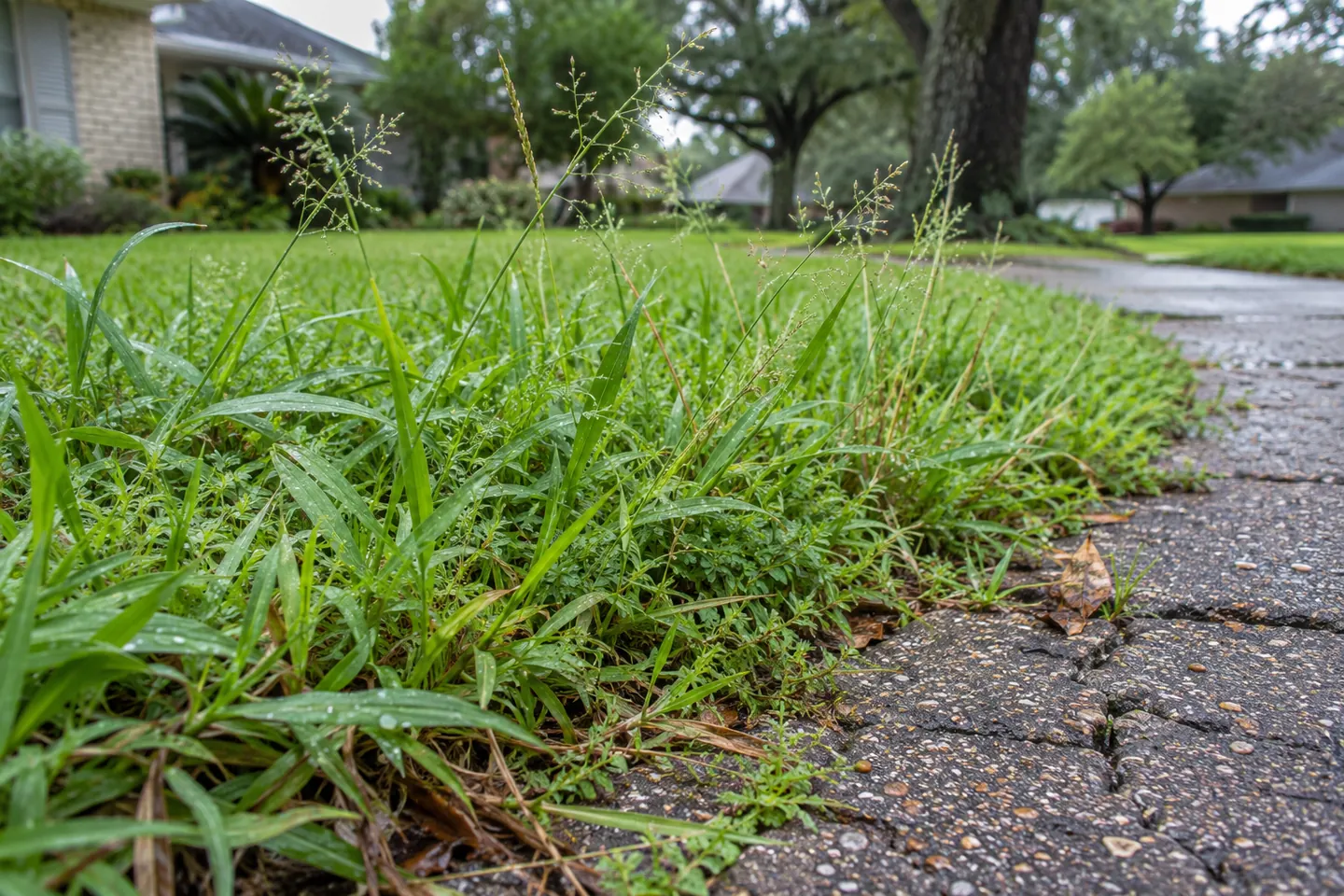
Count visible branches, then record what the count cannot show
Write down the number of branches you can see in the particular head. Use the word visible when a branch could be obscured. Do not expand that observation into a species rule or assume every head in the patch has the same count. Plant structures vary, and a photograph adds its own limitations. The count is one part of the record, not a shortcut around the rest of the plant.
If you include several heads, give each its own frame or label. This is better than circling a dense group and supplying one number for the entire image. A reviewer can then distinguish a complete head from one that is cropped or overlapping. It also keeps an ordinary question about one plant from turning into an unsupported claim that all the surrounding grasses share its identity.
Keep the attachment point in the picture
The meeting point of the branches can help explain the overall arrangement. A photograph of only the tips removes that information. Include enough of the supporting stalk to show how the head is organized. Then keep another frame connecting that stalk to leaves and the lower plant. These are different scales of evidence, and each should answer a specific question.
Do not assume that a nearby broad or narrow blade belongs to the head simply because they touch in the photograph. Mixed lawns can contain interwoven plants. Trace only connections you can actually observe, and label an uncertain leaf association as uncertain. This is especially important when comparing crowfootgrass with another grass whose head looks similar in a quick view.
Look at the lower stem as part of the same example
The LSU account includes the lower stem's ability to bend and root at nodes. If those features are visible without disturbing the lawn, show them in context. Do not dig through an area solely to force a match to the article, and do not call an unobserved underground connection confirmed. A surface photograph may be enough to raise the right question while leaving other details for a qualified identification review.
When the lower plant is hidden under cuttings or mixed foliage, say that the base was not visible. This is a useful limitation. It helps the next person decide what evidence is missing, instead of relying on a complete-sounding description written from a reference rather than from the actual yard. Keep the source's traits and your property's observations in separate sentences when they do not yet match clearly.
Compare the candidate with goosegrass carefully
Because the reference warns of confusion, it is reasonable to ask whether the specimen could be goosegrass or another fingered-head grass. Phrase that as a comparison question. Do not select whichever name produces the closest image search result, especially when the comparison photographs show different stages, damaged heads or unidentified plants posted by other users. A confident caption is not the same as a reliable specimen record.
Ask the local extension office which additional feature would help distinguish the alternatives in your photographs. The answer may involve a clearer part of the leaf, stem or head rather than more images of the same silhouette. Keep any response with the specific example it reviewed. A name assigned to one sample should not automatically be copied onto every similar-looking head elsewhere in the lawn.
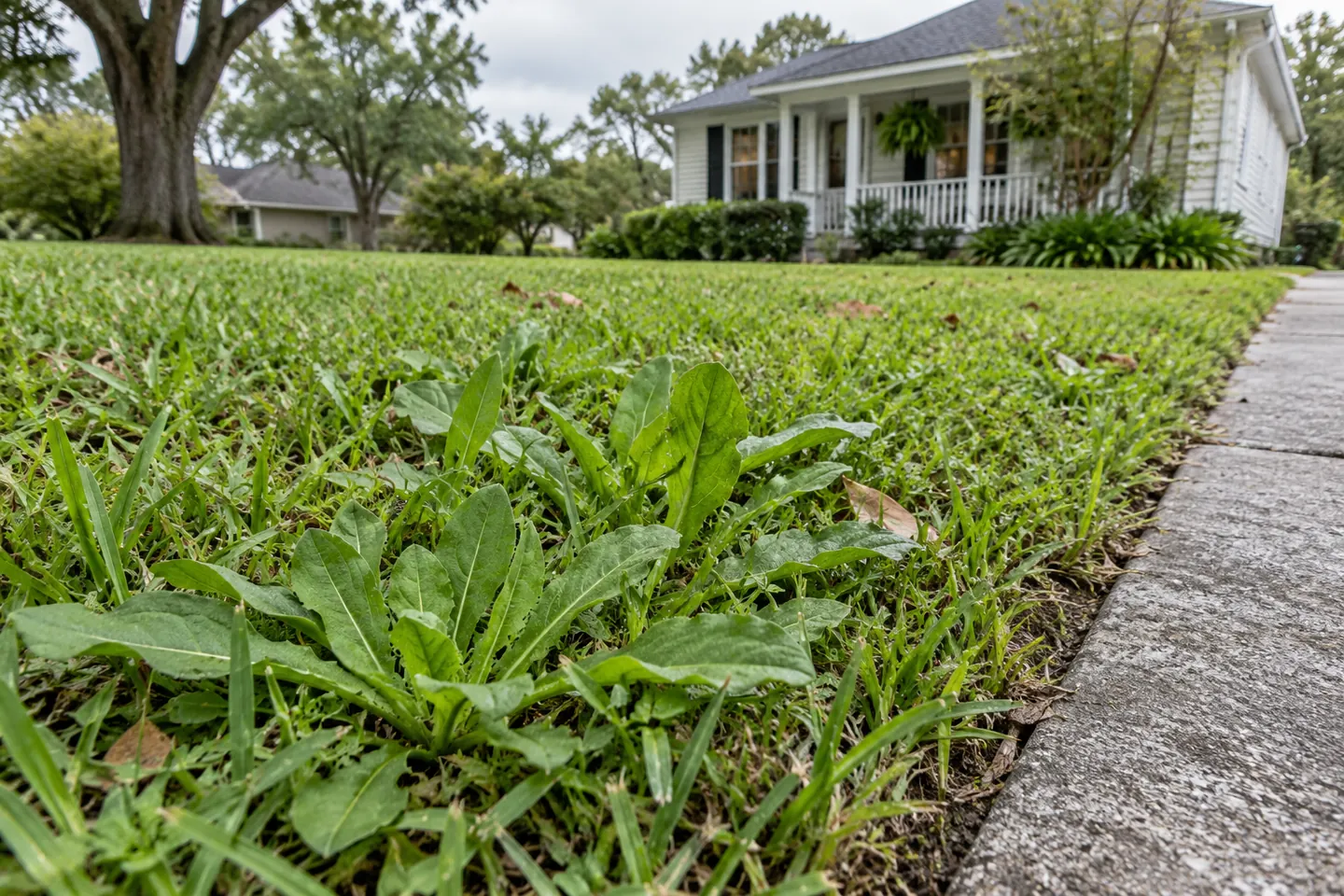
Describe the surface pattern without assigning its cause
A group of heads may occupy a thin-looking area, a path edge or a mixed lawn section. Record that location and appearance, but do not use the plant name alone to diagnose drainage, compaction or a maintenance failure. General habitat notes in a reference are not a property-specific site assessment. The present condition may need more information than a plant photograph can supply.
For a practical maintenance inquiry, describe the patch in terms of what you see and what you want reviewed. Perhaps the radiating heads stand out along the front path, or the low growth makes the edge look irregular. Keep those two appearances distinct if both matter. Happy Grass can discuss the routine finish more clearly when the task is described without an unsupported explanation for why the plants are there.
Do not let a head comparison dictate the whole lawn routine
An identification article can help name a grass without specifying how your entire lawn should be cut. The surrounding turf, the actual site and the requested finish still matter. Avoid lowering everything simply to chase a particular head pattern. A proposed mowing approach should be discussed for the grass composition and current lawn condition, rather than inferred from the shape of the most noticeable plant.
Confirm whether the present request is mowing the surface, finishing a defined edge or obtaining identification guidance before deciding on work. A routine visit does not automatically include species-specific removal. A neater view can be a valid result while the plant remains present. Establishing that distinction before the visit makes it much easier to review the outcome fairly afterward.
Keep one useful comparison record
Organize the evidence around the example that was actually reviewed. Save the whole-head view, the attachment view, the lower-plant view if available and a short location note. Add the identification response only when one exists. Do not replace the original uncertain caption with a confident name and lose the history of what was known at the time.
- Label overlapping, broken or clipped structures explicitly.
- Keep each candidate plant's photographs together.
- Distinguish observed traits from reference traits not yet seen.
- Record which sample a later identification response addressed.
This record lets you ask a focused follow-up if another head appears later. You can compare evidence instead of starting again with a memorable name and an uncertain silhouette. For an Algiers or Harvey homeowner, that makes the next maintenance conversation more direct: this is the marked area, this is the feature under review and this is the lawn finish we want discussed.
Avoid a silhouette assembled by camera perspective
A low viewing angle can place branches from different heads directly behind one another. If the branch count changes dramatically when you move a small distance, note that the original silhouette was ambiguous. Keep the second view with the first instead of discarding the confusing image without explanation. The pair can show why a first impression was unreliable. This is especially useful when a distant photograph has already been circulated with a confident crowfootgrass caption and the next discussion needs to correct that impression.
Ask Happy about the marked patch
Call 504-339-3571 and ask for Happy. Explain the fingered-head patch and whether the requested work is mowing, edging, weed-eating or blowing. Confirm the actual boundary, availability and expected routine finish before arranging a visit.