
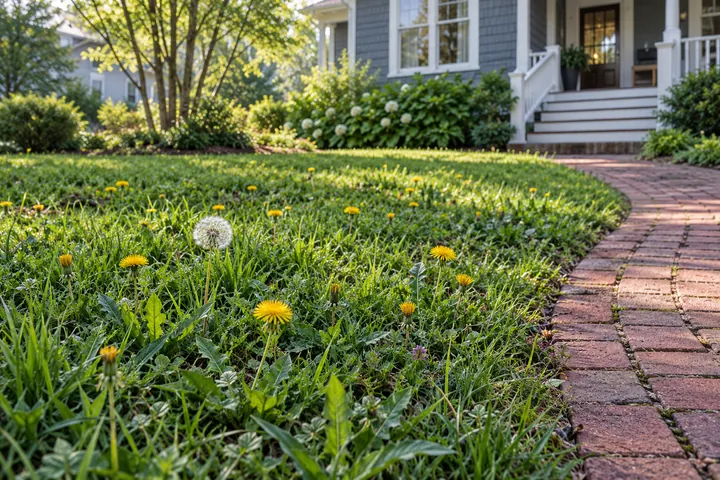
One yellow head does not tell the whole story
It is easy to call every yellow lawn flower a dandelion. The University of California identification gallery describes a perennial with a basal rosette, a deep taproot and individual yellow flower heads on hollow, leafless stalks. Its familiar rounded fruiting head carries the later dispersal structures. Those relationships matter more than the general impression of a cheerful yellow spot in the lawn.
Begin with one marked example instead of a collection of the brightest flowers. Show where its stalk meets the lower plant, and include the full stalk if it is readable. The question is not simply whether a flower looks familiar. It is whether the visible parts and their arrangement support the comparison. A nearby branching stem with several yellow heads should not be silently added to a record of a single leafless stalk.
Count heads and stalks separately
Several flower heads can sit close together above one patch of leaves. A photograph from directly overhead may merge their stalks and make the structure difficult to follow. Use a second angle that lets a reviewer trace each visible stalk. Describe the number you can actually distinguish, and leave hidden connections unresolved. There is no need to force a count when turf covers the lower parts.
This is particularly helpful when comparing a possible dandelion with other yellow-flowered lawn plants. One head on a stalk is a structural observation; several heads in a patch is a location observation. They answer different questions. Labeling them correctly keeps an attractive overall picture from being used to support a connection the camera never showed. A simple caption can carry that distinction without requiring technical botanical vocabulary.
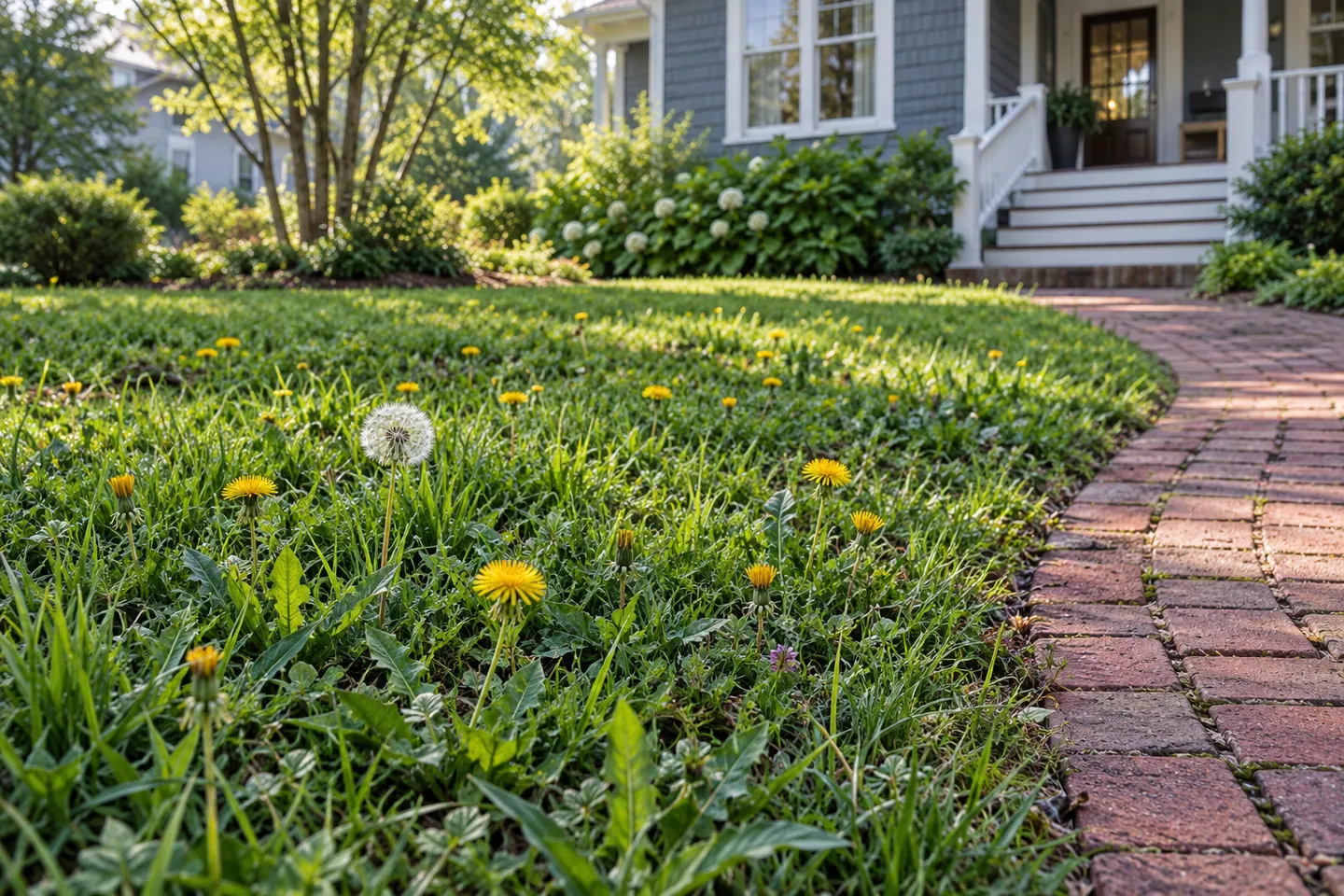
Leafless means the stalk needs to be visible
If a blade of grass crosses the flower stalk, it can look like a leaf attached to the flowering plant. A closer angle may show the blade passing behind it. Keep that overlap in mind before describing the stalk as leafy or leafless. The evidence should show the attachment, not just two green lines that happen to meet in a flat image.
Do not strip leaves or break a stalk to make the example resemble a reference. If a stalk is already broken, document that condition and keep any earlier intact photograph. The gallery's hollow-stalk description is background for identification, not an instruction to damage a plant during a maintenance inquiry. A qualified reviewer can explain which additional observation is appropriate when the existing photographs do not resolve the needed detail.
Keep the rosette boundaries honest
Lower leaves from neighboring plants may overlap into a continuous-looking circle. An overhead view can help show the arrangement, but it cannot automatically prove that every visible leaf belongs to one crown. Use an example whose center and attachments can be seen. If the patch is too crowded, describe it as a mixed patch rather than presenting a tidy diagram that the yard does not support.
A location label such as curved-walk example lets you keep the record stable while the identity is reviewed. Number a second example separately, even when its leaves seem similar. This gives the reviewer a way to explain that one record is stronger than another without losing the practical location of either plant. The homeowner's map and the botanical conclusion can improve independently.
A puff head and a yellow head need a dated relationship
The rounded pale head is familiar enough to become an identification shortcut. Preserve the date and example label when photographing it. If a yellow head was recorded earlier on the same marked plant, keep both records. If the pale head belongs to another example, say so. A sequence assembled from several plants can illustrate possible stages without proving the history of one individual.
Avoid staging a blowing demonstration to explain the lawn concern. A still picture can show the structure without creating a performance around it. Nor does a pale head beside a walkway establish where every other plant originated. Mapping observed examples is useful; claiming a complete seed-travel route from one photograph adds a story that the evidence cannot support.
Surface appearance is different from the root question
The UC profile describes a taproot and the potential for regrowth associated with the root. That background explains why a visible flower disappearing is not the same as proving that the whole plant is gone. It does not tell you the condition or completeness of an unseen root in your own yard. Do not claim a successful removal based solely on a neat surface photograph.
If someone shows you a detached root, keep its source and handling history clear. A root found in loose debris is not automatically connected to the marked rosette. A lawn inquiry usually needs a clear description of the requested visible result before it needs an excavation story. Identification, routine tidying and a separate root-related request should be explained as distinct questions with their own evidence and scope.
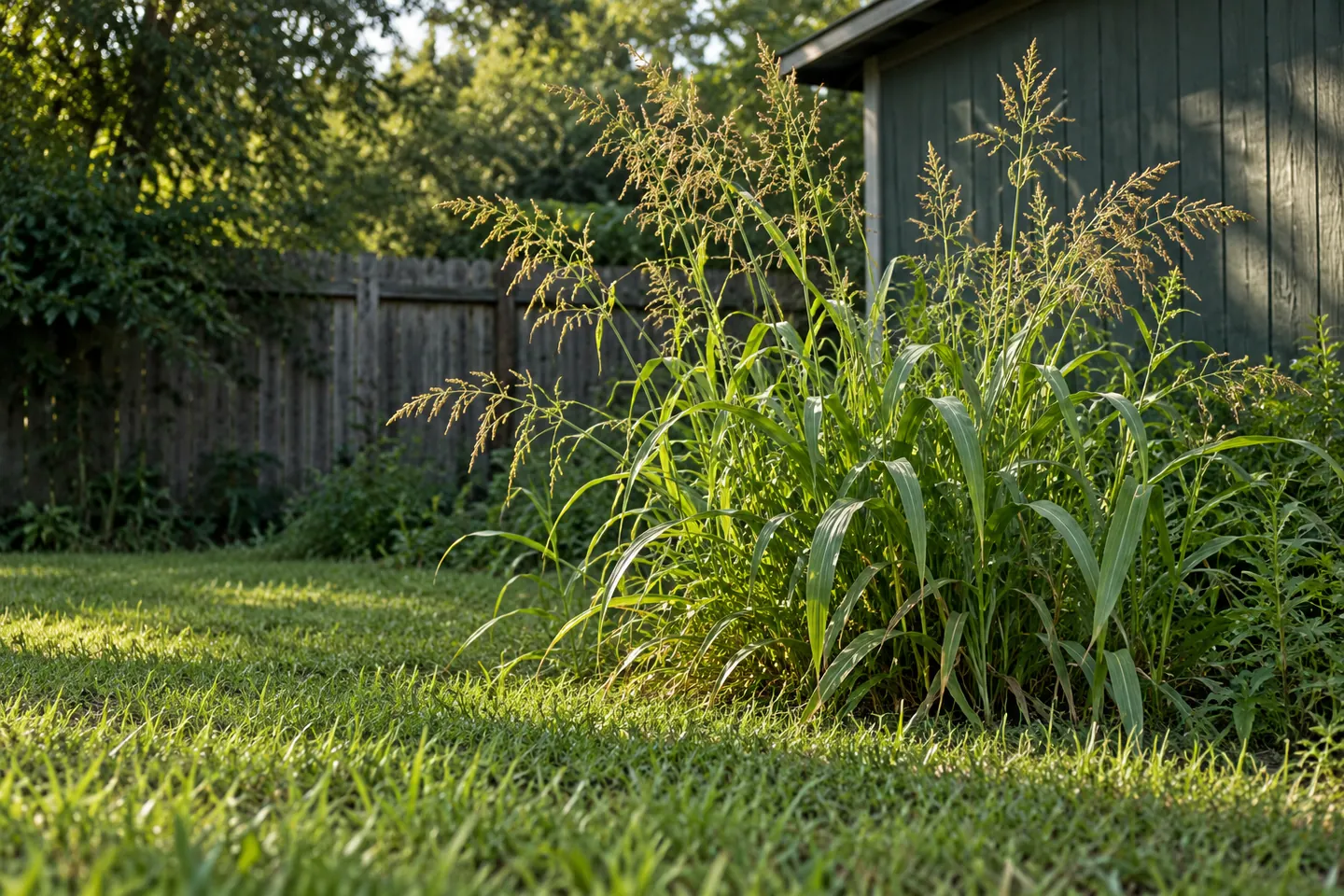
Decide what the yellow spots mean to your lawn view
One homeowner enjoys a few flowers but dislikes uneven height beside the walk. Another wants a more uniform surface in the front view. A third is simply trying to distinguish several yellow-flowered plants. State your own concern plainly. The candidate name dandelion cannot tell Happy which of those outcomes matters to you or which area should be reviewed first.
Photograph the ordinary view from the sidewalk or porch as well as the plant detail. The overview explains how the marked example fits into the lawn's appearance. Discuss the specific routine operation proposed for that location, such as mowing or edging, and confirm what finish is included. A routine visit should not be interpreted as a promise about permanent absence of a perennial plant or future appearance of flowers.
A changed stalk is not proof of a changed species
After cutting, a plant may no longer carry the structure that made the original comparison useful. Keep the earlier image and describe the current condition separately. Do not transfer an identification to every new short shoot in the same area merely because the older stalk was cut there. The remaining lower leaves can be reviewed, but the evidence set has changed.
For a later comparison, use the fixed location and show whether the same crown is visible. If you cannot establish that, call it another example in the area. That wording preserves useful information without claiming more continuity than was observed. It also helps a lawn follow-up focus on the agreed visible result, rather than treating an unresolved identity question as proof that the maintenance task failed.
Compare yellow-flowered examples without mixing their parts
If the yard contains both simple stalks and branching yellow-flowered stems, build two labeled evidence sets before asking which name fits each. Give the apparently simple stalk its own lower-leaf view and flower detail. Give the branching example a separate frame showing its junctions and base. A side-by-side comparison can be useful, but every picture needs to retain its original example label. The brightest flower should not become the shared illustration for both records merely because it looks similar at that scale.
Write the comparison as observable differences: this stalk has one readable head and no attached leaf visible in the current view; that frame has several readable branch junctions. Avoid naming one plant correct and the other wrong before the review. The reviewer may find that one attachment is obscured or that a crop conceals another branch. A corrected interpretation should then update the appropriate record without changing the other example's history. This approach is especially helpful when a homeowner has called all the yellow flowers dandelions for convenience. The familiar word can remain a useful description of the initial concern while the separate connected examples receive more careful attention. It also lets Happy understand which patch, rather than which guessed species, is the actual subject of the lawn request.
Make a small comparison record that can be corrected
Keep the original file, a labeled crop and a brief note about which connection each image shows. Ask whether the individual head, apparently leafless stalk and lower rosette support a dandelion comparison. Tell the reviewer when the hollow interior, crown or attachment cannot be observed. A good question leaves room for a different conclusion without making the whole record unusable.
- Trace a stalk rather than counting yellow dots across a patch.
- Keep crossing grass separate from attached leaves.
- Date flower and pale fruiting-head photographs individually.
- Define the lawn finish without claiming unseen root outcomes.
The original generated yard scene provides context for a friendly lawn discussion. It is not a scientific specimen plate, proof of a local plant occurrence or a record of a customer's job. Use your marked example and the primary identification account when the actual plant name matters. Clear evidence makes it easier to agree on a practical next step.
Ask Happy about the walk-side lawn
Call 504-339-3571 and ask for Happy. Describe the location, access and the mowing, edging, weed-eating or blowing you want reviewed. Confirm the work and availability for your yard before arranging a visit.