
The name describes a pattern, not a measuring test
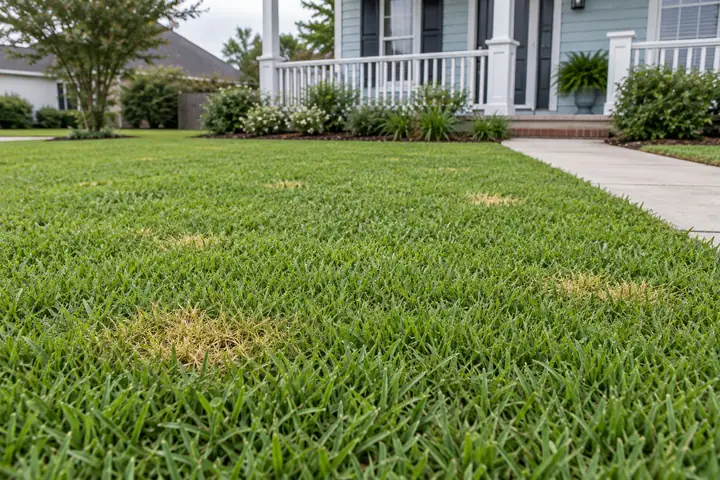
Dollar spot gets its familiar name from small pale areas in the turf. It does not mean that every affected spot must match a coin placed on the grass. LSU AgCenter describes straw-colored patches formed by groups of affected leaves. University of Georgia Extension notes that individual spots can be less obvious at a higher mowing height. A homeowner looking at ordinary lawn turf should therefore be cautious about comparing it directly with a tightly cut golf-green photograph.
Begin with the pattern that exists in your yard. Are there scattered pale flecks, several separate small patches, or a larger area in which individual spots are no longer easy to distinguish? Describe that pattern without forcing it into a perfect circle. If an apparent spot turns out to be a leaf lying on the surface, remove the leaf from the comparison. The aim is to understand the standing turf, not to collect every pale thing visible from the porch.
Compare several blades across a small patch
Dollar spot is a foliage disease. LSU describes light tan lesions across a blade or at its tip, with darker borders. A patch-level view cannot show whether those marks are present. Compare a few affected blades with nearby apparently normal foliage, keeping the grass identity in mind. A bright white patch in an overexposed picture is not evidence of a particular lesion color. Look at the leaves themselves before relying on the camera display.
Ask three practical questions: does the discoloration run across the blade, does it begin at the cut end, and are the surrounding leaves showing the same thing? Keep the answers separate. Uniformly torn ends throughout a newly mowed strip deserve a different discussion from bordered lesions among otherwise intact leaves. Those observations still may not identify the cause, but they help avoid asking an adviser to diagnose the whole lawn from a distant pale dot. Do not clip every suspect blade away before the assessment.
Keep spot size and mowing height in the same picture
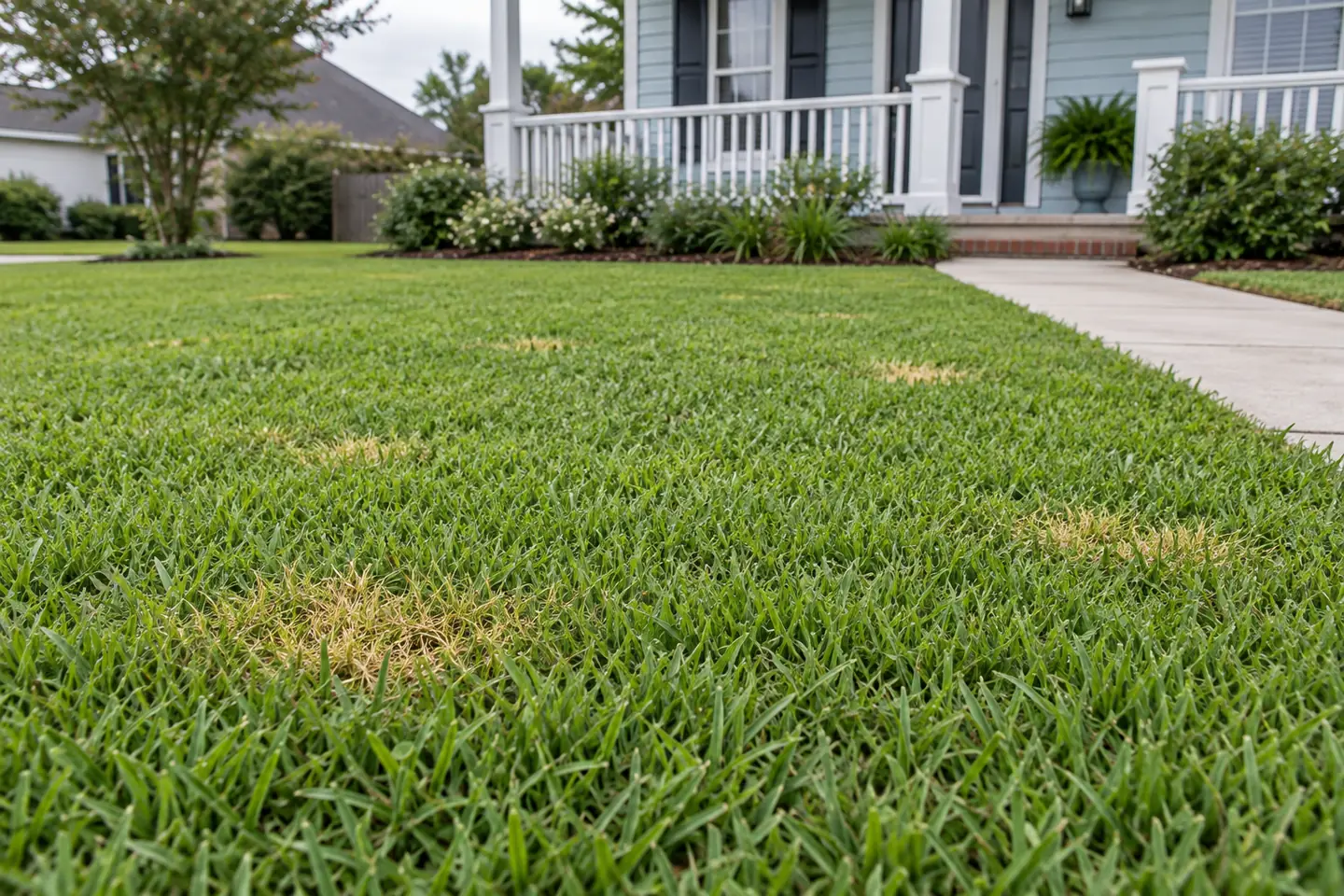
NC State's disease overview explains that dollar spot areas can be larger in taller turf and that neighboring spots can merge. This is why “the patch is too large for dollar spot” is an unreliable shortcut. At the same time, a large irregular area is not proof that tiny spots must have merged. You need either a record of that change or an appropriate assessment of the present evidence.
For a simple comparison, choose one view that shows several separate spots and the living turf between them. At the next review, ask whether the spaces are still present, narrower or no longer visible. Record the last mowing date alongside that observation. You do not need to count every patch in the yard or create a precise acreage estimate. A small, repeatable comparison area can answer the useful question: are distinct spots remaining distinct, or is the visible injury occupying more of the canopy?
Morning white growth is a clue with limits
White, cottony growth can sometimes be visible with morning dew on dollar spot areas. LSU specifically cautions that similar-looking growth occurs with other turf diseases. Its presence can be worth showing to a qualified reviewer; it is not a homeowner's confirmation test. Its absence later in the day also does not settle the question. “There was pale material across the blades at dawn, but I could not see it at noon” is an honest observation.
Before assuming the material is on the plants, check whether it is a web spanning a gap, loose surface material, or something attached to multiple leaves. Avoid rubbing everything away until you have recorded what caught your attention. If you cannot distinguish those possibilities, say so. A useful close view should include the grass supporting the material rather than only a featureless white blur. No need to chase the perfect fungus photograph at the expense of explaining where in the yard it appeared.
Do not confuse wet leaves with an adequately watered plant
Extension descriptions associate dollar spot with prolonged leaf wetness and also identify drought stress as a contributing condition. Those statements can sound contradictory until you separate the leaf surface from the root zone. Dew on a blade does not tell you how much usable moisture is available below it. This guide cannot determine either condition from the pale patch alone. Keep the observations separate when describing the yard.
If the lawn received a short evening sprinkler cycle, record that actual event. If the soil condition is unknown, leave it unknown instead of calling the yard either overwatered or dry. Compare the affected area with another part of the same irrigation zone, and note any obvious overlap or missed coverage for the person reviewing the system. Do not keep adding water merely because the leaves are pale. The useful next question is which condition has actually been assessed and what change, if any, is supported by that assessment.
Nutrition is part of the history, not a color prescription
LSU and UGA discuss the association between dollar spot and inadequate fertility, particularly low nitrogen. That relationship does not make every small pale patch a call for fertilizer. Other problems can produce pale foliage, and different grasses have different management needs. Bring an existing soil report and the actual application history into the discussion rather than guessing a nutrient rate from a photograph. A missing record should remain a missing record.
Suppose the front received a lawn product and the back did not. Keep that distinction instead of writing “the yard was treated.” Likewise, separate a product applied recently from one used last year. The adviser needs a useful sequence, not an inventory of everything in the shed. If a nutrition change is recommended, confirm who will provide that work and how its result will be reviewed. A maintenance visit should not quietly become an unplanned experiment with a different service.
Read disease names in their publication context
You may encounter different scientific names while reading dollar spot references. Some Extension pages retain the older name Sclerotinia homoeocarpa, while newer resources place the pathogens in Clarireedia. The difference in terminology does not mean that the pale spots in your lawn have changed identity between web searches. It does mean you should pay attention to the publication, host grass and management context rather than assembling a treatment plan from isolated search snippets.
Save the actual reference supplied by the person assessing the lawn. If two recommendations seem inconsistent, ask which one applies to your grass and why. A home lawn, a golf putting surface and a sod-production field are different settings. The presence of the same disease name does not make their instructions interchangeable. This is particularly important when a table or photograph is detached from the paragraph explaining its intended use. Keep the source connected to its limitations before making decisions.
Agree on a mowing handoff before the next cut
While identification is pending, the mowing conversation should cover the suspected area, the current turf condition and any specific instructions already received. LSU discusses avoiding wet mowing, cutting affected areas last and removing clippings from equipment. Those are useful points to review with the maintenance provider when relevant to an assessment. They should not be assumed to have happened merely because the finished lawn looks tidy.
Identify the area with a plain location such as the grass beside the back steps, then explain the actual question. Ask whether the visit should wait for an adviser to see the foliage or whether mowing can proceed under supplied instructions. Discuss clipping collection separately if it is requested. A routine agreement may not include it. The goal is a clear decision about the next cut, with the assessment preserved and the work understood before equipment enters the lawn.
Judge the next observation against the original question
Choose a review question more useful than “is it perfect yet?” You might ask whether new small spots have appeared beyond the original area, whether the remaining leaves show similar lesions, or whether the adviser wants a second sample. Keep a record of any treatment or maintenance change between observations. Without that context, a different-looking lawn can be mistaken for a different diagnosis.
A fresh cut can change how pale leaves catch the light. Rain can change the appearance of the surface. Neither is a substitute for the follow-up that the assessment calls for. If the small spots become a wider area of loss, communicate that change rather than continuing to use the original description indefinitely. For a West Bank homeowner, the helpful outcome is a plan that follows the actual turf condition. Let the name guide a better question instead of allowing it to become the whole answer.
Ask Happy about the work you want maintained
Call 504-339-3571 and ask for Happy to discuss confirmed lawn-maintenance work in Harvey, Marrero, Gretna, Algiers, Belle Chasse or Westwego. This educational guide does not add diagnosis, fungicide application, fertilization, aeration, overseeding or pest control to your service agreement. Share relevant assessment instructions before arranging a visit.