
Make the attachment the center of the inquiry
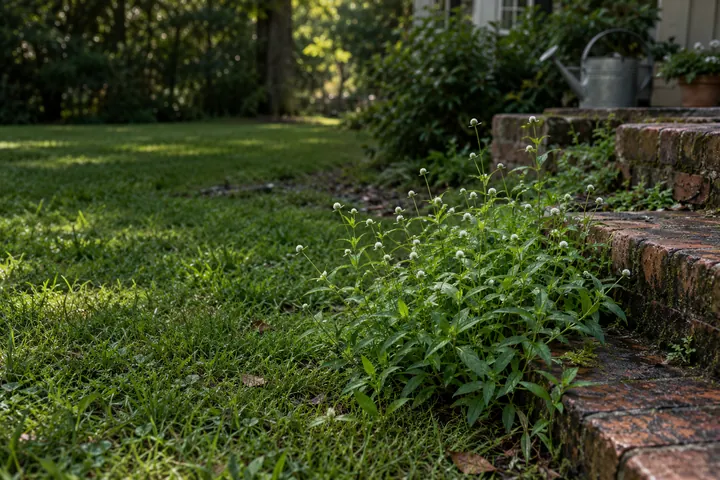
Before asking whether a white-flowered patch is eclipta, choose one readable stem and follow its parts. Give that example a fixed label, such as lower-brick-step stem. The label helps keep the record together when several plants occupy the same corner. It also gives Happy a practical location for the lawn discussion even if a later identification review changes the first candidate name.
University of Georgia's account describes Eclipta prostrata as an annual with stems ranging from low to upright, opposite narrow leaves and white heads on stalks. The leaves are rough-hairy and may have smooth or toothed margins. Stems can root at nodes, and the plant reproduces by seed. These are a connected set of comparison features, not evidence that every white spot next to a moist surface has the same identity.
Show the leaf pair around a visible node
Opposite leaves need to be shown joining at a readable place on the stem. Two leaves pointing in different directions in a flat photograph may come from separate stems. Include a short stretch above and below the proposed node so another person can follow the connection. If the far-side attachment is hidden, say that only one side is readable rather than claiming the full pair has been demonstrated.
You can take a second angle of the same intact stem without creating a complicated camera project. Keep the overall view with both details. A short caption explaining which node each photograph shows is more useful than several extreme crops whose positions are unknown. The reviewer should be able to compare the views without guessing which leaf was moved, which stem was replaced or whether the second image came from another plant entirely.
Follow the flower-head stalk back to the example
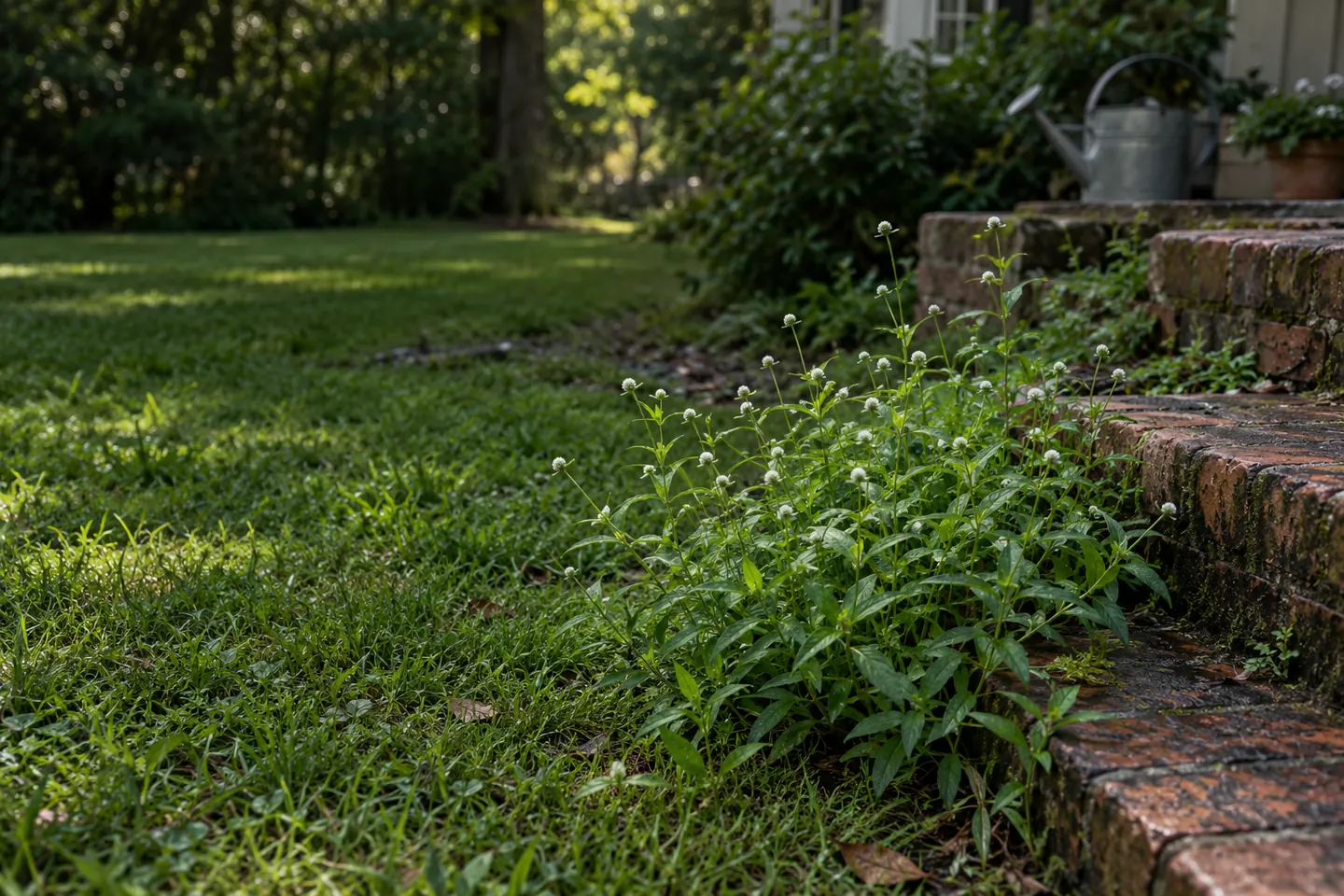
A white head may seem to sit above the selected leaves while its stalk actually passes behind them from a neighboring plant. Trace the visible route back toward its attachment. Keep the head, stalk and supporting stem in one wider image if possible. The flower close-up then has a clear origin instead of floating free from the rest of the identification record.
If turf or another leaf interrupts the route, mark the connection as uncertain. Do not draw a continuous line through a hidden area and present it as an observed attachment. A reviewer may still find the separate details useful, but their relationship needs to remain explicit. An incomplete, traceable record is stronger than an apparently perfect example assembled from the nearest leaves and the clearest white flower in the corner.
A white head and a white petal are different scales
The flower-head description concerns a structure that may look like one small white button at ordinary viewing distance. An image that shows only a pale dot cannot answer detailed questions about its surface. Include a readable head view when available, and state whether the image's purpose is to show its position, its outline or a finer detail. Do not treat every photograph as though it resolves all three.
Avoid enlarging a soft phone image until it appears sharp merely because the pixels have become large. Preserve the original and a matching crop with the same label. If the crop cannot reveal more detail, explain that limitation. A qualified reviewer can ask for a better observation rather than having to separate actual plant structure from the patterns created by aggressive sharpening or a digital filter.
Leaf margins can differ without settling a second name
UGA's description allows smooth or toothed margins. Record the margin on the leaf actually pictured instead of excluding the candidate based on a single expectation. Show enough of the blade edge that a reviewer can distinguish its outline from an overlapping grass blade. A jagged-looking edge in a crowded image may belong partly to the background rather than the selected leaf.
Keep the upper and lower surfaces identified if both are photographed. Hair observations should say which surface was visible, not simply that the plant is fuzzy. There is no need to rub an unidentified plant to produce a tactile demonstration for routine lawn help. A clear attached view and an honest note about what the camera can show give the reviewer a better starting point than an unrecorded handling impression.
Low and upright examples should not be merged automatically
One stem may lie across the ground while another stands above the turf. The reference's range of habits makes those forms worth recording, but it does not prove that the two examples are connected or identical. Number them separately and show their bases where readable. If an actual connection can be traced, add that evidence instead of assuming it from their proximity.
A simple location sketch can mark the lower step, adjoining soil and grass edge. Use one dot for each example and keep the botanical details in its photograph set. The sketch answers where the observations were made; it does not need to invent the hidden outline of a single spreading plant. This separation helps a reviewer revise one identification without erasing the practical map of the corner.
Ground contact is not a documented rooted node
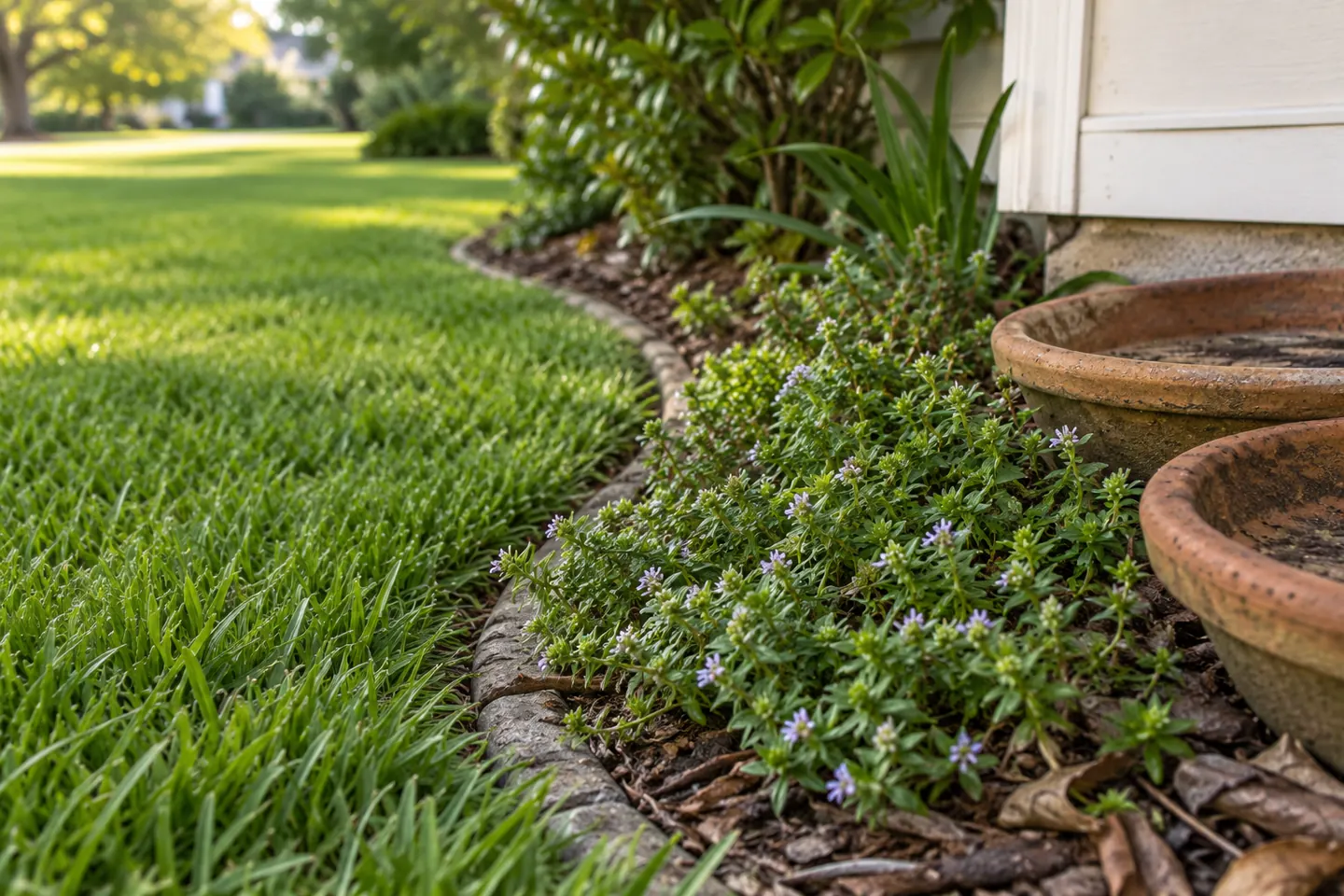
The ability to root at nodes is background about eclipta. A stem touching soil in your photograph is not proof that it has rooted at that point. State the visible relationship precisely: lying on soil, attachment obscured or rooted connection actually observed. These descriptions carry different levels of evidence. There is no advantage in claiming an underground connection that the surface image cannot establish.
If a stem was detached before it was photographed, label it as detached and retain any record of where it came from. Do not use a loose piece resting on a step as evidence that a new plant has established there. Nor does the presence of a piece prove that particular equipment or a previous visitor moved it. A possible biological process and a demonstrated property history are separate questions.
A moist-looking step does not identify the water source
The primary account mentions moist disturbed places. That background cannot diagnose drainage at a particular yard or establish why a patch appeared. Describe any known water observation independently: a wet-looking brick today, standing water at a recorded time or a dry surface on another visit. Keep actual rainfall or watering history factual when it is known, and leave the cause open when it was not observed.
For the maintenance conversation, a current soft or inaccessible area can matter regardless of the species name. Show that condition in an overview rather than expecting a flower photograph to communicate it. A practical visit discussion should state the access question directly. It should not quietly become a drainage-repair request or a promise to correct a water problem that Happy Grass has not assessed or agreed to address.
Describe the step-side finish from an ordinary viewpoint
The close plant record and the yard's appearance need different views. Take one photograph from the place where the corner is normally seen. Explain whether the concern is raised white heads, low texture beside the step or loose material on the hard surface. Those observations help define the conversation much better than simply asking to handle the eclipta everywhere.
Mark the area included in the request, especially where turf meets a bed or paving. Confirm the mowing, edging, weed-eating or blowing being considered and the visible result that belongs to each operation. A tidier surface should not be represented as proof that every root or seed is gone. A remaining low leaf should likewise be assessed against the actual task rather than an unstated promise of complete removal.
Preserve a feature that does not fit the first guess
If a readable leaf arrangement appears different from the candidate description, include it rather than selecting only photographs that seem to agree. Label the exact node and explain why it prompted the question. The reviewer may find that two stems overlap, that the attachment was misread or that another plant should be considered. Each of those answers is more useful when the contradictory observation has been preserved honestly.
Do not erase the original caption after a correction without keeping a short note about what changed. A revised interpretation can explain the evidence without rewriting what the homeowner first saw. This matters in a crowded white-flowered patch, where a clearer view of one junction may change which leaves and head belong together. Keeping the original and corrected notes under the same location label makes the next conversation understandable instead of leaving an album that appears to have always supported a certainty nobody actually had.
Let the record support a useful next question
Ask whether the readable leaf pairs, attached stalked heads and observed stem habit support an eclipta comparison. Identify which node or connection still needs review. Keep the actual answer with the location label and date, including any uncertainty the reviewer retains. If a later image shows another stem, label it as another example rather than automatically transferring the first conclusion.
- Locate the paired attachments on a readable node.
- Trace the white head's stalk before pairing it with leaves.
- State the surface when recording a hair observation.
- Keep soil contact separate from proven rooting.
- Describe water observations and the intended finish independently.
Discuss the brick-step corner with Happy
Call 504-339-3571 and ask for Happy. Explain the marked lawn area, current access and the mowing, edging, weed-eating or blowing you want discussed. Confirm the actual scope and availability before arranging a visit.