
Begin with what the ring is doing
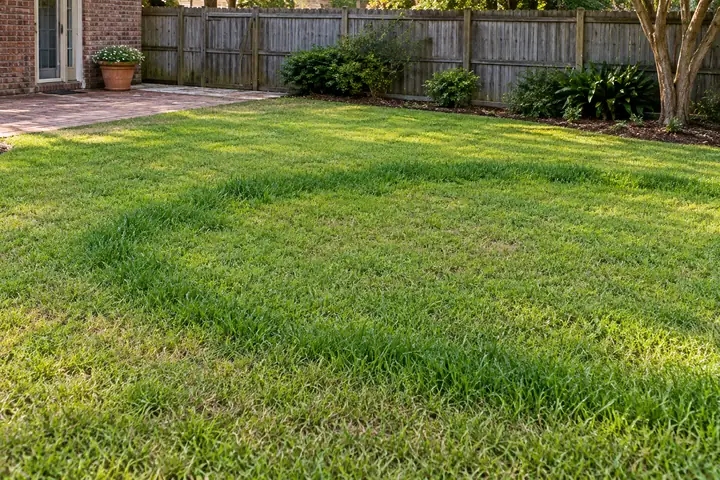
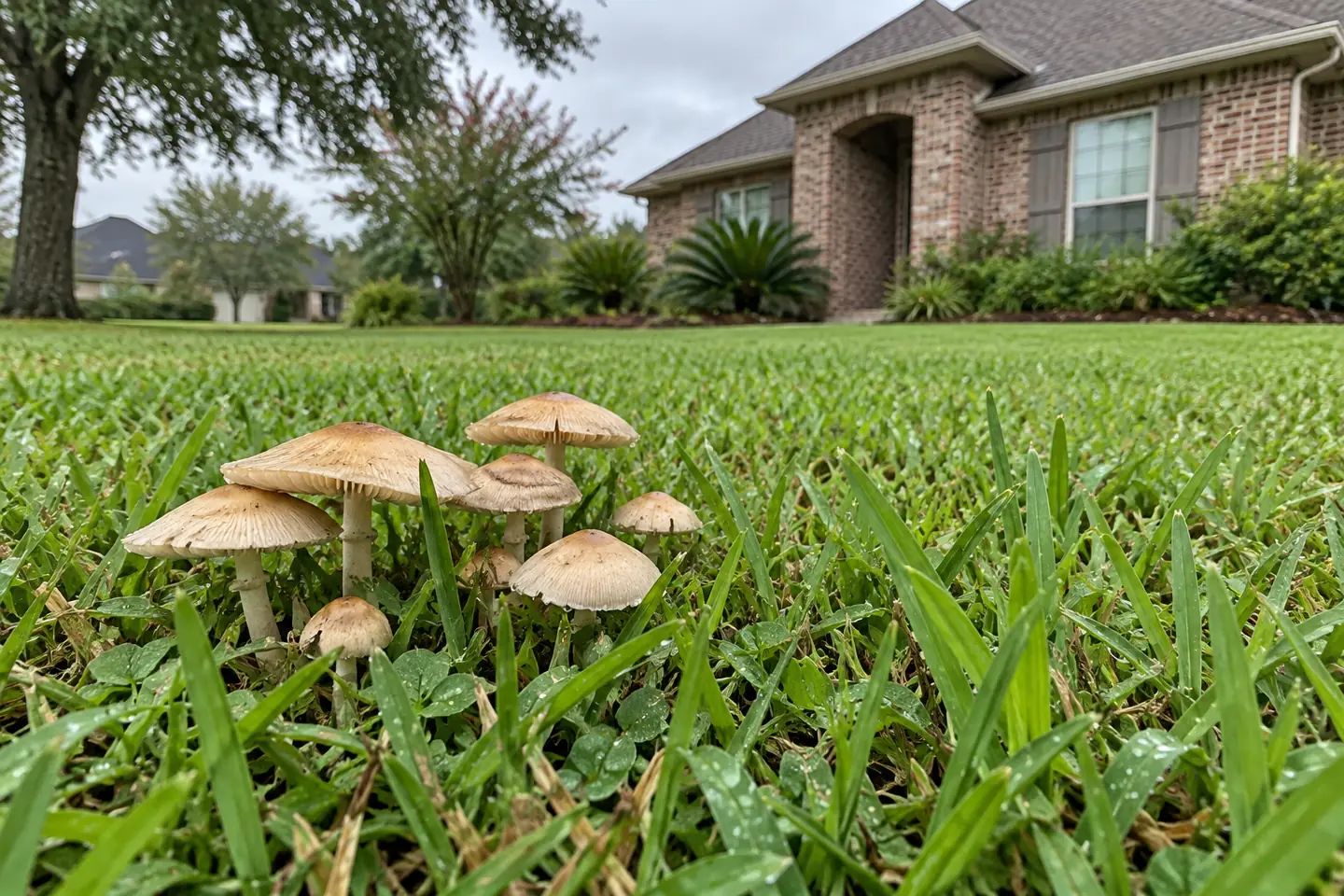
The interesting question about a lawn ring is not simply whether it is round. It is what the grass along that curve is doing. Is it taller and darker than the surrounding lawn? Is there a dry-looking band? Are mushrooms present while the grass otherwise looks much the same? LSU AgCenter describes these as different kinds of fairy ring symptoms. The differences matter because an appearance problem and actual turf loss are different homeowner concerns.
Walk around the visible arc and keep each observation separate. A dark band with living grass should not be recorded as a strip of dead turf. Mushrooms beside an unrelated brown area should not automatically be combined into one diagnosis. You can describe the pattern without deciding which fungus is present. If the curve stops beside a path, record where it stops; do not extend an imaginary perfect circle through the house to make the picture fit a name.
Understand the three symptom types
Extension references commonly group fairy ring symptoms into three types. Type I involves damaged turf associated with water-repellent conditions below it. Type II describes stimulated, darker-green growth. Type III involves a ring or arc of fungal fruiting bodies, such as mushrooms, without necessarily injuring the grass. NC State notes that the symptom expression can change with conditions. These labels describe the observed effect; they are not a homeowner's identification key for the mushroom species.
For a useful first note, choose the plain description before the number: living dark-green arc, declining band, or mushrooms with little apparent turf change. If more than one feature is present, include both. That is better than selecting the most alarming type after an image search. An adviser can then consider whether the features belong together. Your task is to preserve the differences long enough for the assessment, not to make the lawn fit a single category on the first walk outside.
Why the grass can grow greener along a curve
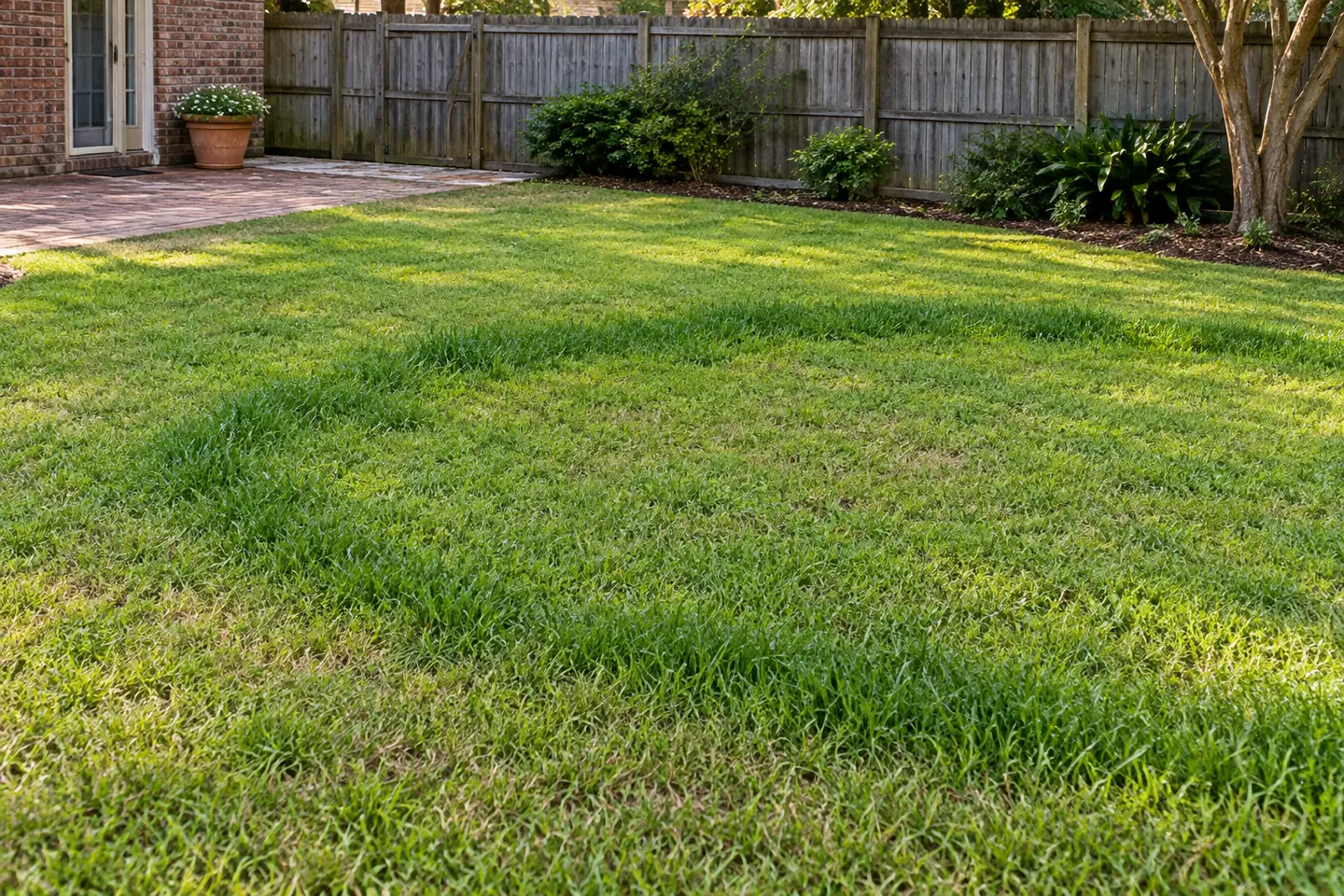
Fairy ring fungi live on organic material in the soil and thatch. Nutrients released during decomposition can stimulate the turf above, creating a band that looks greener or grows faster than its surroundings. That is a different process from a fungus necessarily attacking every leaf inside the ring. It also explains why the visible grass response deserves attention even when there are no mushrooms to point at.
In practical terms, compare height as well as color before the next cut. If the arc stands above the rest, say whether that difference returns between visits. Do not lower the whole lawn simply to make the taller band less noticeable. A mowing-height decision should still fit the grass being maintained. Likewise, the darker band does not tell you that the rest of the yard needs an immediate product application. Keep the growth contrast available for review instead of treating color uniformity as the only measure of a healthy yard.
Water-repellent soil is different from a missed sprinkler spot
In damaging fairy ring cases, fungal activity can create a water-repellent zone beneath the turf. Water-repellent means that wetting the surface does not necessarily wet the affected layer as expected. NC State distinguishes this situation from the stimulated growth of Type II. A brown arc is not enough to prove the layer exists, and a sprinkler running nearby is not enough to prove water has reached the roots.
If this possibility is raised in an assessment, ask how it will be checked and which area is actually affected. An irrigation coverage problem, a soil-water problem and a ring-related water-repellent layer are different questions. Avoid responding by running the entire irrigation system longer without knowing which one is being addressed. That can leave the unaffected parts receiving a change they did not need. The useful plan identifies a condition and a target area, then explains how the response will be evaluated.
A mushroom-free day does not erase the growth pattern
Mushrooms are fruiting bodies, and their visible appearance is not a complete view of fungal activity below the lawn. LSU notes that fairy rings can persist or reappear over time. This means a review made after the caps disappear can still benefit from a record of the earlier arc. It does not mean every recurring patch is a fairy ring. Retain the distinction between a past mushroom observation and the present grass response.
If the caps were arranged along the darker band, preserve that relationship in a simple sketch. If they were scattered elsewhere, show that instead. Do not identify edibility from the ring or from this guide. The lawn-maintenance question is how the area is being used and what needs attention before a visit; mushroom identification for another purpose requires its own reliable expertise. Removing visible caps, when appropriately arranged, is a surface task and should not be described as removing the entire underlying fungus.
Read the curve against the yard's actual history
Some fairy ring fungi use buried woody material, while others thrive on other organic matter. A known old stump or buried construction material may therefore be relevant history. An arc alone does not locate a hidden stump, pipe or forgotten structure. If you know a tree was removed, record where and approximately when. If the idea comes only from someone guessing at a picture, label it as a possibility rather than a fact.
Keep excavation decisions separate from the first observation. Digging along a curved band to chase an assumed underground object can create a new lawn repair before the original problem is understood. Instead, bring any actual site records to the person reviewing the area. A previous owner's note, a dated tree-removal photograph or a known change in the lawn's surface is more informative than a confident story built around the shape. There is no need to solve the whole property's history to describe the visible band accurately.
Compare the same part of the arc over time
Choose two fixed features that frame the visible growth, such as the back steps and a fence corner. Use those as reference points without pushing markers into unknown ground. A repeat view can show whether the arc's edge, the amount of damaged turf or the height contrast has changed. Record the date and whether the lawn was recently cut. A short cut and a low sun angle can alter the apparent boundary without proving the underground process has changed.
It helps to keep three separate observations on the page: the position of the curve, the condition of the grass along it, and the presence or absence of fruiting bodies. A change in one is not automatically a change in all three. For example, mushrooms disappearing after a weather change does not establish that an area of turf loss has recovered. This modest record is more useful than a succession of photographs labeled only “still there.”
Decide which outcome actually needs attention
A dark-green arc in an otherwise usable lawn may be mainly a question of appearance. A band losing turf raises a different concern about the living stand and soil conditions. A flush of mushrooms in a yard used by children or pets adds a separate supervision and surface-cleanup question. Explain which concern matters most before asking someone to “get rid of the ring.” That phrase can mean several different jobs and outcomes.
Ask an appropriate lawn or Extension adviser what the observed type implies for your site. If a recommendation discusses changing soil conditions, thatch or nutrition, confirm the provider and scope of that work separately. Mowing the grass evenly, removing caps, changing the color contrast and addressing an assessed water-repellent zone are not interchangeable results. A clear request avoids promising an invisible underground outcome from a routine surface-maintenance task.
Keep the next lawn visit connected to the assessment
Before a scheduled cut, tell Happy which band is being reviewed and whether anyone needs to inspect it before the foliage changes. Discuss any surface cleanup request, access limit or supplied maintenance instruction. If the grass is taller along the arc, explain that difference rather than assuming an uneven finish was caused during the last visit. A current observation can be shared without assigning blame or making a diagnosis.
For a yard in Harvey, Marrero, Gretna, Algiers, Belle Chasse or Westwego, the practical goal is the same: keep the living grass, the soil question and the visible mushrooms accounted for as separate parts of one useful conversation. Once an assessment supplies a next step, record what is expected to change and what will be checked again. That gives the yard a plan based on its actual condition, with less chasing of circles and more clarity about the work.
Confirm Happy Grass's maintenance work
Call 504-339-3571 and ask for Happy. Discuss the mowing and other available maintenance work for your property before booking. This educational guide does not offer mushroom identification, disease diagnosis, fungicide treatment, fertilization, aeration, overseeding or pest control. Any separate specialist work needs its own appropriate agreement.