
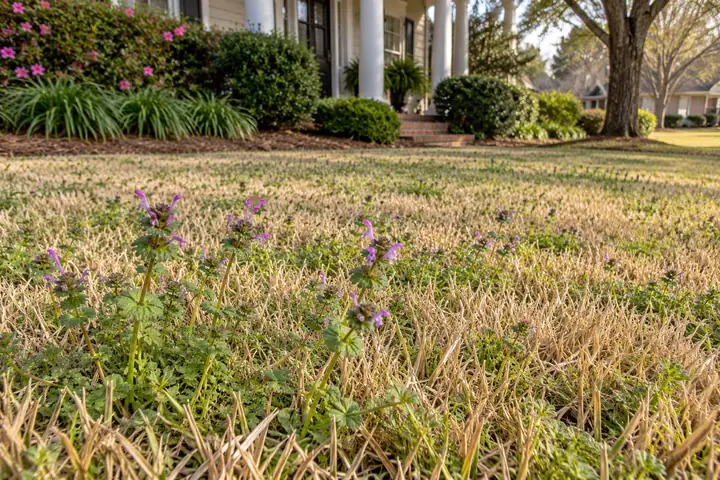
Purple flowers can change the whole view of a lawn
A lawn that seemed quiet through cooler weather can suddenly look busy when purple flowers rise above the grass. Henbit is one possible explanation, but the color alone is not the identification. Start with the plant carrying the flowers. Look at its leaf pairs, upper leaf attachment and stem shape, then look separately at the grass beneath it. The flowering height can make a lawn appear actively growing even when the desired turf is doing very little.
LSU AgCenter describes henbit as a cool-season annual in the mint family. It has four-sided stems, opposite scalloped leaves and purple tubular flowers. It reproduces by seed. Those features make it a different maintenance question from a patch of warm-season grass that simply needs a routine cut. Treat the flowering stems and the underlying turf as two layers so the most conspicuous plant does not decide the whole lawn's schedule by itself.
Use upper leaves to compare henbit and deadnettle
Henbit and purple deadnettle can both produce purple flowers and square stems. Look where the upper leaves join the stem. Henbit's upper leaves appear to clasp it, while purple deadnettle's upper leaves have short stalks and often a more triangular appearance. Iowa State and Washington State extension references use these distinctions. A purple tinge near the top may support a comparison, but it is less useful than leaf attachment when photographs change color.
Compare an upper leaf and a lower leaf on the same intact plant. Do not assume their attachments must look identical at every height. Also avoid confusing a square stem with a complete identification: other mint-family plants share that feature. The useful combination is stem shape, rounded scalloped foliage, upper leaf arrangement and tubular bloom. If those details conflict, ask for identification help instead of calling every purple-flowered winter plant henbit.
A winter annual begins before its showiest moment
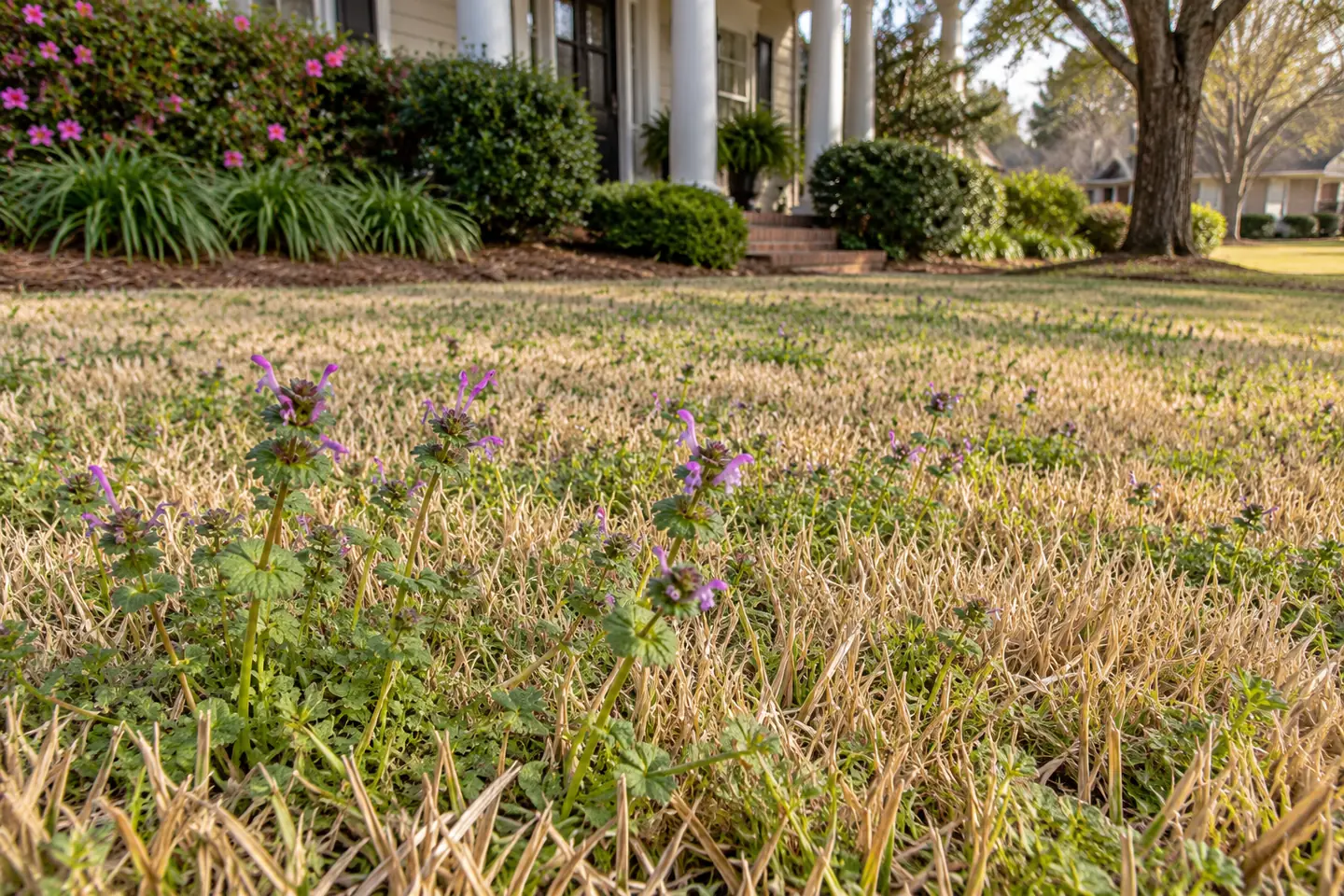
The flowering display can make henbit seem to have arrived overnight. Its cool-season annual life cycle tells a different story: the conspicuous flowers are a stage of an existing plant, not necessarily evidence of sudden new arrival. Compare earlier yard photographs if you have them. Low green plants may have been present before they became obvious above the turf. This distinction helps plan earlier observation rather than waiting for a full purple display each year.
Do not turn a broad seasonal description into an exact treatment date for every West Bank lawn. Weather, plant stage and site conditions vary. The practical lesson is to notice the plant before the flowers dominate the view and to seek appropriate advice before seed production if management is the goal. A calendar reminder can support inspection, but the actual plant stage is the evidence that should guide the next conversation.
Check what is growing between the henbit stems
Stand where you can compare the flower patch with nearby desired grass. Is the turf the same height in both areas? Are the tall points mostly purple-flowered stems? Does the lawn contain broadleaf foliage close to the soil between those stems? These questions distinguish an uneven flowering layer from rapid grass growth. They also explain why the view after a visit may improve even though the turf itself needed relatively little height reduction.
For example, a tan warm-season lawn with scattered green flowering plants presents a different situation from vigorous green turf mixed with henbit. Neither should be managed from flower height alone. Identify the intended grass and its condition before deciding on the cut. A request to shorten purple stems is more specific than an instruction to make the whole lawn much lower. The latter may change the desired grass without resolving the annual weed's low foliage.
Flower removal and annual-weed management are different goals
You may want the purple stalks reduced for appearance, or you may want a separate discussion about managing henbit. Say which goal applies. A mowing pass that changes the floral skyline does not establish that all plants or seeds have been removed. Conversely, a decision to tolerate seasonal flowers does not mean the grass edge and walking routes must be left untidy. Appearance preferences and plant-population goals can be discussed independently.
If the plan concerns seed production, do not wait until a photograph shows obvious dry seed before asking for advice. Small reproductive structures are easy to miss. An extension reference can explain the plant stage more reliably than an assumption that flowers are only decoration. This guide does not provide a chemical calendar or promise that mowing alone prevents every seed. Confirm the actual management approach and its limits for the identified plant and turf.
Distinguish henbit from other cool-season lawn changes
An early green patch may also contain chickweed, annual grasses or unrelated flowering plants. Look for more than one growth habit within the same area. Henbit's scalloped leaves and upright flowering stems differ from chickweed's softer branching mat and tiny white flowers. A single wide photograph can merge them into one green blur. If two forms are present, describe two forms rather than assuming one weed explains the whole patch.
This matters when reviewing a later result. Purple flowers may be fewer while a white-flowered mat remains, or the opposite may occur. Calling both plants henbit would make the comparison confusing. A simple sketch with a note for purple tubular flowers and another for white star-like blooms preserves the difference. You do not need to identify every species yourself, but you should avoid treating visibly different plants as one uniform problem.
Use thin-turf observations carefully
LSU notes henbit in thin turf and some shade. That association can prompt a useful look at the desired grass, but it does not diagnose why the turf is thin. Note bare openings, a changing canopy or an object left on the lawn. These details may justify a separate turf assessment. Do not choose soil amendments or a renovation approach simply because henbit occupies the gap. The weed identifies a plant, not every condition below it.
An assessment may also reveal that two areas have different expectations. An ornamental corner with seasonal flowers is not necessarily intended to look like the main lawn panel. State those preferences before requesting a whole-yard change. If the goal is a more continuous grass surface, discuss the grass and site together. Removing the conspicuous flowering plants cannot by itself guarantee that desired turf immediately occupies the space they used.
Review the patch as the season changes
Keep track of three features: flowering stems, low broadleaf foliage and the desired grass. A change in one does not prove the same change in all three. The flowering display may fade while low plants remain, and the turf may change color or growth rate on its own seasonal course. Comparing only the overall shade of green can misread these independent changes. Look at the actual plant structures when deciding what remains to address.
Use an old photo as a location guide rather than an exact color standard. Different sun angles can intensify purple or make tan turf seem greener. The more useful comparison is whether the same kind of leaf and stem remains in the same places. Where the patch has changed enough to make identification difficult, note the uncertainty. A careful description is more helpful than insisting that every later green shoot must be the original winter annual.
Compare flower height with two turf conditions
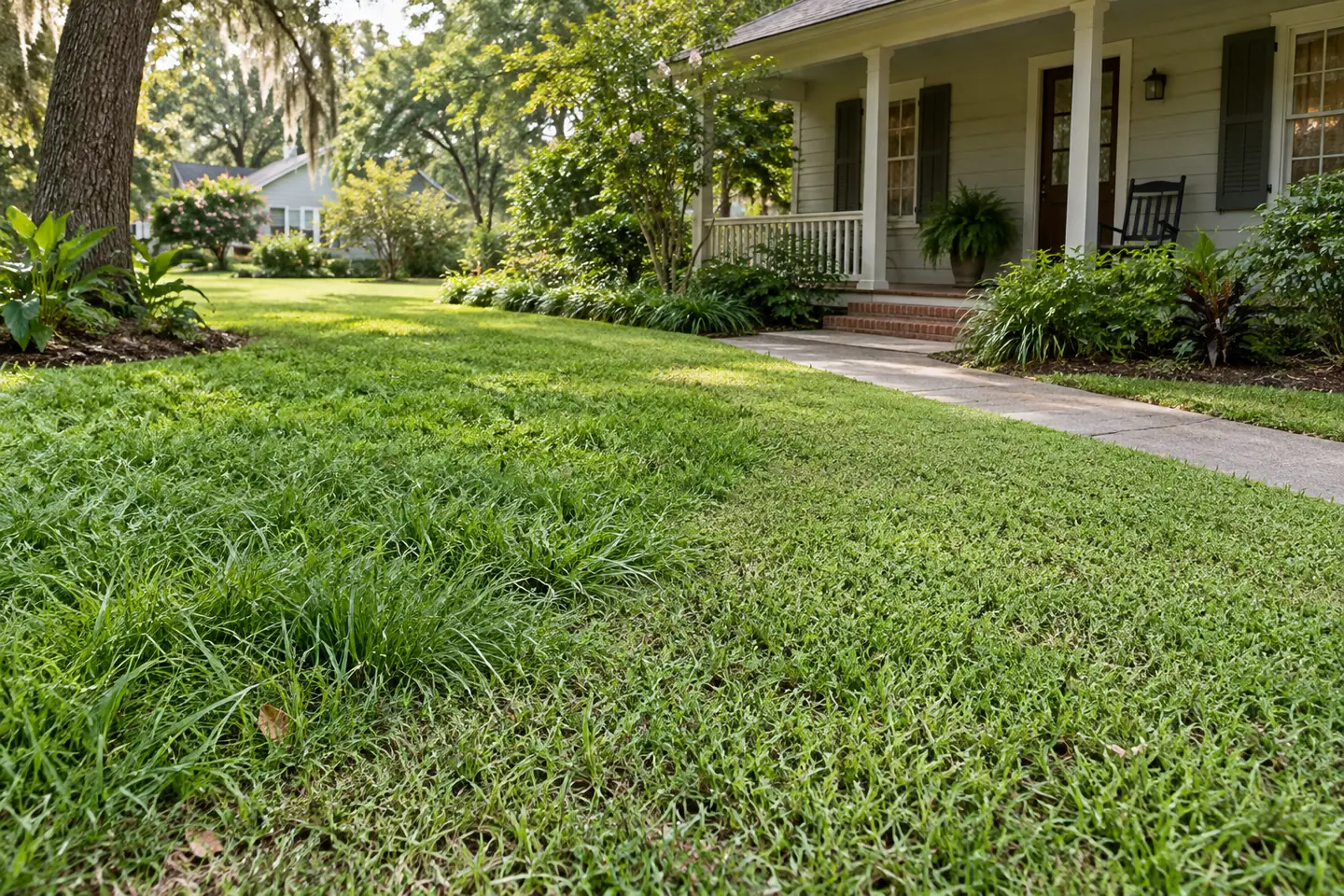
Imagine the same henbit-like stems in two places. In one, the desired grass is mostly tan and low. In the other, the turf is green and actively adding height. The purple flowers may reach a similar height in both, yet the mowing questions differ because the grass underneath differs. Record the two settings separately instead of treating the tallest flower as a universal measure of how much the lawn needs cutting.
A third location may contain low scalloped leaves but no open blooms. That observation matters too. It could preserve identification clues before a conspicuous flowering stage, or require more evidence if the plant is uncertain. The absence of purple petals is not a complete inventory of cool-season broadleaves.
- Quiet turf with flowering stems: distinguish the floral skyline from actual grass growth.
- Active turf with flowering stems: discuss both components rather than assuming one setting suits every plant.
- Low leaves without blooms: preserve leaf attachment and stem details for identification.
- Mixed purple and white flowers: trace each to its own foliage instead of giving the patch one name.
These comparisons support a more useful seasonal review. The aim is to describe what is growing now, while avoiding a dramatic flower display becoming the sole reason for a major change to the intended turf finish.
Give the cool-season visit a clear purpose
A useful request might explain that purple tubular flowers rise above mostly quiet turf near the front walk, that you want the flower height tidied and that a separate identification or weed-control discussion is needed. If flowers are intentionally retained elsewhere, name that area too. This makes the maintenance result reviewable without assuming an unpurchased treatment or a wholesale change to the grass height.
Happy Grass takes lawn requests around Harvey, Marrero, Gretna, Algiers, Belle Chasse and Westwego. Call 504-339-3571 and ask for Happy. Explain the condition of the turf below the henbit-like stems as well as the flowers above it. Fertilization, aeration, overseeding and pest control are not offered. A clear cool-season request keeps the visit focused on the lawn's actual growth, the flower preference and any separately agreed weed-control scope.