
A soft green carpet can conceal a different lawn
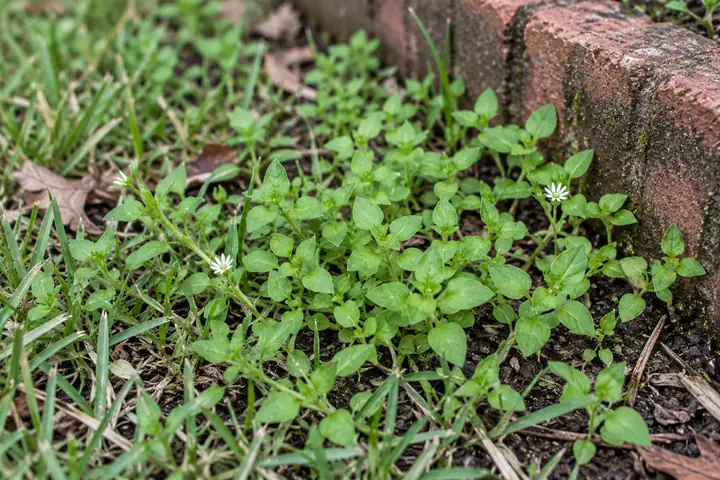
Common chickweed can make a sparse area look pleasantly green from a distance. Closer inspection may reveal a soft branching mat with small paired leaves instead of the grass you intended to maintain. The useful first question is which plant supplies the cover. A green surface and a dense turf stand are different descriptions. This distinction matters before deciding whether a mowing visit, separate weed management or a broader turf assessment is the next useful step.
LSU AgCenter describes common chickweed as a cool-season annual with a prostrate branching habit, opposite oval leaves and small white flowers. The flowers have five petals that are deeply divided, which can make them look like ten. Look at an intact flower close enough to see the divisions rather than counting the apparent white tips from standing height. Pair that observation with the leaf and stem arrangement on the same plant.
Compare common chickweed with its hairy relatives
The name chickweed covers more than one lawn plant. UC IPM distinguishes common chickweed from mouseear and sticky chickweeds, which have more conspicuously hairy leaves. Common chickweed may show a line of hairs along a stem rather than a uniformly fuzzy surface. A close view under good light can help reveal the difference. Do not rub unknown leaves across your skin or assume that softness alone identifies the species.
This comparison matters because related-looking plants do not necessarily share the same life cycle. A homeowner who calls every low white-flowered mat common chickweed may carry the wrong seasonal expectation into a management request. If the leaves look densely hairy or the arrangement does not fit, keep the identity open. An extension identification using intact material is more useful than selecting a product on the strength of a familiar common name.
Trace one stem through the carpet
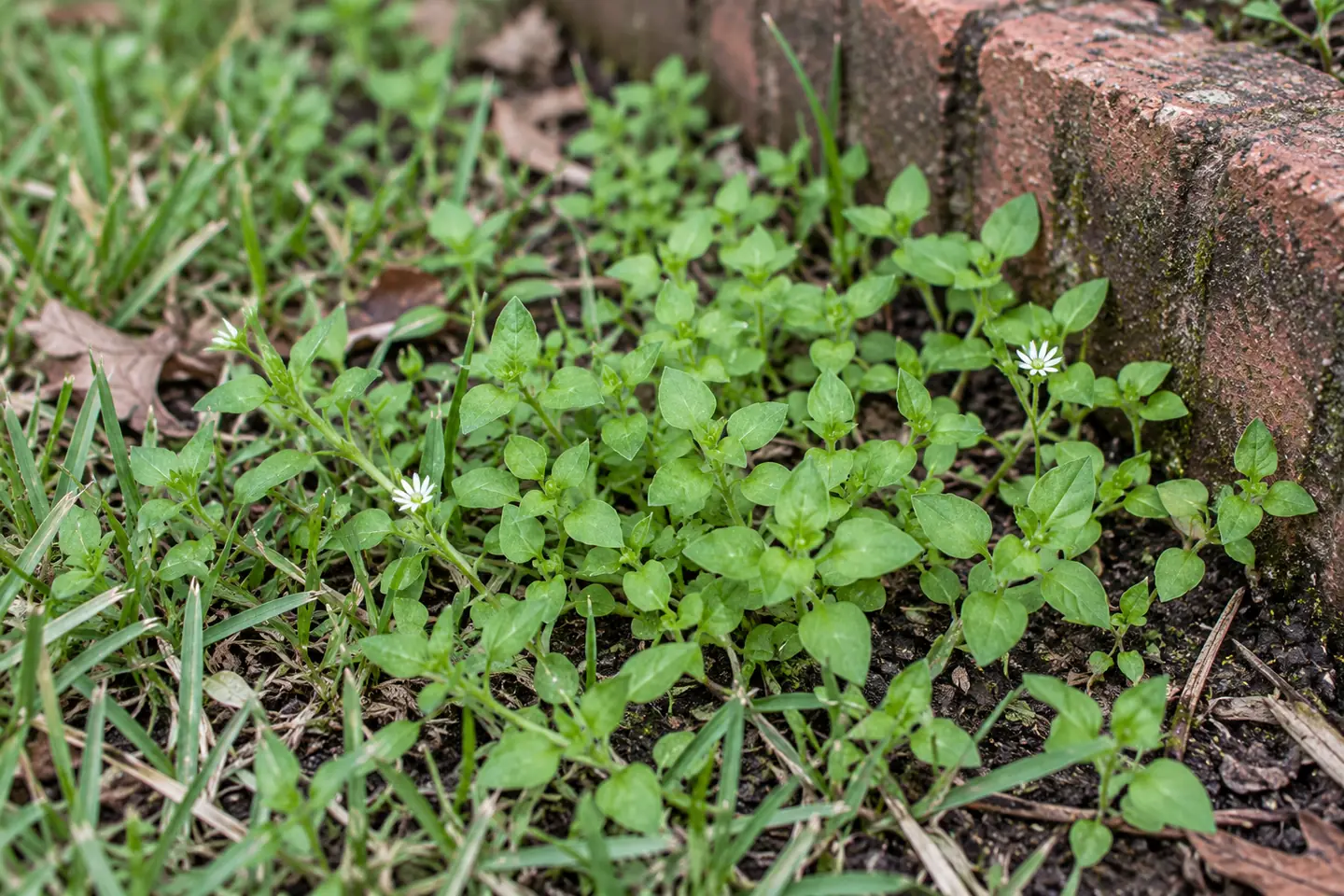
At the patch edge, follow a visible stem and locate successive paired leaves. This helps separate the mat's branching pattern from the surrounding grass. UC IPM notes that common chickweed can reroot from stem nodes in moist areas. The practical implication is that a loose-looking carpet should not automatically be treated as inert debris. If manual removal is discussed, the destination of removed material and the final cleanup deserve attention too.
Avoid assuming that one pulled handful represents the whole patch. Some branches may remain tangled through grass, while others may have been displaced onto damp soil. A useful inspection checks the original center, natural openings and the outer margin. Describe where attached plants remain instead of relying on the size of the pile collected. The visual drama of a large handful is a poor substitute for checking what is still growing at the site.
The flowering mat is a later observation
LSU describes chickweed as commonly germinating in early fall and flowering in spring in Louisiana. That broad pattern explains why the conspicuous white blooms are not necessarily the beginning of the problem. Earlier low plants may have been hidden among grass or leaves. If this area repeatedly develops a mat, look for the small paired-leaf stage before the flowers dominate. The aim is earlier recognition, not a rigid calendar detached from the actual plant.
UC IPM emphasizes preventing seed production and notes that common chickweed can produce seed relatively quickly under suitable conditions. Do not assume there is a long harmless waiting period after first noticing it. If management is desired, ask for appropriate advice while the identification and growth stage can still be assessed clearly. This guide does not supply a treatment date, herbicide rate or guarantee that one mowing pass will prevent reproduction.
Separate shade, surface moisture and turf density
Common chickweed is often noticed in moist, sheltered places, but that does not make every mat a diagnosis of excessive watering. Record the conditions separately. Is the ground persistently damp, does a canopy limit light, and is desired turf visible through the mat? Those observations can guide an assessment without pretending that the weed identifies a single cause. A sheltered bed edge and an open worn lawn strip may contain similar plants for different reasons.
For a useful comparison, inspect an adjacent area where desired grass is more continuous. Note which conditions differ and which are shared. If both areas receive the same irrigation, watering alone may not explain the difference. If one remains covered by accumulated leaves, that is a specific surface condition to discuss. Avoid turning every observation into an immediate repair. The first task is to understand the setting well enough to ask the right question.
Look for the desired grass inside the mat
Examine a few small openings rather than judging only the outer boundary. Is turf evenly interwoven, present as scattered tufts or missing through the center? A thick chickweed carpet can make these situations look similar from a distance. They have different implications for the appearance after weed work. Where little grass remains, reducing the mat may reveal open ground rather than an instantly uniform lawn.
This is particularly worth discussing before a household event or a request for a dramatic immediate change. A greener before photograph and a barer after photograph do not automatically mean the work damaged a full turf stand; the green cover may have been chickweed. On the other hand, the possibility of exposed gaps should be explained beforehand. Honest expectations start with knowing what is actually supplying the cover before selecting the task.
Mowing and hand work leave different evidence
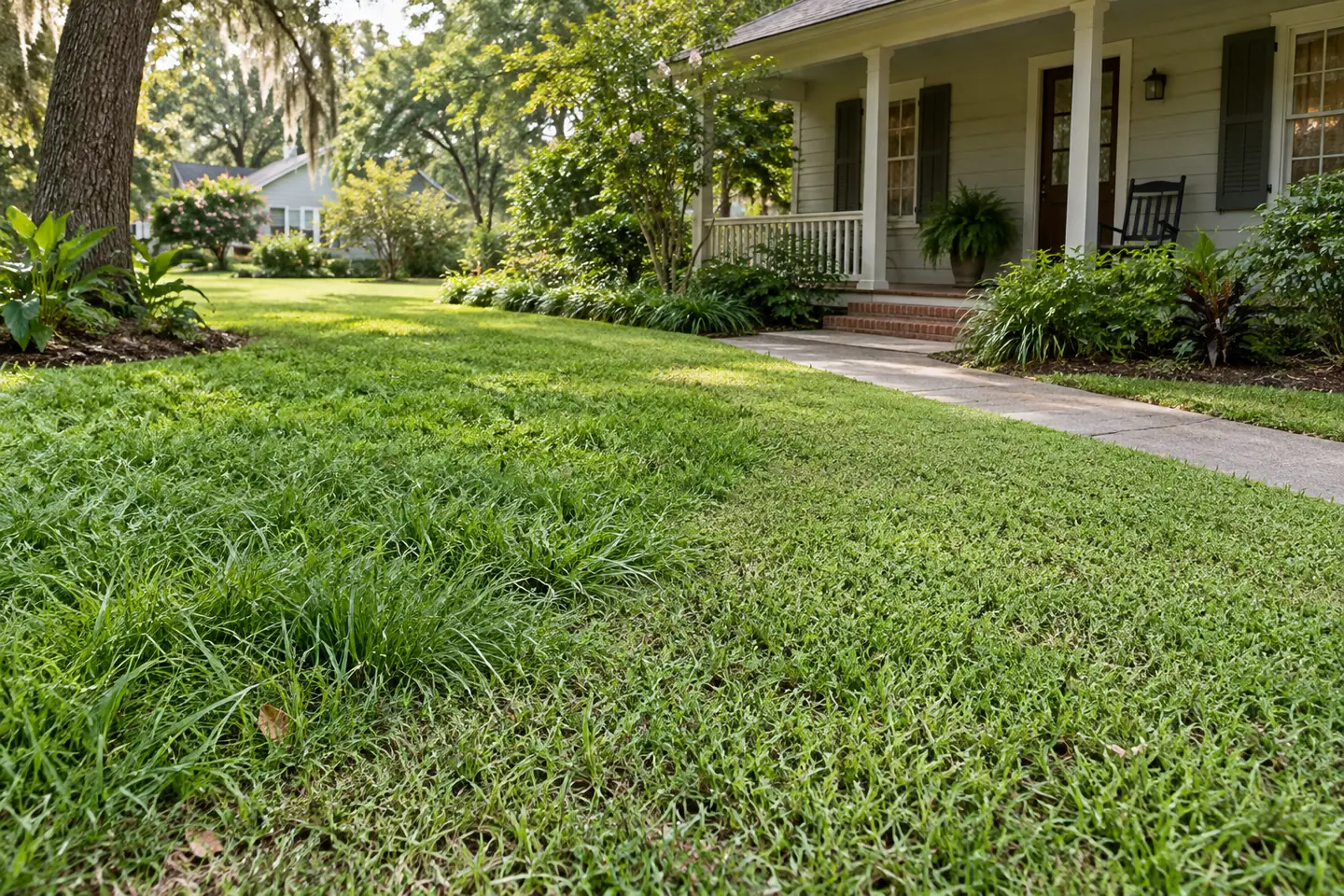
A mower may shorten flowering stems and higher foliage while low branches remain. If the agreed goal is an even turf finish, assess that finish separately from the plant's persistence. If manual weed work is agreed, inspect the former center and perimeter for attached branches. Neither task should be judged only by the disappearance of white flowers. Flowers can be lost while the low carpet remains identifiable through its leaves and stems.
Removed chickweed should not simply be left on a damp growing surface on the assumption that it is finished. UC IPM's rerooting caution makes material handling relevant. Ask how cleanup will be completed and which areas will be checked. This is not a promise that every fragment roots or that careful handling eliminates every later seedling. It is a practical reason to keep live plant material and ordinary dry litter from being treated as interchangeable.
Read separate white-flowered plants separately
Not every tiny white flower in the yard belongs to the same mat. Clover has clustered heads and three leaflets; buttonweed has a different leaf form and four-petaled flowers. Follow the flower back to its own stem before linking it to the leaves in the foreground. Mixed patches can confuse even a careful wide photograph when several species overlap. A clear description can say that more than one form is present without naming them all.
After any agreed work, use those distinctions in the review. A chickweed-like mat may be reduced while an unrelated white-flowered plant remains. Calling the entire area chickweed would obscure the result and could prompt the wrong next task. Keep a few representative plant views associated with their locations. The useful record is about connected features on actual plants, not a collage of every white bloom collected around the yard.
Check the carpet after flowers are shortened
A chickweed-like carpet can remain easy to recognize even when its white flowers have been cut off. Look for opposite oval leaves along the branching stems at a natural opening. If only the flowers were documented beforehand, later identification becomes harder. A connected leaf-and-stem view protects the comparison and makes it possible to describe what remains without waiting for another round of blooms.
Consider two after-work observations. In one, the low branching layer remains attached across the original area. In the other, the former center is clearer but loose green material rests on damp soil beside it. These are different things to review: remaining plants in the first case and cleanup/material handling in the second. Neither should be represented automatically as proof that new plants have established.
- Connected branches show where the low carpet remains visible.
- Separate small plants need their own location and identification check.
- Loose material should be described as loose rather than counted as an attached mat.
- Exposed turf gaps should be compared with the earlier grass-continuity view.
This sequence makes a small white-flowered weed easier to discuss accurately. It also prevents the final review from being limited to whether the lawn still looks bright green from the porch, which may say little about the desired grass underneath.
Keep the chickweed request focused
Tell Happy where the low paired-leaf mat occurs, whether white divided-petal flowers are present and how much desired grass shows through it. Identify adjacent beds and any damp areas where removed material should not be left. Then state whether you want ordinary lawn maintenance or a separate weed-control discussion. Available scope and the intended turf need confirmation before any product or removal method is selected.
Happy Grass takes requests around Harvey, Marrero, Gretna, Algiers, Belle Chasse and Westwego. Call 504-339-3571 and ask for Happy. Fertilization, aeration, overseeding and pest control are not offered. A useful chickweed conversation stays with the actual carpet, its effect on the desired lawn and the work that can be reviewed honestly after the visit. The tiny white flowers are a clue; the low branching layer is the part that deserves the closer look.