
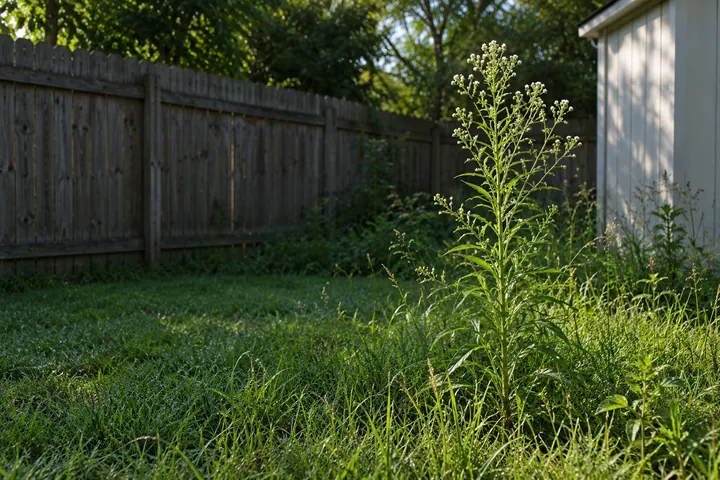
Begin with the main stem and its leaves
The University of California identification gallery describes horseweed with a lower rosette followed by an erect main stem, alternate leaves and upper branching that carries many small flower heads. Its seasonal pattern varies with the conditions described by a regional source. University of Missouri also treats the plant as capable of winter- or summer-annual behavior. A life-cycle label should therefore be used with attention to the source's region and context.
For your own example, show the main stem and where the leaves attach. Add a full-plant view so the upper frame can be understood. A tall thin plant beside a shed is a useful location description, but it is not enough by itself to confirm horseweed. Keep the candidate name provisional when the lower connection or small heads are not readable.
Alternate leaves need a stem view
A dense column of leaves can make attachments hard to distinguish. Photograph a readable stretch of stem rather than relying only on a silhouette. Show where successive leaves join, and avoid treating a crossing grass blade as an attached leaf. If the stem is obscured, state that the arrangement is unresolved. A reviewer needs the attachment evidence rather than a count of green marks in the frame.
A closer crop can help locate the relevant area, but keep it paired with the original. The wider view may be the only evidence linking that stretch of stem to the marked plant. If the close-up came from another example, label it separately. A collection that quietly mixes several stems can look more complete than any actual plant observation was.
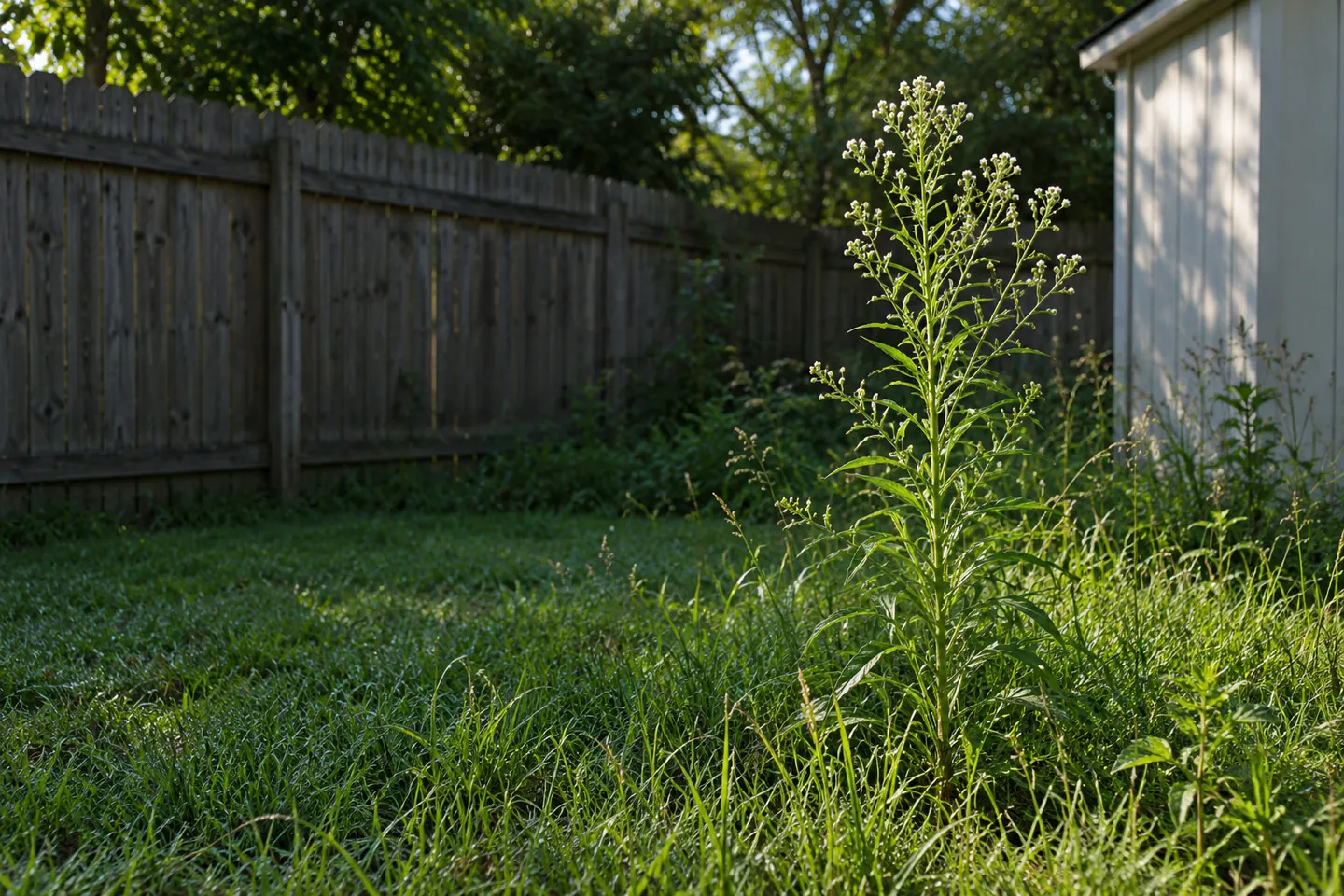
The upper frame can change the first impression
From a distance, the upright main stem may look unbranched. A closer view of the top can reveal a much finer branching structure. Preserve enough space around the plant to show that frame. Do not crop the upper branches away merely to make the picture fit a neat portrait shape. Those details may be central to the comparison.
If nearby plants overlap, follow a visible junction before calling a side structure an attached branch. A second angle can help separate crossing stems. Label uncertain connections rather than drawing an imagined complete crown. The aim is a record another person can trace, not a polished outline that conceals the very places where the identification evidence is incomplete.
Tiny heads are not just background texture
The small flower heads can look like a pale haze at the top of a tall plant. Include a readable attached section if one is available, with enough supporting branch to orient it. A distant haze remains an overview observation; it should not be promoted into a precise flower description. Say which details the image resolves and which it does not.
You do not need to photograph every head or count the whole top. A few well-labeled views can explain the arrangement better than an album of nearly identical blurred crops. If no readable head is available, ask a qualified reviewer whether the existing leaf and stem evidence is sufficient for a provisional comparison or whether a later observation or specimen is needed.
A lower rosette and a tall stem need a demonstrated link
An earlier photograph may show a low plant near the shed, while a later one shows a tall stem in roughly the same area. That is a useful observation history, but it is not automatically a continuous record of one individual. Keep the dates, fixed location and any features that demonstrate the connection. When the exact crown was not marked, say that clearly.
Do not fill the gap with a guessed emergence date. Becoming visible from the patio is different from first appearing at ground level. A plant may have been present in a less conspicuous form before anyone photographed it. A useful caption can state that the tall stem was first noticed today and that the earlier rosette's connection is unconfirmed. That gives a reviewer honest evidence to work with.
Regional annual labels should not become a local countdown
Different extension accounts discuss horseweed in different climates and management settings. Read the regional label as background rather than a promise about exactly when a plant in Harvey will bolt, flower or disappear. Use dated observations from the actual yard for the local timeline. A general source cannot replace checks that were never made on the marked example.
The distinction also matters when reading agricultural advice. A field-crop publication may explain a plant's biology while describing a setting and operations that do not apply to a residential lawn visit. Keep the useful identification facts separate from those management assumptions. This guide does not turn crop advice into a Happy Grass service or establish an unrequested treatment plan for a customer's property.
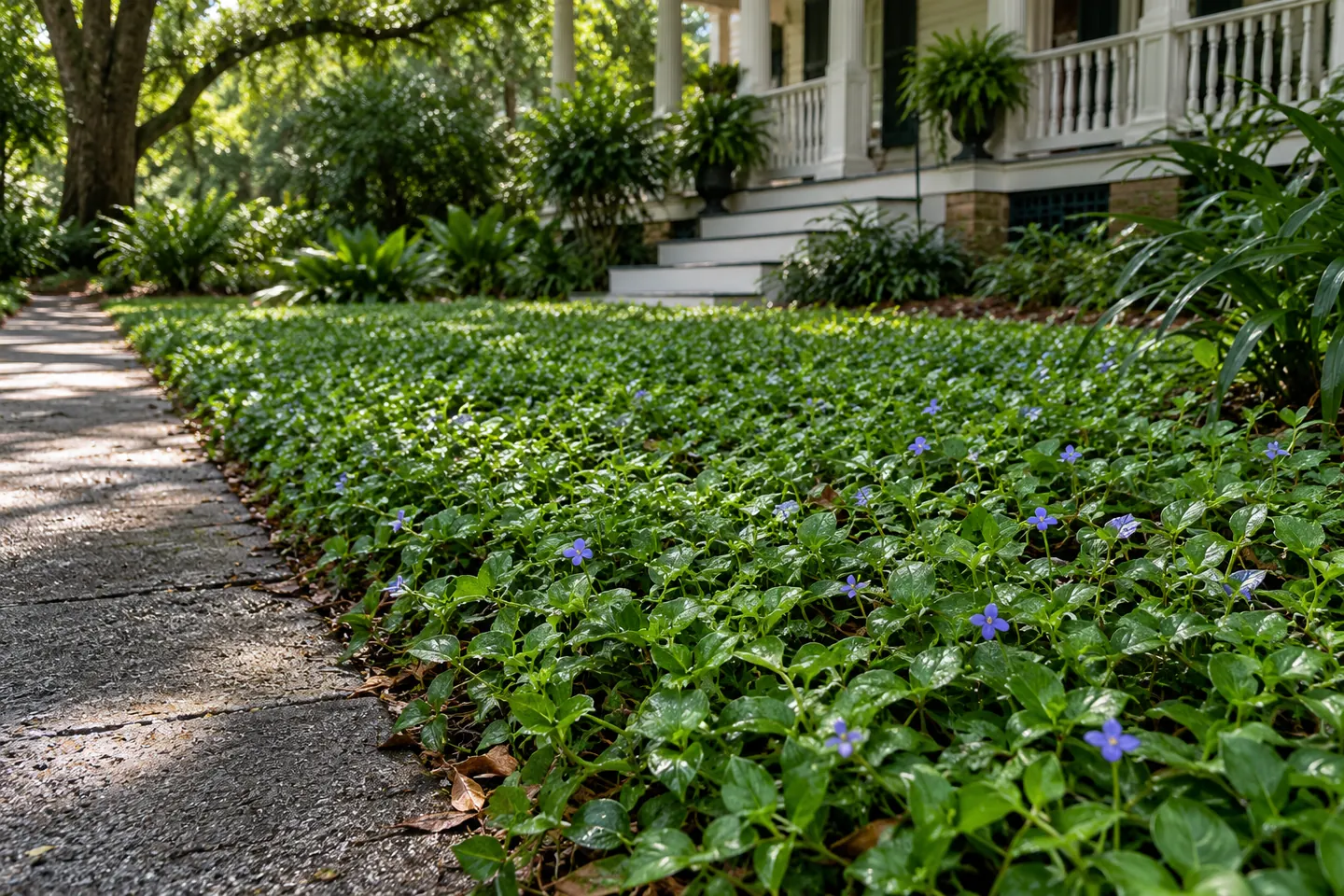
Cutting history can change the form being compared
The UC gallery notes that cutting can affect branching. If the marked stem was previously cut, include that history when known and show the current top without assuming it represents an untouched plant. Keep any earlier intact photograph. A changed outline after a known event can be useful context for identification, but it does not prove every cause of growth in the surrounding strip.
If the cutting history is unknown, leave it unknown. A blunt-looking point in one photograph is not necessarily a complete record of a past operation. Do not assign the event to a provider or an exact date without evidence. The practical follow-up can describe the visible standing or branched material and compare it with the actual work agreed, while the plant-history question remains open.
A shed-side plant can expose an unclear work boundary
The plant may occupy turf, a narrow unmaintained strip or the edge of a storage area. Show the whole location from an accessible viewpoint. Include the fixed boundary and any current obstacle relevant to the proposed visit. A tall-stem close-up cannot communicate whether the requested work lies within the ordinary lawn area or in a different space that needs separate discussion.
Tell Happy whether you want the raised growth tidied, the surrounding lawn finish reviewed or the access route considered. Confirm the mowing, edging, weed-eating or blowing proposed for that area. A candidate species name does not define the service or guarantee permanent absence of future plants. A clear marked boundary and visible-result agreement make a later comparison more useful than a broad complaint that the weed is back.
Separate a height reference from a growth-rate claim
A tall stem beside a shed can be described against a fixed feature, such as a panel seam, if the viewing angle is preserved. That is a practical height reference for the visible concern. It is not an exact measurement unless the actual distance was measured, and it does not reveal how quickly the plant reached that height. Keep the camera viewpoint and example label with a later image so a change in perspective is not mistaken for a change in the plant.
If you want to discuss growth over time, use dated observations of the same marked stem and state what was actually checked. An earlier photograph of the shed with the plant hidden behind another object cannot establish that the stem was absent. Likewise, a newly noticed top above the seam does not prove the whole increase happened since the previous routine visit. A modest note about visibility is more reliable than an unsupported daily rate. These distinctions help a reviewer understand the timeline and help Happy assess the present work location without inheriting a claim about past performance. The current standing growth can still be discussed directly, even when the age of the plant and the moment it first crossed the reference point remain unknown.
Keep a record that survives a revised identification
Use a location label such as pale-shed stem one. Keep the overall frame, attached-leaf detail and any readable heads under that label. When a reviewer offers another candidate, add the conclusion and its limits to the same record. The location remains useful even when the first species guess changes, and the practical lawn request does not have to be reconstructed from scratch.
- Show successive leaf attachments on a readable stem section.
- Preserve upper branches instead of cropping them out.
- Label an earlier rosette link as unconfirmed when it was not observed.
- Record known cutting history without assigning an unsupported cause.
- Define the shed-side work area independently of the plant name.
Bring the upright-stem question to Happy
Call 504-339-3571 and ask for Happy. Describe the marked area, access and the mowing, edging, weed-eating or blowing you want discussed. Confirm the actual scope and availability before arranging your visit.