
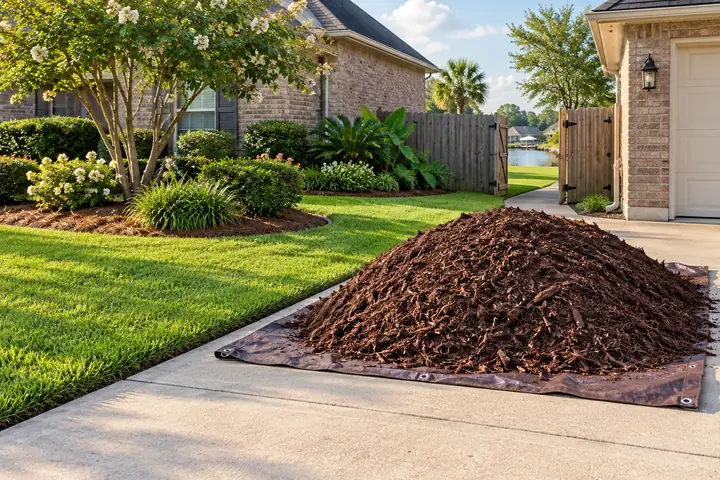
Choose the delivery location with the whole route in mind
The shortest trip to the beds is not always the best place for a pile. Keep the gate swing, mower unloading lane, sidewalk, driveway drainage and household parking available. Ask the delivery company what surface can support its truck and how much space dumping needs. The owner controls that decision; Happy does not direct delivery vehicles or accept material on the owner's behalf. A simple photo marked with an approved drop area and an alternate keeps an unexpected early delivery from blocking every useful route.
Keep bulk material off established grass when practical
A heavy pile shades and compresses turf, and wet mulch can remain difficult to remove completely. A suitable protected hard surface often makes cleanup more manageable, subject to the supplier's directions and the owner's approval. Do not place a tarp over a utility cover or drain merely because it looks level. If grass must be used, discuss the temporary exclusion and restoration responsibility in advance. Happy's mowing quote does not automatically include moving the pile or repairing the surface beneath it.
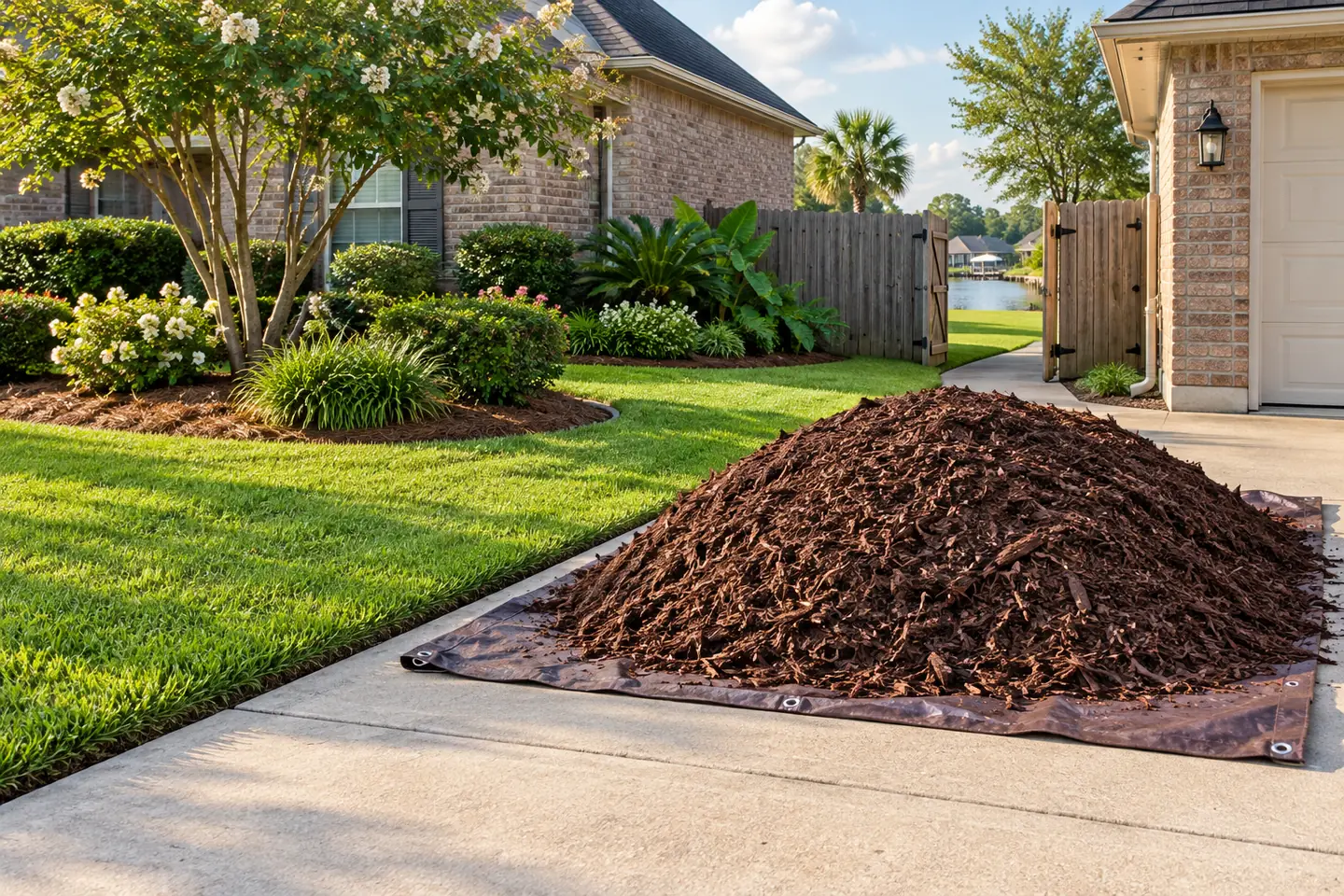
Protect the entrance before protecting the perfect view
Leave a lane wide enough for the actual mower, not just for a person carrying a bucket. Account for handles, gate posts and the turn into the backyard. A pile that sits clear of the opening can still prevent equipment from turning. Walk the proposed route with the gate fully open before delivery. If access will be closed for several days, tell Happy early so another part of the property can be considered or the visit can move. Avoid promising a route that exists only after somebody shovels a corner away.
Define who spreads and who cleans
Mulch delivery, bed preparation, spreading and lawn mowing are different tasks. Confirm the landscaper's scope and the condition expected when that work finishes. Happy can review the lawn edge after the beds are complete, but should not inherit bags, pallets, excess material or a partially used mound without an agreement. The owner should identify where leftover mulch belongs. A clear handoff says the pile is gone, the route is swept, tools are stored and bed edges are ready for careful trimming.
Watch wheelbarrow routes after repeated trips
Repeated loaded trips can wear a narrow grass path or leave ruts when the soil is wet. Select a route that avoids tree roots, low covers, irrigation fittings and soft drainage areas. The landscape crew should use appropriate ground protection where needed and remove it before lawn service. Happy should inspect the exposed turf rather than mowing over a board track or a deep wheel groove. A changed surface may need a temporary no-turn lane until it recovers or is repaired by the responsible provider.
Keep the final bed boundary readable
Fresh mulch can spill over the old edge and make the bed appear wider than intended. Ask the owner or landscaper to establish the finished boundary before mowing. Do not use a mower to shave through bark and rediscover the edge. Trim grass from the lawn side while keeping discharge away from loose chips. If the bed expanded, update photos and the mowing footprint. This prevents the next crew from following an outdated line into a new planting area.
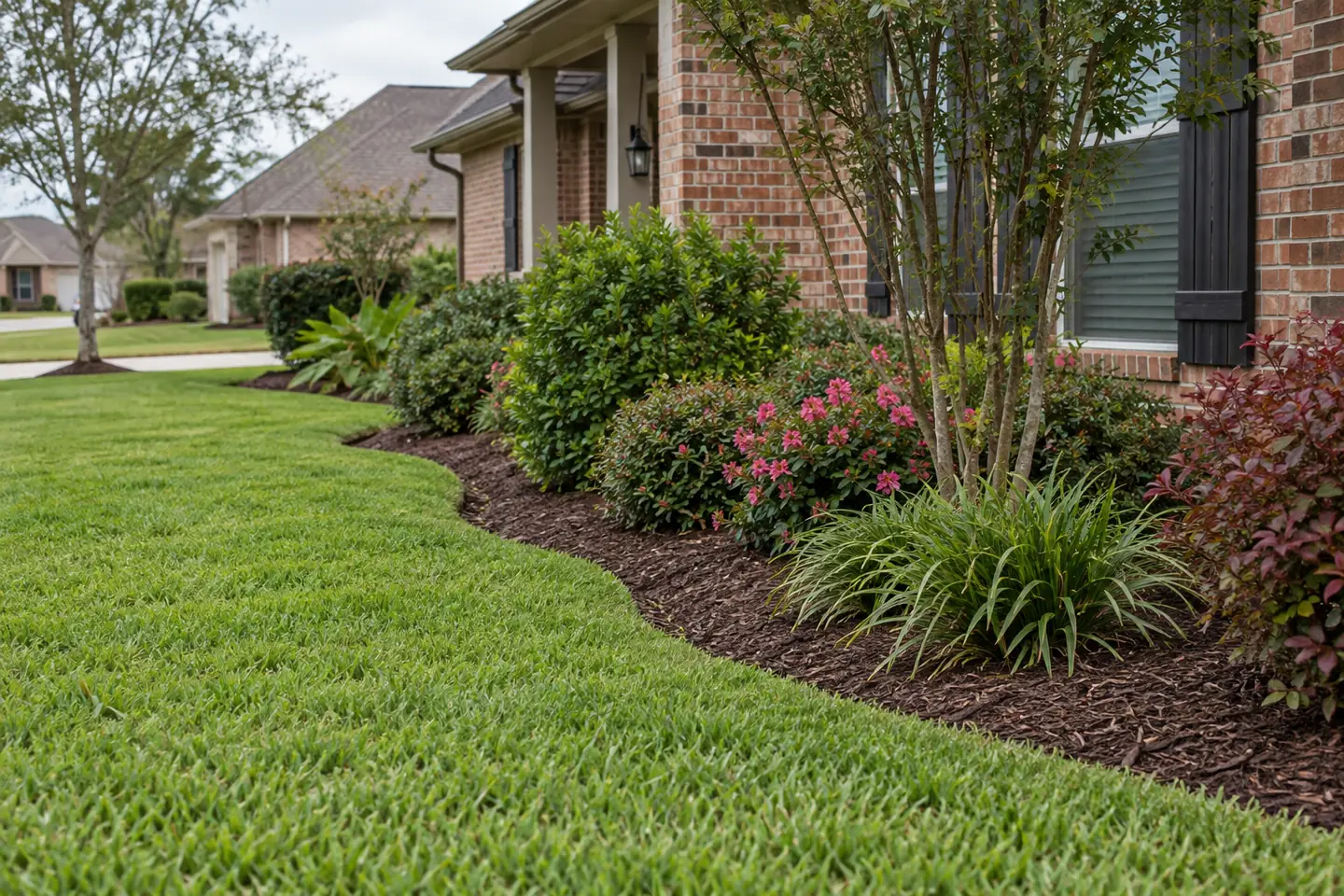
Loose bark belongs out of the mower lane
Small chips can hide stones, string, plastic packaging or staples from delivery bags. Walk the adjacent lawn after spreading and collect foreign items. A blower may return a few loose chips to the bed, but a thick spill should be gathered by the landscape crew rather than scattered across grass. CPSC debris guidance applies to objects in the mowing area regardless of how natural the pile looks. The released lane should show turf clearly and contain no delivery tools or straps.
Plan for rain before the tarp becomes a problem
Rain can add weight, wash fine material toward a drain and leave a tarp holding water beside the pile. Secure coverings according to the delivery or landscape plan without creating loose ropes across grass. Keep runoff paths clear. If the pile remains through a storm, recheck the gate route, downhill lawn edge and nearby hardscape before service. Do not wash mulch dust into the street. EPA's stormwater guidance supports collecting yard debris rather than sending it through drainage systems.
Use a delivery-to-service checklist
- Approve a drop area that preserves gates and household access.
- Confirm truck placement with the supplier before dumping.
- Identify the spreading crew and leftover-material destination.
- Protect and then inspect loaded wheelbarrow routes.
- Collect packaging, chips, stones and loose tools from turf.
- Release the lawn only after the finished bed edge is clear.
Preserve access to low equipment
Mulch can bury irrigation lids, termite stations, cleanouts and landscape-light connections near the foundation. Show these features to the spreading crew in advance. Happy should not dig through fresh material to find them afterward. If a cover disappears, ask the responsible provider or owner to restore visibility before trimming. The correct final mulch depth and plant placement belong to the landscape plan; the lawn crew's role is to protect the visible boundary and avoid unknown buried hardware.
Check new planting separately from the mulch surface
Fresh shrubs, watering tubes and support stakes can extend beyond the old bed. A clean bark edge does not mean every object is inside it. Mark fragile plants and identify temporary watering lines. Avoid directing hot equipment exhaust or concentrated clippings into new foliage. If a plant is too close to the mower route, review the boundary with the owner rather than cutting the lawn lower around it. A thoughtful first visit protects the investment in both the beds and surrounding grass.
Handle partial completion honestly
If only half the pile has been spread, describe which route remains open and how long the work is expected to continue. Happy may mow a released front section while the backyard waits, provided the equipment can enter safely. Do not move another contractor's wheelbarrow or pallet to create access. A small schedule adjustment is easier than a dispute about displaced material or damaged plants. Update the plan when the pile moves, because the available lane can change throughout the project.
Keep the next mowing visit simple
Send a wide photo after the landscape crew finishes, showing the former pile area, gate and new bed line. Mention any rut or soft patch that remains. Happy can then review the visible lawn and give the boundary a clean finish without guessing where material was stored. The delivery is successful when the mulch reaches its intended bed and the equipment route returns to ordinary use. That is the point where the lawn can rejoin its normal maintenance rhythm.
Account for bagged deliveries too
A pallet of bagged mulch can block a gate just as effectively as a bulk mound. The pallet may also carry staples, wrapping, straps and broken wood that end up in grass after unloading. Ask the supplier or landscape crew to remove those items and inspect the storage footprint. Do not leave an empty pallet for Happy to relocate. If the owner stores unopened bags for later, place them on a suitable approved surface outside the equipment route and account for water trapped beneath the stack. A neat stack is still a project obstacle until the lane is clear.
Avoid mixing the grass finish with mulch depth decisions
The correct amount of mulch around trees, shrubs and building features belongs to the landscape plan. Happy should not scrape material away from a trunk or add more to hide an edging gap during mowing. Report a covered feature or a spill from outside the bed and let the responsible provider correct it. Once the bed is released, a current boundary photo gives the lawn crew a precise place to stop. That keeps a cosmetic grass request from quietly changing plant-care details.
Confirm the final cleanup destination
Before the spreading crew leaves, decide where the last shovel of excess material, empty bags and swept driveway debris will go. Leaving a small mixed pile in the side yard can preserve the access problem after the main delivery is gone. The owner should accept a visibly clear lane and completed storage plan before marking the project finished.