
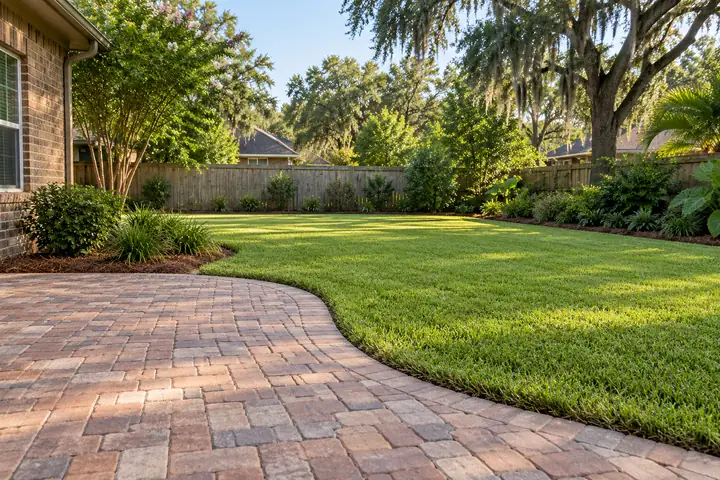
Inspect the edge before grass hides the details
Walk the full patio perimeter at ground level. Look for settled units, raised corners, missing joint material, loose restraints and places where turf has grown across the first row. Happy Grass does not level, reset, seal or repair pavers. We need to see a stable edge that equipment can approach without catching a wheel or throwing a loose piece. Mark damaged sections and use a wider buffer until a qualified installer makes repairs. Do not press a rocking paver down just before service and assume it will hold. A photograph taken along the edge, not straight down, shows height changes and trip points. Where the patio curves, note tight inside corners that may require hand trimming rather than a mower pass. The lawn finish should follow the actual stable boundary, not an imagined perfect curve.
Keep a defined separation between turf and joints
Southern grasses can creep over hard surfaces and root in sand-filled joints. LSU AgCenter explains that edging creates a clear barrier between landscape materials and turf, and that South Louisiana growth can require regular attention. The right method depends on how the patio was built. Happy Grass can maintain a visible lawn edge with normal mowing and trimming, but we do not excavate the paver base or remove deeply rooted growth from joints as part of routine service. Avoid asking for aggressive string contact against every unit; it can scatter joint sand, mark edges and fling debris. If turf has covered several inches of patio, first expose the intended line with an appropriate landscape or hardscape plan. Once the boundary is clear, recurring visits can preserve it more consistently.
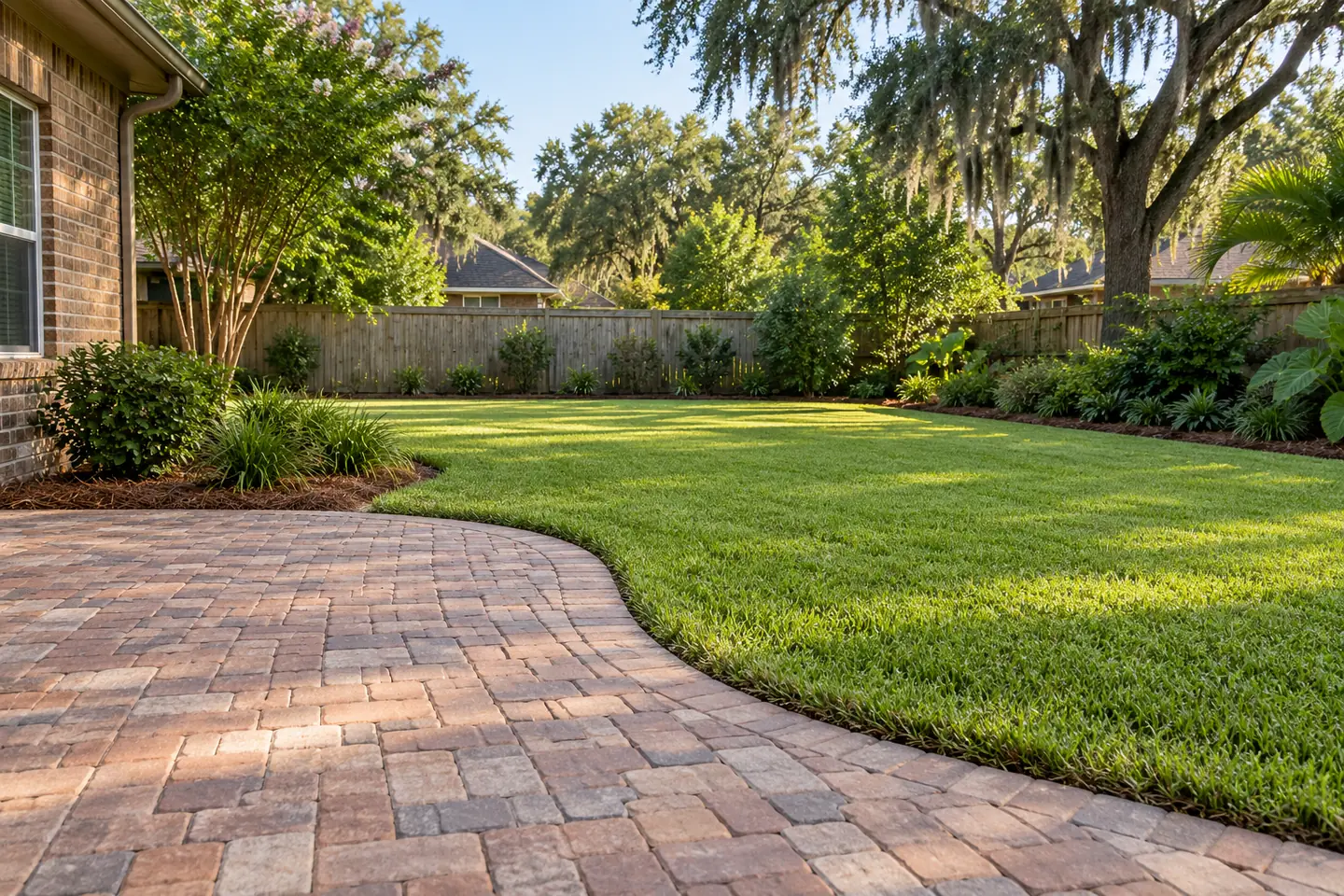
Manage height differences without scalping the lawn
A patio may sit flush with the turf in one spot and several inches high in another. A mower wheel riding on the pavers can tilt the deck and scalp the grass, while a wheel dropping off a sunken unit can strike the edge. Happy Grass chooses the stable turf route and may leave a narrow strip for trimming. Do not add loose soil over pavers to smooth a transition. If erosion has created a void, have the edge and drainage evaluated. On a raised patio, keep the vertical face visible and free of loose stones. A crisp result does not require the mower to run on the masonry. Often the safest finish is parallel mowing outside the edge followed by a controlled trim from the lawn side.
Clear furniture, cords and planters from the work zone
Patio items tend to migrate into the grass: chair legs, umbrella bases, grill mats, string-light cords, toys and plant saucers. Move them onto a stable central area well before the visit, leaving the entire border open. Happy Grass does not rearrange heavy furniture, hot grills or fragile containers. Disconnect and remove extension cords rather than coiling them at the edge. Check beneath furniture for stones, broken glass and small metal pieces that could become projectiles. If a planter drains onto the lawn and leaves mud, relocate it or allow the area to firm up. A completely visible perimeter makes trimming faster and protects personal property from dust and clippings.
Control clippings without filling the paver joints
Dry clippings can be blown from the patio back into the lawn, but wet clumps and fine debris can lodge in joints. Keep doors and windows closed during the immediate cleanup and tell the crew about pools, outdoor kitchens or other sensitive features. We avoid directing debris toward the house, neighboring property or drains. If the patio has loose joint sand or a recent sealant application, provide the installer’s restrictions and wait until the surface is released. Lawn cleanup is not a substitute for power washing or joint maintenance. The goal is to remove ordinary mowing debris with a light, appropriate pass, not blast the surface or disturb bedding material.
Respect drainage paths built into the patio
Pavers may slope toward the lawn, a drain or a permeable area. Do not block outlets with edging, soil or clipping piles. If runoff is eroding the turf at one corner, mark the soft zone and address the water source with the appropriate professional. Happy Grass can maintain grass around a working drainage design but cannot determine whether the patio pitch, base or drain is correct. After heavy rain, postpone service where the lawn edge is saturated. Driving repeatedly along a wet border can create a trough that holds more water. A stable, slightly wider route protects both the turf and the edge units.
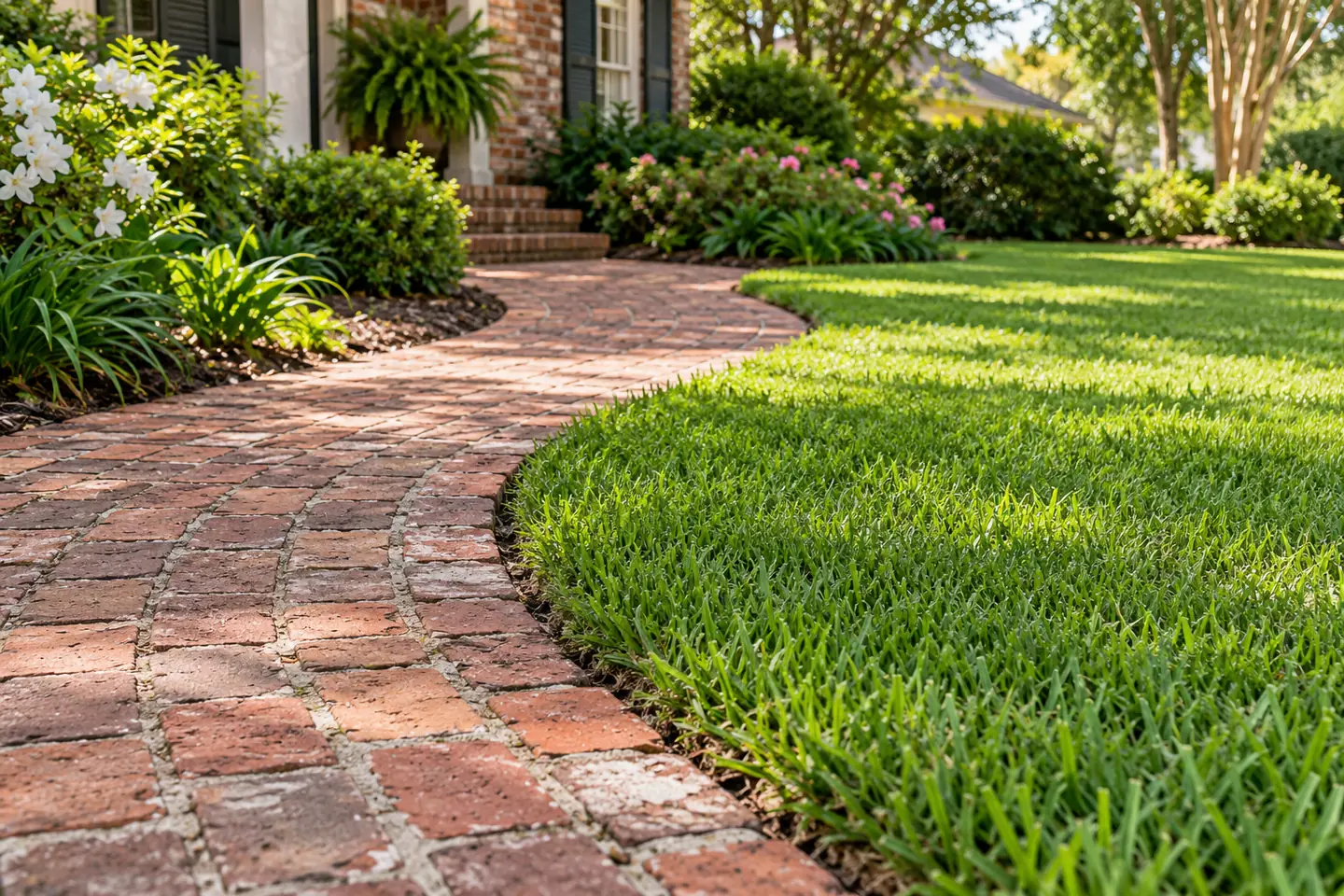
Use trimming tools with room for debris control
LSU AgCenter warns that edgers and trimmers can throw gravel and other objects. Remove loose aggregate before the visit and keep people, pets and breakable items away. An edger wheel should not ride over an unstable paver, and a line trimmer should not be forced into open joints. Where the patio meets decorative gravel, add a stable containment edge or accept a wider hand-maintained zone. Happy Grass uses ordinary lawn tools for reachable grass; specialty hardscape cleaning and restoration are outside scope. If a section cannot be approached without sending stones toward glass doors or people, it may be left until the material is contained.
Coordinate hardscape repairs before detailed lawn work
If an installer is lifting pavers, replacing restraints or adding joint material, schedule that work first. Keep lawn equipment away from stacked units, open base material and string lines. After the repair, remove pallets, spacers and sharp scraps, then confirm which edge may carry mower traffic. Fresh soil beside the patio may need time to settle. Send Happy Grass an updated photo if the line changed. Do not ask the lawn crew to push displaced units back after each cut; recurring movement means the hardscape needs professional attention. The cleanest long-term lawn edge begins with a stable patio edge.
Build a repeatable service-day routine
Before each visit, move patio items, remove cords, secure pets and check for loose units. Sweep or pick up stones that crossed into the grass. Unlock the correct gate and keep the route from the driveway clear. Mark any new repair or wet corner in a message rather than with a tiny object that could be struck. For a quote, photograph the whole patio, the narrowest access and representative close views of height changes. In West Bank yards, mention drainage and shade because those conditions affect firmness. Happy Grass can then maintain a friendly, consistent grass line while leaving masonry decisions to the people responsible for the patio.
Avoid using chemical shortcuts at the lawn-paver seam
Weeds in joints or along a patio edge may tempt a quick spray, but herbicide selection and application are separate from routine mowing, and Happy Grass is not offering pest-control or weed-treatment service here. Overspray can injure desirable turf and create an irregular brown border that still needs maintenance. Pulling deeply rooted joint growth may also disturb sand or expose an unstable unit. Ask the appropriate landscape or hardscape professional for a method compatible with the paver system and nearby plants. Once the joint and edge are restored, regular mechanical maintenance can help keep the grass line visible without inventing a treatment program.
Make room for gates, steps and patio transitions
Many patios connect directly to a gate, deck stair or narrow walk. The mower route must account for the whole transition, not only the open lawn. Keep gate stops, door mats and step lights out of the wheel path. A paver step can look flush from above but still present a vertical edge on the lawn side. Mark it clearly and avoid backing equipment toward it. If a walkway branches from the patio, decide which hard edge guides the cut and where trimming begins. These small choices create a consistent finish and reduce repeated turns on the same turf corner.
Review the edge seasonally
Heat, heavy rain and root growth can shift a border over time. Compare the patio edge in spring and late summer, looking for new rocking units, washed-out joints and turf encroachment. A route approved months ago may need a wider buffer after settlement. Do not wait for a mower to reveal a raised corner. Send a quick update before the next visit and arrange repair when movement persists. Seasonal review also catches patio furniture or planters that gradually migrated into the grass. Stable hardscape and a clear route make the lawn result repeatable through the long Louisiana growing season.