
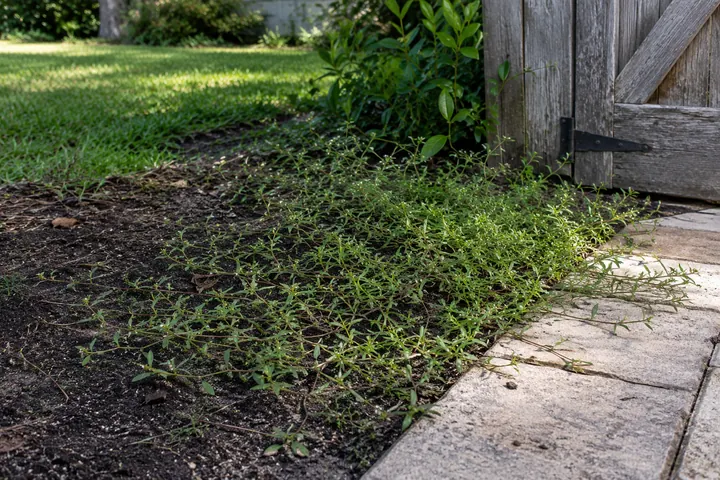
Start with a stem instead of a green outline
The green outline of a patch tells you where something is visible, but it may conceal how that plant is built. Choose one readable line crossing the open ground and follow it through a few leaf attachments. Give the example a location label such as gray-gate mat. That makes the evidence useful even if a reviewer later chooses a different name from the one first suggested.
UC's gallery describes prostrate knotweed with slender wiry, branching stems, small stalkless alternate leaves and a zigzag appearance. The stems can show ribs and slightly swollen nodes. Tiny flowers occur near leaf bases and have green centers with pale margins. These features give the inquiry a structure. They do not mean that every low plant occupying a worn gate opening is confirmed knotweed or that its presence measures the soil's condition.
Distinguish a narrow leaf from its supporting stem
In a crowded photograph, a long thin green line may be a grass blade crossing the mat or a stem bearing several small leaves. Back out enough to show attachments along the selected line. If the supposed leaf has other leaves joining it, that is a useful reason to reconsider what part is being described. Keep the observation plain instead of forcing the first impression into botanical terminology.
Use one close detail and an overall image of the same example. The close view helps a reviewer inspect the attachments, while the wider one shows where that branch lies in the patch. A lone enlarged green line may be impossible to orient. Do not expect the reviewer to infer its source from the filename or from a location description supplied for a different photograph later in the message.
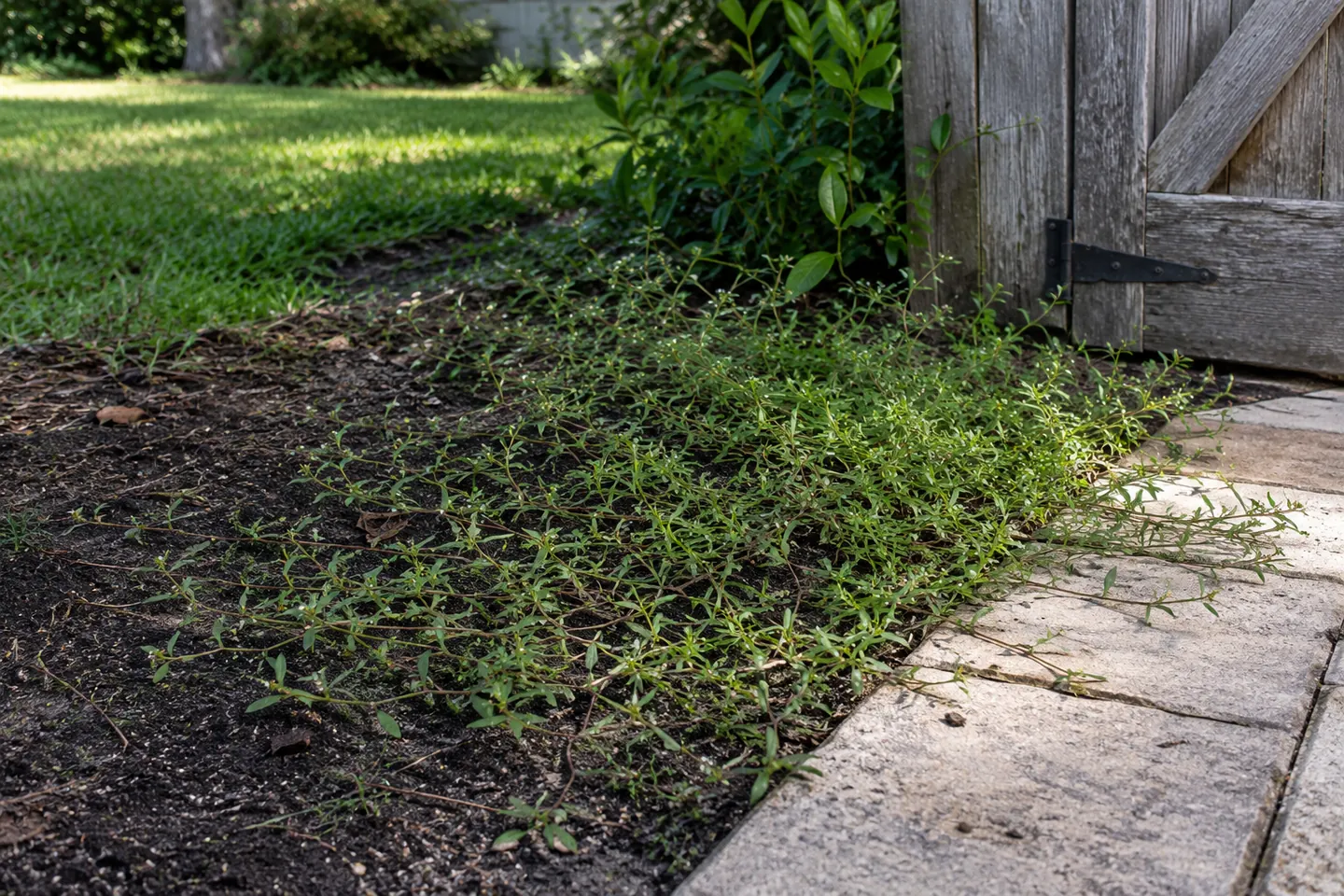
A zigzag needs several connected joints
One angled segment cannot demonstrate the whole branching pattern. Show a few successive readable joints and identify the connection that remains visible through them. Keep crossing stems separate from branch junctions. A flat picture can make two unrelated lines appear to meet precisely, particularly when dry leaves or grass cover the point where they pass each other.
An annotated copy can help locate the joints under discussion. Put small numbers in the background and keep the original unchanged. Do not draw a continuous stem through an obscured gap and then use the drawing as proof that the line was followed. A reviewer can work with a partial route when the break in the evidence is clear; an invented connection makes a complicated low mat harder to understand.
Keep the small leaves in their attached positions
The UC account's alternate-leaf description refers to how leaves join along a stem. A pile of detached leaves cannot answer that arrangement question. Include a readable stretch where successive attachments can be followed. If the view only resolves two adjacent leaves, say that rather than implying that the entire mat has been checked and every attachment confirmed.
A mature-looking stem and a small new example can be photographed separately, but do not pair their features as though they belong to one individual. Use labels that describe location and example number. The candidate name can be revised later while the record still explains exactly where each view came from. That is especially helpful when a patch contains both turf and several low broadleaf plants.
Tiny flowers may need a different photographic role
The flower detail can be difficult to show at ordinary lawn-photo distance. A wide view may establish where the small structures sit near leaf bases without resolving their color or outline. Let that image keep its useful role. Do not call an indistinct pale mark a confirmed flower merely because the reference says flowers should be present at that location.
If a close view is available, preserve its connection to the marked branch and explain the scale. A reviewer may ask for a different angle or a specimen when the details remain unclear. There is no requirement to pry apart small structures or manipulate an unidentified plant for a routine lawn discussion. An honest record of what is visible can still support a focused next question.
A crowded gate opening does not prove compaction
UC notes that knotweed can occupy disturbed or compacted ground. That is background about a plant's possible setting, not a measurement of your gate route. Describe the actual surface separately: bare-looking patches, a worn-looking track or a hard surface under current conditions. A photograph cannot establish the full soil profile or identify the cause of every gap in the lawn.
Avoid assigning the patch to a particular visitor, mower or previous lawn operation unless the event was observed and documented. A candidate plant plus a traffic route does not create a complete history. If a soil question matters, explain it as a separate assessment need rather than asking routine mowing to correct an unmeasured property condition. Happy should receive the practical route concern directly, without having to infer it from a weed name.
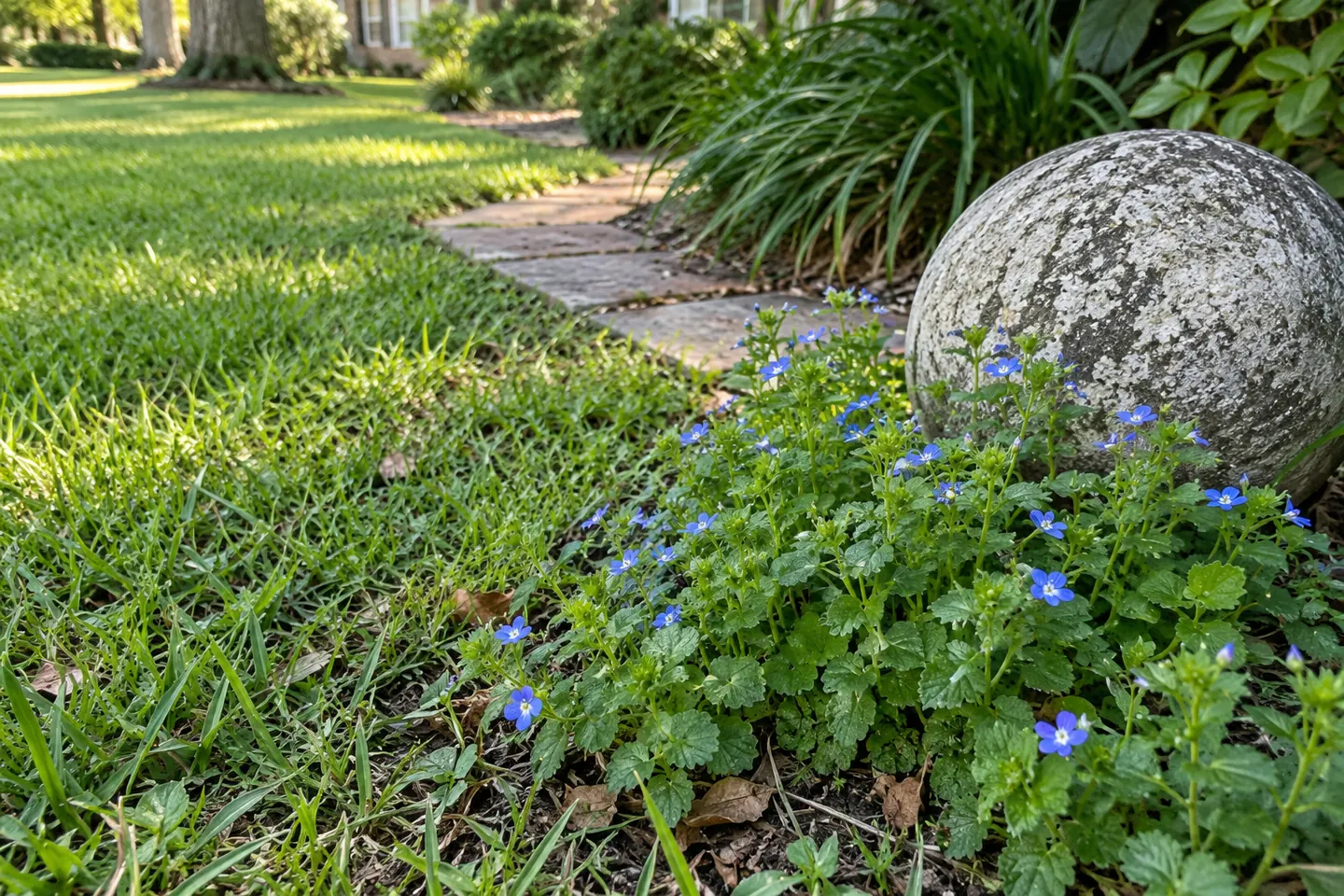
Map the visible mat separately from the grass footprint
The low stems may occupy open ground, a paving seam and the edge of the turf. Mark those surfaces separately in the overview. An area where a plant is visible is not automatically part of the maintained grass area, and a mat crossing several surfaces does not define which work is included. State the fixed endpoints of the area you want discussed.
If a rough measurement would help, explain what was measured. The distance between two pavers describes a work boundary; it does not prove the size of one connected plant. Do not calculate a precise biological footprint from a tilted close-up with no scale. A clear location description often gives Happy the needed context while leaving hidden stem connections and underground questions appropriately unresolved.
Avoid confusing a familiar name with another knotweed problem
Common names can be broader than the particular plant in the photograph. Keep prostrate knotweed tied to the low wiry example being reviewed rather than attaching unrelated information found under the word knotweed. Read the scientific name and the described habit in a source before transferring its discussion to your own lawn concern. Similar words do not establish that two sources describe the same plant.
When someone sends advice based only on the name, ask which example and which source they used. Preserve any useful comparison while keeping its limits explicit. This prevents a modest gate-side mat from acquiring a much larger story that the photographs do not support. A qualified identification answer should follow the actual connected parts, not a search result chosen because its headline sounds dramatic.
Define the routine result around the low layer
A low plant may remain visible below the height of raised lawn growth. Explain whether the concern is its texture, the open ground beneath it or material crossing a paving line. These are different observations and can lead to different scope questions. A lower mowing request should not be used as a substitute for clarifying which surface and finish you actually want reviewed.
Confirm the mowing, edging, weed-eating or blowing proposed for the marked location. A tidy line can be a useful result without becoming a claim that every seed or rooted part has been eliminated. A later photograph should be compared with the specific included work. The candidate species does not create a separate treatment, removal or soil-repair agreement on its own.
Preserve a repeat view without inventing a timeline
Choose one fixed gate-side viewing position and retain observation dates. If the later mat looks broader, show the same boundary and describe the visible change. A different camera angle can make a patch appear larger even when the evidence does not establish a measured increase. Leave the emergence date unknown when the route was not being observed before the first photograph.
An identification record can ask whether the visible wiry branch, alternate attached leaves and tiny axillary structures support prostrate knotweed. A maintenance record can state the actual gate-side area and desired finish. Keeping those records connected but distinct makes a later review clearer and gives Happy a practical starting point for the lawn conversation.
- Trace a stem with several attached leaves.
- Mark hidden branch connections as uncertain.
- Keep the mat outline separate from the grass-work boundary.
- Treat a worn route as an observation rather than a completed soil diagnosis.
- Use dated repeat views before claiming a measured change.
Ask Happy about the gate-side gap
Call 504-339-3571 and ask for Happy. Describe the marked lawn area, route condition and the mowing, edging, weed-eating or blowing you want discussed. Confirm the actual scope and availability before arranging a visit.