

See the whole water path, not only the chain
A rain chain begins at the gutter and ends at a landing point. Photograph the upper connection, the full hanging length and the basin or bed below so Happy can understand what is fixed and where mowable turf begins. Note whether the chain hangs freely, touches a wall or sways toward the grass. Do not ask a lawn crew to reconnect links, adjust a gutter outlet or decide whether the roof-drainage design is adequate. Those questions belong to the property owner and an appropriate drainage or gutter professional. Happy Grass treats the chain and its landing as a no-contact feature. Our job is to follow the visible lawn edge, avoid loose hard material and keep the surrounding accessible grass neat.
Define a stable landing outside the turf
Rain falling from a roof can arrive with force, so many chains end in a bowl, stone basin, gravel bed or drain. The landing should not be disguised by tall grass or mixed with loose stones scattered across the mowing route. Before service, remove ordinary debris and return displaced decorative pieces only if they are yours to handle safely. Do not build a new basin or change the outlet just to simplify mowing. A consistent border around the landing creates a practical visual cue. The LSU AgCenter encourages directing roof runoff toward places where water can soak in without pooling at buildings; the exact solution for your home still depends on the structure, soil and local requirements.

Check the area after real rain
A dry-weather photo cannot show every issue. After a typical storm, look for overflow, a washed channel, muddy footprints, mulch carried onto the lawn or water collecting against the house. Take a current picture before moving anything significant. If the landing is saturated, keep lawn equipment out until the ground firms. Happy does not diagnose gutter capacity, foundation drainage or erosion, and mowing should not hide evidence that a qualified professional needs to see. The higher grass may remain serviceable from another direction. A rain-chain page in a quote is useful because it tells us that the edge can change with weather and should be reviewed instead of crossed automatically.
Keep swinging metal away from people and equipment
Wind can move a chain beyond its normal vertical line. Secure it only according to the manufacturer or installer’s instructions; do not tie it to lawn equipment, temporary stakes in unknown ground or a movable planter that can tip. Before the visit, confirm that the chain is intact and not lying across the grass. If links have separated or the anchor has pulled loose, place the area outside the service route and arrange repair. Happy will not hold the chain aside while machinery passes, nor will we detach it for trimming. A slightly wider grass boundary is a better recurring choice than depending on someone to manage a swinging metal feature during every visit.
Separate stones, bowls and hidden hardware
Some splash basins contain river rock, a grate, a central pin or an underground inlet. Grass can creep over the rim and make these hard objects hard to see. Show close photos of the border and tell Happy about anything below the foliage. Keep loose stones out of the turf because mower blades can strike and throw them. Do not lift a grate or open a drain for the quote. If a ceramic bowl is cracked or a metal basin has a sharp edge, keep people and equipment away until the owner repairs or replaces it. Routine trimming may be possible around a stable visible perimeter, but detailed stone placement and water-feature repair are not lawn-service tasks.
Coordinate nearby beds and foundation plants
Rain chains often hang inside a planted bed at the house corner. Shrubs, vines and seasonal flowers can narrow the route or hide the chain’s lower anchor. Decide which growth belongs to the lawn boundary and which requires separate landscape care. Happy Grass provides the approved lawn services, not shrub pruning or drainage redesign. Move light pots that sit on the grass and keep thorny or brittle branches from reaching into the route. Do not cut plants solely to gain access without the property owner’s plan. A photo taken from the gate helps show whether a walk-behind mower can reach the open grass without brushing the chain, wall, flowers or basin.
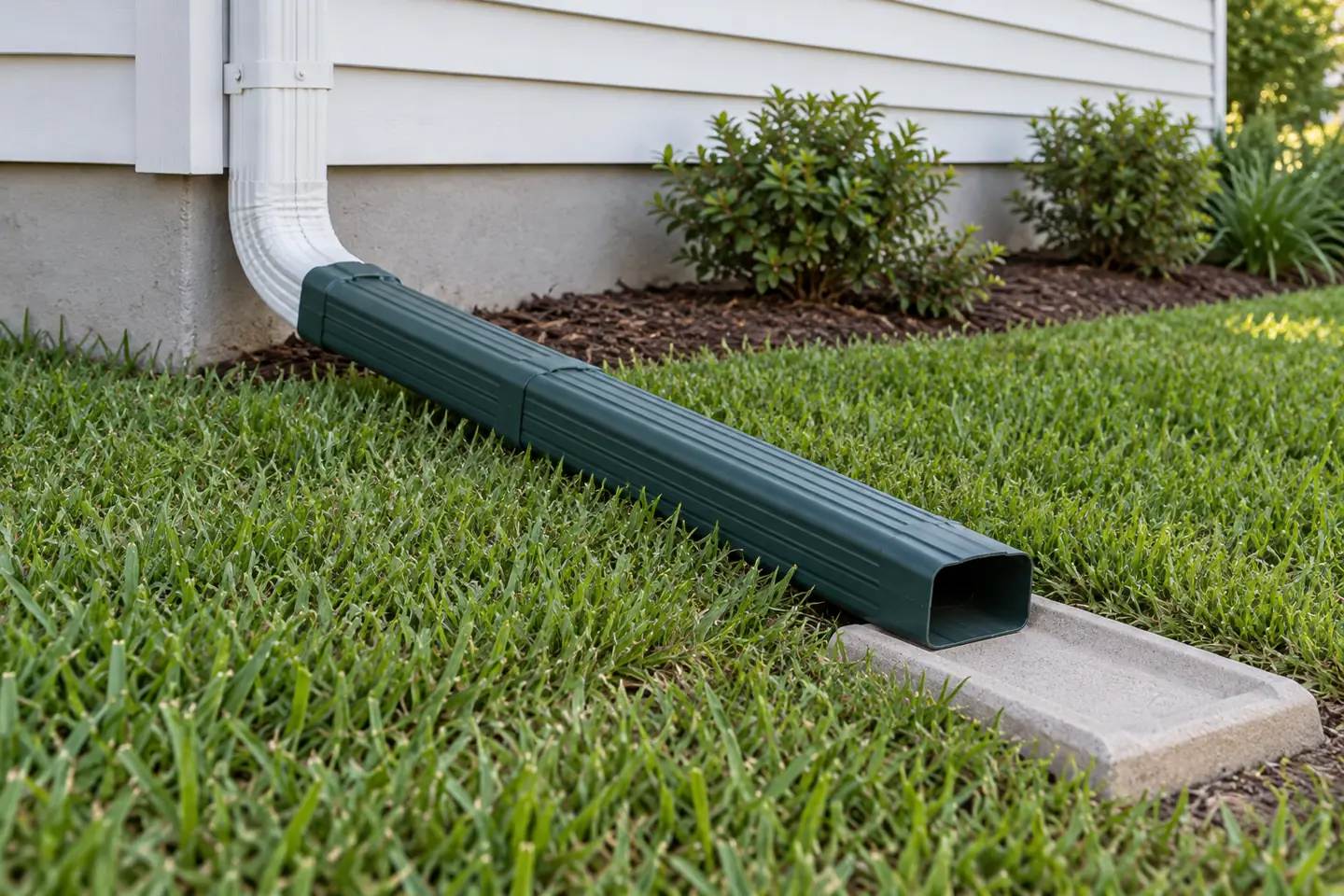
Treat frost, storms and roof work as changes
South Louisiana weather can move loose material even when freezing is rare. Strong wind, tropical rain or roof and gutter work may leave the chain disconnected, the basin shifted or the surrounding soil washed. After any such event, inspect the feature before the next lawn visit. Keep roofing scraps, fasteners and broken links out of the grass. Preserve contractor markings and do not erase evidence of a temporary repair. If roof work is still active, create a clear no-service zone and tell Happy when the contractor releases it. The lawn plan should resume from current conditions, not from an older photograph taken before the water path changed.
Avoid sending clippings into the landing
The finish around a rain chain should not intentionally pack clippings into a basin, cover a grate or create a dam at the lawn edge. Tell Happy if the landing includes a drain or if a specific side must remain open. At the same time, ordinary lawn service is not detailed basin cleaning. Remove accumulated leaves, roof grit and decorative debris through the appropriate property-maintenance plan. If a heavy pile has formed, clear it before service rather than asking the mower or blower to move material through the water feature. A defined edge makes cleanup expectations honest: accessible turf receives a clean finish while the basin remains protected infrastructure.
Build a useful photo set for the quote
Send one full-height view, one close picture of the lower anchor, one ground-level view of the basin edge and one image showing the gate-to-lawn route. Mention whether the area remains wet after rain, whether stones migrate and whether the chain swings into the grass. If a gutter professional has given access instructions, include the parts that affect the lawn. You do not need to estimate roof area or water volume. Happy needs to know what is fixed, what is movable and where a safe recurring trim line can be maintained. This level of detail keeps a decorative feature from becoming a surprise at the corner of the house.
Review the edge in wet and dry seasons
Once the first service is complete, look at the border for displaced stone, fresh contact, grass left too close to hidden hardware or clippings gathered in the basin. Then review it again after a substantial rain. If the wet footprint grows, the anchor moves or erosion exposes new material, send an updated photo before the next visit. The best recurring plan may be a small no-mow ring, a bed boundary or an excluded damp strip depending on the actual property. Happy does not promise drainage performance. We can provide consistent lawn care around a stable, visible boundary and pause when weather or damage makes that boundary uncertain.
Give temporary decorations their own plan
Seasonal lights, hanging ornaments and potted plants can gather around a rain chain because the corner already looks decorative. Keep cords, hooks and movable décor completely off the grass before service, and never fasten them to the chain without the product installer’s approval. If holiday items conceal the basin, remove them early enough to inspect the ground underneath. A wet patch or loose stone discovered after the crew arrives cannot be evaluated from an old photo. When decorations stay for several weeks, send a new route picture and use a consistent storage place away from the gutter landing. This keeps a changing display from quietly changing the lawn boundary.
Follow the feature from above to its lawn-side footprint
A photograph of the basin alone may omit the hanging feature that defines the space above it. Include a wider view showing the visible arrangement and the grass boundary, taken from an ordinary safe position. Describe any temporary accessories the owner has added without assuming they belong to the original installation.
For the lawn discussion, identify the outer presented footprint and the authorized approach around it. If a contractor has recently changed the roof drainage setup, keep that update attached to the photograph so the older layout is not reused by mistake. Review the grass-to-basin finish against that boundary rather than asking Happy to adjust the water feature. A complete reference gives the maintenance request useful vertical context while drainage performance and installation decisions remain outside the task of cutting and finishing nearby grass.