
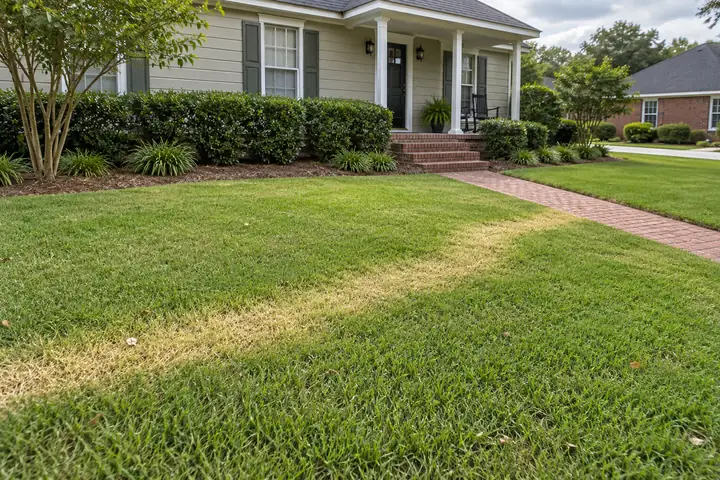
A sequence is useful evidence, but it is not proof by itself
When a lawn changes after a weed-control application, the timing naturally attracts attention. Keep that sequence, but do not let it become the whole diagnosis. The grass may have another problem, an application may be relevant, or more than one factor may be involved. UGA Extension describes chemical injury patterns and symptoms that can resemble other lawn concerns. A useful review starts with the actual observations and records, without deciding the cause before they are compared.
Begin with two dates if they are known: when the application occurred and when the change was first noticed. If either is approximate, say so. Also distinguish a new symptom from an older pale area that became easier to see after surrounding growth changed. A remembered sequence should not be given false precision. The aim is to preserve enough information for an appropriate assessment, not to choose the most recent event as the explanation for everything in the yard.
Identify the actual product and the actual grass
UC IPM emphasizes matching herbicide use to the turf species and target weed. A product suitable in one grass or setting is not automatically suitable in another. Keep the exact label or application record available rather than describing every product as weed killer. Similar brand names can hide different formulations, and a complete record is more useful than a photograph of an unrelated bottle found later in the shed.
Confirm the turf identity too. In a mixed stand, one plant may respond differently from another. Ask whether the affected leaves belong to the intended lawn grass, a weed being targeted or another grass within the yard. A browned weed can change the appearance of a patch without establishing injury to all the turf around it. Conversely, assuming every discolored plant was a target can overlook an actual concern. Keep those plant identities separate in the discussion.
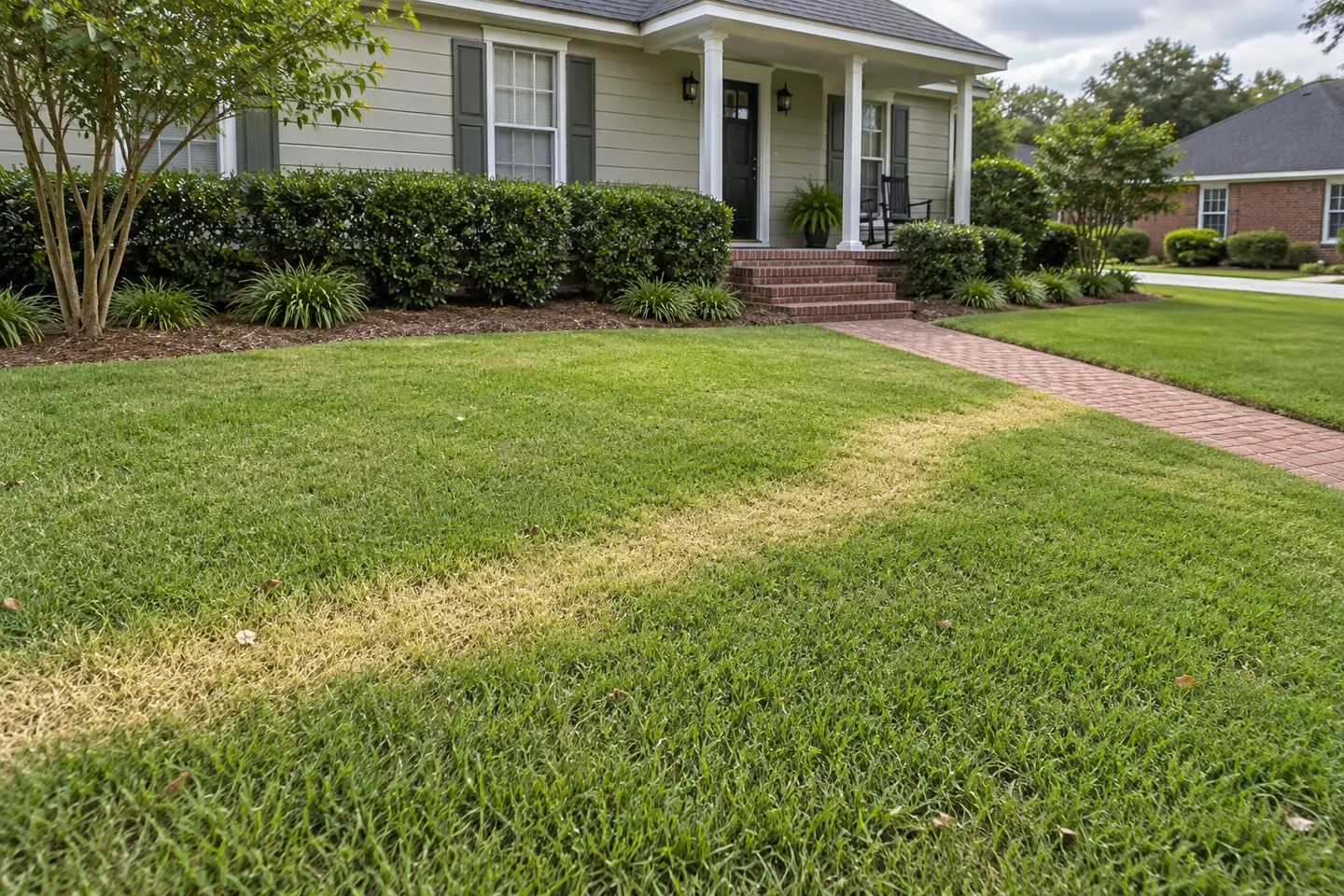
Read the footprint of the change
UGA describes chemical injury that may appear as streaks, bands or other patterns related to application. That makes distribution worth recording, but no shape is a universal confirmation test. A straight mark can also be associated with traffic, cutting or another operation. Describe where the change starts, stops and crosses the yard before selecting a cause. A pattern is most useful when it remains connected to the site features around it.
Compare whether the change follows: – A treated border or a known application area. – A repeated strip, overlap or turning location. – A route crossing both grass and another surface. – Only one plant type within a mixed stand. – A boundary that existed before the application.
Do not redraw an irregular patch into a neat spray path to make the explanation fit. Retain the unedited overall view as well as closer plant observations. An assessor needs the pattern that occurred, not a diagram of the cause already assumed.
Keep separate applications separate
If two products were used in different areas, retain those boundaries instead of describing the property as one treatment. A symptom crossing both areas raises a different comparison from one confined to a single application footprint. Neither pattern establishes the cause by itself. The unaffected area may contain another grass or different growing conditions, so it is not automatically a perfect control. Giving the assessor the actual application map, plant identities and observed boundaries helps determine whether the comparison supports the suspected explanation or leaves an additional question unanswered.
Symptoms can develop on different schedules
UGA notes that symptoms may become apparent quickly or after a longer delay, depending on the situation. There is no single number of days that confirms every product-related injury. A symptom seen later should not be dismissed merely because it was not obvious the next morning. Equally, the passage of time after an application does not prove that an unrelated condition arose from it.
Keep a sequence of the actual plant response. Was the first change yellowing, speckling, unusual growth or loss of whole plants? Did the same feature appear throughout the affected area, or did several different changes occur? If the lawn was mowed between observations, record that as well. Cutting may remove tissue that was visible earlier. The next reviewer should be able to understand which photograph shows the first concern and which shows the condition after other work occurred.
Separate leaf injury from a change in growth
A plant may show discolored tissue, distorted growth or a different growth rate. Those observations are not interchangeable. A lawn that stops gaining height presents a different maintenance question from one that remains vigorous but has marked leaves. Describe the change without selecting a mode of action from an internet image. Product identity, grass identity and an appropriate assessment are needed before interpreting what a particular pattern means.
It can help to compare the newest growth with the older tissue still present. Do not assume that a tidier appearance after cutting proves the original issue has ended. Also avoid repeatedly trimming the area to remove evidence while a review is being arranged. Ask whether the assessor needs to see the uncut growth first. The goal is to retain the relevant plant response long enough to answer the question, while making any necessary maintenance decision clear.
Include neighboring plants without accusing a source
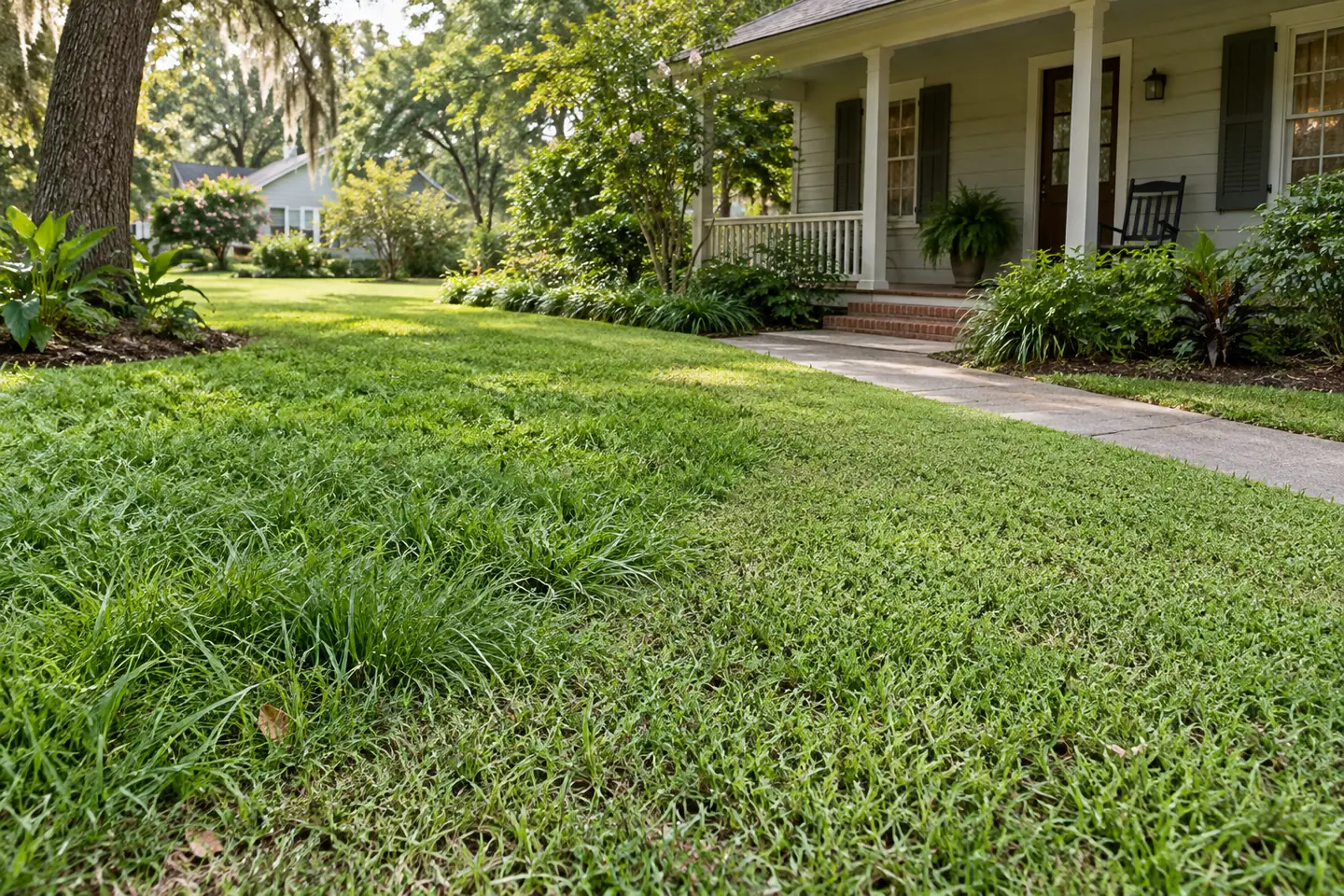
UC IPM's herbicide-injury guidance discusses inspecting surrounding vegetation as part of an assessment. That can help establish distribution, but an injured plant near a property line does not by itself identify who applied what or how it moved. Keep observations about your lawn separate from conclusions about another property. This guide cannot assign responsibility from symptoms or a photograph.
If several plants changed, identify their locations and the kinds of symptoms seen. If only one lawn species appears affected, preserve that distinction too. Avoid expanding the claim from a few leaves to the whole landscape without evidence. A careful record supports the assessment whichever explanation is eventually found. It is more useful than a confident accusation that later has to be disentangled from the actual product and plant information.
Do not add a home antidote to the evidence
A generic instruction to wash, neutralize, dig out or apply another material may not fit the actual product or site. Ask an appropriate adviser and use the product's current instructions for the situation rather than improvising from a different chemical's example. A remedy selected before the cause is understood can change the lawn and obscure the original question. Record any action already taken, including its location and timing.
If the concern involves direct human or animal exposure, use the relevant product emergency instructions and appropriate help rather than this lawn guide. For the plant-health question, retain the label and application history for assessment. Do not taste material, deliberately reproduce an exposure or apply a test dose to another area. The homeowner does not need to create a second damaged patch to show that the first deserves a careful review.
Coordinate the next mowing decision
Before the visit, identify the area under review and explain whether an assessor needs to see it before cutting. Discuss any current label or professional instructions affecting access and timing. The normal appointment does not override those instructions. A crew also needs to know whether the request concerns routine maintenance, removal of affected material or another task outside the existing agreement.
Keep the request concrete. You may need an area left uncut temporarily, a different route or a conversation about the amount of living growth. None automatically establishes a diagnosis or promises recovery. If separate corrective work is recommended, confirm its provider and how ordinary maintenance should fit around it. This prevents the next cut from becoming an unplanned experiment intended to prove or disprove a suspected product effect.
Define the follow-up question
Once a review supplies a finding, ask what evidence will be checked next. New growth, continued decline, survival of the intended turf and a later repair decision are different outcomes. A return of green color may be encouraging without establishing the full extent of recovery. Keep the assessment wording intact when passing it to another provider, including any uncertainty or further investigation requested.
For a lawn in Harvey, Marrero, Gretna, Algiers, Belle Chasse or Westwego, this approach keeps a sensitive concern grounded in the actual plants and work. Preserve the pattern, retain the product information and let a supported assessment guide the next step. A useful lawn conversation should make the evidence clearer, with less guessing about the cause and more clarity about what will happen before the next visit.
Confirm the available scope with Happy
Call 504-339-3571 and ask for Happy. Discuss the maintenance work and any relevant assessment instructions before booking. This educational page does not offer chemical-injury diagnosis, neutralization, environmental cleanup, fertilization, aeration, overseeding or pest control. Separate assessment or corrective work needs an appropriate provider and agreement.