
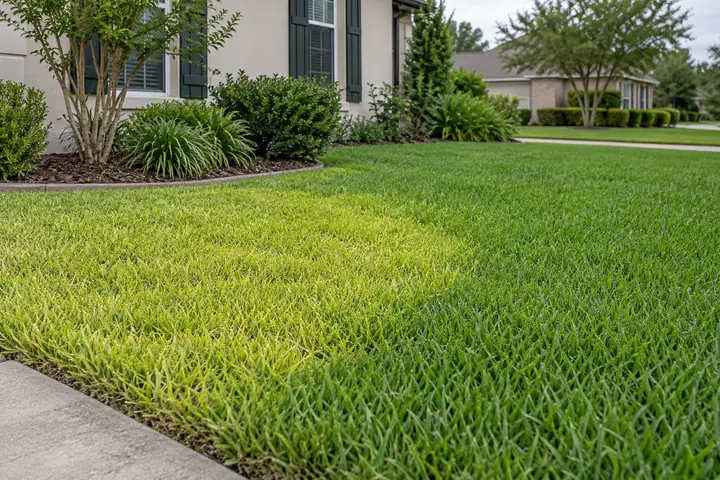
Which leaves are yellow?
A pale lawn does not come with a nutrient label attached. Before deciding that it needs more nitrogen, look at where the color change appears within the plant. LSU AgCenter describes iron deficiency symptoms beginning in younger foliage, often as yellowing between veins. Its turf guidance contrasts that pattern with nitrogen deficiency, which commonly appears first in older leaves. The distinction gives you a useful observation to report; it does not make a glance at one blade a complete nutrient diagnosis.
Compare connected growth rather than a loose handful of clippings. Can you distinguish the newer leaves from older foliage below them? Are both pale, or is the upper growth lighter while lower leaves retain more green? If the canopy is too recently cut or mixed to tell, keep that uncertainty. The next useful step may be identification or assessment rather than a guessed application. A simple question about leaf age can prevent the whole discussion from beginning with the wrong assumption.
Chlorosis describes a symptom, not a bag to buy
Chlorosis means loss of normal green color associated with reduced chlorophyll. Iron is involved in chlorophyll production, but iron is not the only possible explanation for yellow foliage. LSU's home-lawn iron guidance specifically notes that other nutrient problems can also affect color and growth. A leaf symptom needs to be considered alongside the actual turf, roots, soil and growing conditions before assigning a cause.
Use plain descriptions when asking for help. “New leaves are yellow while some lower foliage remains greener” preserves more information than “the lawn needs feeding.” Say whether the stand is still producing growth and whether living cover has changed. If there are separate lesions, loose runners or an area losing whole plants, include those as additional observations. A nutrition hypothesis should not cause other plant-health evidence to disappear from the conversation simply because yellow is the most noticeable color.
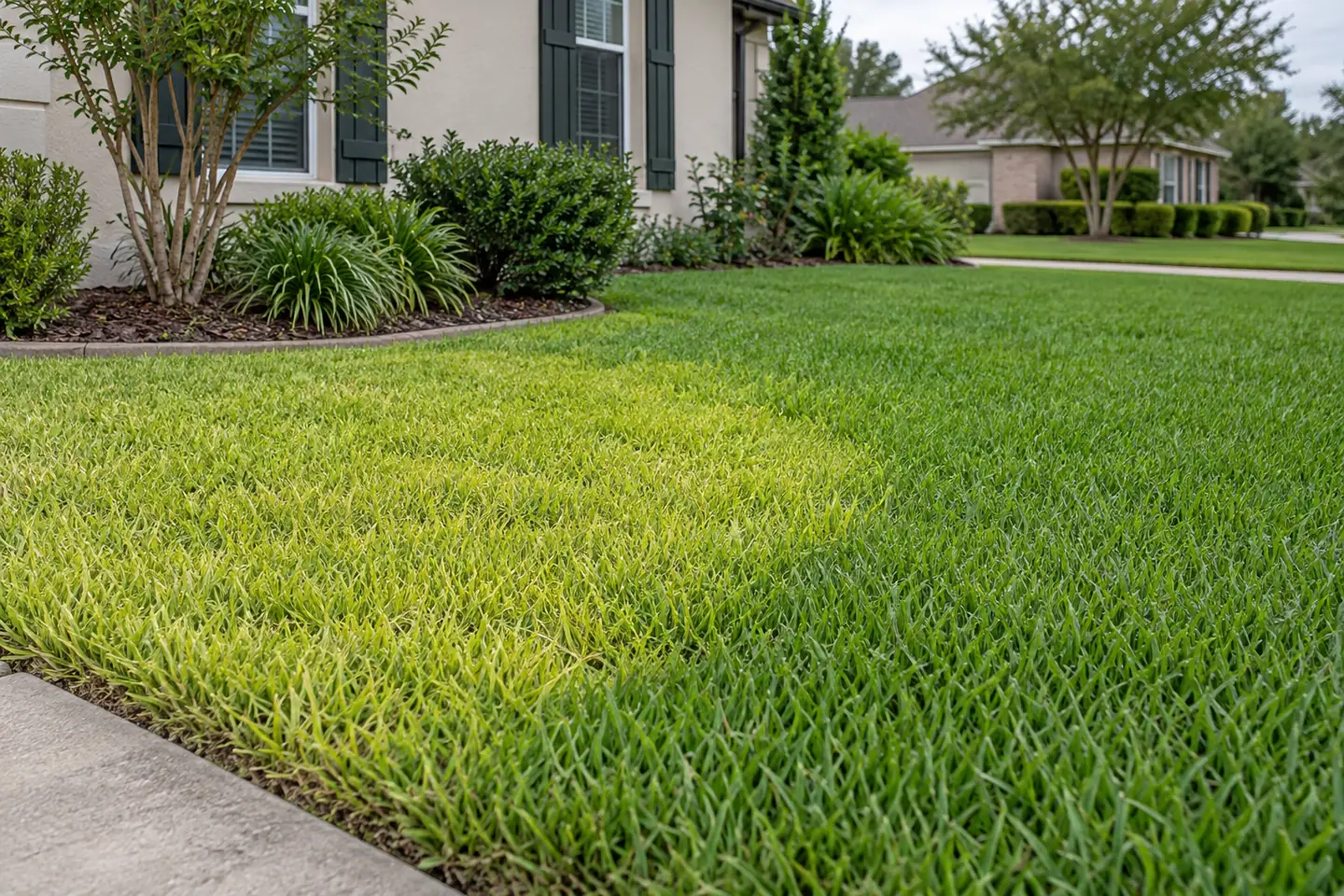
Iron can be present without being readily available
The amount of iron in a material or soil is not the same as the amount the grass can use. LSU's more recent explanation emphasizes the influence of soil chemistry on iron availability, including high-pH conditions. That helps explain why adding a product with iron on the label does not automatically resolve an assessed availability problem. It also explains why a homeowner should not infer the need for more iron solely from an unsuccessful previous application.
Ask what has actually been established: a low measured concentration, an availability concern, a root-function problem or only a suspected visual pattern. These are different statements. Keep the sample location and testing method with any report so the result remains connected to the lawn. A number without its context can be misleading, particularly when a garden-bed result is used to explain turf growing in different soil beside it. The recommendation should answer the question the evidence supports.
A soil report and a plant observation do different jobs
Soil information can help assess pH and nutrient conditions, while the plant shows how the living turf is responding. Neither should be asked to stand in for the other. A soil sample does not display the age of yellow leaves, and a yellow leaf cannot measure soil pH. Bring both kinds of information together when seeking interpretation. If further testing is recommended, ask what it is intended to distinguish.
A useful review packet can include: – The grass identity, or a clear statement that it is uncertain. – Whether young, old or all visible leaves are changing color. – The dated soil report and the area it represents. – Recent lawn products, including their actual treated areas. – Any separate loss of roots, density or normal growth.
Those details frame a specific question. They are not a do-it-yourself formula for adding several nutrients at once. Leave room for the assessor to explain which findings are relevant and which need a different investigation.
Do not turn a temporary color response into a complete answer
LSU discusses iron applications used for short-term greening without a major flush of growth. A color response therefore needs to be interpreted for what it shows. It does not automatically establish that rooting, soil conditions or every contributor to poor growth has been corrected. Likewise, a lawn can look darker while another problem remains. Decide what outcome is being reviewed before using a greener photograph as proof of full recovery.
If someone has already applied a product, retain its name, date and area. A mixture containing several nutrients cannot be described as a test of only one. If the response was temporary, record that sequence rather than assuming the lawn simply needs the same input forever. An appropriate adviser can then consider whether the underlying question concerns availability, timing, uptake or another cause. The homeowner's job is to preserve the result honestly, including any limits on what it can establish.
Growth and greenness are related but separate observations
A lawn may be producing leaves while their color is poor, or it may be pale and growing slowly. These are different conditions to describe. University of Arizona turf guidance uses both leaf-age patterns and growth observations when comparing iron and nitrogen questions. Its regional soil assumptions should not be copied wholesale to a Louisiana yard, but the distinction between appearance and growth remains useful to discuss.
Look at the actual grass before the next cut. Has it gained height, and where? Are tall stems weeds or seedheads rather than normal turf leaf growth? Keep those distinctions in the record. Choosing a shorter mowing interval because the lawn is yellow does not address a nutrient question if the intended grass has barely grown. Conversely, vigorous height gain does not prove every aspect of plant health is satisfactory. The maintenance decision and the assessment should each use the observation relevant to them.
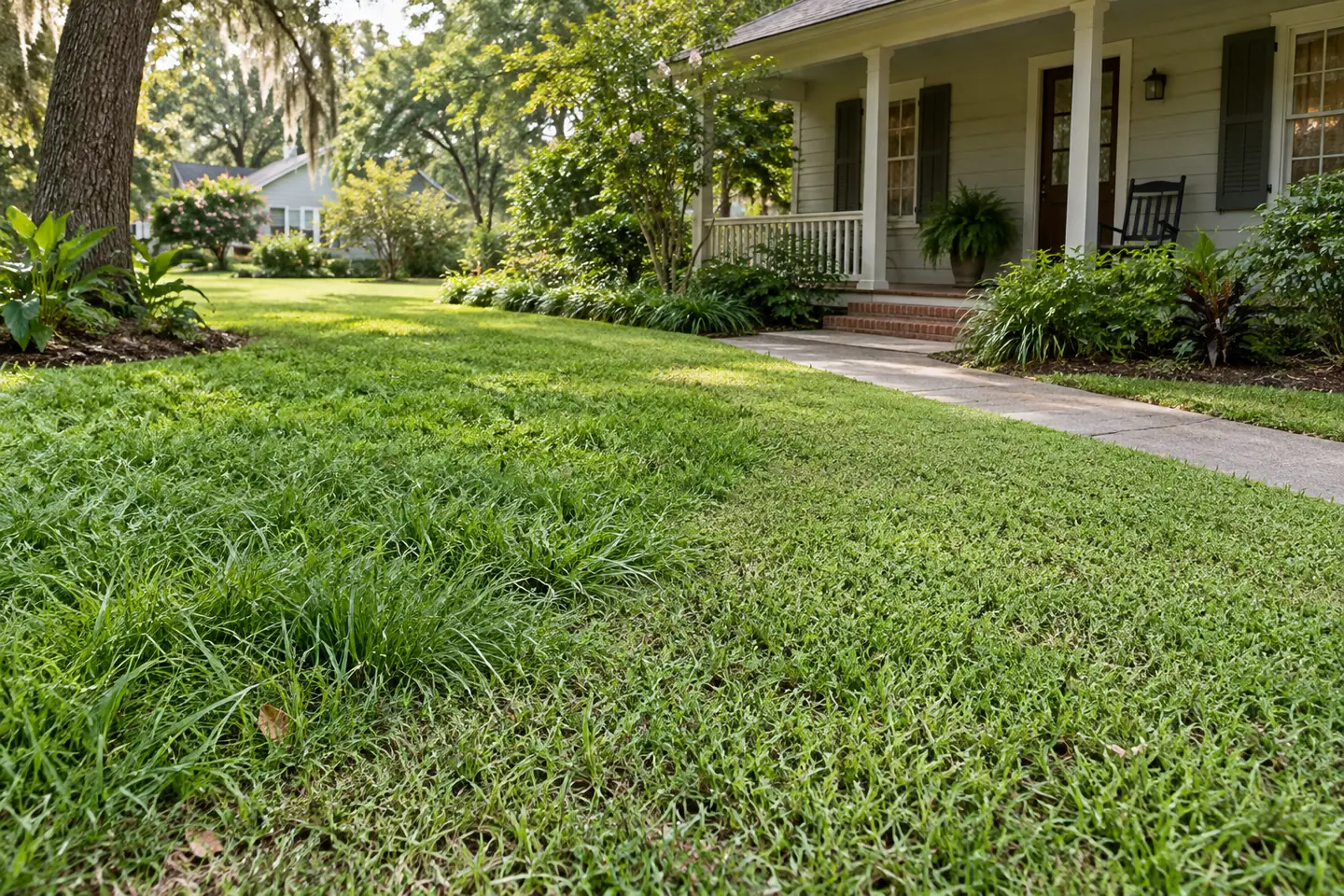
Read the whole product history
A lawn may receive material from more than one source: an earlier service, a homeowner application or work associated with a nearby planting area. If those inputs are relevant, identify what was actually used instead of writing only that the yard was treated. Do not assume a product's familiar front label tells you every ingredient involved. Keep the complete label or application record available for the person interpreting the symptoms.
Avoid adding another product as a way to make the history easier to explain. Multiple changes can make it harder to know which condition was present initially or what produced a later response. Ask which action is supported by the assessment and how it will be reviewed. The point is not to preserve yellow grass unnecessarily; it is to choose a response that answers the actual question instead of obscuring it under several overlapping inputs.
Consider new growth after the next observation point
Once an assessment supplies instructions, ask what will be examined at follow-up. Will the review compare the color of new leaves, the persistence of the original pattern or another measured condition? A mowing visit can remove some of the foliage used in the comparison, so coordinate timing if the assessor needs to see it first. Keep old marked leaves and new growth distinct when describing what happened afterward.
Also retain normal lighting context. A lawn photographed in strong sun can look lighter than the same grass under cloud, and a phone's processing can shift green and yellow. Compare the plant in person where possible and retain unfiltered original photographs. Do not let an edited color change become the evidence for a nutrient conclusion. A clear view of connected leaves is more useful than a dramatic overall image with no reliable reference to the original appearance.
Keep a realistic color goal for the actual turf
Not every lawn grass is naturally the same shade. Centipedegrass, for example, should not be pushed toward another species' dark color simply because a photograph makes it appealing. Confirm which grass is being maintained and what change would represent a meaningful improvement. The best question is whether an assessed problem is being addressed, rather than whether the yard matches a particular green in an advertisement.
For homeowners in Harvey, Marrero, Gretna, Algiers, Belle Chasse and Westwego, this keeps the iron conversation grounded in the living lawn. Observe the leaf age, connect the evidence and separate a supported recommendation from a cosmetic preference. The next cut can maintain the grass sensibly while an appropriate provider answers the nutrition question. A lighter lawn deserves a useful explanation, not an automatic assumption about what to spread on it.
Confirm Happy Grass's role
Call 504-339-3571 and ask for Happy to discuss available lawn maintenance and any assessment instructions affecting the visit. Happy Grass does not provide fertilization, aeration, overseeding or pest control. This educational page does not add nutrient diagnosis or iron application to your maintenance agreement.