
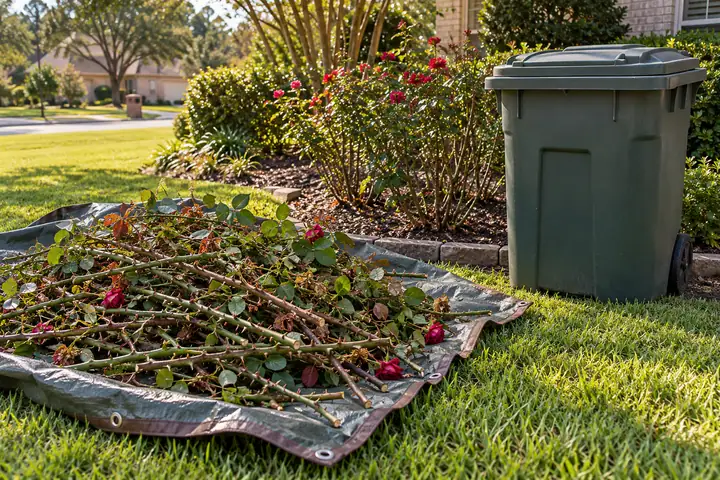
Identify the cutting work and its full footprint
Tell Happy which plants were pruned, where the branches were stacked and how they left the property. Cuttings may fall between the shrub and collection pile or scatter from a cart along the driveway. Start with that whole route rather than only the original plant. The owner should coordinate cleanup with the pruning provider. Happy does not automatically include thorny-debris handling, shrub pruning or hauling in an ordinary mowing agreement. A clear description helps decide whether the lawn is released or needs separate attention first.
Treat thorns as hard debris
Small pointed pieces can puncture skin or tires, while longer canes can be struck and thrown by equipment. Do not use a mower to shred them into less visible fragments. CPSC advises clearing the lawn before mowing because objects can become dangerous projectiles. A prickly branch remains debris even when its leaves are green. Keep the affected area closed to children and pets until the owner completes an appropriate cleanup. The crew's final visual walk cannot certify that every tiny thorn has been removed.
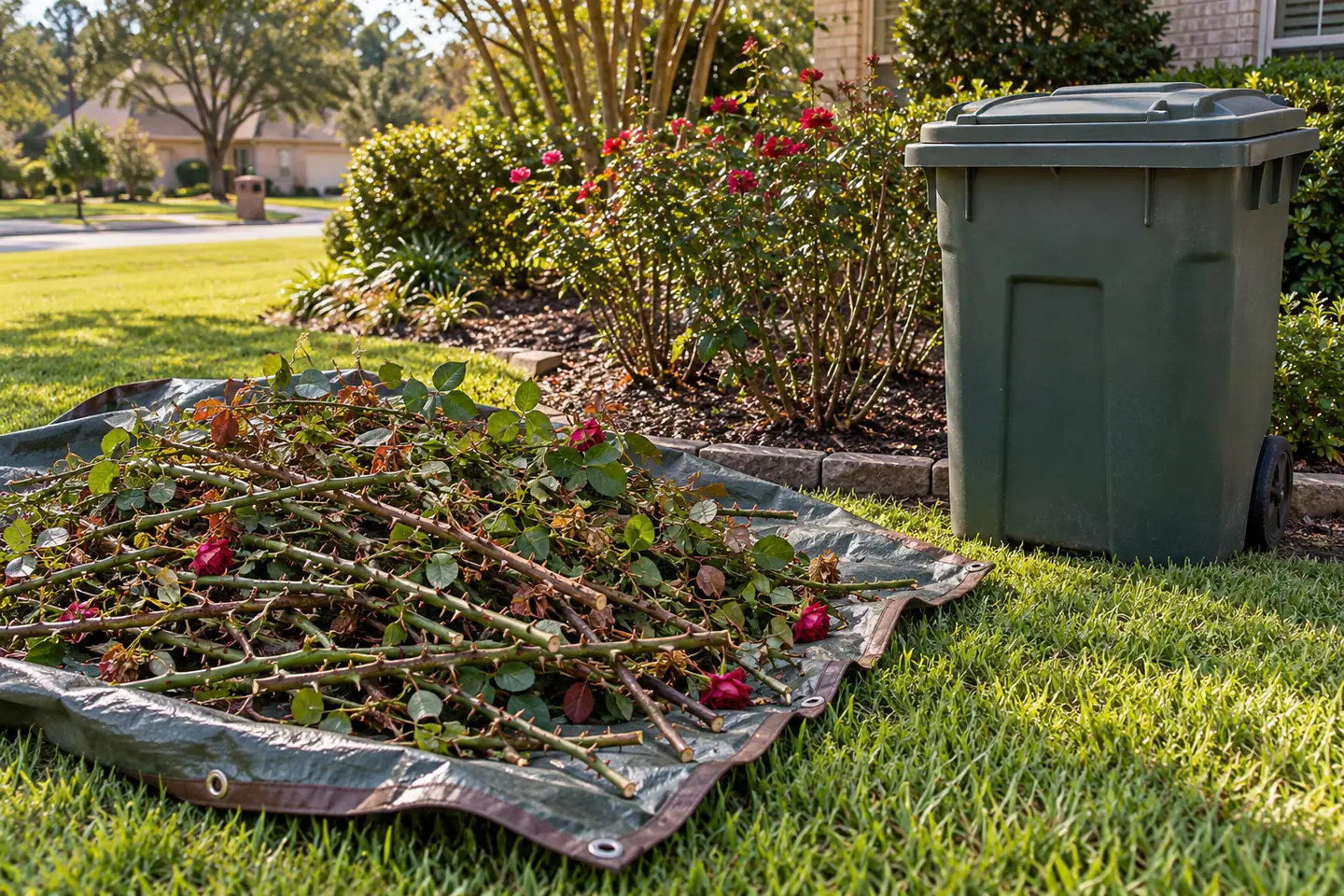
Use the right collection method for the plant
The pruning provider should select tools, protective equipment and containers suitable for the material. Avoid barehanded gathering, squeezing a thorny bundle against clothing or putting sharp ends into a thin bag that can tear. Local yard-waste requirements may determine bundling or container rules. Happy should not invent disposal instructions or assume a municipal cart accepts every form of debris. The owner can confirm requirements with the relevant collection service and have the material ready before lawn equipment arrives.
Lift the tarp only after the material is controlled
A tarp can help contain cuttings, but it may also conceal dropped stems or sharp points beneath its edge. The pruning crew should gather and move it safely, then inspect the exposed lawn. Do not drag a loaded tarp across the mower route and leave scattered canes behind. Account for ropes, clips and stakes used to hold the covering. Once the tarp is stored, check its former footprint from several directions in daylight before considering that patch part of the released lawn.
Search where the pile was carried
Look along gate thresholds, wheelbarrow tracks, driveway seams and fence corners. A cane can catch on a latch and snap into a short piece that disappears in turf. Check both sides of the gate and the loading point. Do not assume the collection pile was the only place debris touched the ground. A broad route photograph can help the owner give the pruning crew a focused cleanup request. Keep the record factual and avoid assigning blame from one visible fragment.
Separate attached canes from loose material
A cane bent into grass may still connect to the shrub. Do not tug it free during mowing preparation, especially if it is under tension or tangled with a fence. The pruning provider should decide where to cut and how to collect it. Happy can maintain ordinary grass outside a clearly marked plant margin. A trimmer should not be used blindly inside a thorny shrub to reach a few stems of grass; the boundary may need a landscape adjustment instead.
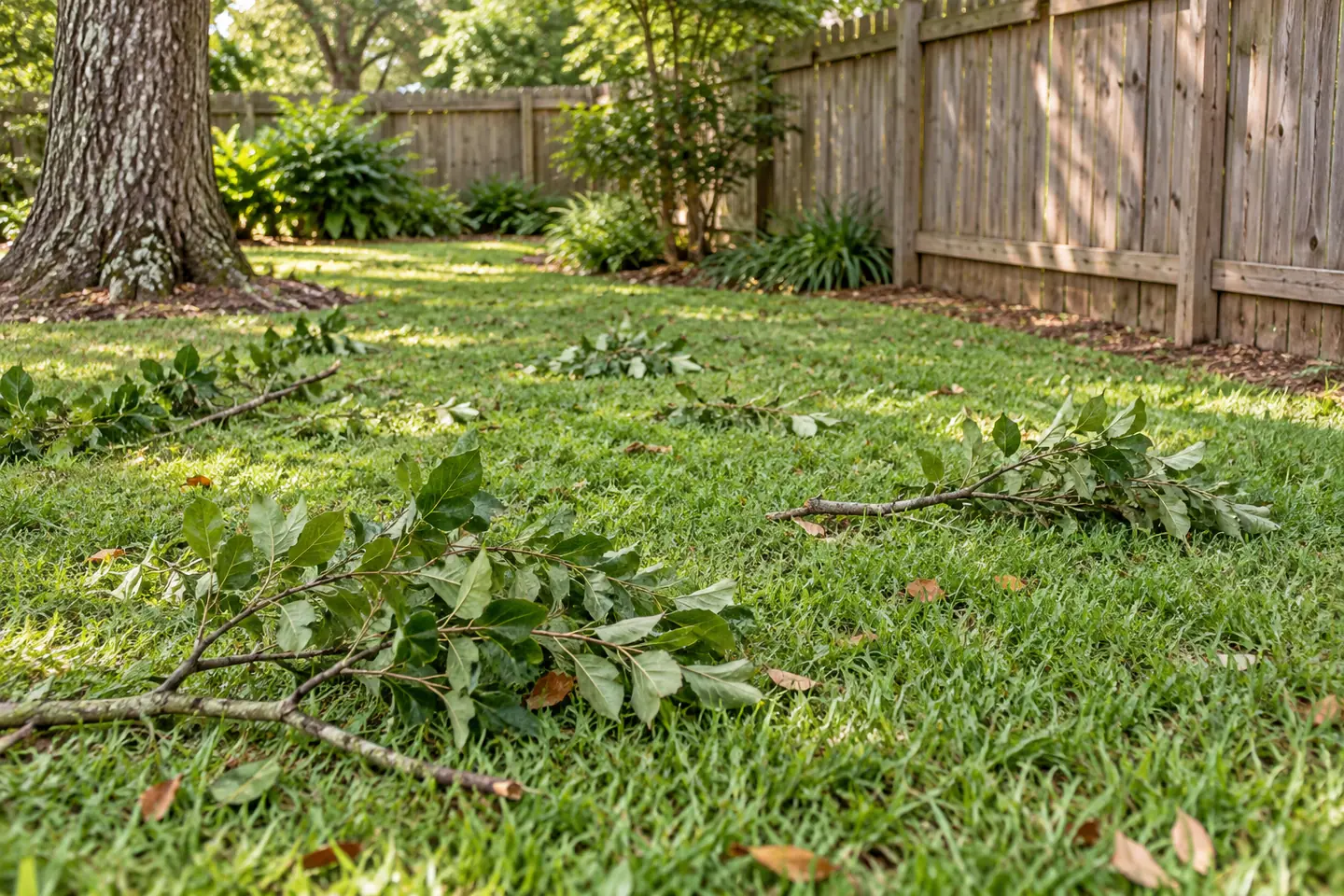
Keep wheel routes off the debris field
Driving over cuttings before pickup can press fragments into soil and carry them away in tire treads. Use a separate safe path until cleanup is complete. If every entrance crosses the affected area, reschedule or limit service to an independently accessible zone. Do not lay a thin board over branches and treat that as a released route. The goal is an actually clear surface, not a temporary cover that hides the hazard until the next person steps there.
Use a pruning-to-lawn checklist
- Confirm the plant, pile location and hauling route.
- Have the pruning provider collect sharp material appropriately.
- Remove tarps, ties, tools and loose covering anchors.
- Inspect the pile footprint, gate and loading area in daylight.
- Keep pets, children and mower tires away until released.
- Tell Happy about any corner still awaiting cleanup.
Recheck after rain or wind
Weather can move leaves away from a hidden cane or wash small fragments toward a low spot. Inspect the affected edge again before mowing, even if the main cleanup occurred earlier. A newly visible fragment may be a leftover rather than new damage. Document its location and ask the responsible provider to review the area. Do not blow it into a bed or drain. That only moves the sharp material to a place where the next cleanup becomes more difficult.
Protect tire and tool inspections
After a released area is serviced, the operator should look for material caught on tires or equipment from a safe stopped condition. Do not remove embedded sharp pieces barehanded. Follow the equipment's maintenance instructions and report the observation to the owner. This is a sensible follow-up, not proof that the entire property remains contaminated. If repeated fragments appear, the area may need another cleanup before the next lawn visit. Keep the issue visible rather than escalating mowing force.
Distinguish thorn debris from plant disease questions
Spotted leaves, dead stems or unusual growth may be the reason the shrub was pruned, but Happy should not diagnose the plant during a mowing visit. The owner should ask the pruning professional or extension resource about handling and disposal restrictions. Do not compost or redistribute suspect material based on a lawn crew's guess. Share relevant instructions before service if the area needs special access limits. Ordinary lawn maintenance can proceed outside the marked zone once the surface is clear.
Make the long-term boundary easier to maintain
If thorny growth repeatedly reaches grass, the owner may need a wider bed, revised pruning plan or different equipment clearance. A landscape provider should choose the plant care and design. Happy can explain where ordinary mowing and trimming can be performed without reaching into the shrub. A deliberate grass edge is easier to keep neat than a narrow strip filled with recurring canes. Avoid cutting the lawn extremely low to compensate for a plant that has outgrown its space.
Keep collection storage away from gates
Bundled prunings waiting for pickup should sit in an approved location outside lawn access and pedestrian routes. Secure the bundle according to the collection provider's rules and do not lean it against a gate that must open. Happy should not carry sharp bundles to the curb as a surprise addition to service. If pickup is delayed, send a new photo showing the remaining clear route. That lets the crew assess access without disturbing material already prepared for disposal.
Close the project with a clear release
The most useful message is simple: cuttings are collected, the tarp is gone, the hauling route has been checked and one identified area remains excluded if necessary. Happy can then walk the released lane and finish the grass carefully. A good cleanup leaves no mystery about who handles sharp debris or where equipment can turn. The lawn looks better because the pruning job and mowing visit connect cleanly, each with a clear responsibility.
Include the underside of collection equipment
A wheelbarrow, pruning cart or folding table can retain a small cane beneath its frame. Have the responsible crew inspect and store equipment away from lawn access before the mowing window. Do not leave a loaded cart where Happy must move it to open the gate. Once it leaves, check the former resting points and tire track. A few fragments around a cart can be missed even when the original pile footprint was cleaned carefully.
Review grass flattened beneath the pile
After cuttings and tarp are removed, the lawn may remain bent or damp. Let the owner assess whether it can support equipment and tell Happy how long the material was stored. Flattened grass can hide one last hard stem, so inspect before making a recovery pass. Avoid lowering the mower simply to erase the pile's outline. The first cut should follow the actual condition of the turf, while any lasting bare spot receives its own recovery conversation.
Keep the accepted disposal boundary explicit
If local pickup requires bundles at the curb, the owner should place them without blocking sidewalks, drains or the service entrance. Happy can work around an agreed stable storage area, but does not decide collection eligibility or move sharp material into a public route. A clear pickup plan keeps the final lawn cleanup from being undone by last-minute relocation.