
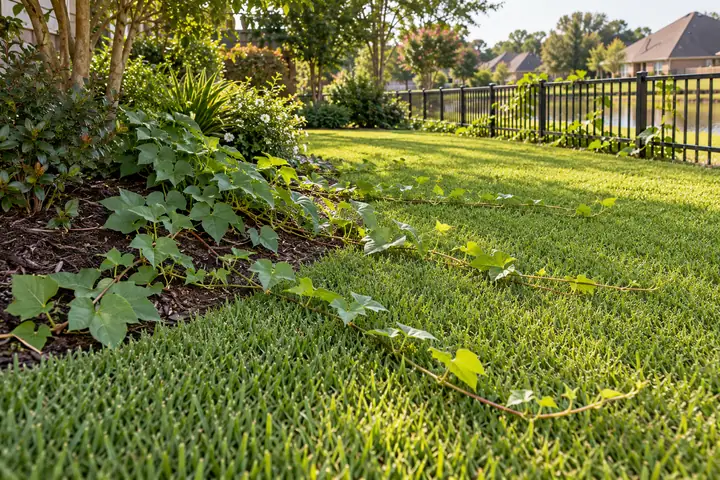
Follow the runner with your eyes first
Look from the lawn toward the bed, fence or tree where the vine begins. A runner may cross turf at ground level, loop beneath grass or climb an object farther away. Do not pull it to discover what it connects to. It can be wrapped around irrigation tubing, lighting cable, a desirable plant or loose fence hardware. Send Happy a wide photograph and a closer view of the leaves and stem. The immediate need is to understand the surface route without turning a tangled plant into a moving obstacle.
Tell Happy what should be preserved
Some owners want a vine kept on a trellis while allowing no growth in grass. Others intend to remove the plant entirely through a landscaper. Those are different instructions. Mark the approved bed edge and any retained stems before service. A vague request to clean it all up can lead to the wrong branch being removed. Happy can review ordinary trimming at a clear boundary, but does not assume ownership of pruning, plant identification or specialist removal just because the growth touches the lawn.
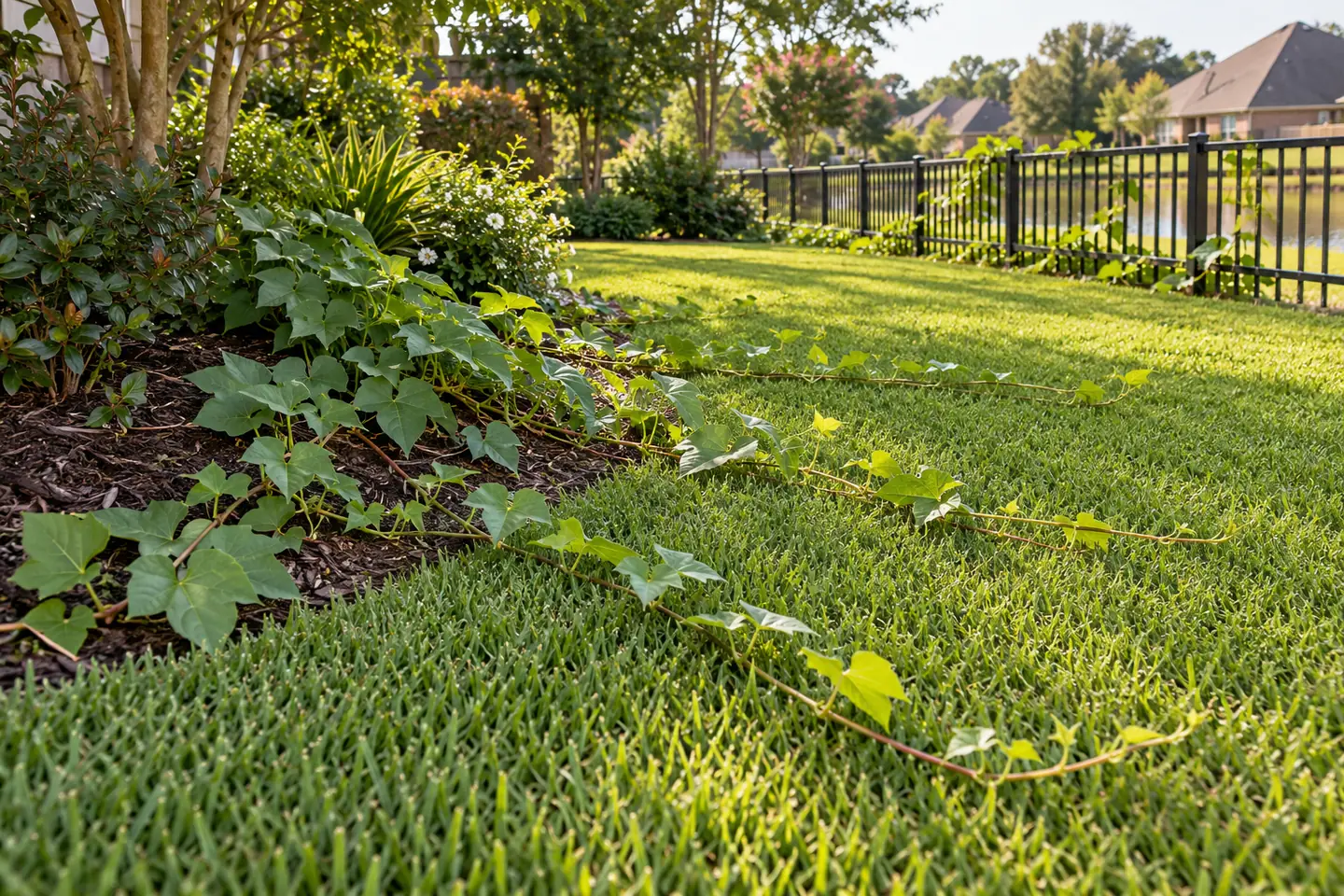
Identify unfamiliar or irritating plants before contact
Do not handle an unknown vine barehanded, run a trimmer through it or burn collected material. Some plants can irritate skin, and identification from a distant photograph can be uncertain. Ask a local extension resource or qualified landscape provider when needed. Happy should receive the result and relevant work restrictions before mowing beside the patch. Keeping an excluded strip is a useful temporary decision while identification is resolved; hiding the leaves beneath a cut does not make the material harmless.
Separate vine stems from cables and hoses
Thin brown or black runners can resemble low-voltage wire, drip tubing or old tie cord. Trace every visible crossing to a known source without tugging. If a line disappears into a bed or wall, stop and ask the owner. Happy does not test unknown lines with an edger. The property note should identify irrigation and lighting separately from plants so a later crew can read the route. This is especially useful where a trellis, faucet and landscape lights share one narrow border.
Avoid wrapping long material around equipment
Long flexible runners can catch wheels or wrap around rotating parts even when the leaves are soft. The owner or landscape provider should collect cut lengths before mowing. Do not leave a coiled bundle in grass or expect a mulching mower to process it. CPSC debris guidance applies to material that can interfere with equipment. If a runner is still rooted or attached, agree on an appropriate clearing method first rather than dragging it through the lawn during a normal pass.
Keep the grass boundary at a healthy height
A vine crossing does not justify shaving the surrounding lawn. Scalping can weaken turf and leave bare soil while the vine's source remains unchanged. Define a readable edge and maintain ordinary grass outside it. If the plant repeatedly crosses that line, the owner may need a landscape management plan. Happy can report recurrence and adjust access, but should not promise eradication from repeated trimming. The service result should be a tidy lawn boundary with an honest note about unresolved plant growth.
Inspect where runners root into soil
Some vines establish new contact points along a stem. Pulling one length may lift grass, mulch or soil from several places and expose a depression. Do not treat a connected runner as loose litter. Ask the appropriate provider to decide how it should be removed and how the surface will be restored. After work, inspect the route for holes and remaining stiff bases before bringing equipment back. A cleared vine can still leave a lawn that needs a careful transition visit.
Review fences, gates and trellises together
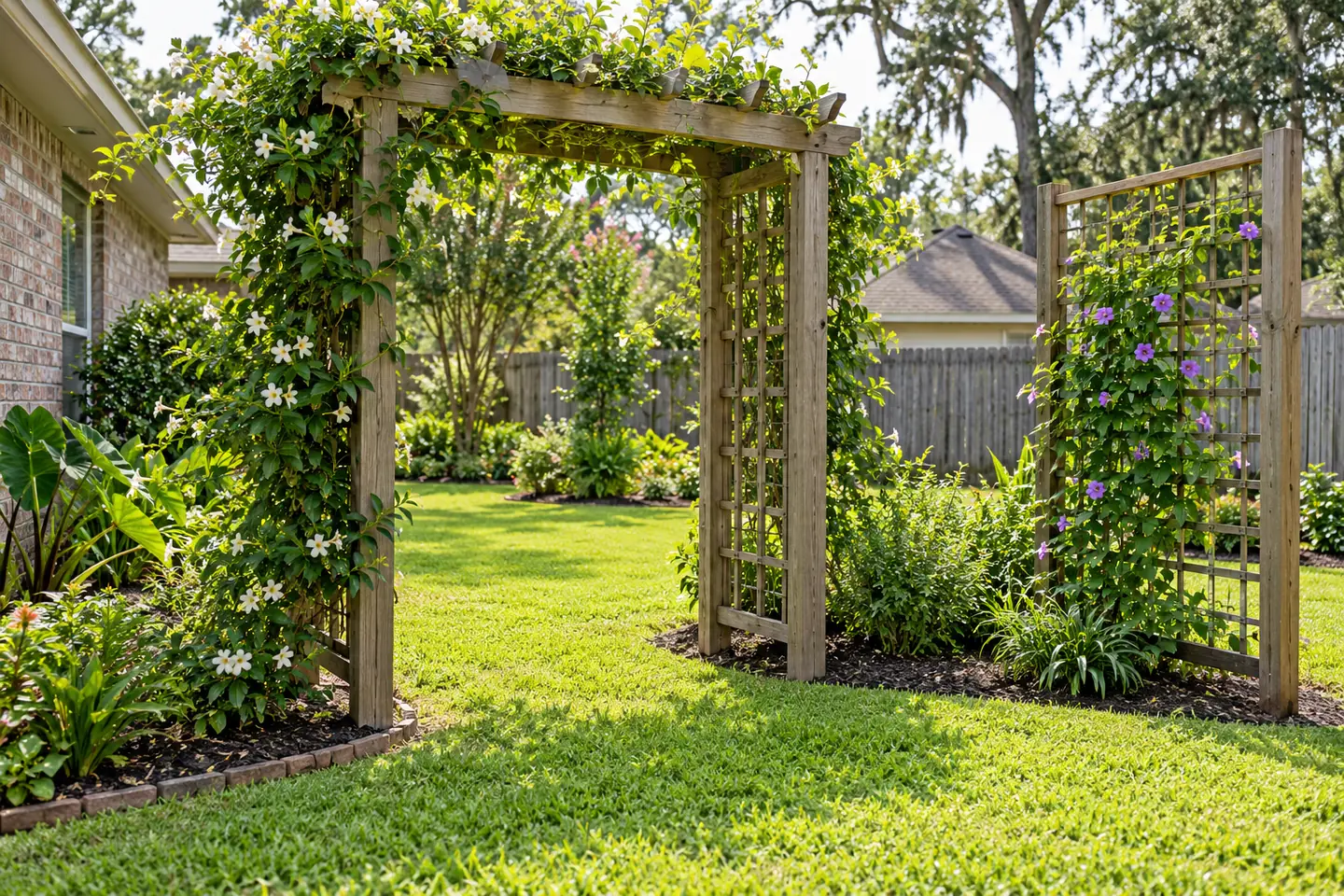
Vines can tie a gate to a fence, conceal a latch or pull on a lightweight trellis. The owner should release the gate and confirm the structure is stable before the lawn crew uses it. Happy should not force a stuck gate or cut a vine under tension to open the route. If the trellis leans into the lawn, mark its full footprint. Smaller equipment does not solve a structure that can move unexpectedly when contacted.
Use a runner-edge checklist
- Identify the source plant and the owner's desired result.
- Mark retained stems and the approved lawn boundary.
- Distinguish plants from wires, tubing and tie material.
- Resolve unfamiliar or irritating growth before handling.
- Collect loose cut lengths outside the mowing route.
- Check the cleared surface and gate before service resumes.
Watch the border after bed maintenance
Pruning, mulching or moving a planter can lay runners across turf that was clear the previous week. Ask the landscape crew to gather every cut length and restore visibility around low fixtures. A blower should not push a pile beneath shrubs where it can return to the lawn. Inspect the exact mowing edge after the project, not only the finished trellis. A wide photo can show whether the approved line changed and whether new watering tubing now shares the route.
Keep chemical requests separate from mowing
Do not request an automatic spray on unknown vine leaves. Species, nearby plants, label directions and connected root systems can change the appropriate response. Happy's limited weed-control conversation does not include specialist vine eradication or tree treatment. If another provider applies a product, the owner should share relevant access directions and marked areas. The lawn crew should not assume dry or wilted foliage means the site is ready for disturbance.
Compare repeat growth from one viewpoint
Take occasional photographs from the same general location showing the bed edge, fence and advancing runners. Note whether growth appears after rain, pruning or a gap in maintenance without claiming those events caused it. A consistent record helps the owner decide whether to change the planting or its support. Happy can use it to keep the mowing footprint stable while the landscape provider addresses the source, rather than expanding a no-mow strip unpredictably at each visit.
Protect plants the vine is climbing
If a runner reaches a shrub or tree, do not pull it off during lawn service. Tension can damage the host plant or drop material into the work lane. A qualified provider should assess the vine and choose a removal method. Happy can maintain grass outside the marked plant area when safe. The owner should make clear whether a climbing stem is ornamental or unwanted, because appearance alone does not establish the intended landscape plan.
Choose a permanent edge when the crossing repeats
A clear bed line, suitable support and a realistic maintenance margin can make future visits easier. The landscape provider should determine the design and plant care details. Happy can describe the equipment clearance needed and maintain the final grass-side boundary. Avoid creating an improvised trench or cutting roots as part of edging. The lasting improvement is a border that both the plant and the mower route can occupy without constant conflict.
Release the yard after clearing, not during it
Vine removal can leave piles, tools, exposed anchors and disturbed ground throughout the side yard. Wait until the owner confirms those items are collected and the surface is stable. A partially cleared gate may still be connected by a hidden runner. The first visit back should walk the entire lane before blades start. With the plant decisions settled and the edge visible, Happy can give the lawn its normal finish without having to solve a tangle at every turn.
Account for ties left after vine removal
A trellis project may leave garden tape, zip ties, wire loops or support clips after the plant is cut back. The landscape provider should remove loose pieces and identify anything that must remain attached. These small items can hide at the lawn edge and catch a trimmer even when the runners are gone. Happy should not cut every tie on sight because some may support a retained plant. A quick post-project tool and hardware check completes the handoff more reliably than inspecting leaves alone.
Keep the origin and crossing point in the same record
When a runner crosses into the lawn, show both the visible crossing point and its apparent connection to the neighboring planting when that can be observed safely. Label an uncertain connection as uncertain. A close view of the stem alone may not explain whether the owner wants a plant preserved, a border reviewed or a separate identification question answered.
Before agreeing on the lawn finish, record which planting the owner intends to keep and where the ordinary maintenance boundary lies. Keep any proposed plant removal or other specialist work separate from that decision. After another provider clears or rearranges the border, update the current view rather than asking Happy to infer the new limit from a pile of cut material. This makes the next lawn request specific to the presented crossing and the owner’s actual preservation choice.