
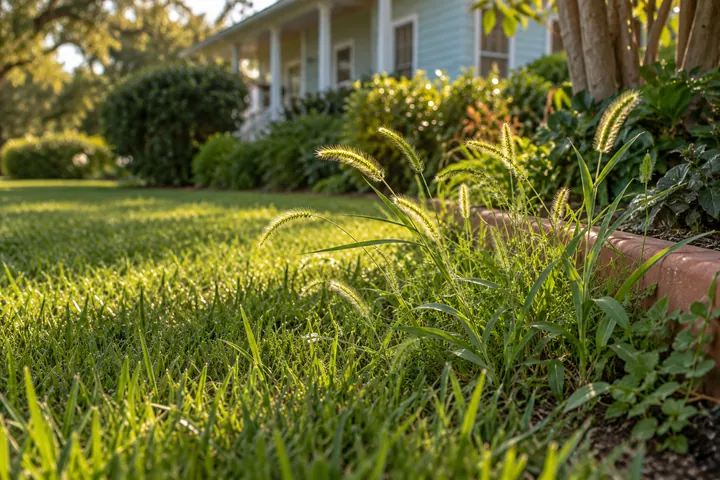
A brush-shaped outline starts the comparison
A cylindrical bristled head can be easy to notice above a lawn, especially when sunlight catches its edges. It may prompt an immediate foxtail label. That is a reasonable everyday description, but it does not distinguish yellow foxtail from every other grass given a similar common name. A useful inquiry keeps the attractive outline in context and asks which connected details are needed to narrow the identification.
UC IPM describes yellow foxtail as a summer annual with a densely packed bristled head. Its account notes long hairs near the blade base, a hair-fringed ligule and a hairless sheath margin below the collar, a feature used in comparison with green foxtail. Some leaves have a spiral twist. These are details to review together; the apparent yellow color of a distant head does not settle the plant's identity.
The common name should stay attached to a candidate
If someone has called the plant foxtail, keep that wording as the starting point rather than rewriting it as confirmed yellow foxtail. Ask which scientific or reference name they mean. Common names can be shared across different plants and regions, and a search result with the same familiar label may not describe the same candidate. The name should help locate the comparison, not conceal uncertainty about it.
Give the actual example a location label that remains useful if the candidate changes. Terracotta-border head is enough for an initial record. Keep that label with each photograph and any later identification response. A reviewer should not have to guess whether a leaf-base close-up came from the same plant as the prominent bristled head in the overview.
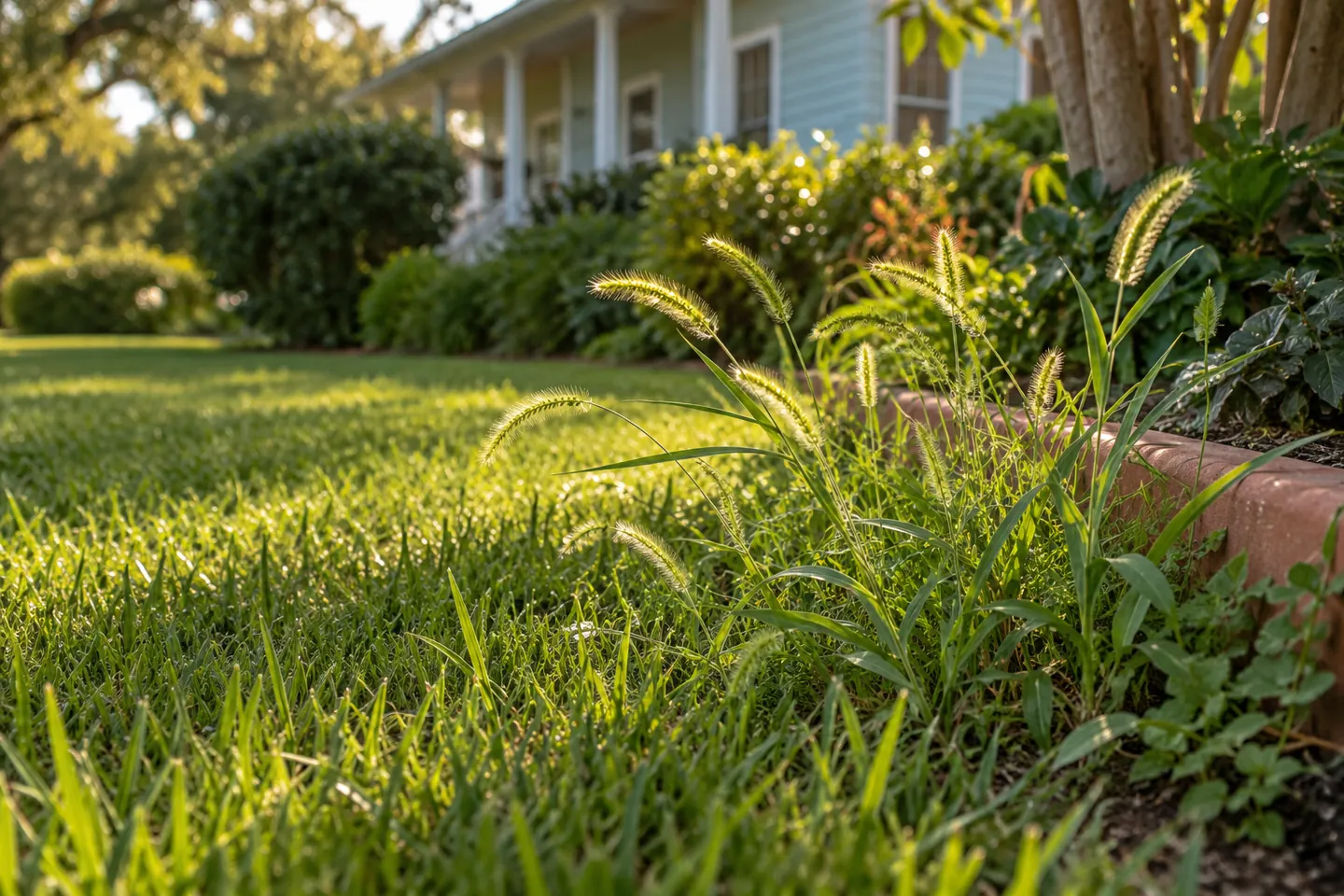
Photograph the head's shape without relying on its glow
Backlighting can make a bristled head look striking while hiding its center and attachment. Include a view under more even light as well as the overall scene. A photograph that explains the structure is more useful for review than one chosen only because the bright rim looks dramatic. Keep the stalk connection visible so the head remains associated with the plant under discussion.
Do not handle or rearrange bristles just to produce a neater photograph. If the head is bent, clipped or partly obscured, show and label that condition. A clear limitation lets a qualified reviewer decide whether another view is needed. A carefully staged outline can look convincing while removing information about the actual example's condition.
Know which part the collar question concerns
The collar region is near the junction of the blade and its enclosing sheath. A distant picture of the whole leaf normally does not resolve the small features discussed in a grass-identification account. Ask which close view would help before assuming that a photograph of the tip answers a question about the base. The location of the requested feature matters as much as the image's magnification.
Keep the leaf attached where practical and make its relationship to the supporting stem readable. If the junction cannot be shown clearly, state that. Do not describe a sheath margin as hairless merely because the photograph is too soft to resolve hairs. An unresolved feature is a useful piece of information; a falsely definite absence can lead the comparison in the wrong direction.
Keep blade-base hairs separate from nearby bristles
A head's bristles and hairs near a leaf base are not the same structure. Label close-ups by the part shown rather than sending several fuzzy details under one caption. A reviewer may be comparing the blade base, the sheath margin or the head, and those photographs should not be interchangeable. An image can be sharp yet still fail to answer the question if it shows the wrong location.
If a close-up includes material from another plant crossing behind the leaf, mention the overlap or choose a clearer example. Mixed grass can create apparent hairs or edges that belong elsewhere. The goal is to preserve real connections, not to assemble every expected trait from whatever happens to be visible nearby. Keep doubtful associations labeled as doubtful.
Do not let the word yellow become a color rule
The reference discusses changes in head appearance, and lighting introduces another source of variation. A head that looks green, gold or tan on a phone screen should be described as it appears in that view without treating the color as an automatic species test. If two examples are being compared, photograph them under similar ordinary light and keep them separately labeled.
Avoid borrowing a mature reference image to fill a missing stage in your property's record. A reference can explain the question, but it should not be presented as a photograph of your plant. Keep current observations and published background visibly distinct. That makes a later identification response easier to follow and prevents a forwarded message from becoming more certain as its original captions are lost.
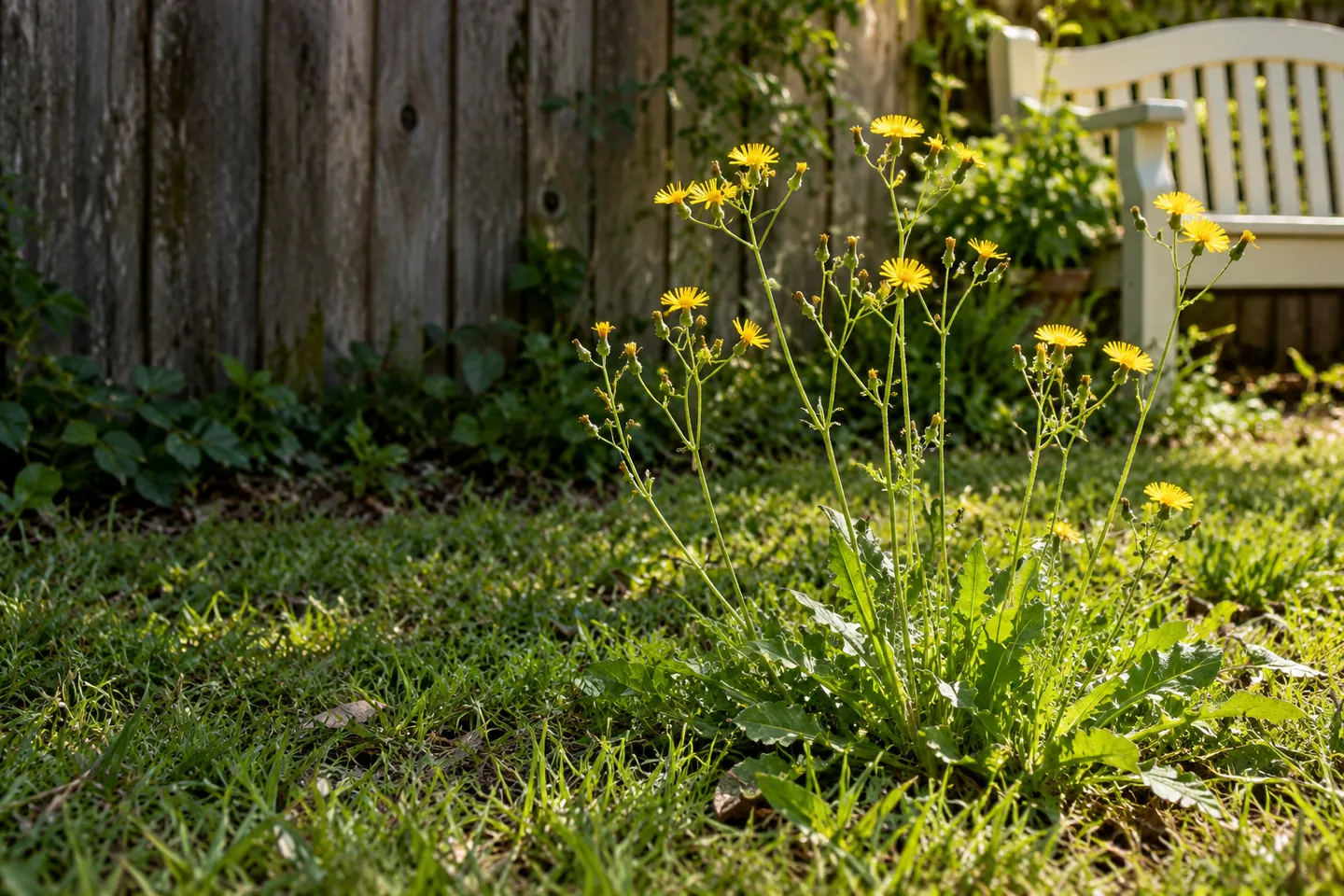
A twisted blade is another feature, not a finished answer
If a leaf appears to twist, show the attached blade's route rather than only the tip. A bent or folded leaf after cutting may not demonstrate its original form. Explain whether the example was intact when observed. The reference's mention of a spiral twist can guide a question without making every curled piece of grass a yellow foxtail specimen.
You can still make a useful maintenance inquiry if that detail remains unclear. Name the bristled heads and the fixed area where they stand out. A homeowner does not need to settle every botanical comparison before asking what routine lawn work can address the present appearance. The identification question and the proposed finish should be clear enough to discuss separately.
Define the visible concern in the lawn
The heads may interrupt the view from a path while the underlying grass surface appears acceptable. Another homeowner may be concerned about the whole clump's texture. State which applies. A request focused on the raised heads should not silently become a promise to change the lawn's grass composition. The desired result needs its own description even if the plant is eventually identified with confidence.
Use a fixed border or walkway reference to describe the task area. The head itself may be cut or no longer visible by the visit, so it is a poor stop line. A marked overview and a matching written boundary let Happy discuss the actual location without relying on a temporary feature. Keep nearby beds or other retained plants distinct from the lawn area under review.
Keep an ordinary maintenance agreement specific
Ask which mowing, edging, weed-eating or blowing is being proposed and what visible finish is expected. A grass-identification article does not establish a treatment service, product choice or control calendar. This guide provides none of those. If the real goal is a longer-term change in the plants present, identify that as a separate question needing appropriate review rather than an implied part of routine care.
Do not ask the entire lawn to be cut progressively lower solely to chase a conspicuous head. The surrounding turf and the appropriate overall finish still need consideration. A photograph of one bristled structure is not a mowing-height specification. Bring the wider lawn view to the conversation so the proposed work reflects the surface that is actually there.
Give a repeat finding a fair description
If bristled heads become noticeable again, record the location and observation date. Distinguish a known previously marked plant from another similar example in the same general area. Do not assume that all visible heads belong to one individual or that a later appearance proves how the plant arrived. A useful record states what was seen without assigning an unobserved movement history.
Compare the result with the actual agreed task. A neater border can be a completed maintenance outcome while a plant-identification question remains unresolved. If the visible finish still needs review, say exactly which stretch and feature concerns you. That gives Happy a practical question to address without asking the conversation to resolve every botanical or long-term management issue at once.
Keep the comparison easy to follow
Organize the evidence from location to plant to detail. The overview explains where, the connected head-and-leaf view explains which example and the collar or blade-base photograph addresses the distinguishing feature. Label any separate specimen or damaged part. A small purposeful set is easier to use than an album of similar glowing heads with no way to relate the parts.
- Preserve the candidate name as a candidate until reviewed.
- Distinguish head bristles from blade-base and sheath details.
- Treat color and leaf twist as supporting observations, not complete tests.
- Define the maintenance boundary independently of the standing head.
For a Harvey or Algiers lawn, this keeps a memorable plant shape from becoming an overconfident conclusion. You can show the right evidence, ask a focused identification question and discuss a clear routine finish. The head catches the eye; the connected details make the next answer more useful.
Ask Happy about the bristled-head area
Call 504-339-3571 and ask for Happy. Identify the marked border and the appearance you want reviewed for mowing, edging, weed-eating or blowing. Confirm the actual work and availability before arranging a visit.