
Let’s make the backyard part of the happy plan
It is easy to ask someone to cut the front grass. A backyard can come with more questions: which gate to use, where the mower can turn, whether the dog will be outside and what to do around the chairs by the patio. None of those details is a reason to put off asking for help. They are simply part of understanding the job.
Happy Grass Lawn Care serves Marrero with mowing, edging, weed-eating and blowing, with weed-control requests available to discuss. This page focuses on planning lawn maintenance when fences, gates and outdoor living areas shape the work. Your yard does not have to match a particular layout. Tell Happy how it is actually arranged and which parts you want to feel easier to enjoy.
Maybe the backyard is the space where the family spends time. Maybe you mostly notice it from the kitchen window. Either way, the finish you want deserves a clear description. A usable yard is not always the same thing as the part that looks tidy from the street, and we do not want your most important patch to become an afterthought.
Start at the entrance instead of the middle of the grass
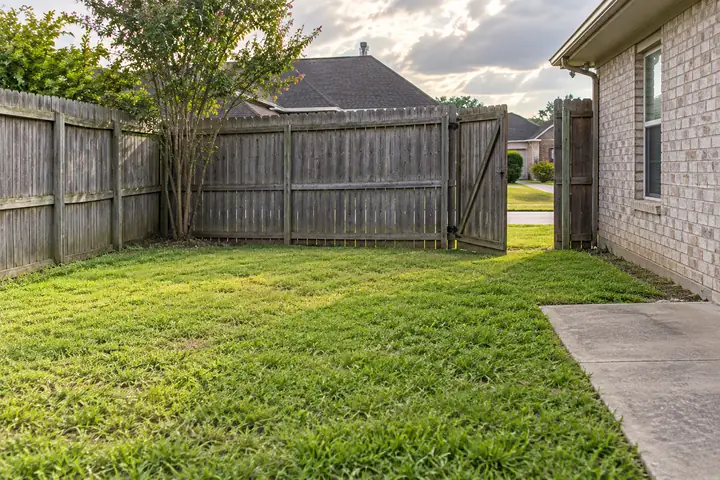
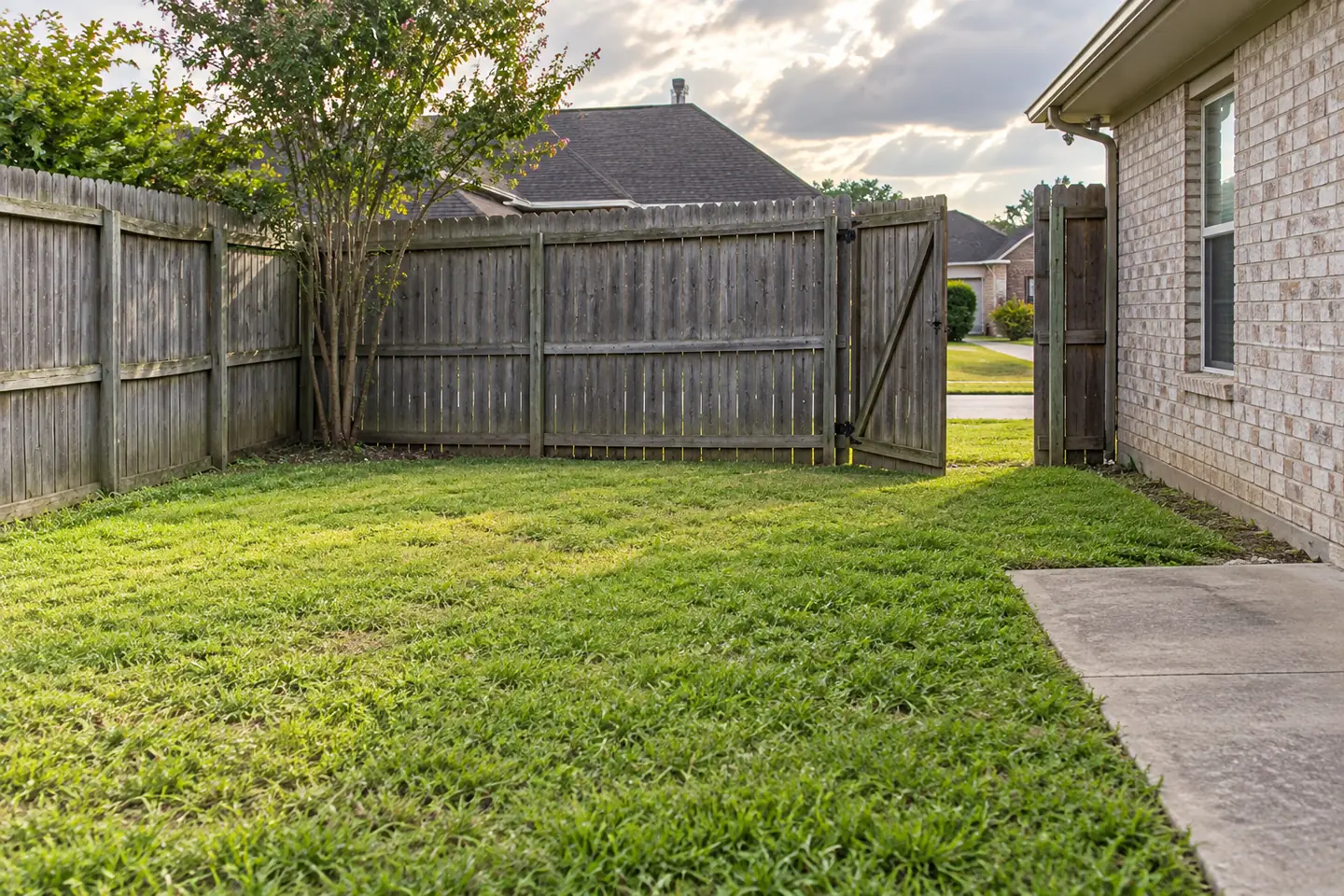
Before photographing the lawn, take a picture of the entrance with the gate open. Include the path leading to it and the space immediately inside. A wide-open backyard is useful only if it can be reached through a suitable route. A tight turn before the gate can matter just as much as the width between the posts.
If you know the clear opening, send that measurement. Measure the usable gap with the gate open, rather than the full width of the fence panel. Mention loose hinges, a latch that needs a particular lift, a slope at the entrance or steps in the access path. Do not expect a photograph to reveal every small difficulty.
Access is something to discuss, not a reason to guess about equipment. Happy can review what you send before confirming the plan. If the entry changes or becomes blocked between the quote discussion and the visit, give an update. The arrangements should fit the yard as it will actually be on service day.
Decide what stays, what moves and what needs room
Outdoor furniture, toys, hoses, play equipment and plant containers help make a backyard yours. They can also divide the mowing area into several smaller spaces. Before service, decide which movable items you can put away and which larger pieces will remain where they are.
Happy Grass is a lawn-maintenance service, so do not assume a quote includes moving a heavy structure, dismantling furniture or clearing stored materials. Point out fixed obstacles and ask how the grass around them can be handled. A sensible exclusion is better than making a promise about an area that cannot safely be reached.
- Put away loose toys and small items before the agreed visit.
- Lift hoses and cords out of the grass where practical.
- Identify fragile pots, young plants and decorative borders.
- Explain the spaces beneath or behind larger equipment that you want assessed.
- Keep an access route clear between the entrance and mowing areas.
Pets need their own service-day arrangement
If pets use the backyard, tell Happy before the visit is confirmed. Make a plan to have them secured away from the work area, and explain how the gate will be handled. Do not rely on a note saying that a pet is friendly as a substitute for an access arrangement.
Please remove pet waste before service. It is easier to discuss preparation plainly at the start than to leave someone trying to work around surprises. If the lawn is shared by more than one household or someone else normally controls the gate, include that person in your own preparations so the agreed access can actually happen.
A customer does not have to write a long set of instructions. A short message can cover the essentials: “The dog will be indoors, the side gate will be available, and the water bowl will be moved.” If those arrangements change, send a timely update. A little coordination keeps a backyard visit from becoming a guessing game.
Fence lines and patio edges need different descriptions
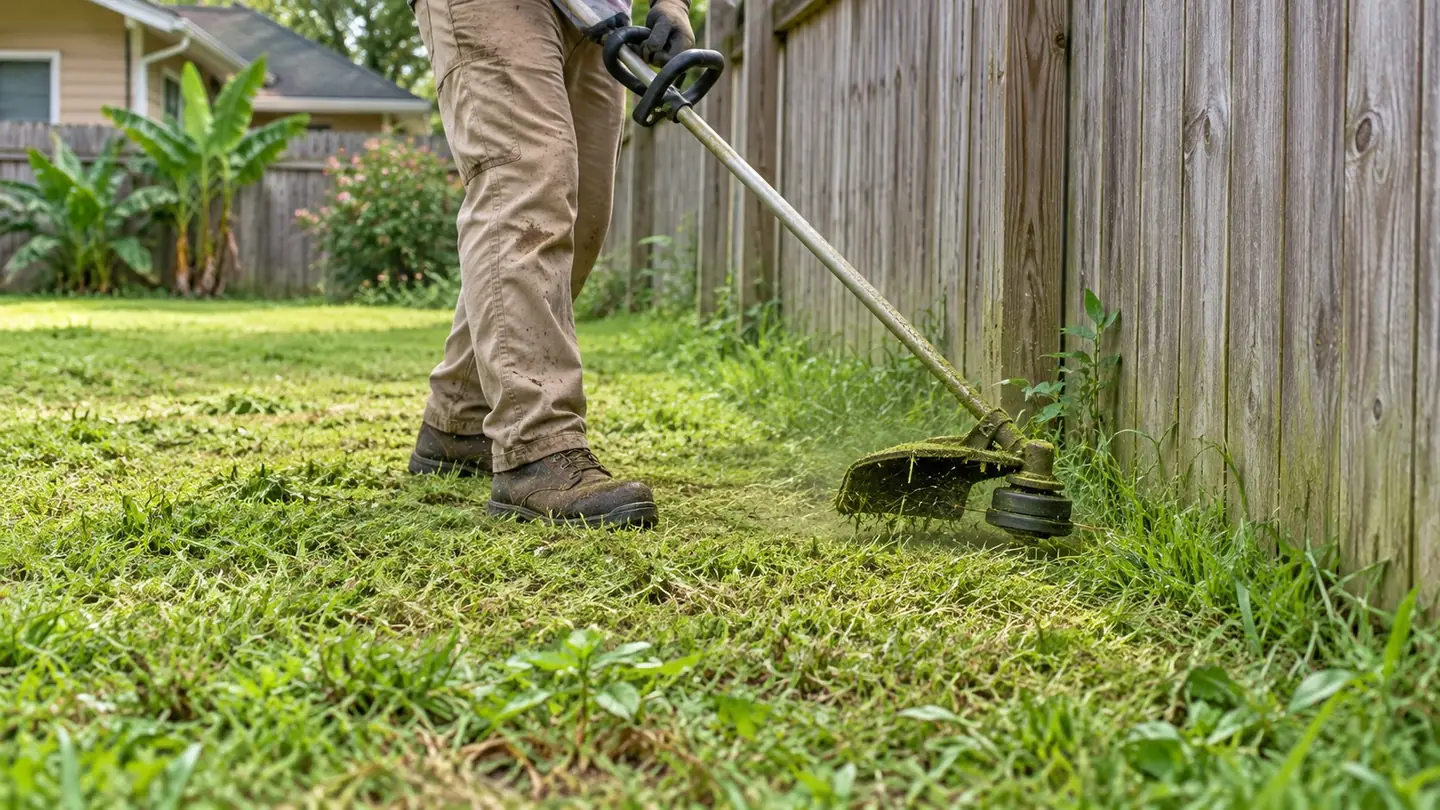
The open center of the lawn is a mowing task. Grass growing beside fence posts or in suitable tight areas is a trimming conversation. A paved patio edge may need edging, blowing or both, depending on the growth and the finish you want. Show each area rather than describing everything as the backyard.
A wooden fence is not a guide for cutting directly into the wood. Likewise, a young tree or a delicate border deserves room rather than an assumption that every blade must disappear around it. Point out vulnerable materials and places where you prefer an agreed margin. A clean-looking yard should still respect the things that make it your yard.
If the patio is your priority, photograph the line where the grass meets it. Mention whether there are ordinary mowing clippings to address or a separate collection of leaves, branches or old project debris. The quote needs to describe the requested work accurately; mowing and a larger cleanup should not be confused just because they happen in the same space.
Think about the lawn between visits
Happy Grass offers weekly and every-other-week options to discuss in Marrero. Begin with how the yard looks and feels before the next cut. Is it comfortable to use? Are the areas around the furniture getting ahead of you? Are you thinking about the lawn every time you open the back door?
Those observations give the scheduling conversation some substance. An interval is useful when it fits the lawn and the work, not simply because it sounds familiar. Your priorities may also change when a play area is added, a patio is extended or part of the grass is replaced with a planted bed. Let Happy know when the property changes.
If the grass has already become tall, separate the first visit from the maintenance routine. Tell us approximately when it was last cut and send photographs that show the whole area. There is no benefit in making the pictures look more manageable than the yard is. Honest information helps avoid a mismatch between an ordinary recurring visit and the first job needed to get there.
Share the areas that stay soft after rain
A fenced backyard may dry differently from the access route beside the house. Before service, mention where water remains or where the ground feels soft. The condition of the visible front grass does not settle what is happening behind the gate.
If wet conditions affect the work, Happy will need to discuss the next step with you. Do not plan around an unconfirmed replacement date or assume that clear weather makes every surface suitable immediately. Your latest description of the actual lawn matters more than the weather forecast by itself.
Mowing can improve the appearance of growth, but it does not diagnose persistent lawn problems or correct a drainage cause. Describe recurring issues as observations rather than expecting a grass cut to solve them. Fertilization, aeration, overseeding and pest control are outside the services Happy Grass offers.
Send a request that shows how you use the yard
For a useful Marrero lawn request, include the property address, wide front and backyard photographs, a gate picture and the tasks you want discussed. Add the space you care about most: the patio approach, the play area, the fence line or simply the whole yard looking maintained again.
If you are preparing for a gathering, mention the date early while leaving room to check route availability and ground conditions. A request can help start planning, but it does not reserve a place on the schedule. The work, quote and available timing still need to be confirmed directly with Happy.
Call or text 504-339-3571 and ask for Happy, or use the quote form. You can explain the yard in ordinary words. “I want to use the patio without thinking about the grass” is a perfectly good starting point. Let’s work out the access, the mowing and the happy little details together.
Count the grass sections, then connect them
A Marrero lawn request can be clearer when you count separate grass sections before estimating the size of the job. In a hypothetical layout, a driveway divides the frontage into two pieces and a patio separates another rear strip. Label those pieces once. Then show how the route between them works. A second photograph of the same strip from the opposite direction should retain the same label so that it does not look like extra lawn.
Now add the household use that changes the route. A parked vehicle may narrow one passage; a container may occupy another. Describe the condition expected when access is needed, and identify any preparation that has not yet happened. There is no benefit in presenting a clear route that only existed when an older photograph was taken.
Use that small area list when reviewing a proposed scope. Each included section should have a recognizable reference, while excluded spaces should remain understandable. This keeps the conversation about your actual arrangement of grass, pavement and household items. It avoids making the word “backyard” carry several different meanings at once.