
Three leaflets do not always mean clover
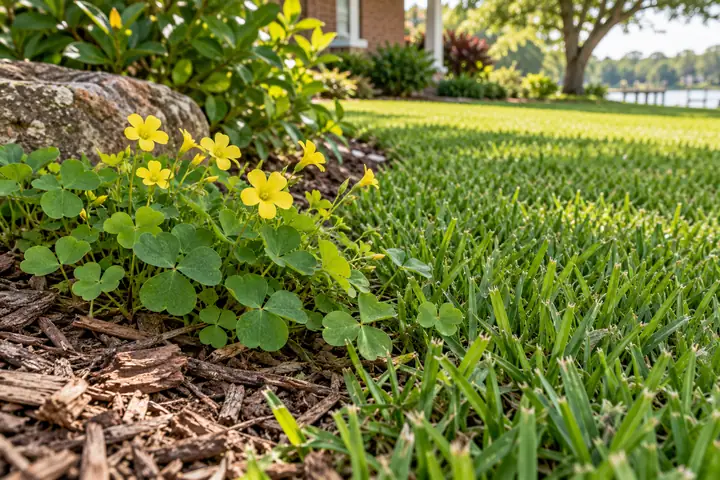
Small groups of three green leaflets often get called clover without a second look. Yellow woodsorrel invites a closer comparison. Its leaflets have a pronounced heart shape, with a notch at the outer end. When flowers are present, they are yellow with five separate petals rather than the clustered white head of white clover. Follow a flower to the plant carrying it, because mixed lawn patches can put unrelated blooms and leaves beside one another.
LSU AgCenter and Penn State Extension describe these heart-shaped leaflets as useful identification clues. Woodsorrel belongs to Oxalis, a group that includes several similar plants. A familiar shamrock-like outline does not establish the exact species. The practical first step is to distinguish the heart-shaped broadleaf from the desired grass and from clover, then seek more detailed identification when a management decision depends on it.
Compare the leaflet, not just the whole leaf
Look at one set of three leaflets, then inspect the outline of each leaflet separately. A heart-like notch differs from a rounded oval with a pale band. White clover commonly has the latter pattern. Do not let a broad impression of three green parts override the actual shape. An overhead view with all three leaflets open can be useful, while a folded or damaged set may conceal the comparison.
Penn State also distinguishes woodsorrel from other three-leaflet weeds such as black medic. These comparisons illustrate why the common label clover weed can be too broad for an accurate request. You do not need to memorize every relative before calling for help. You do need to preserve the details that allow someone else to distinguish them. A close view should show the leaf arrangement and the plant's stem, not only an isolated leaflet removed from its context.
Keep flowers and seed capsules in view
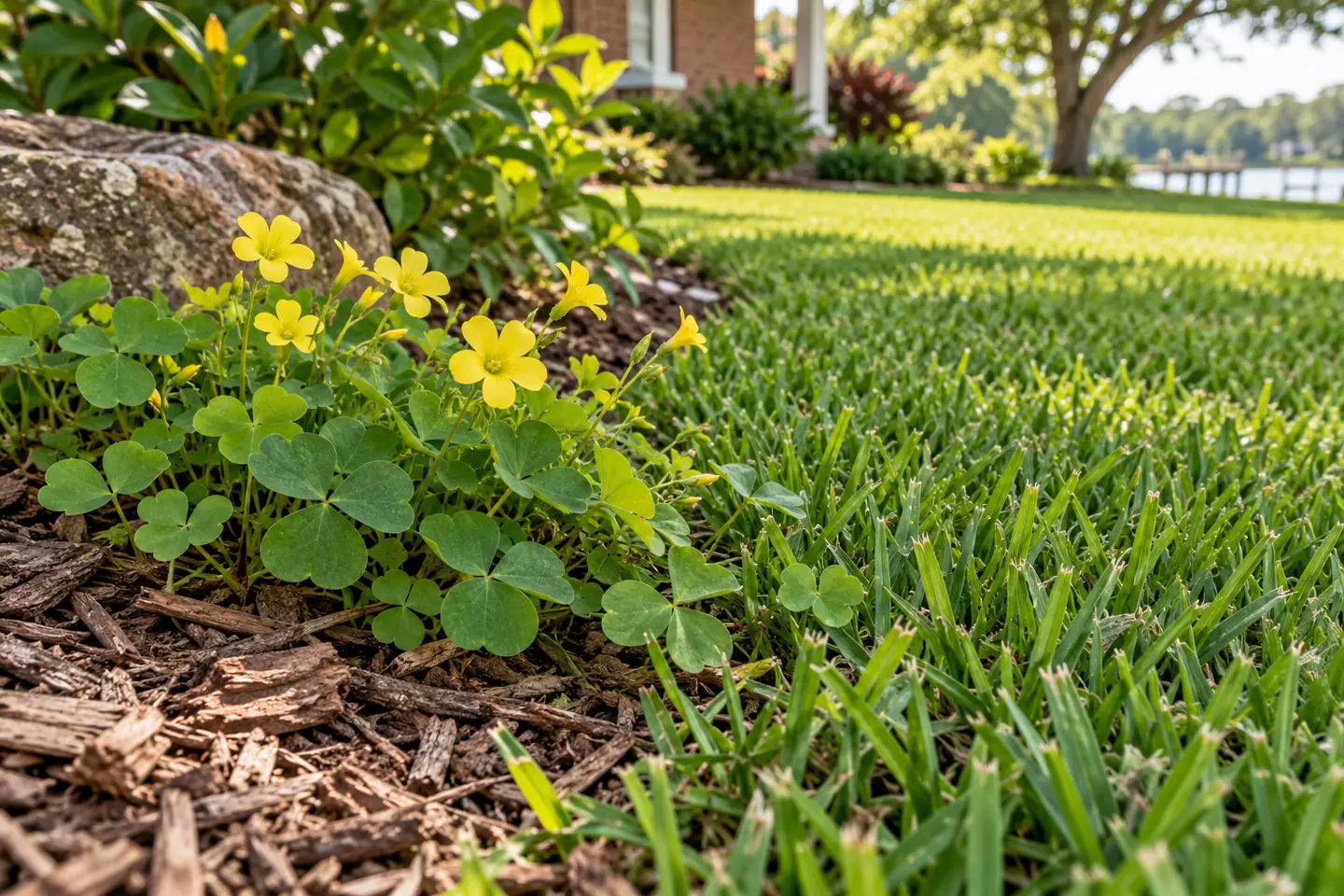
Yellow flowers are noticeable, but slender capsules may provide another useful feature. Woodsorrel capsules can release seed when mature. The relevant observation is whether the plant carries flowers, developing capsules or both. A patch without fresh blooms may still be at a reproductive stage. Do not judge its condition solely by whether yellow petals remain visible above the lawn on the day of the visit.
If identification help is needed, capture the capsule attached to the same stem as the heart-shaped leaflets. Avoid deliberately squeezing mature capsules as a yard experiment. The point is to record the structure, not scatter its contents to demonstrate it. For a removal discussion, mention the capsules before material is moved through the landscape. A small plant's reproductive structures can matter even when its leafy footprint seems modest.
Different Oxalis plants can need a closer distinction
Yellow woodsorrel and creeping woodsorrel are related-looking plants, but their names should not be treated as interchangeable. University of Missouri's identification resources compare the more upright yellow woodsorrel with the more prostrate creeping form, which may show reddish-purple leaves. Color alone is not enough to settle the difference. Look at how stems grow across or above the surface and whether the overall plant matches the reference being used.
Regional descriptions of life cycle can also differ, and several Oxalis species may be involved in casual household use of the name. Avoid promising that a patch must vanish after one particular season merely because one reference calls a related plant annual. When exact identity is uncertain, describe the observed form and seek local guidance. A management request should not rest on a life-cycle assumption copied from a plant that only looks similar.
Read the lawn-to-bed crossing
Woodsorrel may occur at the grass edge, among ornamental plants or in a container nearby. Mark these as separate locations. A mower working the lawn cannot be assumed to address plants growing through a ground cover or tucked beside a pot. Likewise, clearing a bed does not establish that the lawn edge is free of smaller plants. The site map should show where the weed grows, not merely which side of the yard looks untidy.
For example, note an upright group in the lawn, low stems through mulch and a separate plant at the base of a container. Do not assume all three are one connected plant or even one species without checking. That distinction helps choose what needs identification and what work can be quoted. A single request to remove all the shamrocks risks including intentional ornamental Oxalis or unrelated plants the owner meant to retain.
Confirm which shamrock-like plants are intentional
Some landscapes deliberately include ornamental Oxalis. Before requesting broad removal, identify any planted containers or bed sections you want protected. A homeowner's dislike of a lawn weed does not imply permission to remove every related-looking ornamental. If someone else in the household maintains pots or planting pockets, resolve that preference before the visit. The useful boundary is a specific retained plant or area, not an assumption that every heart-shaped leaflet is unwanted.
This can be handled with a simple yard sketch showing retained pots and affected lawn strips. Keep the instructions attached to locations rather than relying entirely on plant names that may be used differently by different people. When a plant is uncertain, label it for review. A small amount of clarity before work prevents a much more difficult conversation after an intentional ornamental has been mistaken for a weed.
Understand what a mowing change can show
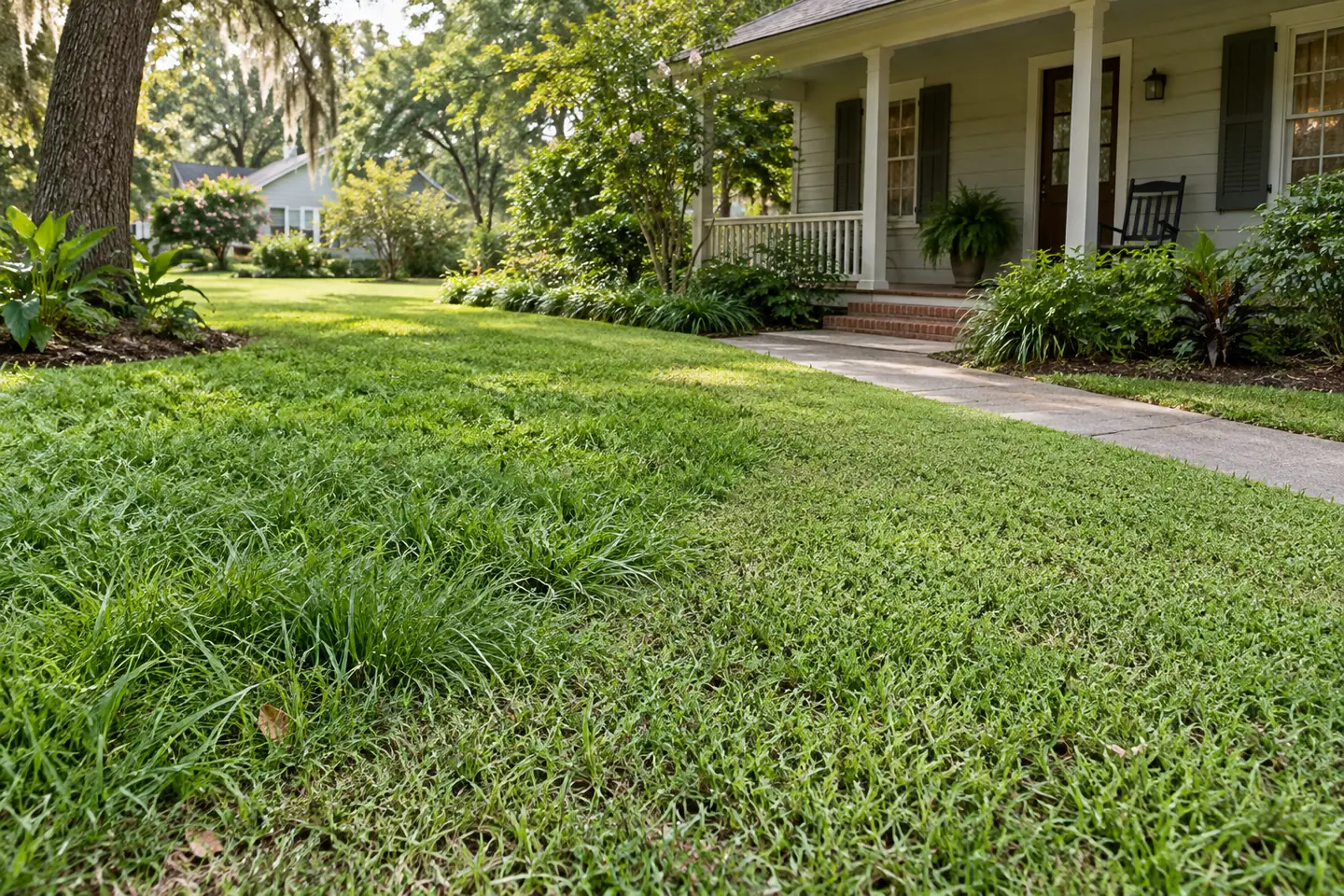
A cut may remove taller stems and flowers while leaving lower foliage visible. That changes the patch's appearance without proving the plant has been removed. Review the heart-shaped leaves, remaining stems and capsules separately from the evenness of the grass. If the agreed goal was ordinary mowing, a persistent broadleaf is a separate management question. If removal was agreed, inspect the specified area rather than judging only the disappearance of yellow flowers.
Lowering the whole lawn to reach a few short plants is not an identification strategy or a complete plan for the patch. The intended turf still needs suitable maintenance. Where woodsorrel occupies an open edge, note whether desired grass is continuous around it. The weed and the turf gap may need different discussions. Removing a broadleaf from an opening does not automatically explain why the opening formed or fill it with grass.
Make repeat observations comparable
Leaflets can change position, and flower visibility changes over time. Compare the same location with attention to stems and the actual plant boundary rather than using apparent leaf area as the only measure. An afternoon view and an evening view may not present the leaflets in the same way. If the plant seems smaller, check whether leaves have folded before concluding that growth was removed or a management step succeeded.
Record new seedlings separately from surviving older stems where that distinction is visible. A mature capsule-bearing plant near scattered smaller plants presents a different pattern from one isolated specimen. The observation does not prove the age or source of every seed, but it helps direct the next inspection. Keep the aim practical: determine what remains, where it occurs and which part of the agreed work needs review.
Separate a lawn specimen from a planted shamrock
Imagine heart-shaped leaflets in a decorative pot, a yellow-flowered plant in the turf and low reddish growth through a bed. A broad instruction to remove all Oxalis would ignore both the owner's intention and possible differences among the plants. Start by labeling the pot as retained or for review, then document the lawn and bed plants independently. A familiar leaf shape is a starting clue, not permission to treat every location alike.
The attached capsule is especially useful when flowers are absent. Keep its position in the plant view so the reproductive structure is not mistaken for a detached piece from another specimen. If no capsule is visible, say that rather than assuming the plant is not reproducing. The limits of the observation belong in the record.
- Ornamental container: establish the owner's preference before including it in any weed request.
- Upright turf plant: record leaves, flowers or capsules and the desired grass around it.
- Creeping bed growth: preserve its stem habit for comparison with related Oxalis references.
- Folded leaflets: compare at a time when their outline can be seen clearly.
This location-and-form comparison can prevent two common mistakes: protecting an unwanted lawn plant because it resembles a planted shamrock, and removing a wanted ornamental because an unrelated lawn patch needs attention.
Keep the request about the actual patch
For a woodsorrel conversation, describe the heart-shaped leaflets, yellow five-petaled flowers, capsules and upright or creeping form. Name any ornamental Oxalis to retain and list lawn, bed and container locations separately. Before considering a product, verify the target and desired plants at that site. This guide does not prescribe a herbicide or include ornamental-bed work automatically within a lawn-maintenance quote.
Happy Grass accepts requests around Harvey, Marrero, Gretna, Algiers, Belle Chasse and Westwego. Call 504-339-3571 and ask for Happy. Confirm available weed-control scope separately from mowing, edging and cleanup. Fertilization, aeration, overseeding and pest control are not offered. A thoughtful request gives those little heart-shaped leaves the right context, protects the plants you want and keeps the lawn visit tied to a clear, realistic result.