
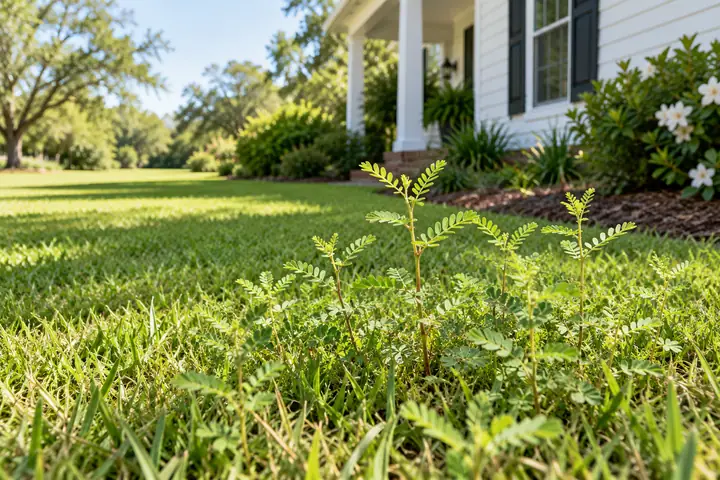
The little tree appearance can be misleading
A short upright weed with neat rows of tiny leaves can look like a miniature tree growing in the grass. Chamberbitter often earns the nickname little mimosa for that reason. The nickname is a useful description of appearance, but it is not a reliable botanical identification. Instead of deciding that every small fern-like plant is the same weed, look at the main stem, the leaf-bearing branches and the structures tucked beneath those branches.
LSU AgCenter identifies chamberbitter as a warm-season annual broadleaf with an erect growth habit. Its small leaves are arranged in two rows, and the fruit appear beneath the leaf-bearing branchlets. That underside view is the feature many porch-level inspections miss. A photograph showing only the leafy top may communicate the size of the patch while omitting the most useful clue. The plant deserves a closer look before it is shortened into a less recognizable stem.
Follow the branch from above and below
Begin with an intact plant at the edge of the group. Find the main upright stem, then a side branch carrying the small leaves. View that branch from the side and beneath, using an undisturbed branch where possible. Look for the row of small rounded fruit rather than assuming that leaf size alone settles the identity. Do not mistake a collection of unrelated seedlings in the background for structures attached to the branch you are examining.
North Carolina Extension notes a close look-alike, long-stalked phyllanthus. Fruit-stalk length helps distinguish the two: chamberbitter fruit are attached without the longer stalks seen on that relative. This is a reason to preserve detail, not a reason to diagnose a species from a blurry phone enlargement. When the underside is unclear or fruit have not developed, keep the identification provisional and ask an extension office what additional view or sample would help.
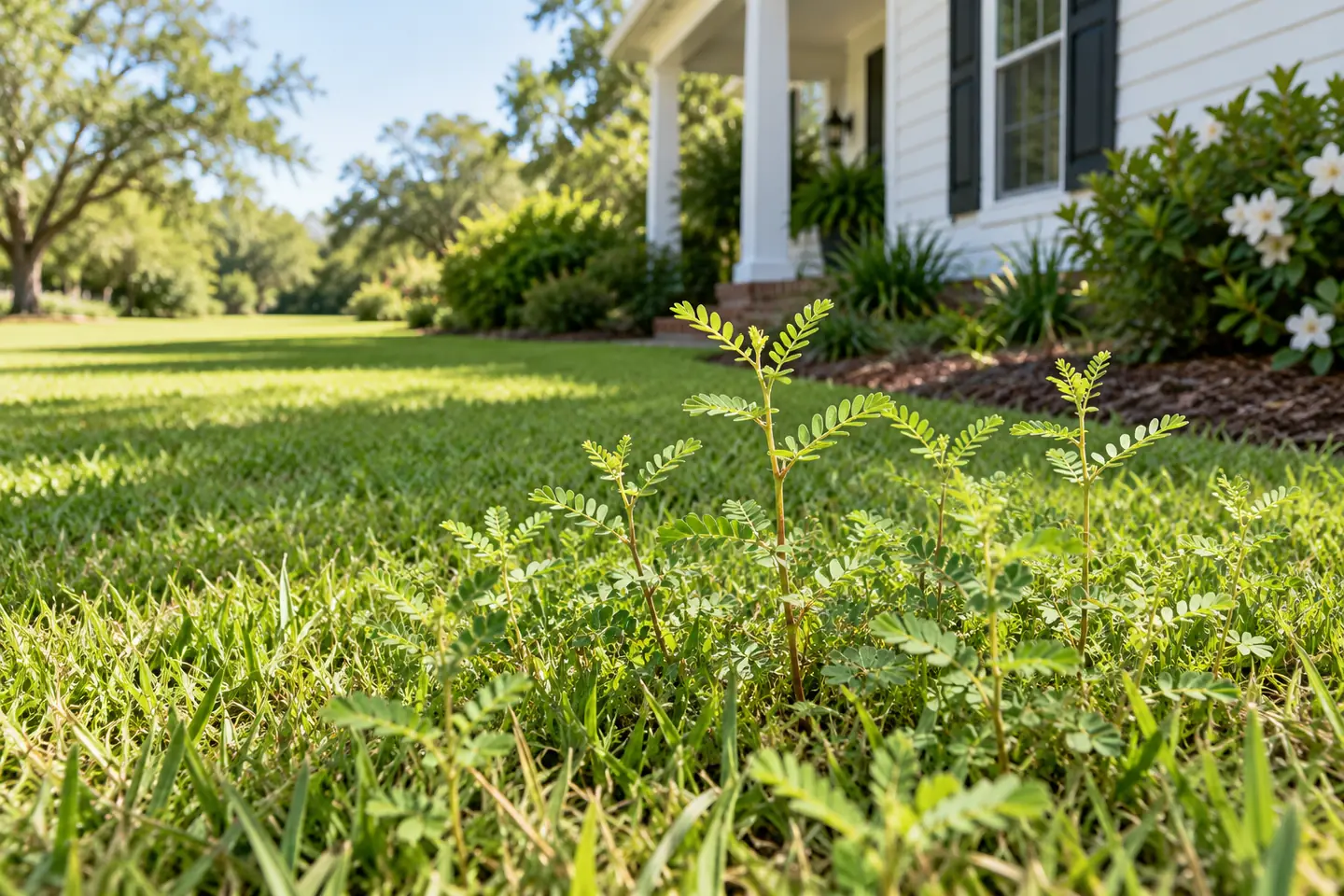
Why the fruit matters before the plant looks large
An upright plant is easy to notice after it rises above the lawn. The more useful inspection may happen earlier, while smaller plants are hidden among grass or mulch. North Carolina Extension describes fruit that expel seeds over short distances and emphasizes preventing seed production. That makes the presence of fruit a separate observation from plant height. A short plant with fruit deserves a different description from a new seedling with leaves only.
Do not assume that the absence of showy flowers means reproduction has not begun. Chamberbitter's interesting structures are small and easily overlooked. If the goal is to discuss manual removal before a mowing visit, say whether you have seen fruit and where the plants are concentrated. That allows the sequence of work to be discussed before everything becomes chopped material. It is more useful than discovering afterward that the small plants were already carrying fruit.
Read the lawn, bed and container as separate locations
Chamberbitter does not respect the edge between the grass and the planting bed. Map those areas separately: upright plants in turf, plants in exposed bed soil and plants in pots. A maintenance visit may include one of these surfaces without including the others. If the lawn group is addressed while fruiting plants remain beside it in a container, the whole landscape situation has not been reviewed. That is a scope gap worth identifying early.
Inspect the surface of a nursery pot before placing it among established plants. North Carolina Extension specifically recommends checking pots for this weed. The practical lesson is to look at what accompanies a plant, including small volunteers near its base. Finding chamberbitter in a pot does not prove where every lawn plant originated. It simply identifies another location needing attention and avoids making an unsupported accusation about a previous delivery, installer or neighbor.
Keep an arrival history without assigning blame
Write down recent changes such as new planting, moved containers or disturbed bed soil. Add dates if they are known. Then record where the first plants were actually noticed. These two timelines may overlap, but an overlap is not proof of a source. Seeds may already have been present, and small plants may have escaped notice. A useful record preserves uncertainty while showing which areas should be checked next.
For example, a row of plants following a newly opened bed edge deserves a closer bed inspection. A scattered group across an undisturbed lawn deserves a different map. Neither pattern alone identifies how seeds arrived. Avoid promising that removing one visible group will prevent every later seedling. The visible plants, the places where new seedlings appear and the history of the soil are related observations, but they answer different questions.
Distinguish a seedling flush from regrowth of an old stem
After work, new little plants may appear near the original location. Look carefully before calling them the same plants returning. A surviving cut stem and a separate seedling are different things. Record whether growth comes from an identifiable old stem base or appears as new small plants in surrounding soil. You do not need to prove a seed's age to make that distinction useful. Simply describe what is physically present.
That observation affects the review question. If old stems remain, ask what the agreed work was intended to remove. If new seedlings are appearing, ask how continued monitoring fits the management discussion. An annual weed can still recur through seed; annual does not mean one lawn visit guarantees a permanently clear area. The next inspection should look for small new plants as well as the conspicuous tall ones that first drew attention.
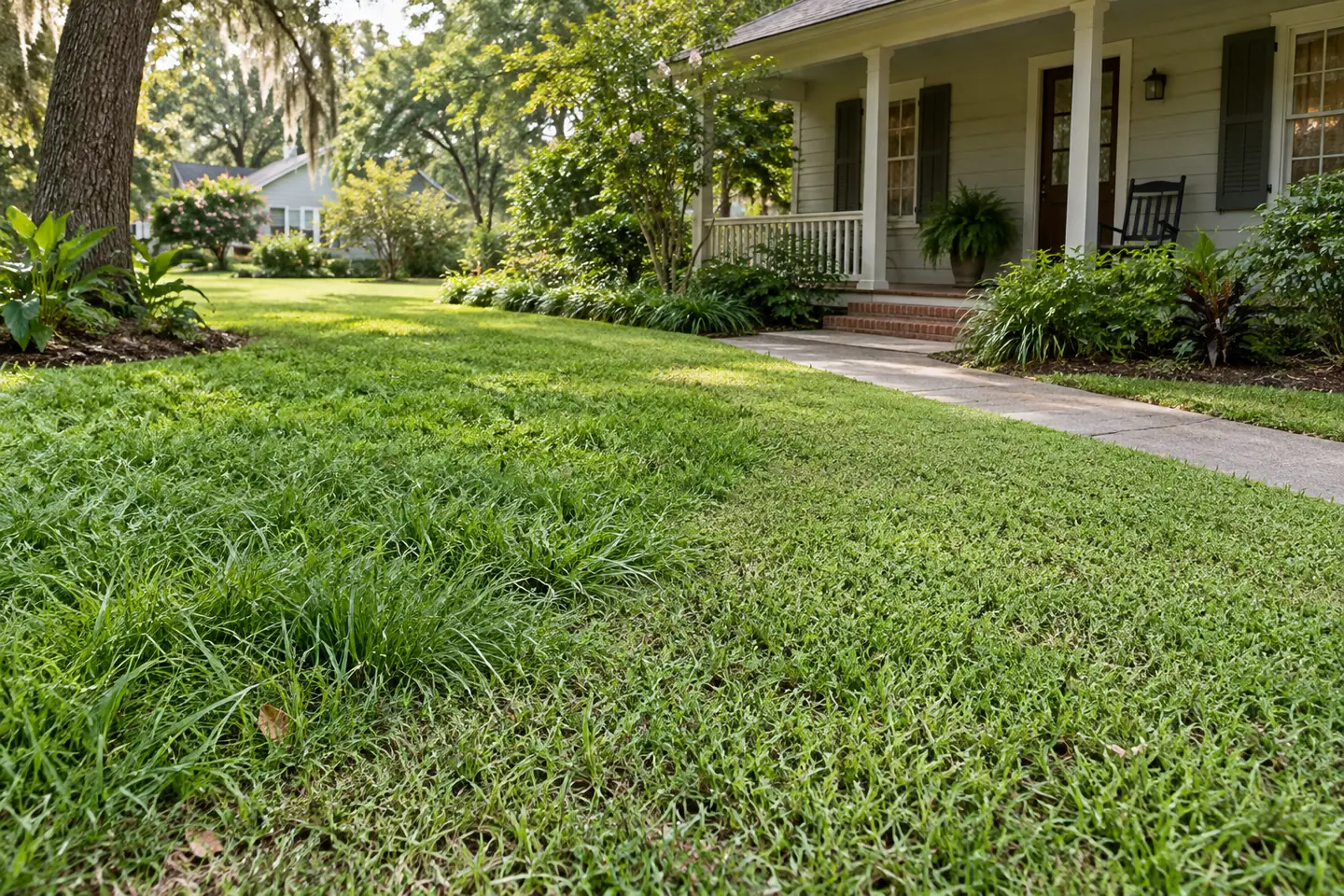
Mowing and removal have different endpoints
A mower can reduce an upright plant's visible height while leaving the question of removal unresolved. If you want chamberbitter reviewed before mowing, identify the affected strip clearly and discuss the order of tasks. A request to cut the grass does not automatically tell someone to inspect fruit beneath small branches, work through ornamental beds or remove plants from containers. Those tasks need to be named rather than hidden inside the word cleanup.
Where manual removal is being considered, the plant's position matters. One standing in open bed soil presents a different access problem from one tangled through a desirable plant's crown. Do not yank through ornamental roots to satisfy a quick lawn instruction. Ask which locations are practical to address and which need separate assessment. A small weed can create a larger landscape problem when a removal method ignores what is growing around it.
Use a search pattern that finds the small plants
Inspect the original center first, then its perimeter, then nearby pots and exposed soil. This keeps the search from ending with the easiest tall specimens. Look beneath the lowest foliage of desired plants where it can be done without damage. If access is blocked, record that area as unchecked rather than calling the whole bed clear. An honest unchecked location is more useful than a confident statement based on the visible front edge alone.
Use one simple notation for each location: leaves only, fruit visible or identification uncertain. Those categories describe the current observation without pretending to measure an entire seed bank. Revisit the same locations after an agreed interval or a noticeable new flush. The aim is to notice the plant while it is still a manageable conversation, rather than waiting for another set of miniature trees to stand above the grass.
A small underside inspection can change the order of work
Imagine a few upright plants at the lawn edge, a larger group in the bed and a small volunteer in a pot. If only the lawn group is noticed, the request may sound like ordinary tall-weed trimming. Looking beneath the branches can reveal fruit in the bed group as well. The useful change is not an exaggerated whole-yard alarm; it is recognition that several surfaces and plant stages need to be discussed before the work sequence is settled.
A second situation involves many tiny plants with no obvious fruit and one much larger fruiting plant. Record both stages. Removing only the large specimen would leave a different issue from leaving every plant untouched. Similarly, later small seedlings should be recorded as a new observation rather than automatically described as the old upright stems growing back.
- Main stem and two-row branches establish the plant's visible form.
- An underside view records whether fruit are actually present rather than inferred from height.
- A location note separates lawn, bed and container work.
- A stage note distinguishes small leafy plants from conspicuous fruit-bearing specimens.
Together these details explain why chamberbitter is worth noticing before the miniature-tree appearance becomes obvious above the entire edge. They make a focused inspection more useful than repeatedly trimming whichever plants stand tallest.
Bring the hidden detail into the service request
For a chamberbitter discussion, the useful information is the upright two-row appearance, whether fruit are visible underneath and whether plants occur in grass, beds or pots. Add any places you want protected, such as a newly planted border. If weed-control options are discussed, the exact plant, site and intended turf still need confirmation. This guide does not prescribe a herbicide or turn a lawn quote into a treatment agreement.
Happy Grass handles lawn-maintenance requests around Harvey, Marrero, Gretna, Algiers, Belle Chasse and Westwego. Call 504-339-3571 and ask for Happy. Explain that the little mimosa-like plants need review before the mowing sequence is settled. Happy Grass does not offer fertilization, aeration, overseeding or pest control. A clear plant-and-location request keeps the conversation focused on the actual work available and the small details that make chamberbitter different from ordinary tall grass.