
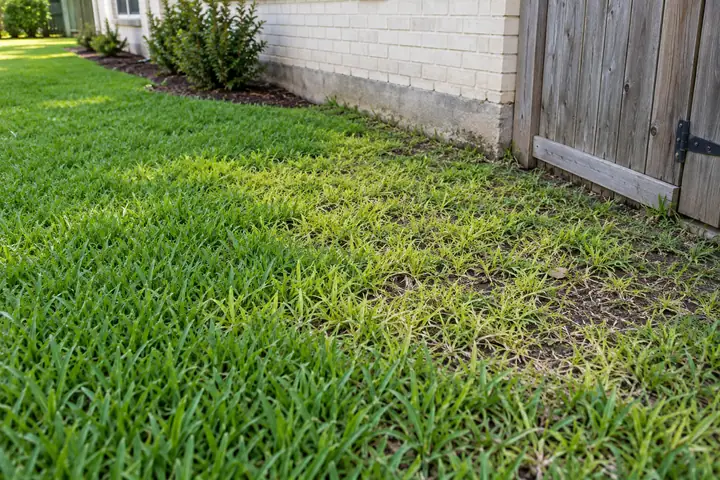
The visible leaves may be reporting a root problem
When grass turns yellow, it is tempting to look only for something wrong with the yellow blade. Take-all root rot asks a different question: what is happening to the plant below the canopy? LSU AgCenter describes yellowing and thinning that can develop into irregular brown areas, with compromised roots beneath. The foliage is the visible warning, but its color alone cannot identify the condition. A nutrition problem, another disease or insect injury may need consideration too.
Start by describing whether the lawn is losing density as well as color. Can you see more soil between plants than before? Is the yellowing confined to scattered leaves or shared by whole runners? Keep the answers distinct. A lawn that is pale but still dense and a lawn losing entire plants present different evidence. Neither should receive an automatic treatment name from a street-side glance, even when a neighbor recognizes a similar-looking patch from another yard.
Know the difference between a leaf, a runner and its roots
St. Augustinegrass and bermudagrass spread through horizontal growth that homeowners often call runners. Extension references use the word stolon for a shoot running along the surface. Leaves attach to the plant above, while roots anchor it below. These parts are connected, but they are not interchangeable. “The grass pulls out” leaves an important question unanswered: did a leaf detach, or did a runner lift with little root attachment?
Do not repeatedly tug large areas apart to find out. If you have already noticed loose runners, describe what lifted and what remained. If an adviser requests a sample, follow their instructions about retaining the connected plant parts. A handful of detached yellow blades cannot show the same condition as an intact piece of turf with its roots and transition to living grass. Understanding those parts makes the handoff clearer without requiring you to perform a destructive home diagnosis.
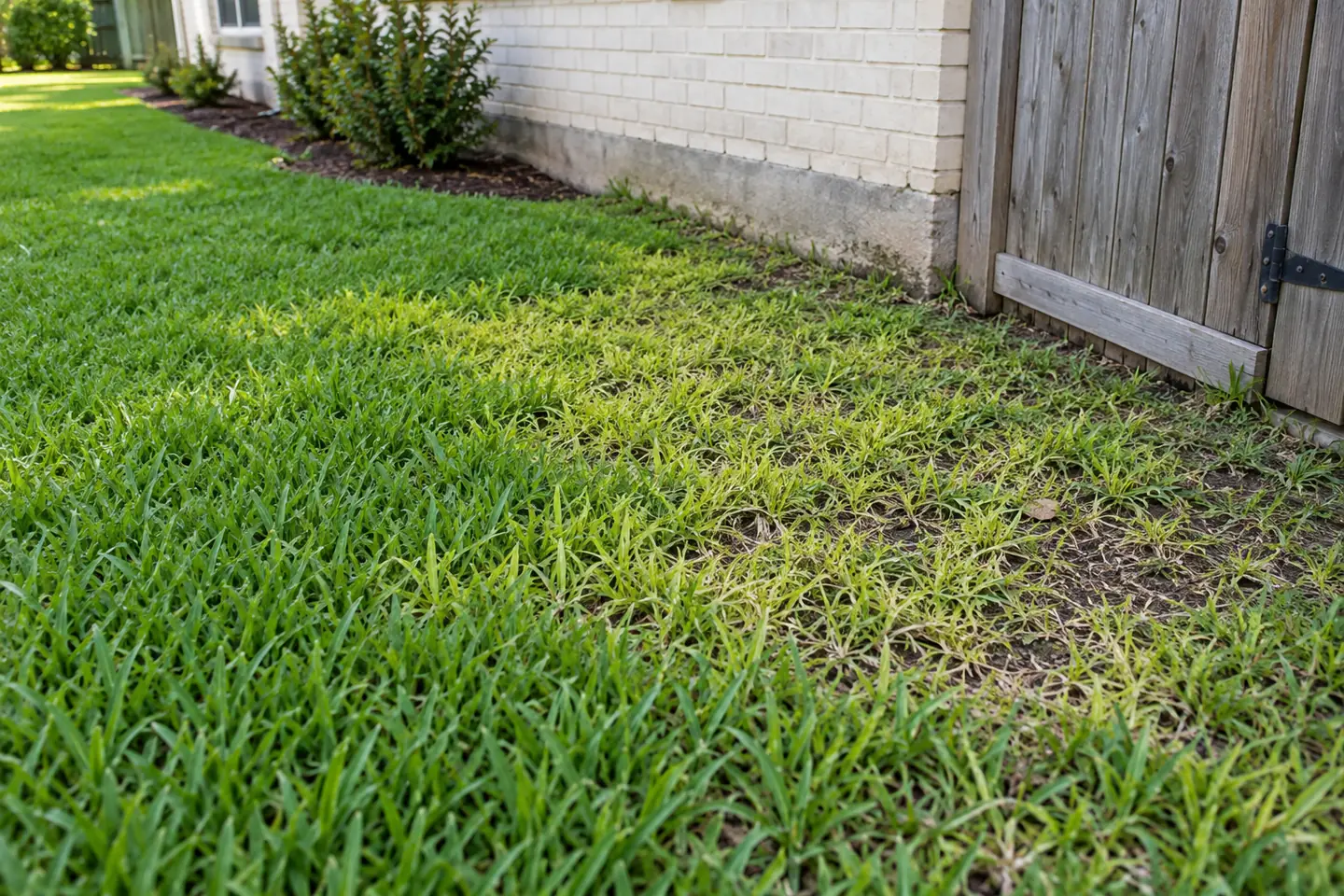
Root appearance is evidence, not a final verdict
LSU and Texas A&M describe affected roots as reduced, dark and deteriorated, with runners that may lift easily. Those findings can support an assessment, but dark roots in a casual photograph are not a complete confirmation. Soil sticking to the surface, the condition of the collected material and the part of the patch chosen all affect what a reviewer can see. Preserve the question rather than turning an ambiguous close-up into certainty.
If someone has already examined the roots, ask what was actually observed and how the cause was determined. Was it a visual field opinion, a diagnostic result or a description supplied by the homeowner? Each can contribute information, but they carry different limits. Keep the original wording when passing it to another provider. “Possible root disease, sample requested” should not become “confirmed take-all” by the time a mowing visit is arranged. A clear record protects the usefulness of the assessment.
Similar brown areas can involve different plant parts
Texas A&M specifically discusses confusion between take-all root rot, large patch and chinch bug injury in St. Augustinegrass. These possibilities do not call for the same response. Large patch guidance emphasizes injury around lower leaf sheaths, while take-all concerns the root system. An insect question requires its own identification. The shape and color seen above ground may not reliably separate them, and more than one problem can occur in a lawn.
For the homeowner, the practical step is to avoid making the first suspected cause exclude all others. Tell the assessor if a previous explanation was based only on the patch outline. Share any actual insect findings or plant observations without inventing a connection. You do not need to conduct every test you find online. Ask which competing explanation needs checking for your turf, and let that answer determine the next observation or sample. A focused comparison is more useful than trying unrelated remedies one after another.
The day symptoms appear may not be the day injury began
LSU explains that visible symptoms can become apparent when other stresses, especially heat or drought, coincide with an already compromised root system. Texas A&M also distinguishes conditions favoring fungal activity from the later expression of injury. That makes “it turned brown this week” useful timing information, but not proof that this week's weather or mowing caused the entire problem. Keep the first noticed date separate from the assumed start date.
Build a short sequence from events you know: a period of persistent wetness, a change in watering, the onset of warmer conditions, or a noticeable decline in density. Approximate dates are fine when labeled honestly. Do not assign an exact onset to an invisible root process. This distinction is especially helpful when several people manage the property. It allows them to discuss the evidence without deciding that the last person to touch the yard must have caused everything now visible.
Review stress without turning every condition into a diagnosis
Extension guidance connects serious take-all problems with unfavorable growing conditions and management stress. The useful homeowner question is which of those conditions is actually present at this site. A shaded lawn is not automatically a diseased lawn. A wet period is not automatically an irrigation fault. And soil pH cannot be read from yellow grass. Keep measured information, observed conditions and untested possibilities in separate parts of the discussion.
If a soil report exists, retain its date and the location represented by the sample. A result from a garden bed is not necessarily a result for the lawn. If no report exists, ask whether testing would answer a specific question before making amendments. Avoid copying a pH adjustment from a regional disease article into a blanket yard prescription. The assessment needs to account for the actual soil, grass and existing inputs, with any separate work provided by someone appropriately qualified for it.
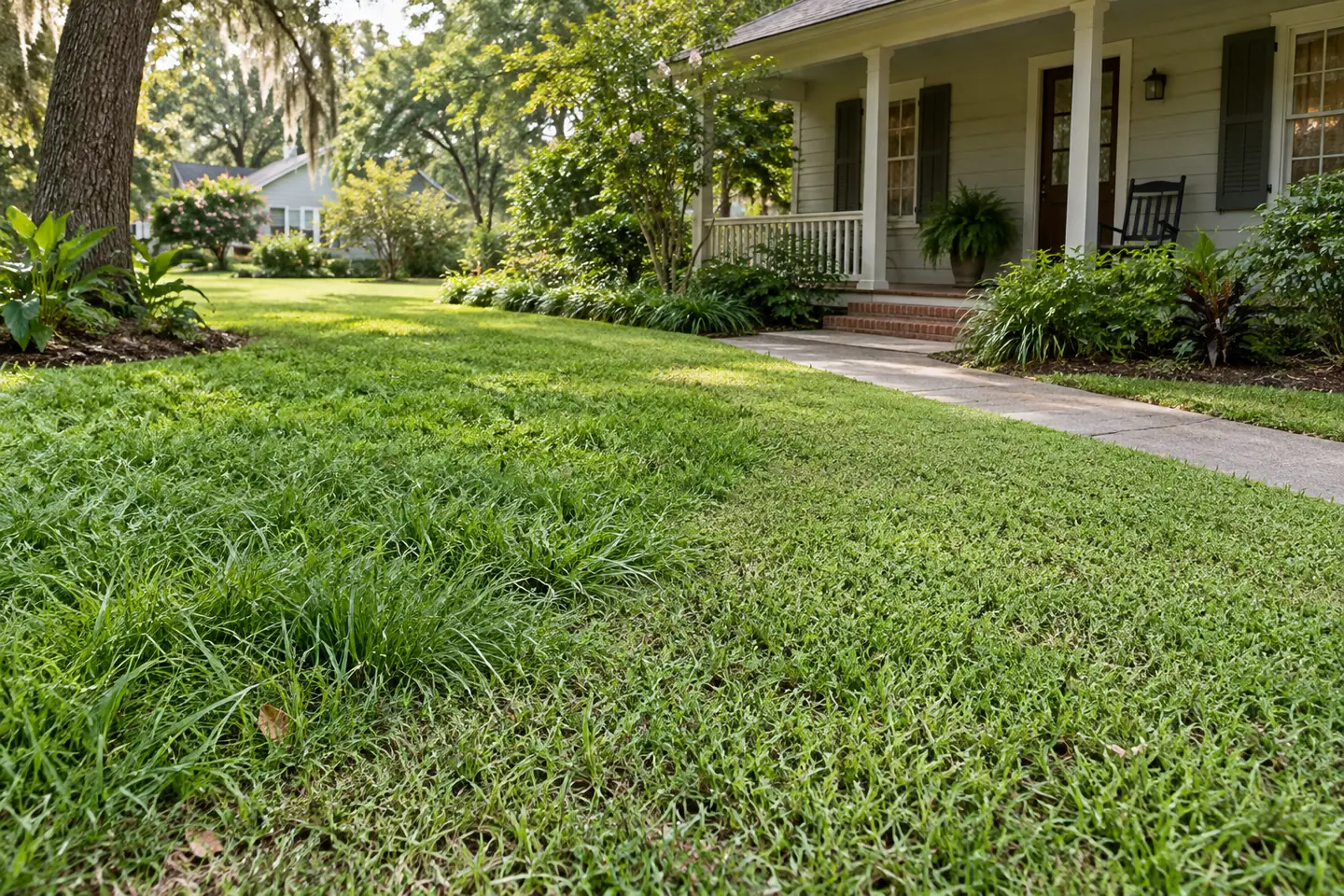
Protect the remaining turf while the question is answered
A root concern changes how you describe a maintenance request. Identify areas where runners are loose, the stand is thin or the surface is easily disturbed. Ask whether a diagnostic visit needs to occur before mowing, and share any supplied instructions about the remaining grass. Cutting the lawn to make every yellow leaf disappear does not address an assessed loss of roots. The height and timing still need to fit the living turf and conditions.
Texas A&M notes that movement of infected grass, soil or thatch is a more relevant spread concern for this disease than ordinary mower or foot movement. That is a reason to discuss material movement explicitly if renovation or sampling is planned. It is not a reason to declare every routine visit harmless under all conditions. Keep the maintenance decision grounded in the actual assessment, surface condition and proposed work rather than borrowing rules from a different leaf disease.
Ask for a root-specific sample plan
Before collecting material, contact the receiving diagnostic resource and explain the root concern. Ask which part of the affected area they want, what connected roots and soil should remain, and how to prepare and deliver it. Follow those current instructions. Do not assume that washed roots, dry clippings or a completely dead center will provide everything needed. A sample plan should be tailored to the question the service is being asked to resolve.
Include the turf identity if known, the symptom sequence and any recent products or soil changes. Keep photographs showing the sample location before removal. These details allow the specimen to be related to the lawn rather than arriving as an unexplained bag of plant material. Once the result is supplied, ask whether it confirms a cause, rules out a particular possibility or recommends further investigation. An inconclusive result should remain inconclusive in the next service conversation.
Make recovery a separate part of the plan
After an assessment, ask what outcome will be reviewed next: stabilization of the affected area, fewer newly declining plants, surviving runner growth or a later repair decision. Suppressing a cause and rebuilding a usable turf stand are different stages. Do not promise a date for full coverage based only on the size of the brown area. The condition of surviving plants and the supplied plan need consideration.
If separate corrective work is recommended, keep its provider, scope and timing clear before arranging routine maintenance around it. A homeowner can then ask a concrete question such as whether the back corner should be left untouched until the next review. Across Harvey, Marrero, Gretna, Algiers, Belle Chasse and Westwego, a root problem deserves that level of clarity. The lawn's yellow leaves may start the conversation, but a useful answer follows the question all the way to the plant parts involved.
Keep the service agreement clear
Call 504-339-3571 and ask for Happy to discuss the available lawn-maintenance work. This guide is educational and does not create a diagnostic, fungicide, fertilization, aeration, overseeding or pest-control service. Share any professional assessment and specific mowing instructions before the next visit so the agreed maintenance can be discussed accurately.