
An orange shoe is the beginning of a question
Sometimes the first lawn concern is on the shoes: an orange coating appears after walking through grass. Turf rust can produce that sort of residue, but the stain by itself is not an identification. The next useful question is where the material came from. Did it transfer from standing leaves, from loose soil, from a recently applied material or from a nearby surface? Keep the observation connected to its actual source before deciding that the entire lawn has a disease.
University Extension descriptions of rust emphasize spore-producing pustules on leaves. That provides a specific feature to look for when explaining the concern. Compare the blades in the area that produced the residue with grass elsewhere. You do not need to walk repeatedly through the whole yard to collect a heavier coating. One clear description of the leaves and the location is more useful than spreading an unidentified powder around while trying to prove its color.
Look for raised features on living leaves
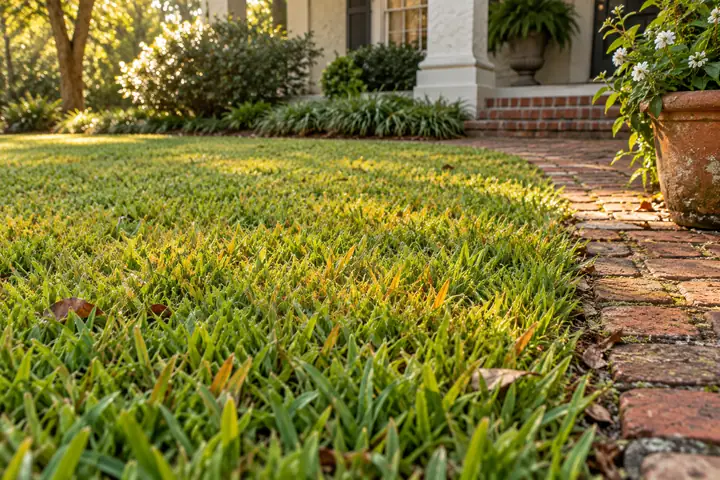
UC IPM describes small yellow marks that develop into elongated orange or reddish-brown pustules. These are different from a blade that is uniformly yellow or a bare patch covered in orange soil. The word pustule describes a raised spore-producing feature in this context; it is not simply another name for any brown spot. A close inspection should therefore describe the surface as well as the color.
If the grass has only dried tips, say so. If material is resting loosely on leaves but you cannot see where it originates, retain that uncertainty. A photograph should show the supporting blade, not only a tiny orange blur at maximum digital zoom. It can help to place the leaf against a plain background without filtering the image. The goal is to let a reviewer see whether the orange material and the plant feature belong together, not to make a photograph match an illustrated disease guide.
Separate a spore coating from a loss of turf
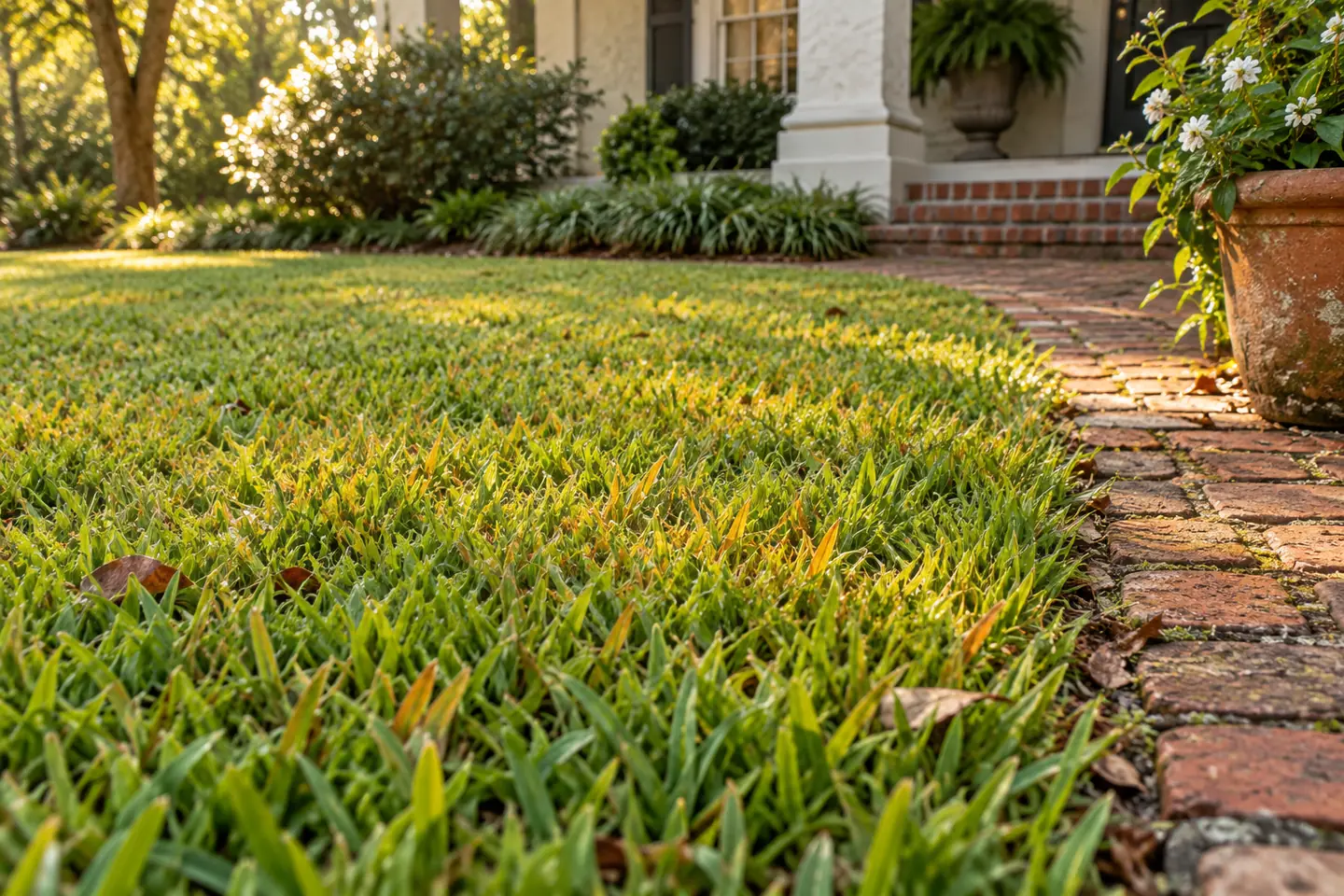
Rust can make a canopy look yellow, reddish or brown, and abundant spores can coat shoes or clothing. The University of Missouri describes an irregular pattern of yellowing rather than a requirement for neat circles. A dramatic coating does not directly measure how much turf has been lost. Look separately at living leaf cover, thinning and any areas where entire plants appear to be missing.
This distinction keeps the conversation proportionate. “There is orange residue but the stand remains dense” and “the grass is becoming sparse with bare ground showing” are different reports. Neither should be shortened to “the lawn is dead.” If the density is changing, note where that is happening and whether it overlaps the leaves with visible pustules. A separate area of turf loss may need its own explanation. Do not let the most noticeable color absorb every other condition into a single assumed cause.
Why slow growth matters to the appearance
Illinois and Missouri Extension associate rust problems with turf growing slowly under stress. The practical importance is the balance between affected older foliage and replacement growth. A lawn that is producing little new leaf tissue may continue to display the same marked leaves. This is different from assuming that every day of visible powder represents a new, equally large amount of injury. Review the growth condition as well as the color.
Look at what has actually happened between cuts. Has the lawn produced enough growth to require mowing, or has the interval mostly passed without height change? A taller patch of a different plant does not establish that the turf itself is vigorous. Keep the grass species and any weeds in the comparison separate. If a professional recommends changes intended to support growth, ask what response will be reviewed and when. A greener photograph alone may not explain whether the original leaf condition is changing.
Dry conditions and wet leaves can belong in the same account
Rust guidance can refer to both slow growth during dry conditions and moist periods that favor infection. These observations describe different parts of the process. Moisture on a leaf surface is not the same measurement as water available to roots. A lawn can have morning dew while still growing poorly. Do not turn either observation into proof that the irrigation system is doing too much or too little.
For an assessment, distinguish known watering events from visible dew and from any measured or observed ground condition. If the open lawn dries quickly while a shaded section keeps wet foliage, that comparison is worth mentioning. It does not automatically establish why the rust appeared. Likewise, a spell of dry weather does not identify the cause of every orange leaf. The useful discussion connects actual conditions to the correct grass and observed symptoms, then considers whether a specific management change is justified.
Check the host before borrowing a regional calendar
Many rust references discuss cool-season grasses such as tall fescue, Kentucky bluegrass or perennial ryegrass. UC IPM also lists zoysiagrass among susceptible turf. A West Bank homeowner should not assume that the calendar and growth pattern described for an Illinois lawn will apply unchanged to the grass beside the back porch. Confirm the host and use local guidance for the timing of any separate management work.
This is especially relevant in a mixed lawn. An orange-looking section may involve one grass while neighboring foliage responds differently. Ask whether the marked leaves belong to the intended turf or to another grass in the stand. A comparison that ignores the plant identity can make a selective symptom look like random lawn failure. Keep species uncertainty explicit until it is resolved. A homeowner does not have to know the cultivar name to begin, but an honest “not sure” is better than choosing one because it appears in a search result.
Do not use color to prescribe a nutrient input
Extension publications discuss fertility as one factor affecting turf vigor and rust severity. That does not make orange powder a direct nitrogen test. Soil information, the actual grass, the time of year and the lawn's previous inputs all matter to an appropriate recommendation. Retain product records if available. A weed-and-feed application and an unfertilized lawn should not be described as the same history, even if both currently look pale.
If someone suggests a new input, ask which assessed condition it addresses and who will perform the work. Avoid copying a fall fertilizer schedule from a cool-season reference into a warm-season lawn plan. Also avoid treating repeated applications as a way to diagnose by response. The rust discussion should lead to a supported decision about the site, not a race to change the color before anyone has identified the grass and the material on its leaves.
Discuss clippings and cleanup as actual work
Regular mowing and management of affected clippings appear in Extension guidance about rust. For a service visit, identify the area and ask how any supplied assessment instructions fit the existing agreement. Collection is a distinct request from simply cutting the lawn. Discuss it before equipment arrives, along with any relevant cleanup of clippings from equipment. Do not assume a standard visit includes every practice mentioned in an educational reference.
The visible powder can also lead to a household question about keeping residue off a porch or indoor floor. Explain the route that is causing the transfer and keep surface cleaning separate from the lawn assessment. A neatly blown path does not prove the leaf condition has ended, and persistent color on an old pair of shoes does not prove new disease activity. Judge the grass by current plant observations rather than by residue that has already been carried elsewhere.
Review new leaves, not just yesterday's stain
At follow-up, compare whether marked leaves remain, whether new foliage shows similar features and whether the stand's density is changing. Include any mowing or other work performed between observations. This keeps a change in appearance from being confused with a confirmed change in cause. If the observations no longer fit the original explanation, return to the assessor instead of extending the label indefinitely.
A useful outcome is a lawn plan that accounts for the actual grass and growth, with a clear answer about the orange material. In Harvey, Marrero, Gretna, Algiers, Belle Chasse and Westwego, that starts with the same modest habit: follow the residue back to the leaf before naming the whole yard. There is no need to panic over a dusty shoe, and no need to promise that a fresh cut will answer every plant-health question.
Confirm the maintenance request with Happy
Call 504-339-3571 and ask for Happy. Share the area under review and any relevant mowing instructions when discussing available maintenance. Educational information about rust does not add diagnosis, fungicide treatment, fertilization, aeration, overseeding or pest control to the agreed lawn visit.