
Start with evidence of exposure
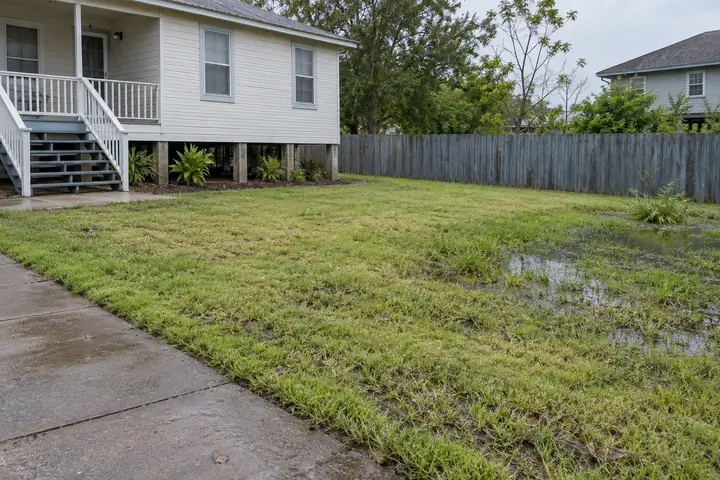
A brown lawn near the coast is not automatically a salt-damaged lawn. The useful starting point is a known event or source: confirmed salty floodwater, a tested irrigation supply or another documented input. Proximity to a waterway does not establish what reached the roots. Before naming salinity as the cause of decline, separate a real exposure history from a possibility suggested by the location of the property.
Describe what you know without filling gaps. Was water observed entering the grass from a particular direction? Is there a report about the water used for irrigation? Was material recently applied to only part of the lawn? These are different kinds of evidence. If none is available, an appropriate assessment may still consider salts, but it should remain one question among others. A useful lawn plan begins with the actual site, not a regional assumption attached to every pale patch.
Salts can complicate the plant's access to moisture
LSU AgCenter explains that soil salts can make moisture less available to plant tissues and interfere with nutrient uptake. This is why wet soil and a stressed plant are not mutually exclusive observations. The visible turf cannot tell you the salt concentration by color alone. A lawn may look drought-stressed for several reasons, and salinity is not confirmed simply because watering has failed to produce the expected response.
Keep three questions distinct: how much moisture is present, what its quality is, and whether the plant's roots are functioning. Adding water answers none of those automatically. If a salinity concern is being reviewed, ask which condition has been assessed and what measurement or history supports it. That prevents a seemingly simple instruction to water more from replacing the more useful question of what is actually happening in the root zone.
Water quality and soil condition are different findings
LSU's salinity guidance recommends considering irrigation-water quality as well as the soil. A result from one does not automatically describe the other. A water source may have changed after an event, while salts from earlier exposure remain in a soil profile. Conversely, a soil sample taken before a source change cannot establish the quality of the water being used now. Retain the dates and represented locations with both results.
When seeking advice, distinguish: – Water directly contacting leaves during an exposure. – Water repeatedly used for irrigation afterward. – The soil area represented by a sample. – The depth and collection method requested by the testing service. – Any changes made between sampling and the next observation.
This information helps an adviser interpret the findings. It is not an invitation to invent exact exposure concentrations or collect a sample by an unrelated method. Ask the receiving service which test and preparation fit the question.
A wet lawn does not guarantee salts have moved away
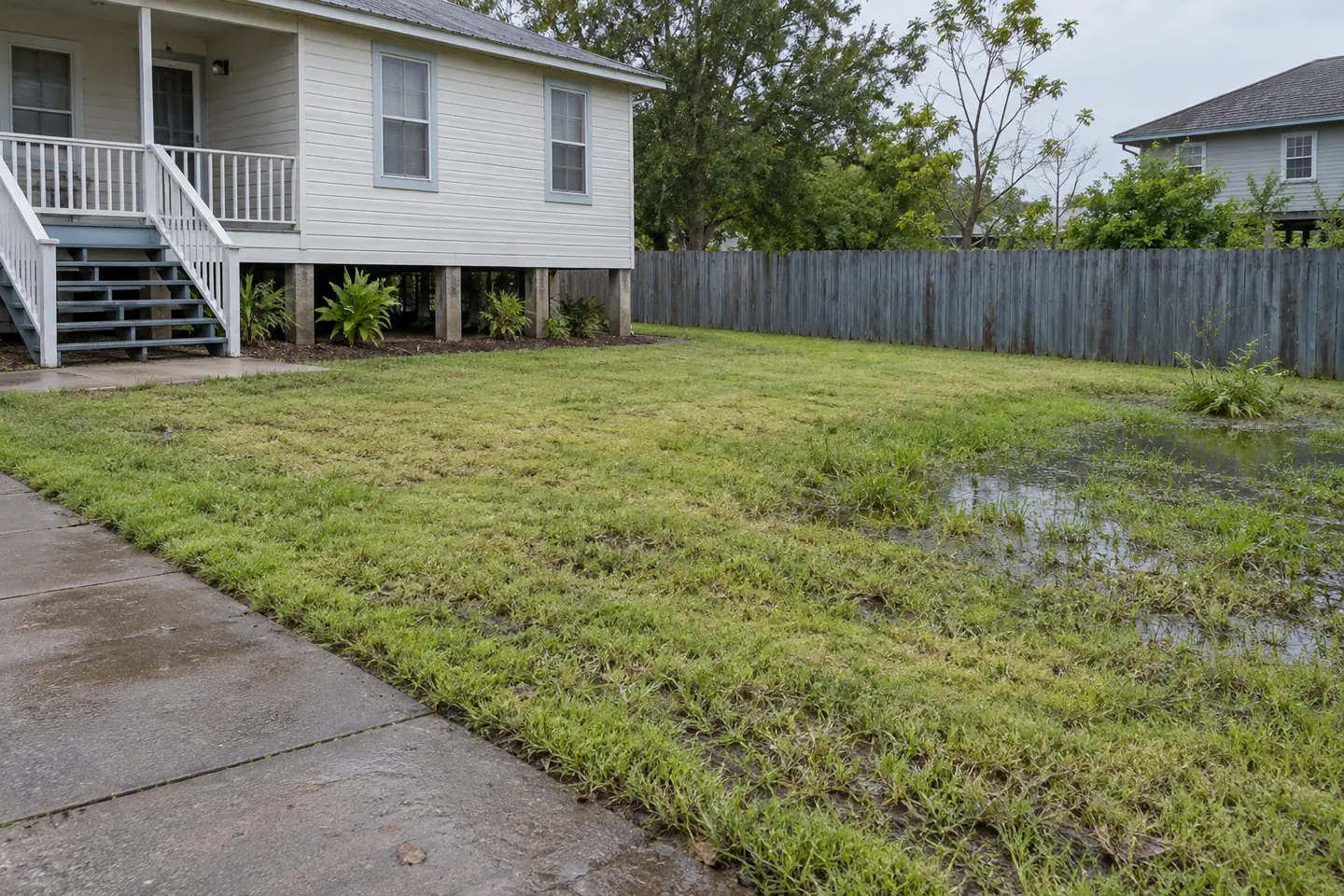
Moving accumulated salts out of the root zone depends on suitable water and a pathway for that water to move through the soil. LSU cautions that poor drainage can make the process slow and that prolonged waterlogging can itself harm turf. Surface wetting and successful movement through the profile are therefore different outcomes. A puddle is not proof that a useful flushing process has occurred below it.
If a separate corrective plan includes water management, ask how drainage and water quality have been considered. Avoid repeatedly saturating the entire yard based on a generic internet instruction. The area under review may differ from the rest of the property, and a water source should not be assumed suitable without evidence. The plan should explain what it is trying to change and how progress will be checked, with actual measurements or supported observations rather than the amount of water applied alone.
Different salt situations should not be treated as interchangeable
University of California guidance lists several possible salt sources, including poor-quality irrigation water, excessive fertilizer inputs and certain amendments. A lawn's problem is not necessarily a consequence of seawater. At the same time, a product application history does not prove that every later symptom is salt injury. Keep the source hypothesis connected to the actual treated area, timing and findings.
This matters when a homeowner receives conflicting advice about an amendment. One person's recommendation may address a particular soil condition while another is discussing general soluble salts. Ask what the recommendation is intended to correct and which evidence supports it. Do not treat the word salt as a complete description of soil chemistry. A qualified interpretation can distinguish the relevant question without requiring the homeowner to turn a lawn-maintenance request into a guessed soil-treatment program.
Relative tolerance is not immunity
LSU's turf guidance describes differences in salinity tolerance among grasses. A more tolerant species can still be affected, depending on the exposure and conditions. A less tolerant grass should not be declared unsalvageable from its name alone. Identify the actual turf and ask how the findings apply to it. In a mixed lawn, contrasting responses may involve different grasses rather than an uneven treatment effect across one species.
Keep any replacement decision separate from the first assessment. Choosing another grass involves more than salt tolerance: the site, use and other growing conditions still matter. A disease photograph or a tolerance table cannot decide the entire renovation plan. The immediate homeowner task is to preserve the existing identity and condition accurately enough for an appropriate recommendation, without promising that changing species would eliminate every future lawn problem.
Surface deposits are clues with limits
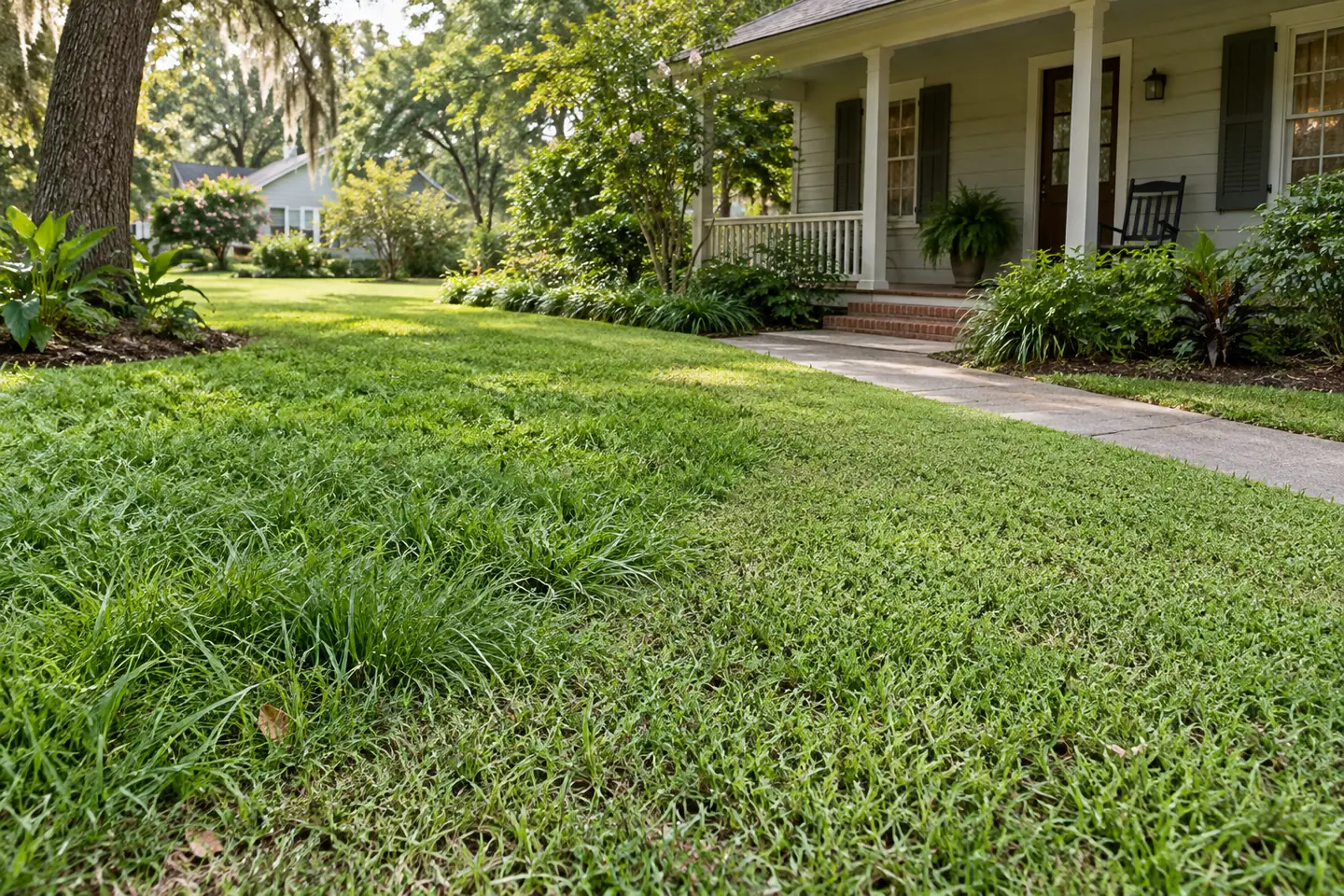
A pale deposit, a dark crust or discolored leaves may draw attention to an area, but appearance alone does not measure salinity. Surface material can have several origins. Do not taste it or use a casual household experiment as a substitute for an appropriate test. Describe where it is, whether it appeared after a known event and how it relates to the affected grass. If identification is needed, ask what sample the receiving service wants.
Also distinguish material resting on the lawn from a condition within the soil. Removing a visible deposit may change appearance without answering the root-zone question. Conversely, no obvious surface deposit does not establish that salts are absent. A useful review stays with the actual exposure and measured or assessed condition. It does not require the lawn to display a dramatic white outline before a legitimate water-quality concern can be considered.
Compare exposure areas without overextending the finding
If only one irrigation zone used the questioned source, keep that boundary in the assessment. A test representing that zone should not automatically be described as a result for the entire property. If the whole lawn experienced the same known exposure but only one section declined, the difference still deserves investigation. Grass identity, drainage and other conditions may change the response. Neither pattern proves a cause alone. Matching the sample, source history and visible boundary helps the adviser decide whether one explanation is sufficient or another question remains in a different part of the yard.
Keep mowing separate from environmental recovery
Before a maintenance visit, explain any known exposure, soft ground, deposited debris or area awaiting assessment. A fresh cut may improve the finish while leaving the soil question unresolved. Do not use mowing as a test of whether salt injury has been corrected. The amount of living grass, current growth and surface condition should guide the agreed work alongside any instructions from the assessor.
If an event left debris or an unsafe route, resolve that access issue separately before routine mowing. This guide does not determine whether floodwater or deposited material is safe to contact. Follow the relevant local guidance for the actual event. The maintenance provider needs a clear description of the remaining work, rather than an assumption that ordinary cutting includes environmental cleanup, soil amendment or a guarantee that the lawn will recover after a particular number of visits.
Review the result against the original question
An assessment may recommend a later soil or water check, observation of surviving growth or another specific review. Keep that endpoint with the plan. A greener patch after rain is encouraging, but it should not be rewritten as a measured reduction in salinity unless testing establishes it. Likewise, persistent old brown tissue does not explain whether the current root-zone condition has changed. Compare the evidence relevant to each claim.
For a property in Harvey, Marrero, Gretna, Algiers, Belle Chasse or Westwego, an honest exposure history and well-defined testing question are more useful than assuming that every local lawn shares a salt problem. Identify what happened, what was measured and what work is actually proposed. That gives the grass and the homeowner a practical way forward, with maintenance connected to the recovery discussion instead of being asked to substitute for it.
Discuss the available lawn work
Call 504-339-3571 and ask for Happy. Share relevant assessment instructions before arranging maintenance. This educational guide does not offer water testing, salinity diagnosis, environmental cleanup, fertilization, aeration, overseeding or pest control. Separate specialist or corrective work requires its own appropriate provider and agreement.