
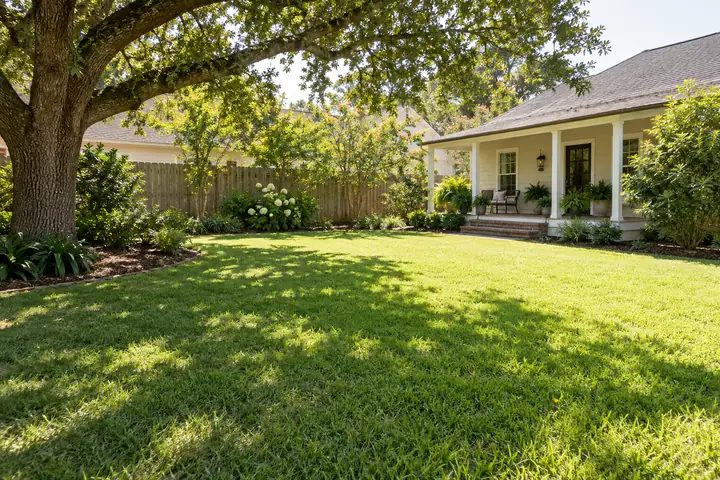
One address can contain several growing environments
An open front lawn, a side strip beside a tall fence and grass under a mature tree do not receive the same exposure. They may still share a watering program. Begin by identifying those areas separately instead of describing the whole property as sunny or shaded. A simple sketch can show where buildings and trees influence the turf. Keep the actual grass identity and condition with each area. The useful question is whether the existing watering arrangement fits those differences. It is not whether one side should always receive a fixed fraction of the other's schedule. The layout, soil, roots and equipment need to be considered before that kind of instruction can be justified.
Shade changes more than the appearance of a photograph
University Extension guidance explains that turf in shade faces different growing conditions and can retain moisture differently from turf in open sun. Tree-covered areas can also involve competition for water and nutrients. These relationships mean that shade should be part of a care assessment, not a shortcut to one watering rule. A sheltered strip may remain damp while another shaded location has a different water problem. Describe the actual conditions rather than assuming both behave the same way. Keep the question specific enough that an adviser can distinguish limited light, water availability and other site factors without being asked to solve them all by changing a sprinkler timer.
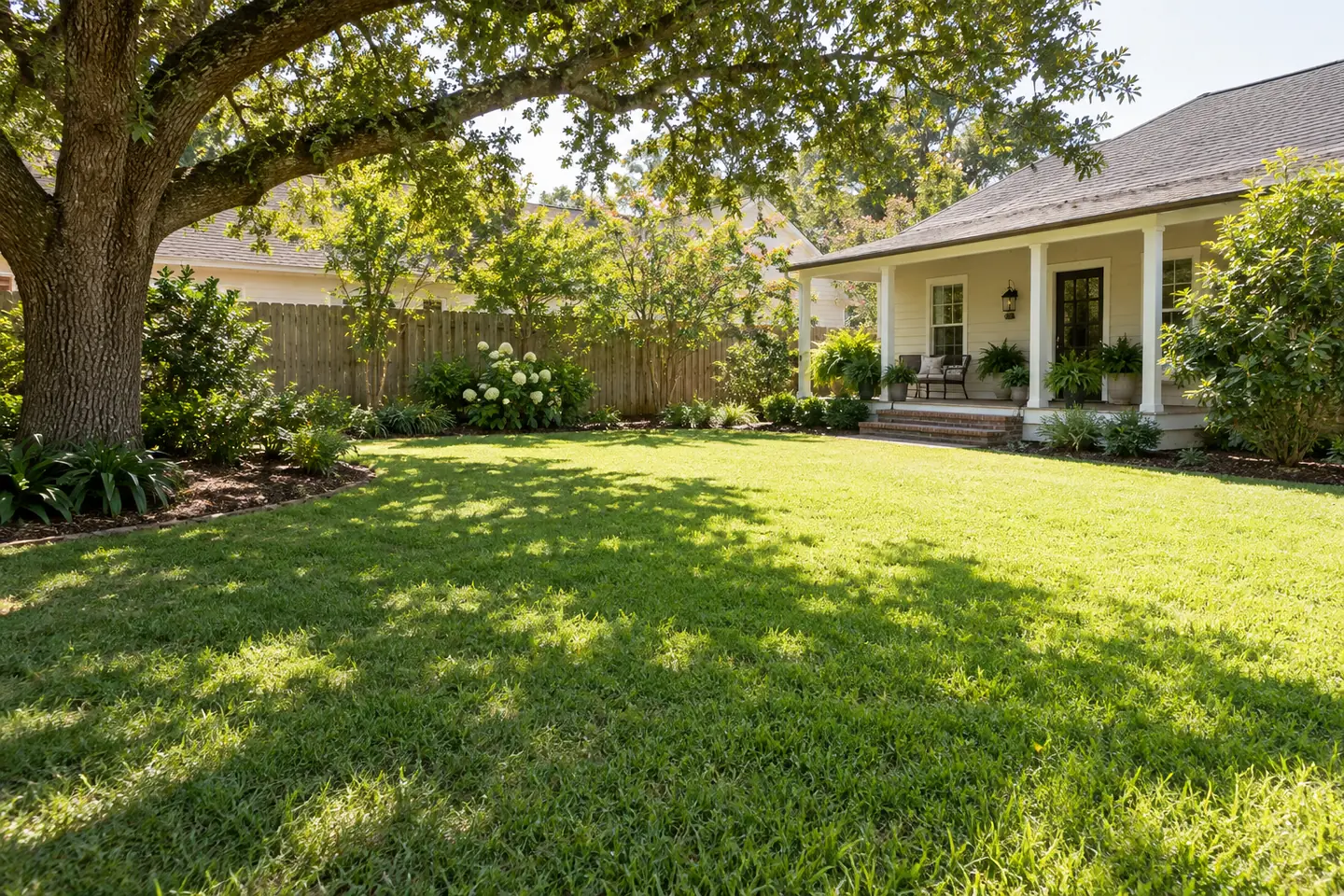
Observe exposure at more than one moment
A morning photograph may show shade that disappears by afternoon. A late-day image can miss several hours of earlier sun. Note the times when you observe the area and avoid presenting one snapshot as a complete daily light record. If a professional recommends a more systematic exposure assessment, follow that method. Save seasonal context too: a changing canopy or the sun's position can alter the pattern over time. The household does not need to invent an exact number of sunlight hours from memory. A clear set of dated observations is a better starting point than confidently calling a strip full shade because that is how it looked when you happened to walk outside.
Separate rainfall exposure from sprinkler coverage
A tree canopy, roof edge or fence can affect the water reaching a particular area. A shaded patch may receive less direct rain, while an irrigation head may still apply water there. Keep those sources separate in the record. If the concern is uneven sprinkler distribution, show the intended coverage boundary and any obstruction. If the concern follows rain, describe shelter and incoming surface flow. The two events can produce different patterns in the same yard. Do not use a rain gauge in an open front lawn as proof of the amount received beneath a backyard canopy. Its reading is useful background with a defined collection location, not a property-wide guarantee.
A shared zone can complicate a simple adjustment
Reducing a zone's runtime may change watering for both the damp shaded strip and an open sunny section. Extending it may create the opposite imbalance. Ask an irrigation professional to review the zone layout and the lawn's needs together rather than changing the whole program to satisfy the most noticeable patch. Preserve any collection observations and their locations. A zone boundary is an equipment fact; a light-exposure boundary is a landscape fact. They may not coincide. Recognizing that mismatch helps explain why a single timer setting is difficult to interpret without a map of what the zone actually covers and how those areas differ.
Do not use extra water as a substitute for light
When grass thins in a sheltered location, watering more is not automatically the answer. Turf species differ in their adaptation to shade, and some sites may not provide suitable conditions for the intended grass. Ask an appropriate Extension or plant-health resource how light and other conditions fit the symptom. Keep the mowing discussion connected to that assessment without expecting a different cut or extra irrigation to solve every limitation. A lawn-maintenance plan should reflect what the site can support. It should not promise that repeating the same inputs more often will create an open-sun environment beneath a dense canopy or beside a permanently shaded wall.
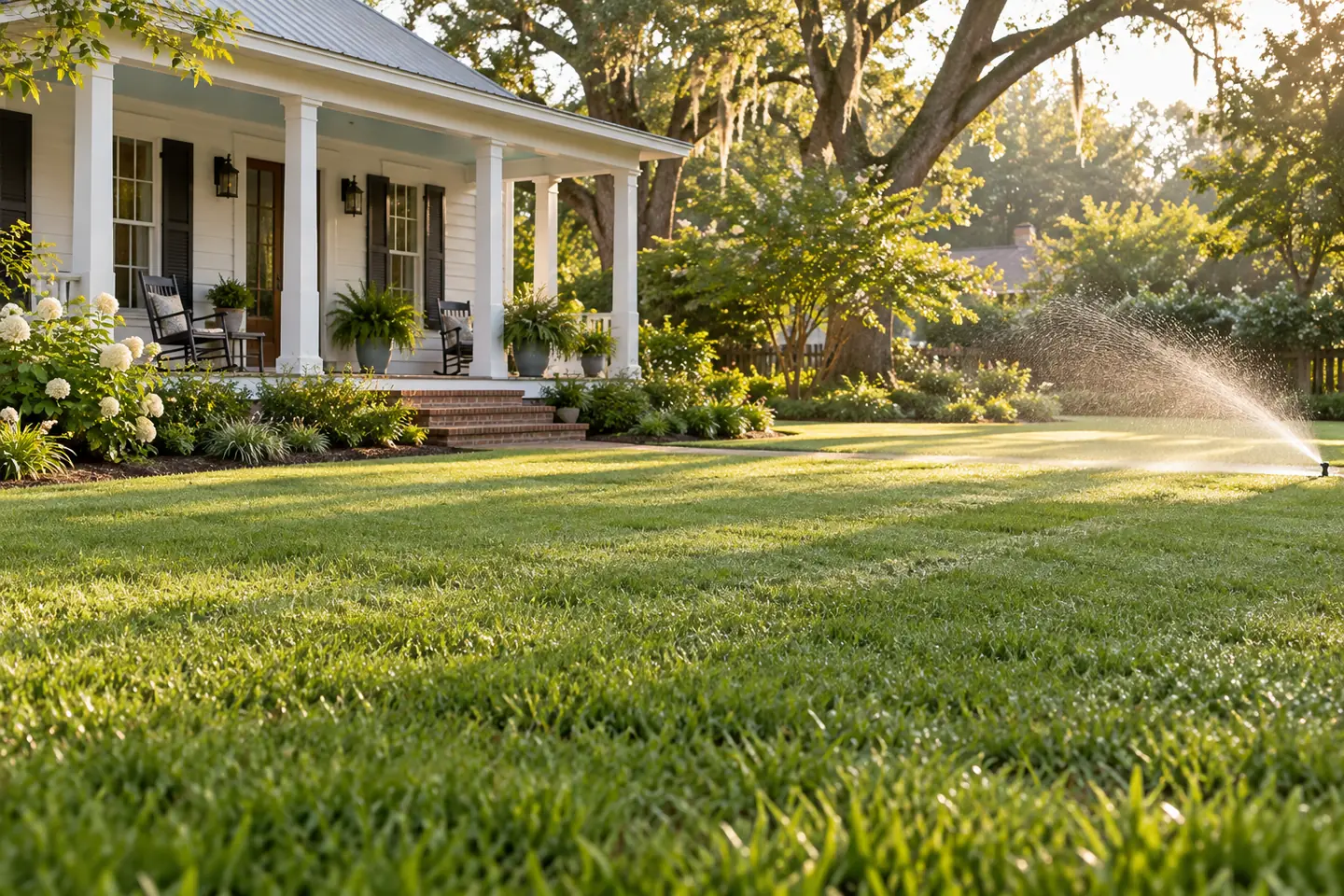
Keep tree-related decisions with the right assessment
A shaded lawn may tempt an owner to remove branches or disturb roots to change the growing conditions. Those are separate tree-care decisions with consequences beyond the grass. Do not dig around exposed roots or authorize pruning solely from a distant lawn photograph. Use an appropriate qualified resource for tree-related work. The household can still record the canopy, visible roots and shade pattern without altering them. That information helps the turf discussion remain realistic. It also protects the distinction between maintaining grass around an existing tree and changing the tree itself to pursue a different lawn appearance. One agreement should not silently expand into the other.
Use ground observations at defined comparison points
If moisture is being compared, identify a suitable sunny location and a suitable shaded location under a consistent appropriate method. Record the depth, timing and recent water history when relevant. Do not compare a wet depression under a tree with a raised sunny edge and attribute every difference only to shade. Slope, soil history and water routes can also differ. State those limitations rather than abandoning the comparison. The observations can still help an adviser choose what to assess next. Their value comes from preserving the actual setting of each point instead of reducing the result to a general rule that all shade needs the same response.
Review the lawn after a lasting landscape change
A new fence, building addition or substantial canopy change can alter exposure and sprinkler coverage. Record what changed and when the turf began to look different. Keep older photographs because they can show the former layout more clearly than memory. An irrigation or plant-care review can then ask whether the existing arrangement still fits the property. Avoid making several unrelated changes at once without recording them. If watering, mowing and shade conditions all change together, it becomes harder to understand which factor relates to the later result. A dated sequence supports a more useful discussion than a single after-photo accompanied by a request to return the grass to how it used to look.
Give a comparison a fair starting point
Suppose a sunny center was watered yesterday but the shaded side strip also received runoff from a roof outlet this morning. A difference observed afterward cannot be attributed only to light exposure. Record the extra supply and choose a comparison that recognizes it. The same caution applies when one area was recently disturbed or contains a different grass. You can still learn from the contrast, but the conclusion should remain limited to the conditions actually observed. A fair comparison makes differences visible instead of pretending the two places differ in only one way. This helps an adviser decide whether the next useful step concerns exposure, supply, soil or another feature of the site.
Keep an exposure observation separate from a plant diagnosis
A shaded location can be an important clue without naming the cause of decline. If a patch develops distinct leaf spots, rapid matting or another new symptom, preserve that detail for the appropriate plant-health assessment. Do not explain it away solely because the area receives less sun. Equally, a healthy-looking shaded patch does not demonstrate that the current watering program is optimal. The useful record includes both exposure and plant condition, with dates that show whether they changed together. This allows the adviser to consider the actual sequence instead of treating shade as an answer that makes every other observation unnecessary.
Choose the next question from the actual contrast
Describe the difference that matters: a shaded gate strip stays damp, an open section receives the same scheduled run, or thin turf follows the edge of a growing canopy. Ask which observations would help distinguish water supply from limited light or another problem. A homeowner in Gretna can share that contrast without declaring a universal shade adjustment. Keep any recommended change with its purpose and review point. The practical goal is a care plan that recognizes the lawn's different environments. It is more understandable and more useful than treating the whole yard as one uniform patch or expecting every shaded blade to behave like the grass beside the street.
- Map exposure areas separately from irrigation-zone boundaries.
- Save observation times instead of inventing a daily sunlight total.
- Distinguish direct rainfall, sprinkler coverage and incoming flow.
- Keep limited light and water supply as related but separate questions.
- Leave tree alteration and irrigation redesign to their appropriate scopes.
Explain the affected maintenance area to Happy
Tell Happy Grass which shaded route stays soft, where roots are visible and whether other assessment work has changed access. Discuss the available mowing, edging, trimming and finish at 504-339-3571. This guide does not promise tree work, irrigation redesign or a cure for turf that lacks suitable growing conditions.