
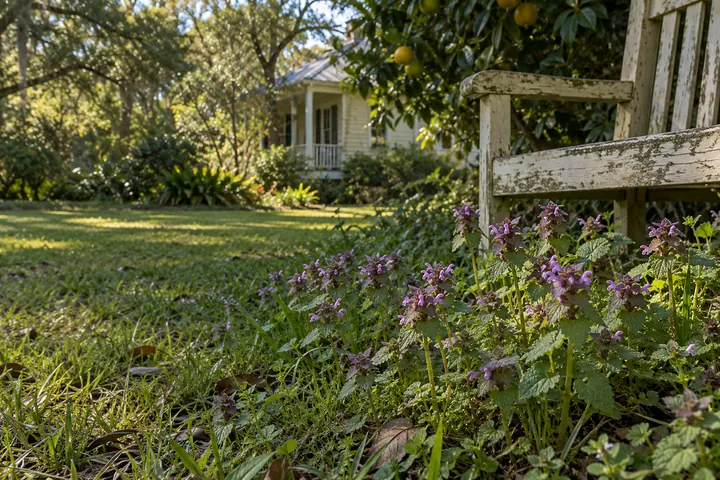
Give the purple patch a better question
There is a friendly way to ask about an unfamiliar lawn plant without naming it too soon: explain the feature you want help comparing. If the first thought is purple deadnettle or henbit, a distant flower photograph may leave that question unresolved. Choose a readable individual in the patch and give it a simple location label. Bench-side example one is a useful identity even before its botanical name is settled.
NC State Extension describes purple deadnettle with short stalks on the upper leaves, longer stalks below, opposite leaves and a four-sided stem. The upper foliage can be reddish or purple. Its comparison with henbit emphasizes the upper leaf attachment, rather than purple flowers alone. This gives the homeowner a specific part to show. It does not make every purple-tipped plant beside a bench a confirmed deadnettle specimen.
Follow one upper leaf all the way inward
The little stalk connecting a leaf blade to the main stem is the area to photograph. Show the blade, that connection and a short stretch of the main stem in the same view. If the blade overlaps the attachment, try another angle of the intact example. Do not describe a stalk as absent merely because the camera did not capture the narrow space behind the leaf.
A good caption can identify the upper leaf on the marked example and say whether its connection is readable. That is enough; a string of technical terms cannot repair an obscured junction. If another leaf crosses the view, keep the crossing clear rather than assuming that it is attached at the same point. The reviewer needs to follow an actual connection, not reconstruct the plant from whatever green lines meet in the image.
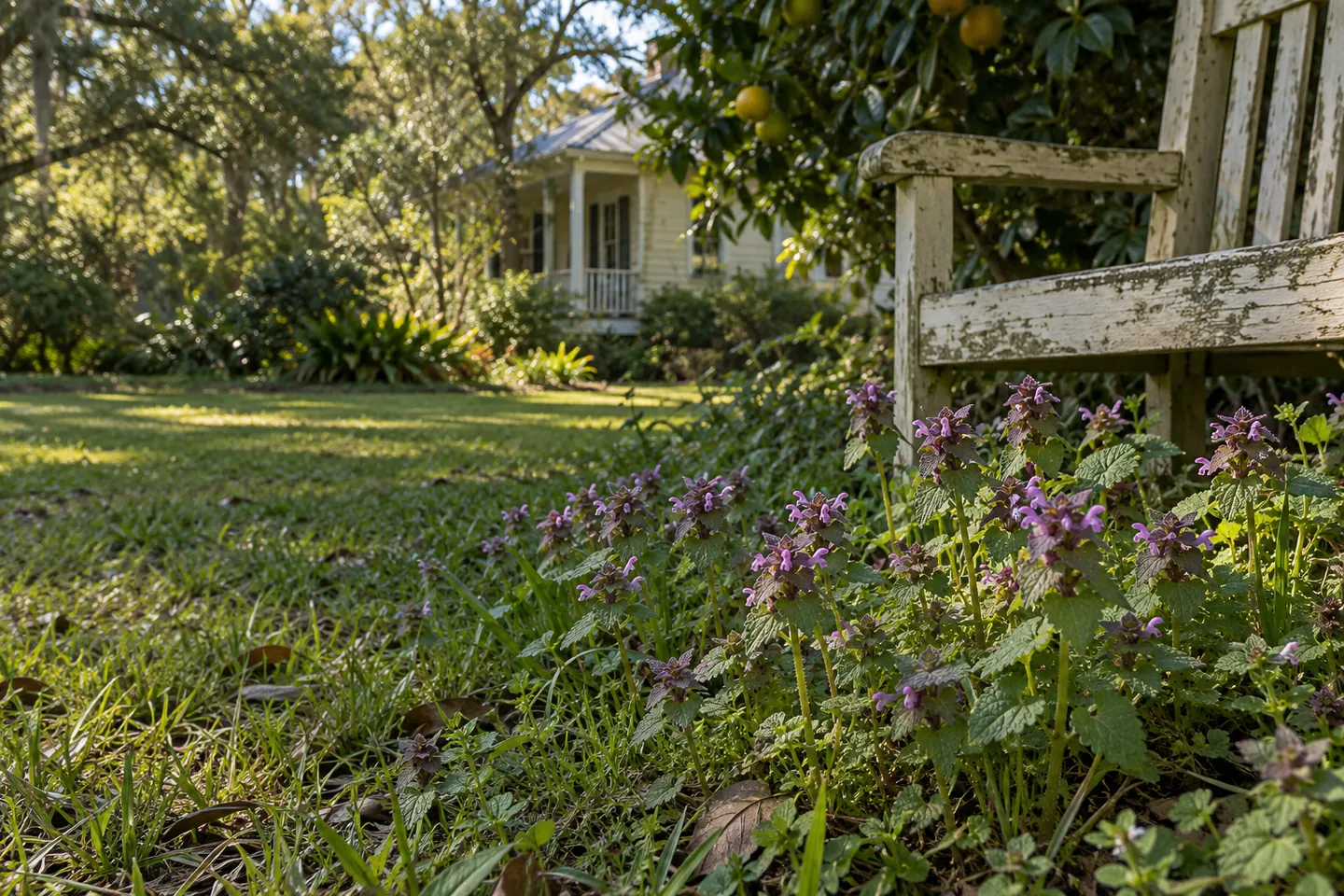
Keep an upper and a lower leaf on the same stem
The reference's contrast between upper and lower leaf stalks makes position important. A photograph of a detached leaf does not preserve where it came from. Start with a whole-stem view, then label the upper and lower details that it supports. If the lowest leaves are hidden by grass, record that limitation instead of substituting an attractive leaf from a different example nearby.
You can use a numbered image copy to orient the conversation. Put one number beside the upper attachment and another beside the lower attachment, leaving the junctions themselves uncovered. Retain the unmarked original. The numbers help someone find the evidence; they do not establish a connection that the photograph fails to show. If a later reviewer changes the interpretation, keep that correction beside the same numbered example rather than quietly relabeling an unrelated plant.
Purple foliage is different evidence from purple flowers
When the whole image has a violet cast, separate what belongs to the leaf from what belongs to the flower or the lighting. Preserve an ordinary-color photograph, especially if a phone filter was used for sharing. The candidate's upper-leaf tint is one feature among several. It should not become a shortcut that replaces the attachment comparison or excludes a greener example without review.
Photograph two examples under comparable light if color is part of the question. Label them separately and explain whether the difference was visible to the eye or only appeared on the screen. Do not claim that a darker top means a particular deficiency or previous maintenance error. A plant-identification inquiry can describe color accurately while leaving the property's growing conditions and the cause of any lawn change as separate, unassessed questions.
A square-looking stem needs more than a silhouette
A sharp edge on a stem can be difficult to judge when the lighting creates a bright line along one side. Include the stem's context and explain the angle shown. There is no requirement to break the plant to produce a cross-section for a routine lawn discussion. Ask a qualified identification reviewer what evidence is appropriate if the intact photographs do not resolve the structure.
Keep the stem observation with the upper-leaf record. It is tempting to combine a clear square stem from one example, a colorful top from another and a readable flower from a third. Such a collection can support separate comparisons, but it must not be presented as a single fully documented plant. A reviewer should be able to tell which features occurred together and which came from different places in the patch.
Compare henbit without losing the original evidence
If a reviewer suggests henbit, return to the upper attachment instead of searching for a photograph that looks more like the new name. Which junction was clear? Which was hidden? Was the flower detail attached to that same stem? These questions let the comparison improve without requiring the homeowner to defend the first guess. A revised name is useful when the evidence remains traceable.
Keep a short comparison note with two columns in your own record: observed and unresolved. The observed column might identify the visible upper stalk and opposing leaves. The unresolved column might contain the obscured lower junction. Do not fill the second column with reference descriptions merely to make the record look complete. An explicit gap gives the reviewer a meaningful next question and prevents a plausible candidate from becoming an unsupported certainty.
Seasonal background is not a calendar for your yard
NC State's winter-annual account describes its regional setting. For a West Bank lawn, record the date the marked example was actually noticed and what was present at that visit. If no earlier check was made, the beginning of the timeline is unknown. First noticed in flower is a useful statement; appeared exactly after the last cut is a different claim that needs its own evidence.
A brief log can distinguish several events: first photograph, first readable upper attachment, later flower view and any known maintenance date. Keep those events in their own order. A plant becoming conspicuous from the porch does not by itself establish when its lower growth began. This honest timeline makes a follow-up easier to assess without turning a regional life-cycle label into a prediction about an exact week in Harvey or Marrero.
Decide whether the low patch or the raised top is the issue
The visible concern may be the low leaves interrupting the turf texture, the flowering tops above the grass or simply uncertainty about the plant. Show the ordinary lawn view and state which concern matters. A close upper-leaf photograph is useful for identification, but it does not explain the appearance you want Happy to review from the walkway or seating area.
Mark the actual work area independently of the candidate name. A bench-side strip and a larger open lawn are not automatically one task because similar flowers appear in both. Discuss the specific mowing, edging, weed-eating or blowing proposed for each included area. Confirm the intended visible finish before the visit. A tidier top should not be described as a promise that every lower plant or future seedling will be permanently absent.
Keep the follow-up tied to the question that was answered
After a review, save both the conclusion and its limits. If the reviewer could only give a provisional comparison, retain that wording. A photograph of a later short shoot should not erase the earlier uncertainty or automatically inherit the same identity. Use the marked location and explain whether the same individual can still be followed. Otherwise call it another example in that area.
For the lawn result, compare the marked strip with the agreed operations. For the plant result, compare the visible attachments with the identification advice. These are useful outcomes with different evidence. Keeping them distinct prevents a friendly maintenance conversation from turning into a disagreement over a species name that nobody actually confirmed. It also gives Happy a concise, practical description of what still needs attention at the next conversation.
Make a small upper-leaf evidence packet
Choose a wide view locating the example, an intact stem view and the two attachment details. Include the flower only when it adds readable information. Give every file a role, and keep unrelated examples out of the same numbered sequence. A small, understandable set is easier to review than many purple-flower photographs whose stems and lower leaves cannot be connected.
- Start the comparison with the upper leaf's attachment.
- Label the lower detail by its position on the same stem.
- Distinguish leaf tint, flower color and camera effects.
- Leave hidden connections marked as unresolved.
- State the lawn finish separately from the candidate name.
Ask Happy about the bench-side strip
Call 504-339-3571 and ask for Happy. Describe the marked lawn area, current access and the mowing, edging, weed-eating or blowing you want discussed. Confirm the actual work and availability before arranging a visit.