
Keep flowers and fruit in one connected record
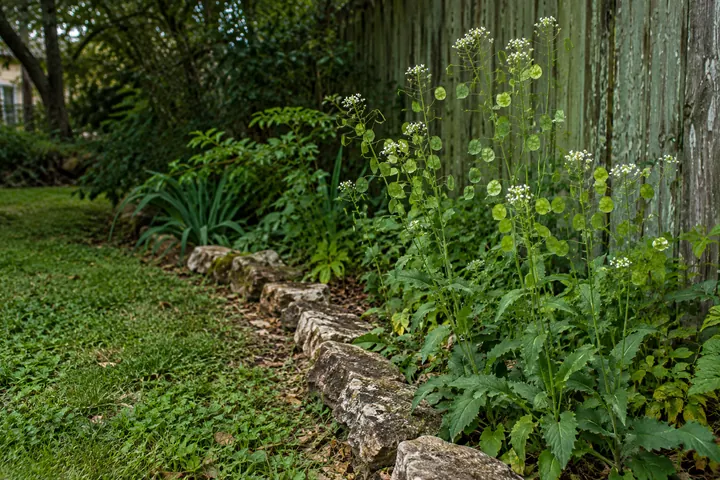
A photograph of a white tip and another of loose green disks can look like a complete plant story while leaving their relationship unproven. Begin with an attached stem showing the structures together. Give the example a location label such as sage-fence stem one. That label remains useful for the lawn discussion even if the reviewer later revises the candidate name.
Missouri State's Virginia pepperweed account describes Lepidium virginicum with elongated toothed leaves, branching above the base and small whitish flowers developing into flat fruit along a raceme. The arrangement can resemble a bottle brush. These details give a reviewer a comparison to assess. They do not identify every little disk or pale flower in a mixed border simply because the word pepperweed has been suggested.
A bottle-brush impression needs readable positions
The overall shape can be useful from a modest distance, but preserve enough detail to show where the flowers and fruit sit along the supporting axis. A crowded cluster photographed from one angle may look like a single upright brush while actually containing several stems. Trace a readable route through the example instead of counting every pale or green dot in the background.
Use a second view when overlap obscures the arrangement. Keep both images under the same label and explain whether the viewpoint changed or the plant itself changed between dates. A reviewer should be able to follow the sequence without guessing how the photographs fit together. The wide image locates the structure; a closer frame can address the individual fruit outlines that the overview cannot resolve.
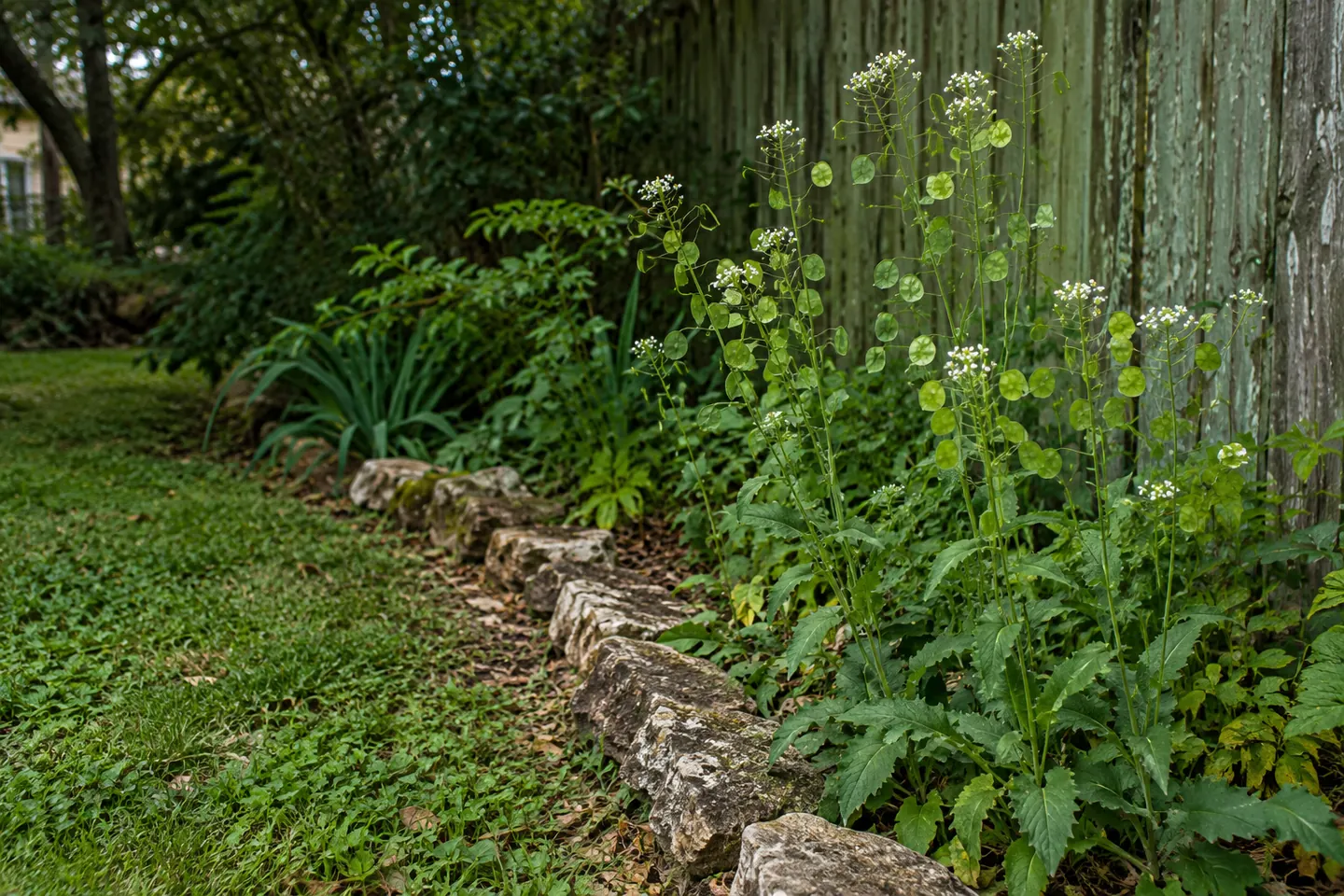
Flat is a shape question, not a color description
A round green object can look flat when its edge is hidden. Include an angle that shows its face and attachment, then another that gives useful side context if needed. Describe which part is actually readable. Do not call an unresolved green circle a confirmed flat fruit merely because the candidate profile makes that detail sound familiar.
If the object was already detached, preserve its source and handling history. A loose disk found beside the fence should remain labeled as loose material unless its origin was observed. It can be compared with attached structures, but it should not silently supply a missing feature on the marked plant. A qualified reviewer can decide whether the detached evidence adds anything useful when its limits are clear.
Separate the flower tip from older structures below it
Different stages may occur along a stem at the same visit. Label what is an open flower, what appears to be developing fruit and what remains unclear. An older structure is not automatically another flower simply because it shares the same axis. A short caption distinguishing the stages can make a small photograph much easier to discuss.
Keep dates when comparing the marked example later. If the second image comes from another plant with a clearer sequence, call it a comparison rather than the next chapter of the original stem. There is no need to invent one continuous individual that contains every useful stage. Several well-labeled examples can support a good identification question without becoming an unsupported time-lapse history.
The lower branching pattern deserves an overview
The Missouri State description distinguishes branching above the base. Show the lower plant and where the visible branches begin if that area is readable. A crop of the top cannot answer a question about the base. When turf covers the lower connection, mark it obscured rather than assuming the branch pattern that would fit the first candidate.
Keep another pepperweed-like plant under a separate location label. Similar upper structures do not prove that the lower habits are identical. A reviewer may need both views to explain why one example is more informative. Keeping the whole-plant context also helps Happy understand whether the concern is one isolated upright stem, several plants along the fence or a mixed patch extending into the lawn.
A leaf tip does not show the entire toothed margin
A narrow crop can make a leaf look smooth or sharply toothed depending on which part was included. Show the full blade and its attachment when possible. If another leaf or grass blade overlaps the edge, choose a clearer attached example rather than tracing an imagined outline through the overlap. The reviewer needs the plant's visible boundary, not a drawing of the expected shape.
Do not pair the largest nearby lower leaf with the clearest fruiting stem without observing their connection. A mixed border may contain several plants whose parts occupy the same photograph. Plain labels such as attached lower leaf and nearby unconfirmed leaf preserve that distinction. They let another person use the evidence honestly without having to undo a confident caption that joined the wrong structures.
The pepper name does not provide a tasting test
A common name is not an assurance that an unidentified plant is suitable for eating or any other use. This lawn guide does not offer that identification. Keep the nickname within the botanical inquiry and explain any separate use question to a qualified adviser rather than trying to confirm the plant through a taste or handling demonstration.
For routine lawn help, that demonstration is unnecessary. A readable attached plant record and a clear location can make the practical discussion useful without resolving every possible question about the plant. Happy should receive the area and desired visible finish. The identification reviewer should receive the connected flower, fruit and lower-branch evidence, with the limits of the photographs stated openly.
Regional timing is background rather than proof of arrival
The primary account discusses a cool-season annual in its own regional context. Record when the marked West Bank example was noticed and which stages were visible then. If the fence strip was not checked earlier, leave the date of first emergence unknown. A flowering tip first seen today does not prove that the entire plant arrived since the previous lawn visit.
Keep any known maintenance date separate from the observation date. A later photograph can show the current standing structures while the earlier image preserves details no longer available. Avoid assigning a growth rate or source of spread from two views taken at different angles. The useful timeline is the one supported by actual checks of the same example, not a complete story supplied after the fact.
Mark the fence strip before defining the routine task
An upright stem beside a fence may occupy turf, a bed or an unmaintained narrow gap. Show those boundaries in an ordinary overview. State whether the concern is raised stems, lower leafy texture or a route that needs review. The plant's candidate name does not tell Happy which surface is included or what result you want discussed.
Confirm the mowing, edging, weed-eating or blowing proposed for the marked area. A shorter visible stem should not be described as proof that every seed or root is gone, and a remaining lower leaf should be evaluated against the actual agreement. A clear routine scope prevents an identification conversation from quietly becoming a separate treatment, removal or property-repair promise.
Keep backlighting separate from fruit-surface evidence
A small green disk can look translucent when light passes through it and opaque when photographed against a darker background. That change in the picture does not automatically represent a change in the plant. Preserve the ordinary attached view and describe the lighting used for a second image. Do not turn a bright center, pale rim or dark shadow into a structural claim unless the actual outline and attachment support it.
If one image was made with a flash and another without, keep that difference in the caption when it affects the detail being compared. A reviewer may still find both useful, but should not have to infer why their surfaces look different. Choose the clearest unaltered outline rather than the most dramatic color. This is particularly helpful when the entire inquiry depends on a tiny flat-looking object whose surface, edge and supporting stalk are easily merged by glare or a busy background.
Send the question that the available sequence supports
A focused message can ask whether the flat attached fruit, small white flowers and readable lower branching fit Virginia pepperweed or leave another candidate unresolved. State which detail is missing. Include the original overview with any numbered crop so the reviewer can orient the evidence. An honest gap is a useful next step when it is specific enough to address.
Save the answer with the location label and source. If the name changes, keep the original observation history rather than renaming unrelated pictures to make the record appear more complete. The fence strip remains a practical location even while its plant comparison improves. That gives the next lawn conversation a clear starting point without requiring a confident species claim.
- Preserve the flower-to-fruit sequence on an attached stem.
- Show a side context before calling a green disk flat.
- Keep the lower branching overview with the upper detail.
- Leave unknown collection origins and emergence dates unknown.
- Separate the fence-strip finish from a complete-removal assumption.
Bring the fence-strip question to Happy
Call 504-339-3571 and ask for Happy. Describe the marked lawn area, current access and the mowing, edging, weed-eating or blowing you want reviewed. Confirm the actual work and availability before arranging a visit.