
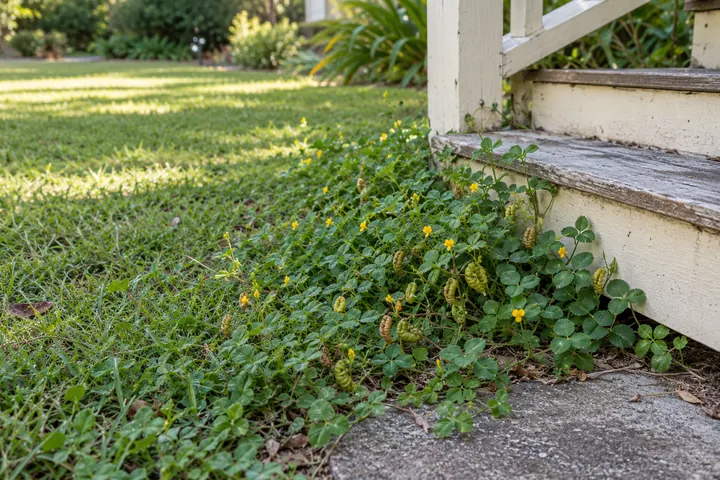
Keep the coiled-pod question with the actual plant
Start by showing one attached example rather than a handful of objects collected across the yard. Give it a location label such as deck-step stem one. That label can stay with the record if a reviewer changes the candidate name. It also gives Happy a practical lawn area to review without treating every clover-like leaf or loose burr as part of the same problem.
UC's gallery describes Medicago polymorpha under the name California burclover. It is an annual with trailing or sometimes upright stems, three rounded toothed leaflets and small clustered yellow flowers. Its pods are coiled and may be smooth or carry prickles, sometimes with hooked tips. These details support the burr medic comparison. The geographical word in the source's common name does not certify where a particular yard plant was observed or establish that a loose object came from it.
A three-part leaf is not a complete identification
Show the whole leaf and how its three parts join their supporting stalk. A crop of three green shapes may conceal whether they belong to one leaf, several neighboring leaves or different plants. Keep the attachment readable and retain a wider view of the selected stem. A reviewer needs the actual arrangement rather than a caption that simply announces clover.
If another example has clearer leaflets, label it separately. Do not borrow that leaf and pair it with the closest coiled pod unless their relationship was observed. A mixed lawn edge can contain several small plants whose parts overlap in one image. Separate records make it possible to explain which comparison is supported without losing the location of either example or creating a fictional plant with every convenient feature.
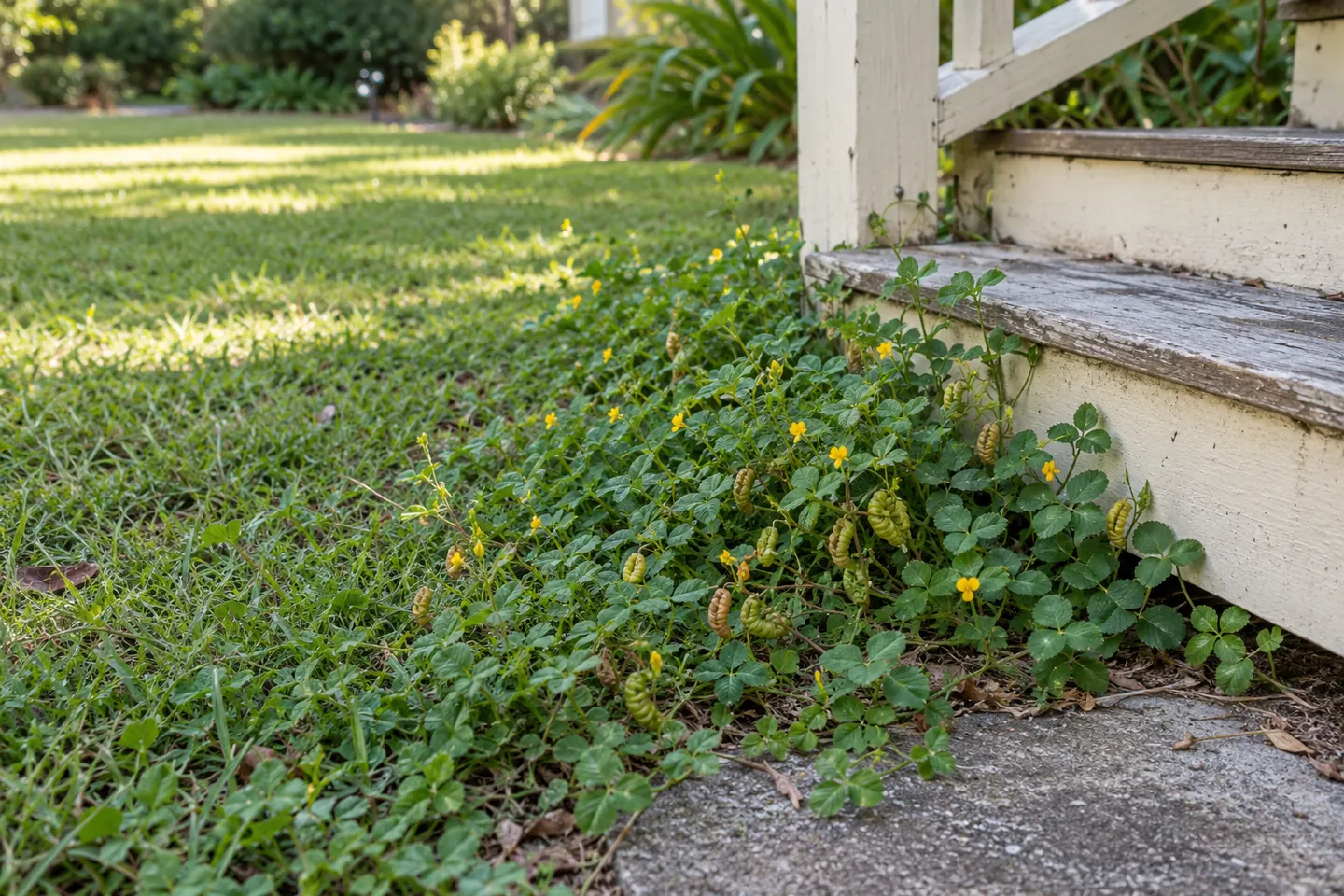
Follow the pod's attachment before describing its coil
An attached pod can help connect the fruit question to the leafy example. Include its supporting stalk and the point where that stalk joins the plant, if readable. Then add a closer view of the coiled outline. A sharp pod photograph without an origin may be useful as collected material, but it should not automatically complete the identification of the deck-side stem.
When the connection is hidden by grass, record that gap. Do not draw a continuous supporting route through an obscured area and present it as something actually seen. A qualified reviewer can assess the separate structures with their limits stated. An incomplete but traceable record is more useful than an apparently complete one assembled from the nearest leaf and the most interesting loose object on the path.
Coiled shape needs a view with depth
A pod seen only from one face can look like a flat disk or a dense lump. Include a side context where practical so the reviewer can understand its three-dimensional arrangement. State which parts of the coil are visible and which are covered. Do not report an exact number of turns when the photograph merges them or shows only the outermost surface.
The source allows variation in pod surface. A smooth-looking object should not be excluded simply because the nickname burr led someone to expect conspicuous hooks. Equally, an indistinct rough outline does not prove hooked prickles. Keep shape, surface and attachment as separate observations. They can be considered together without turning one uncertain detail into a final species conclusion.
Loose burrs deserve their own location record
An object found on a walkway, near a shoe or beside the deck can be photographed where it was noticed and labeled as detached material. Record any known collection history. If nobody saw where it came from, leave the origin unknown rather than assigning it to the nearest three-leaflet plant. The practical concern can still be described clearly while the botanical connection remains unresolved.
Do not stage a demonstration by pressing unidentified material against clothing, skin or an animal. A routine lawn inquiry does not require that test. Keep an existing observation factual and ask a qualified reviewer which further evidence is appropriate. A possible way an object could move is not proof of how it reached the particular place where it was found.
Small yellow flowers need a stem of their own
A yellow flower beside a clover-like patch may belong to another plant. Trace its supporting route and keep the flower detail under the example label it actually belongs to. If the route is hidden, say that the nearby flower has an unconfirmed connection. A bright close-up should not quietly become the shared flower image for every small three-part leaf in the area.
Show the cluster arrangement when it is readable, rather than using color alone. If no flower was observed on the marked example, record that absence from the observation instead of claiming the plant never flowers. The identification record does not need every possible stage at the first visit. It needs to preserve which structures were genuinely available and which questions still require another view.
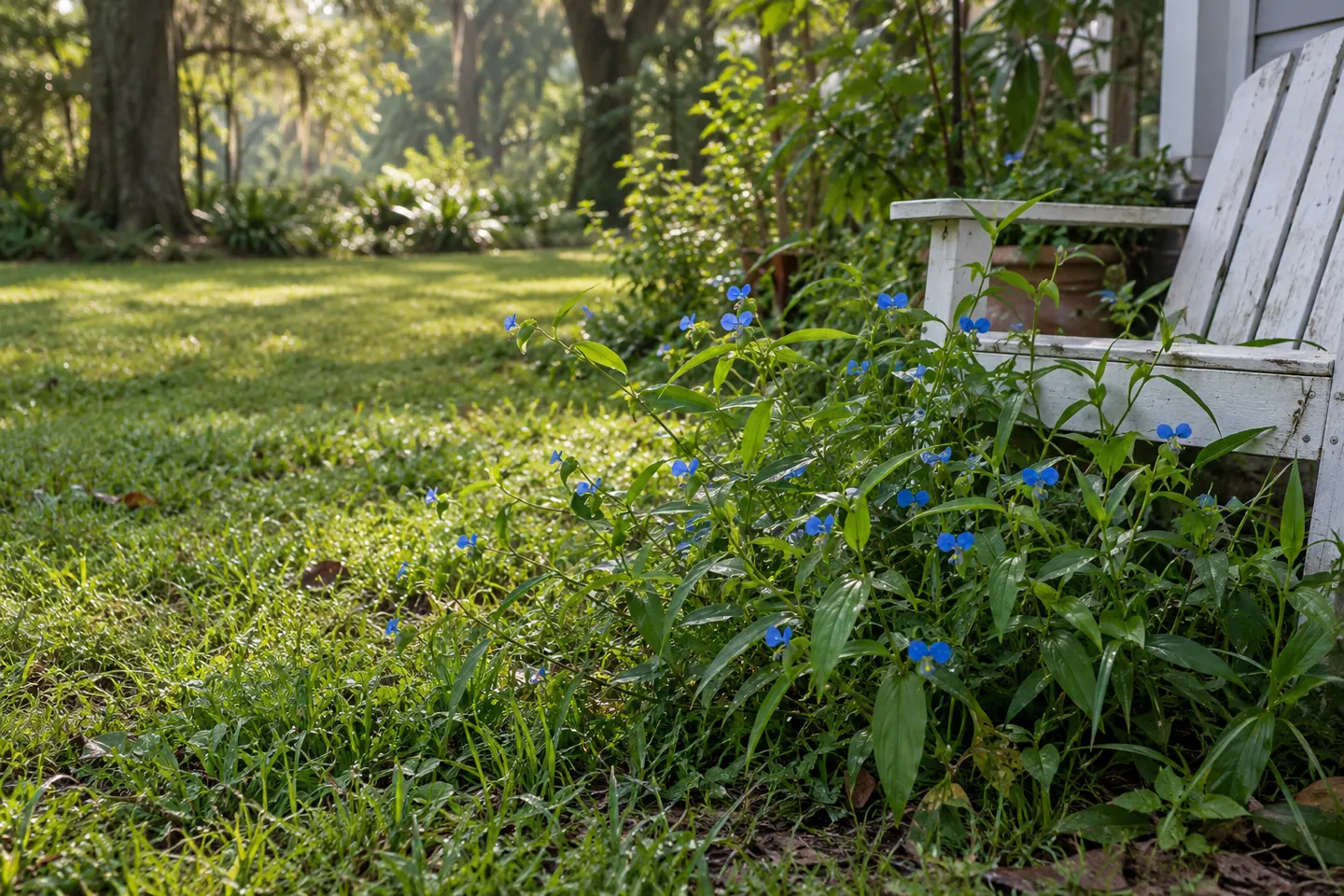
Compare clover-like plants without replacing one shortcut with another
Three leaflets and yellow color can be useful starting descriptions, but they should not force every example into one candidate. Keep each connected plant record separate and ask a reviewer which additional structure matters. The coiled attached pod may be the central question in this inquiry, while another nearby plant may need its own flower or fruit evidence.
Read the scientific name in any source before transferring its advice to the marked example. A common name containing burr, clover or medic may describe a different plant from the one in the photograph. Preserve a revised conclusion beside the original location label. A careful comparison can improve the answer without erasing the actual observations or making the homeowner defend the first familiar word they used.
A trail of objects is not a demonstrated route of spread
Several loose pods in different places can be mapped as separate findings. They do not establish a complete sequence showing which plant supplied them, what carried them or when they arrived. Avoid drawing arrows between the locations as though that history had been observed. A simple dated map can preserve useful information without inventing a cause.
Keep maintenance dates separate from collection dates. If a later object is found near the same step, label it as another finding rather than proof of an exact regrowth or dispersal rate. A qualified identification reviewer may be able to compare its structure with the attached record, while the practical lawn conversation can focus on the current condition and the work actually agreed for the area.
Mark the low patch and the hard surface separately
A low leafy plant in turf and loose material on the deck approach are different visible concerns. Show both locations in an ordinary overview, with fixed boundaries that another person can recognize. State which area is included in the lawn request. The candidate species name does not tell Happy whether the concern is the grass texture, raised growth, a paving edge or detached material resting on a hard surface.
Confirm the mowing, edging, weed-eating or blowing proposed for the included area and the visible finish expected from that work. A tidy path or shorter lawn surface should not be described as proof that every pod or future plant is absent. A later remaining leaf should be judged against the routine scope rather than an unstated promise of complete removal, treatment or a broader property outcome.
Keep a useful question with the final evidence packet
Ask whether the connected three-part leaf, attached coiled pod and any readable flowers support Medicago polymorpha or leave another candidate unresolved. Include the intact stem overview and explain which pod details the close-up cannot show. Keep loose findings under their own labels. This gives the reviewer a focused comparison rather than a mixed bag of clover-like material with a confident name attached.
Save the actual answer and any limits with the date and source. If another example supplies a missing detail later, identify it as a comparison unless continuity with the original plant is known. The deck-side location record remains useful through that correction. Happy can then discuss the routine lawn concern without inheriting a biological history or identification claim that the photographs never established.
- Connect the three leaflets to their supporting leaf stalk.
- Keep attached pods separate from loose findings.
- Describe readable coil turns without inventing a complete count.
- Preserve smooth and prickled surfaces as observations for review.
- Mark turf and hard-surface finish questions independently.
Talk about the deck-side lawn with Happy
Call 504-339-3571 and ask for Happy. Describe the marked lawn area, current access and the mowing, edging, weed-eating or blowing you want discussed. Confirm the actual work and availability before arranging a visit.