
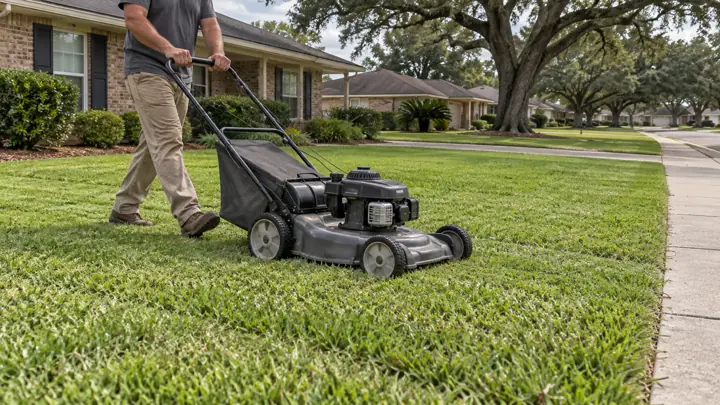
Get the lawn cut.
Keep your weekend.
There is a particular kind of relief in looking out at a lawn that has been handled. The grass is at a consistent height, the edges make sense and the yard is no longer the chore waiting behind everything else.
Happy Grass offers lawn mowing and grass cutting across its listed Westbank service areas, with the details tailored to the property.
The first useful step is not guessing a price from a lot size. It is understanding what needs cutting, how the equipment gets there and the condition of the lawn today. Send Happy your address and a few recent photos.
Tell us if the backyard is fenced, the grass has gotten ahead of you or there are areas that need special care.
What the mowing portion of a visit covers
Mowing addresses the accessible turf included in your quote. The exact footprint may be a front lawn, front and back, side strips or other agreed areas.
Edging, weed-eating, blowing and bagging should be clearly included or excluded rather than left for either side to assume.
A reasonably level, open lawn can be a very different job from several small areas divided by gates, garden beds and obstacles. Equipment must be able to enter and move around safely.
If an area cannot be reached with the planned equipment, Happy needs to know before the visit is arranged.
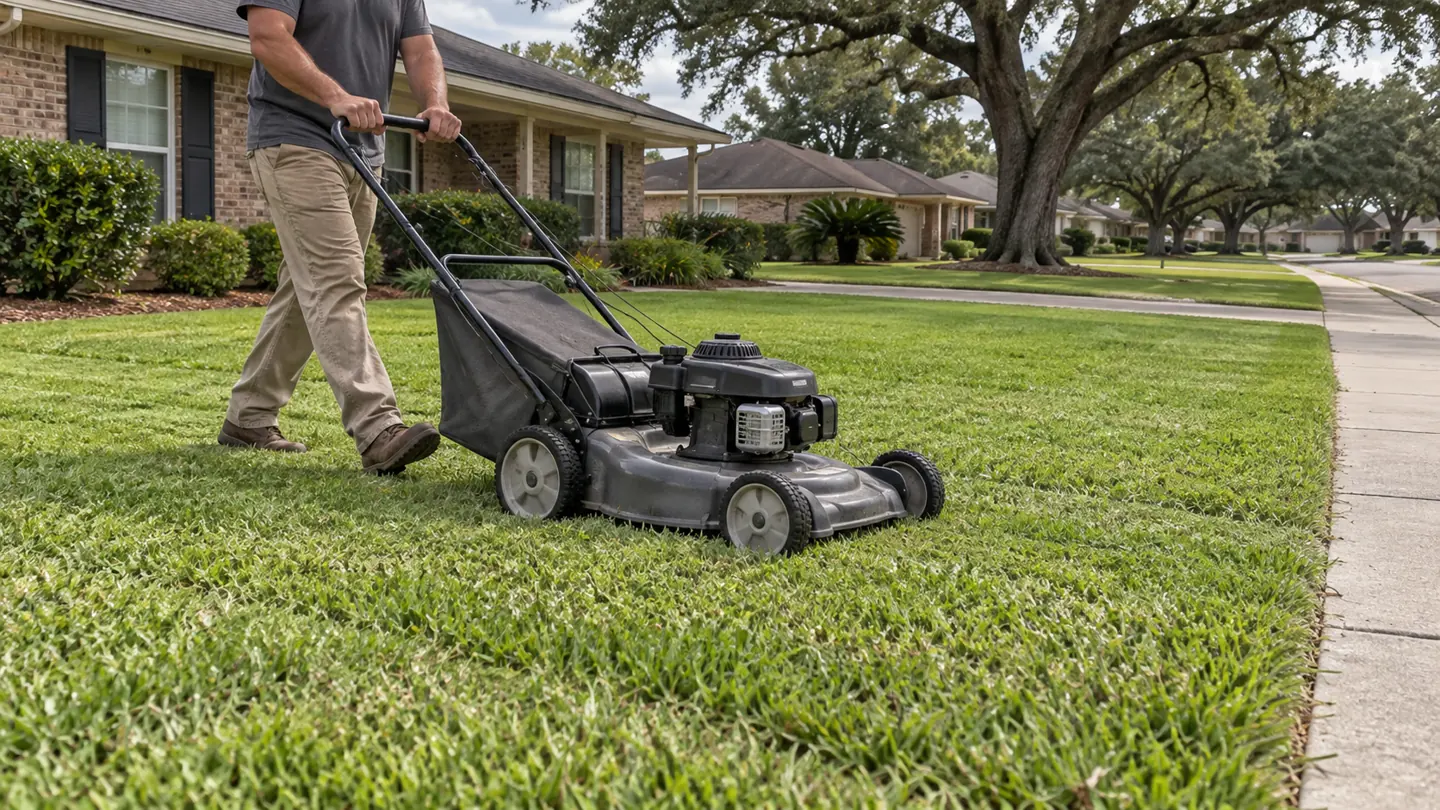
The first cut sets up the maintenance plan
If the lawn has been maintained, the starting conversation can focus on height, frequency and the finishing details you want. If it has become tall, dense or difficult to see through, the first visit may require a different scope.
Long grass can conceal debris, uneven ground and items that should never meet a mower.
Describe the condition honestly. “A little behind” can mean different things to different people.
A broad photo from the sidewalk, another from the back of the yard and a closer view of the tallest patch give Happy something concrete to review.
Mention whether there are piles, sticks, building materials or abandoned objects mixed into the area.
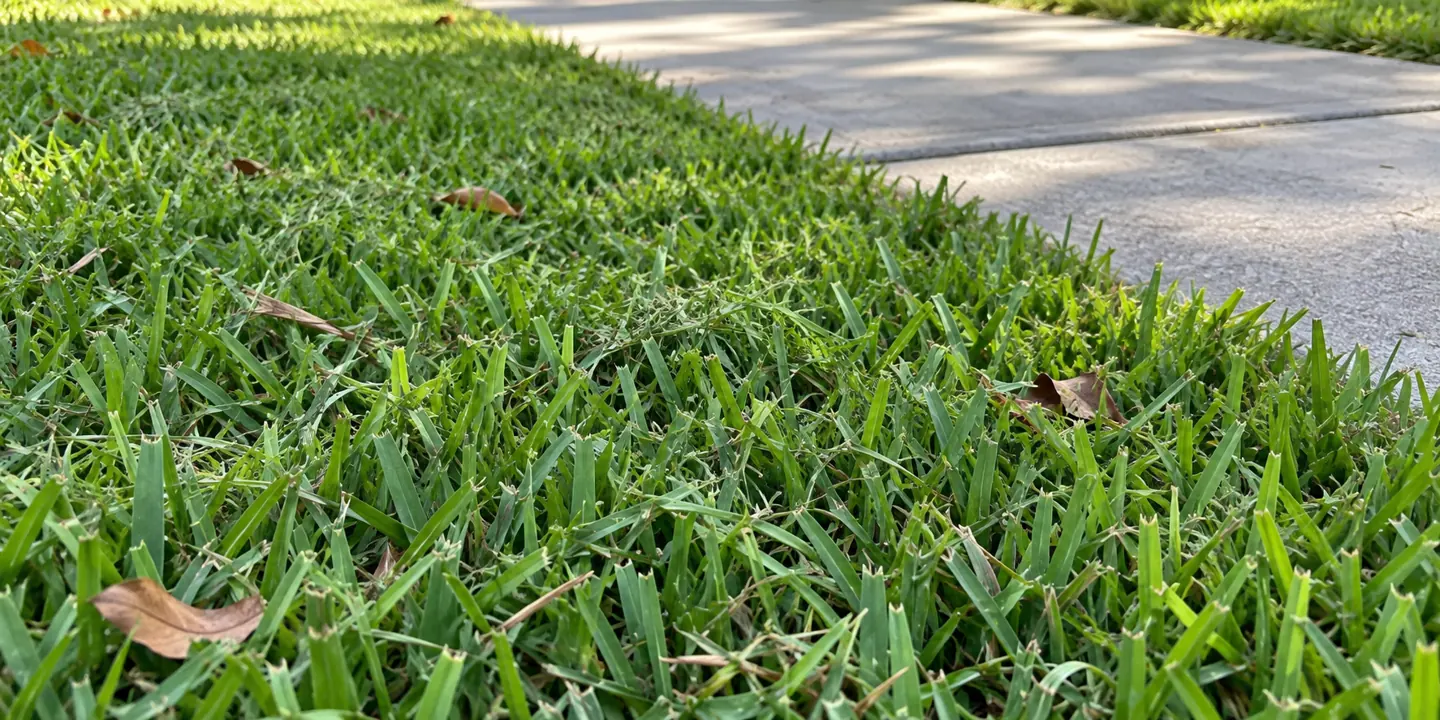
Choose a frequency that fits current growth
Happy Grass offers weekly and every-other-week lawn maintenance. Which is more useful depends on the lawn. Warmth and rain can accelerate growth; shade, stress and cooler conditions can change it.
An interval that worked previously may leave too much growth between visits at another time of year.
Look at the lawn before the next planned cut. Is it still manageable, or has it become noticeably tall and uneven? Are clippings likely to be light, or will the next pass create a heavy load? Those observations are useful when deciding whether to adjust the schedule. Our weekly versus biweekly guide explains the comparison.
A lower cut is not always a better cut
Taking a lawn very short may feel like a way to buy more time, but the result depends on the grass and its condition.
A sensible mowing plan respects the amount of growth being removed, avoids unnecessary scalping and keeps an eye on uneven areas. The goal is maintenance you can repeat, not a dramatic one-day change that leaves the lawn struggling.
If you have a preferred height, say so. Also mention thin shade areas, high spots, exposed roots and any previous problems with close cutting. General advice cannot identify the right setting for every yard without seeing the turf and understanding its condition.
Moisture matters below the surface
Rain can leave different sections of one property ready at different times. A sunny front area may firm up while a shaded backyard remains soft.
Equipment on saturated ground can leave tracks, and wet growth can clump instead of distributing cleanly. Standing water is an obvious warning, but it is not the only sign of a lawn that should wait.
Show recurring wet patches in your quote request and keep Happy updated after major weather changes. Lawn maintenance does not repair drainage simply by cutting the grass.
If water regularly stands in the same spot, that may need its own assessment outside the mowing scope.
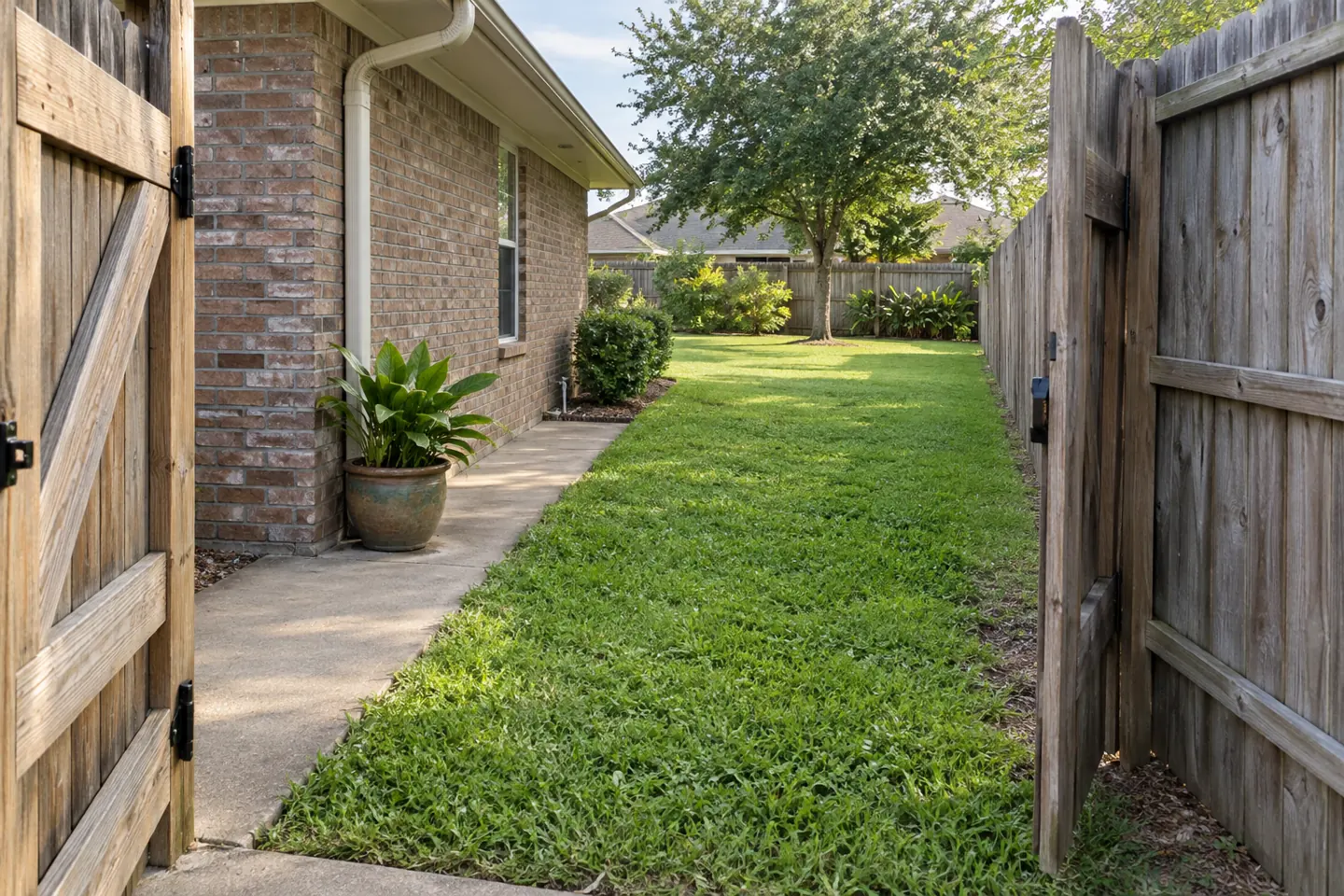
Make access and obstacles part of the quote
- Measure the clear opening of backyard gates, including hinges and posts.
- Show steps, narrow turns, steep changes and soft routes to the lawn.
- Identify sprinkler heads, shallow lines, garden lighting and exposed roots.
- Move toys, hoses and pet items before the agreed visit.
- Secure pets and discuss any special access arrangements directly.
- Tell Happy which areas should be left alone.
These practical details affect more than convenience. They help prevent a quote from being based on an area the crew cannot reach or an obstacle that is invisible in a street view.
Do not place private gate codes in a public page or photo caption; arrange sensitive instructions through a direct conversation.
Finish the job you actually requested
Mowing is one part of the overall appearance. A lawn can be cut and still need defined hard-surface edges, trimming around obstacles and clipping cleanup on paved areas. If you want the complete maintenance combination, make that clear when asking for a quote.
Bagging and mulching preferences also belong in the conversation. Collection, handling and any disposal expectations should match the agreed price and scope. Happy can explain the options for the condition of your lawn rather than promising that one approach suits every visit.
Ready to get the grass off your list? Request a mowing quote, or call (504) 339-3571 and ask for Happy. Include the address, current condition and your preferred frequency so the next conversation can be useful.
Three lawn situations worth talking through
The front looks fine, but the back is getting away from you. Tell Happy whether you want the whole property maintained together or only a particular section. Explain how the backyard is reached and show the current growth. It helps to avoid a quote that describes the easy-to-see front while the work you most want done sits behind a locked gate.
You can mow, but you’d rather have your weekend back. A recurring plan may be the conversation to have. Think about which parts of the chore you want handled: the cut itself, edging, the awkward trimming and the finishing cleanup. Choosing the whole combination you need makes the comparison more useful than shopping for a mowing price that leaves the other chores with you.
You’ve missed a few cuts and don’t know where to start. Send a recent photo rather than trying to make the yard look better before you ask. Explain roughly how long it has been and whether you know of objects hidden in the grass. Happy can review the work as it stands and discuss how a first visit differs from a regular maintenance cut.
A simple way to describe your mowing areas
Instead of estimating the whole lot, name the actual grass sections. You might describe the open front lawn, the side strip along the driveway and the fenced backyard separately. Show any section outside the fence that you also want included.
If part of the property is planting, paving or an area you maintain yourself, make that clear too.
You can use the same description later when checking the quote. Look for the sections you named, the mowing frequency you discussed and the finishing services you requested. If something is missing, ask before the visit.
A short clarification at that point is easier than finding out afterward that the two of you pictured different yards.
That’s the happy part of a clear mowing plan: you know which grass is being handled and which details are included. Then the next time you look outside, you can spend less time organizing a lawn chore and more time enjoying the space around your home. Tell Happy about your lawn and let’s get the conversation growing.
Choose a useful first-visit reference
Pick an ordinary viewing point before the first agreed cut, such as the front walk looking across the lawn. Include a recognizable border and note which areas are part of the request. This is a reference for discussing the finish, not a demand for the grass to match a photograph from a different property. It can also show the starting condition when the lawn has missed several cuts.
After the visit, use the same view to describe any question you still have. Name the area and the aspect of the work rather than sending a tightly cropped patch without context. If the question concerns the next interval, include the actual completion date. That makes the follow-up about your lawn’s routine and the agreed work instead of an undefined expectation of a perfect lawn.